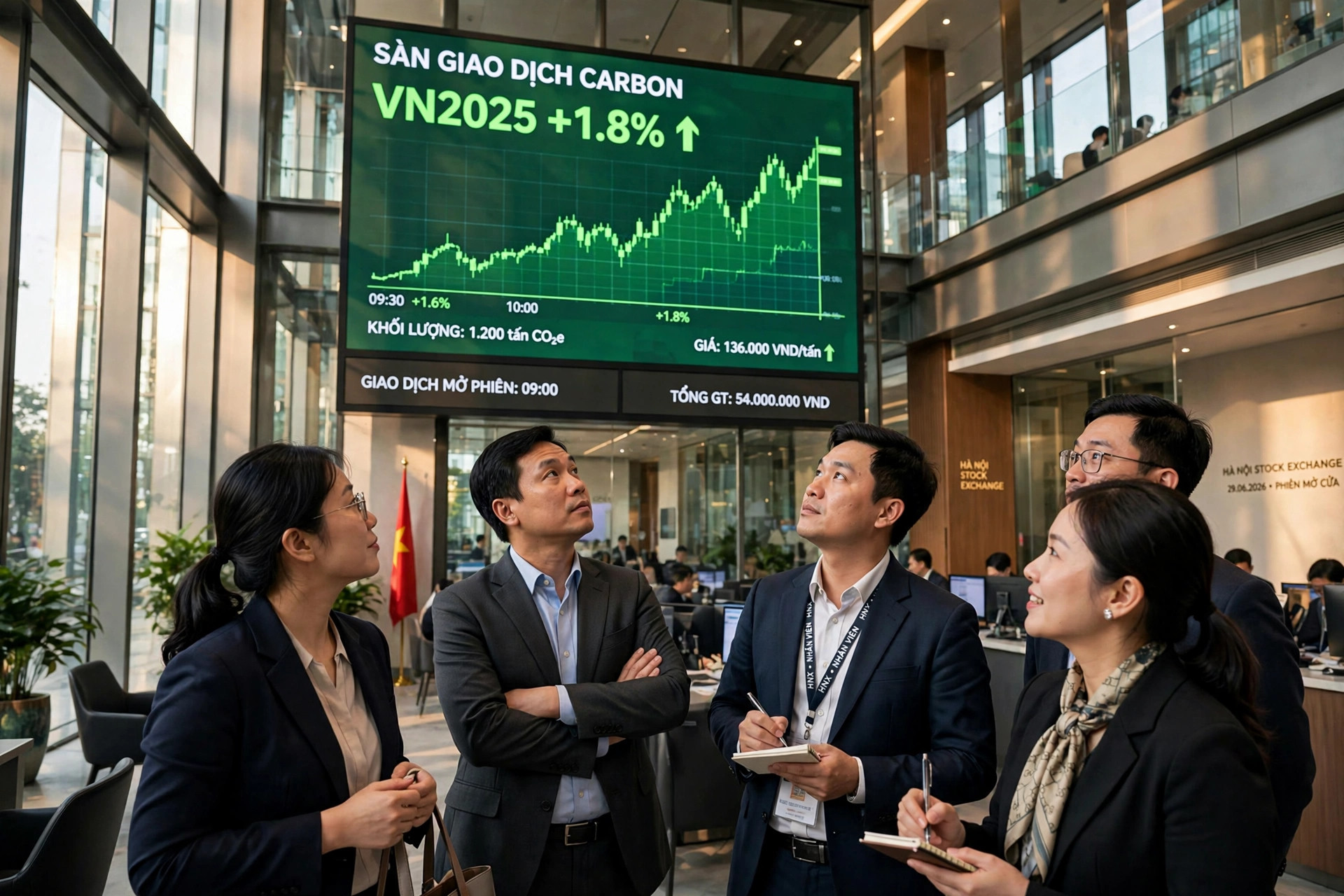
Vietnam’s domestic carbon exchange launched on 29 June 2026 on the Hanoi Stock Exchange, known as HNX. Its first session traded more than 1,200 tonnes of carbon dioxide equivalent at VND 130,000 to VND 136,000 per tonne, or about USD 5.00 to USD 5.23 per tonne at VND 26,000 to USD 1. That print gave Vietnam a domestic price for emitting a tonne of carbon, discovered through an actual transaction rather than set by a fee or estimated in a report.
Then the market went quiet. In a briefing on 16 September 2026, the Ministry of Agriculture and Environment said that after more than two months, the exchange had recorded seven transactions totalling 1,310 allowances. The useful question is not whether the market is busy, because it plainly is not yet. It is whether thin trading signals weak design, a normal beginning, or a demand problem policy must solve before the first surrender deadline in 2027.
What was actually traded
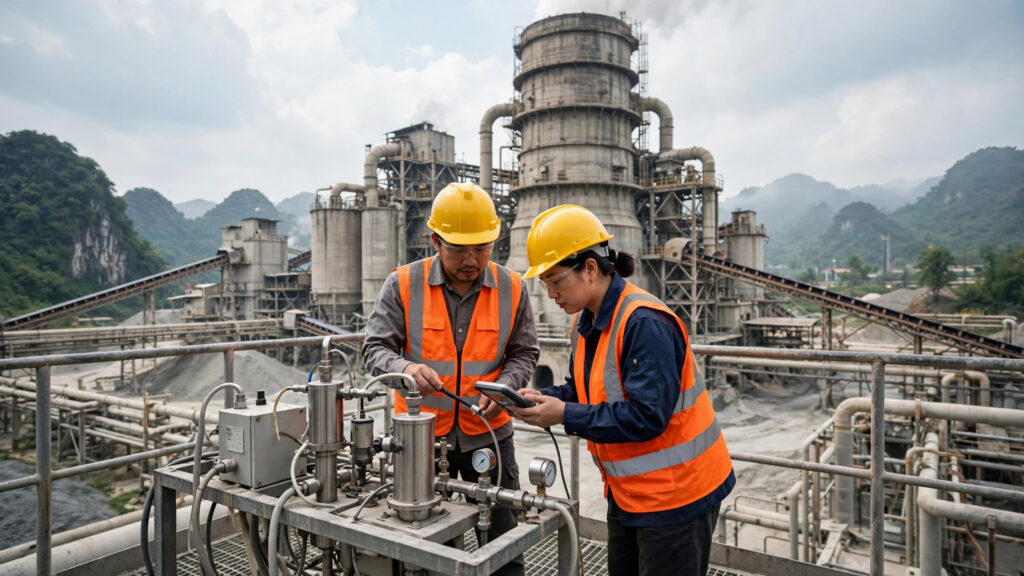
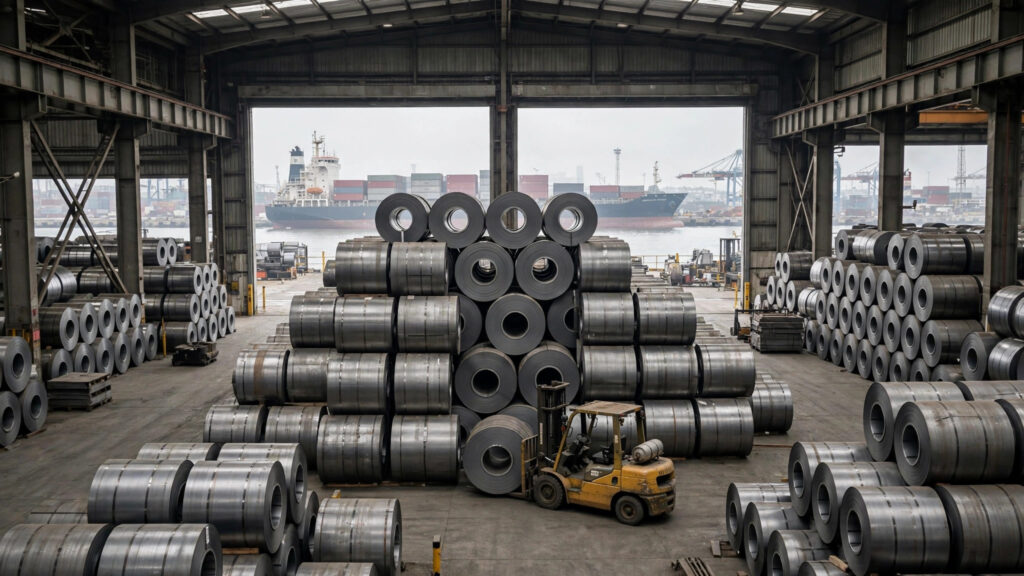
Scale puts the opening months in perspective. More than 510 million tonnes of quota have been registered in the national system. A total of 110 facilities have been allocated quotas for the period from 2025 to 2026, in thermal power, iron and steel, and cement. In all, 92 organisations are participating.

Against that backdrop, 1,310 allowances look tiny, because they are. Yet early trades in a new system often test the plumbing rather than express a strong view on price. Participants must open accounts, confirm that allowances can move, check settlement, and secure internal approvals inside a power plant, a steel mill or a cement group. A few small trades can complete that learning process at low financial risk.
Trading method also shapes the figures. Vietnam is not running a continuous market where buyers and sellers post orders all day. Trading is negotiated, with parties agreeing terms between themselves. That suits an early market with few participants, and it produces fewer visible transactions, because no order book generates a stream of small matches.
Two kinds of asset, two different jobs
The system handles two asset types. Emission allowances are permissions to emit a defined amount, and they form the core of the quotas allocated to covered facilities. Carbon credits represent reductions achieved elsewhere and brought into the system under its rules. The distinction matters, because allowances set the overall cap for covered installations, while credits add flexibility about where reductions happen.
That flexibility has a firm limit. Credits may offset up to 30 percent of an excess. A facility emitting above its allocation cannot cover the whole gap with credits. The rest must be met with allowances or by cutting its own emissions. The cap preserves an incentive for plants to improve their own performance, while still giving them a cost control tool when internal cuts are expensive or slow to deliver.
What a price near USD 5 does and does not say
The opening price of about USD 5 per tonne is the most quoted result of the launch, and it needs careful handling. It shows that early buyers and sellers found common ground at VND 130,000 to VND 136,000 per tonne. It does not yet show the long term cost of cutting emissions in Vietnam, the price that will prevail when surrender falls due, or the figure companies should use for investment decisions covering the next decade.
Comparisons with much higher European prices are tempting and only partly instructive. The gap reflects different caps, allocations and stages of development, not a simple verdict that one price is right and the other is wrong. Generous early allocation, limited immediate compliance pressure and a small pool of active traders can all keep an early price low. As coverage widens and allocations tighten, supply and demand can shift. A pilot price is best read as a starting signal, not a forecast.
The legal stack and the timetable
The exchange rests on Decree 06 from 2022, amended by Decree 119 from 2025 in June of that year and by Decree 83 from 2026 in March of that year. Together they shape who participates, how quotas are allocated, what may be traded and how compliance is checked. For companies, that detail matters as much as the launch date, because it sets reporting duties and the consequences of holding too few allowances at surrender.
The timetable is phased. The pilot runs through 2028. From 2029, coverage widens and allowance auctions begin. Auctions change the economics, because the state sells part of the supply rather than allocating all of it without charge. Before that, the first surrender of allowances falls in 2027. Deadlines concentrate minds in compliance markets. Trading that looks optional in a quiet pilot year can become urgent as surrender approaches.
Demand is the binding constraint
The central risk is demand. A market can have a venue, a registry, quotas and a legal framework, and still see little activity if participants do not yet need to buy. Facilities holding enough allowances for expected emissions have no pressing reason to trade. Facilities expecting a shortfall may wait for clearer rules or more information about how strictly the first cycle will be applied. That rational waiting can look like apathy from outside.
Genuine demand will grow when the cost of being short is certain and near. Clear guidance on surrender, credible verification, and consistent treatment across power, steel and cement will do more for liquidity than launch publicity.
What to watch into 2027
Watch three signals. First, breadth: whether more of the 92 participating organisations become active, or trading stays with a very small testing group. Second, repeat business: whether participants return for second and third trades, showing that the market is entering routine compliance planning. Third, price behaviour near surrender: whether the price holds near VND 130,000 to VND 136,000 per tonne or moves as real shortages and surpluses appear.
A steady rise from seven trades to a few dozen, spread across the three sectors, would convince more than one large transaction would. Vietnam’s exchange has done its first job. It exists, it has registered a very large pool of quota, and it has produced a first price near USD 5 per tonne. Its harder job is turning a careful pilot into a market companies must use and trust. The 1,310 allowances traded by mid September 2026 prove neither success nor failure. They become meaningful when compliance demand arrives in force in 2027.
Related reading
- JETP Money: Has the USD 15.5 Billion Started to Move?
- CBAM Is Now a Bill, Not a Warning: What EU Carbon Charges Mean for Vietnamese Steel
- Southeast Asia’s EV Scoreboard, First Half 2026
Sources
Ministry of Agriculture and Environment briefing, 16 September 2026, on transactions, registered quota, participating organisations and facility allocations. Hanoi Stock Exchange launch of Vietnam’s domestic carbon exchange, 29 June 2026, including the first session volume and price range. Government of Vietnam, Decree 06 from 2022, Decree 119 from 2025 and Decree 83 from 2026, on greenhouse gas emissions trading and the pilot timetable.