Ho Chi Minh City ● Vietnam

Green tech, read from Vietnam  EN Edition

Est. 2026 · Independent · English Language

Vietnam's green future, in English

Category: Policy & Law

Vietnam’s newest green rules, read closely for the people they affect. This desk summarises official decrees, decisions and technical standards in energy, transport, carbon and technology, in English, from the official Vietnamese text, for international investors and the operators who must comply. Every explainer links to the official full text. These English summaries are unofficial and for reference only; they are not legal translations and are not legal advice.

  • The 2050 Roadmap Everything Else Hangs On: Decision 876/QD-TTg Explained

    The 2050 Roadmap Everything Else Hangs On: Decision 876/QD-TTg Explained

    The 2050 Roadmap Everything Else Hangs On: Decision 876/QD-TTg Explained

    Every recent Vietnamese transport rule, from the Hanoi low emission dates to the national charger standard, traces back to one document. Decision 876/QD-TTg, signed by the Prime Minister on 22 July 2022, approves the Action Programme on green energy transition and the reduction of carbon and methane emissions in transport. It is the parent roadmap of the sector: a phase plan to 2030, a production deadline in 2040, and a finish line, a fully electric and green energy transport system, in 2050.

    Document facts

    Issuing body: Prime Minister of Vietnam

    Document number: Decision 876/QD-TTg, approving the Action Programme on green energy transition, carbon and methane emission reduction in the transport sector

    Signed: 22 July 2022

    Effective: 22 July 2022

    Status: In force; programme horizon 2050

    Unofficial English summary for reference only. Not a legal translation and not legal advice. The Vietnamese text linked at the end of this page is authoritative.

    What the document does

    The programme sets one general objective: develop a green transport system aimed at net zero greenhouse gas emissions by 2050, delivering Vietnam's nationally determined contribution and its methane reduction commitments on the way. It works in two phases. To 2030, the task is to raise energy efficiency and push conversion to electricity and green energy in the parts of transport that are ready in technology, institutions and resources. To 2050, the task is to convert vehicles, equipment and infrastructure across the whole system.

    For road transport, the 2022 to 2030 phase promotes the production, assembly, import and conversion to electric road vehicles, expands blending so that road vehicles use E5 petrol universally, develops charging infrastructure to serve households and businesses, and encourages new and existing bus stations and rest stops to convert to green criteria. For rail, it pilots electric and green energy trains on existing lines and plans new lines around electrification.

    What changes in practice

    The second phase carries the two hardest dates in Vietnamese mobility. By 2040, the programme provides for gradually limiting and then stopping the production, assembly and import of cars, motorbikes and motorcycles using fossil fuel for domestic use. By 2050, 100 percent of road motor vehicles and construction machinery in traffic are to run on electricity or green energy, every bus station and rest stop is to meet green criteria, and charging and green energy supply infrastructure is to be complete nationwide.
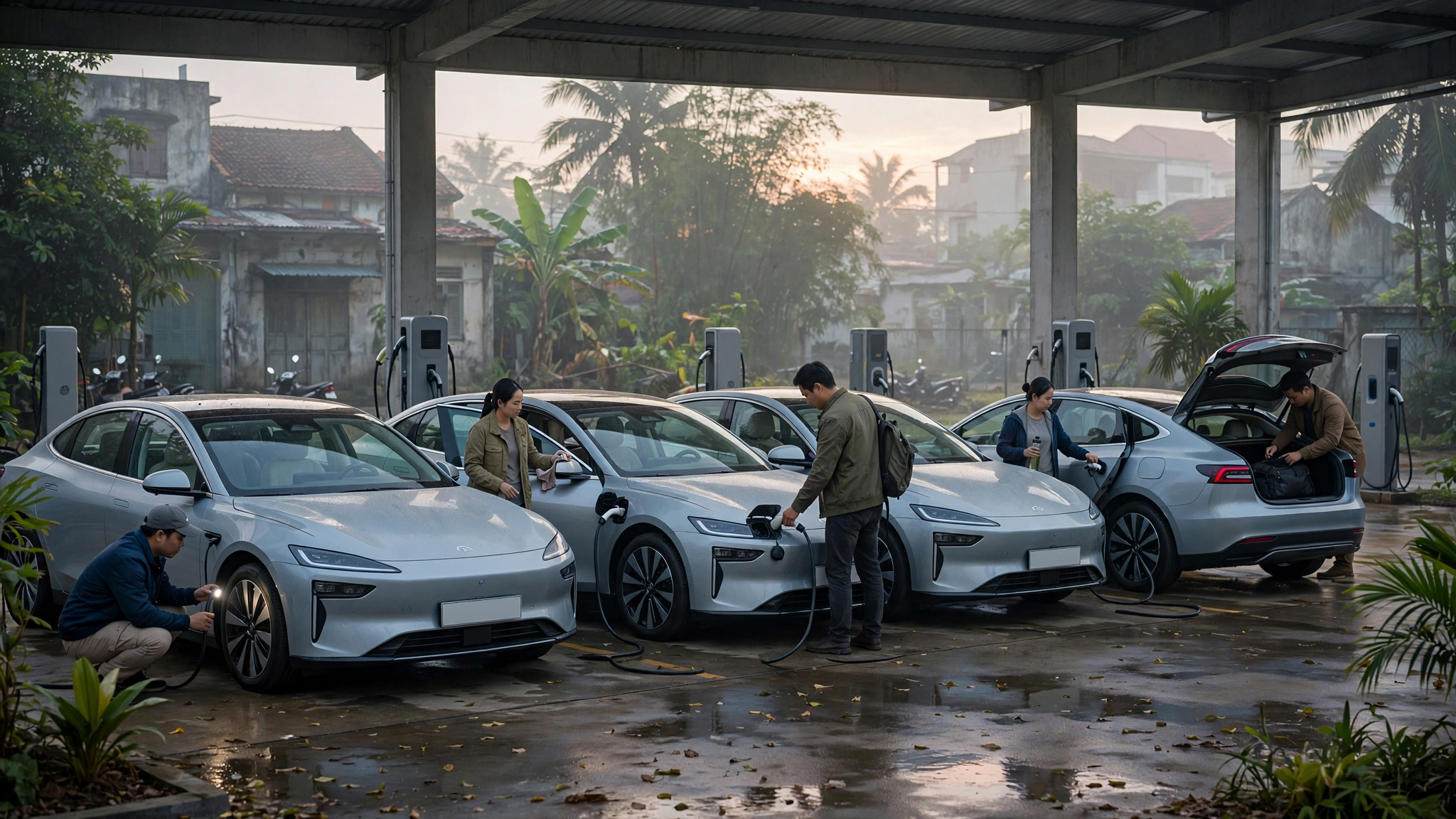
    Body image for the Decision 876 explainer showing a fleet of electric taxis at a charging depot in Vietnam at dawn

    Five years in, the conversion is visibly uneven, which is what a phased programme predicts. Reporting by the Ministry of Construction puts taxis at the front, with more than 61,000 electric taxis out of a national fleet of roughly 86,000, about 70 percent. Buses follow, converting fastest in Ho Chi Minh City at about 60 percent, with Hanoi at about 40 percent and the national rate at about 23 percent. Private adoption is larger in absolute terms: more than 300,000 electric cars are on the road, and registered electric motorbikes number between 3.5 and 4.1 million.

    The programme is also the reference point that newer instruments implement. The fee exemption in Decree 202/2026, the charger standard in QCVN 32:2026 and the Hanoi dates in Directive 20/CT-TTg are all, in effect, this programme being converted from goals into enforceable rules, desk by desk and city by city.

    Who is affected

    In the long run, everyone in the value chain: vehicle manufacturers and importers facing the 2040 production and import horizon; fuel retailers whose core product has a dated future in transport; fleet operators in taxis, buses, logistics and construction; infrastructure investors in charging and energy supply; and the ministries and provinces assigned tasks under the programme. In the short run, the most affected are urban fleets and the suppliers who electrify them, because that is where conversion is being measured first.

    Notes for investors and operators

    Read Decision 876 as a timetable, not a slogan. The 2040 stop on fossil vehicle production, assembly and import for the domestic market is the single most consequential date for manufacturing strategy in Vietnam, and it was published in 2022, which means long dated capital decisions taken today already sit inside its shadow.

    The sequencing matters as much as the dates. The programme electrifies what is ready first, fleets, cities and new infrastructure, and lets the hardest segments convert later; the implementation record so far matches that logic. Investors should therefore weight near term opportunities toward urban fleets, charging and public transport supply chains, and treat the programme's later dates as planning anchors for asset life and residual value, especially for any asset whose business case depends on selling or operating fossil vehicles in Vietnam after 2040.

    Sources and the official text

    Official full text: Decision 876/QD-TTg and the green transport programme (Industry and Trade Newspaper, Ministry of Industry and Trade, Vietnamese)

    Thu Vien Phap Luat, the road transport roadmap and targets of Decision 876/QD-TTg, including the 2040 and 2050 milestones.

    Ministry of Construction progress reporting on the programme's implementation, October 2026, for fleet conversion figures.

    About this explainer: this page is an unofficial English summary prepared by VoltViet from the official Vietnamese text, for reference only. It is not a legal translation and does not constitute legal advice. Only the Vietnamese original is authoritative. For decisions with legal or financial consequences, consult the official text and a qualified Vietnamese lawyer.

    Related reading

    More explainers from the Policy & Law desk, and reporting from the EVs & Mobility desk.

  • Hanoi’s Petrol Motorbike Clock Is Ticking: Directive 20/CT-TTg Explained

    Hanoi’s Petrol Motorbike Clock Is Ticking: Directive 20/CT-TTg Explained

    Hanoi's Petrol Motorbike Clock Is Ticking: Directive 20/CT-TTg Explained

    Most transport rules announce a direction. Directive 20/CT-TTg announced dates. Signed by the Prime Minister on 12 July 2025 as an urgent instruction on environmental pollution, it orders Hanoi to clear fossil fuel motorbikes from inside Ring Road 1 by 1 July 2026, widen the restrictions in 2028, and extend them again from 2030. The first of those dates has now passed, which makes the directive the live experiment every large Vietnamese city is watching.

    Document facts

    Issuing body: Prime Minister of Vietnam

    Document number: Directive 20/CT-TTg, on urgent and resolute tasks to prevent and address environmental pollution

    Signed: 12 July 2025

    Effective: 12 July 2025

    Status: In force; Hanoi milestones run from July 2026 to 2030

    Unofficial English summary for reference only. Not a legal translation and not legal advice. The Vietnamese text linked at the end of this page is authoritative.

    What the document does

    A directive is an instruction instrument: it does not itself create new offences, but it tasks named ministries, agencies and city governments with specific jobs and deadlines, and those jobs are then carried out through existing law and city regulations. Directive 20/CT-TTg is broad, covering air, water and waste enforcement nationwide, but its transport chapter, aimed at Hanoi, is the part with the sharpest commercial consequences.

    For Hanoi, the Prime Minister requires the city to publish a low emission zone scheme, to build out multi modal public transport with priority for electric buses and urban rail, to develop charging stations and services for clean energy vehicles, and to adopt support policies for the companies that make clean vehicles and the infrastructure they need. The Ministry of Finance is tasked with studying an environmental protection fee on vehicle emissions, and with reviewing support and incentives for green transport businesses. The Ministry of Construction is tasked with completing national emission standards for road vehicles.

    What changes in practice

    The roadmap has three steps. From 1 July 2026, no motorbike or motorcycle using fossil fuel may circulate inside Ring Road 1, the ring that encloses the historic centre of the capital. From 1 January 2028, the motorbike restriction extends across Ring Roads 1 and 2, and private cars using fossil fuel are restricted in the same area. From 2030, the measures expand again inside Ring Road 3.

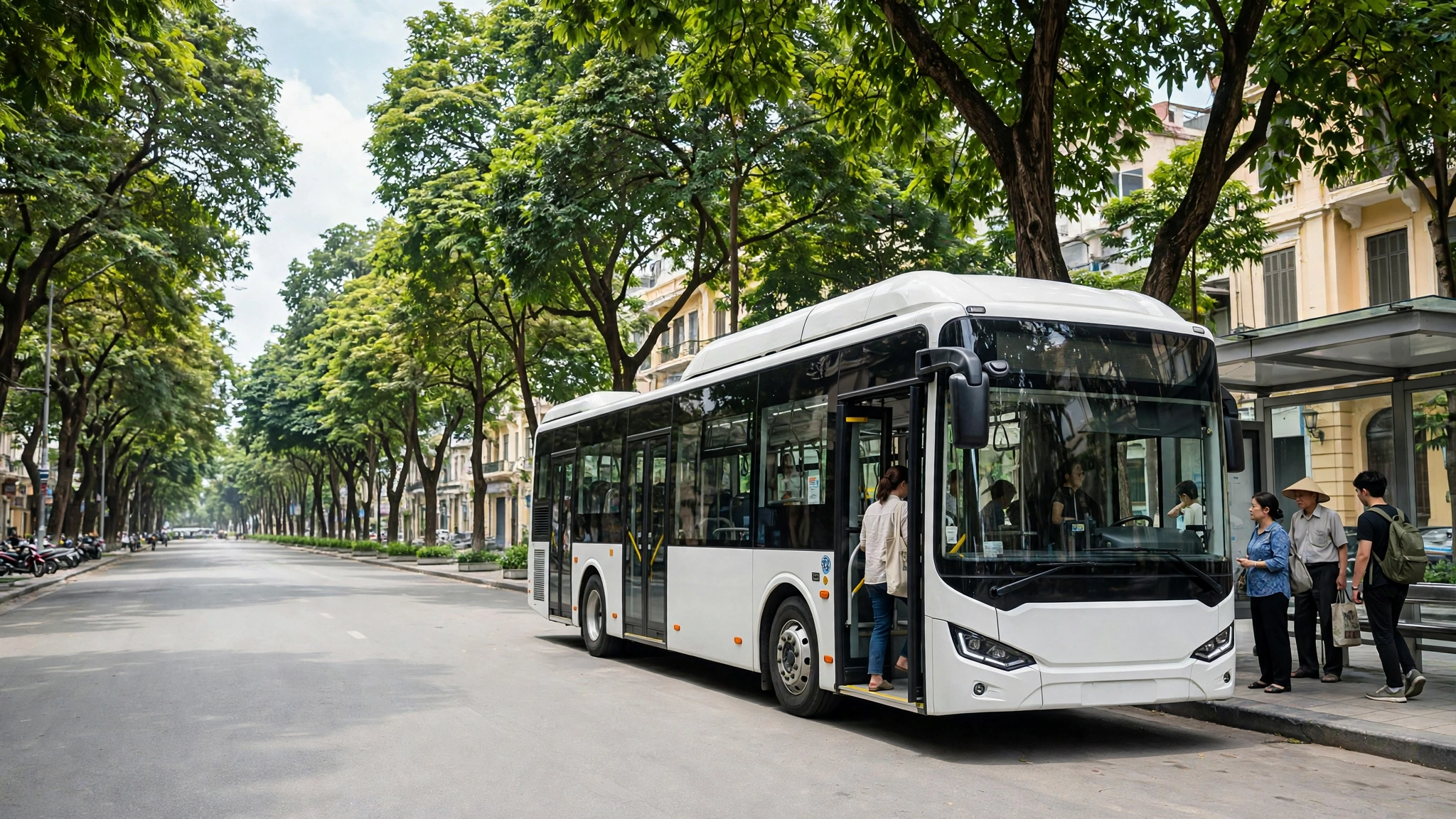
    Body image for the Directive 20/CT-TTg explainer showing an electric bus boarding passengers in central Hanoi

    The city is expected to make the restrictions workable rather than merely prohibitive. Hanoi must balance its budget and mobilise social resources to fund public transport, charging and battery swap infrastructure, and it must study raising registration fees, plate fees and parking charges for fossil fuel vehicles in the centre, with a roadmap adjusted year by year. The city's own People's Council has set the criteria and conditions for low emission zones in its Resolution 57, and a city working group has been surveying sites for charging and battery swap stations for electric motorbikes.

    The directive reaches beyond vehicles. Inside Ring Road 1, restaurants, hotels, cafes and eateries piloted a phase out of single use plastics from the fourth quarter of 2025, and environmental inspections and penalties across the capital were tightened in parallel. The first milestone date, 1 July 2026, has passed with the zone being phased in under the city's scheme; the 2028 and 2030 steps are the ones operators should now plan against.

    Who is affected

    Riders and delivery fleets feel the rule first: a petrol motorbike that cannot enter the centre loses its usefulness for exactly the trips that dominate Hanoi traffic. Dealers and manufacturers feel it as demand rotation, from petrol models to electric ones with swappable or chargeable batteries. Charging and battery swap operators gain a policy backed map of where their infrastructure is wanted. Hotels, restaurants and retailers inside Ring Road 1 carry the plastics phase out and should expect customers arriving by different means. Other large cities are affected by precedent: Hanoi is the test case for low emission zones nationally.

    Notes for investors and operators

    Demand certainty is the story. A dated, staged restriction on the incumbent fleet is the strongest demand signal a regulator can send to electric two wheeler makers, battery swap networks and electric bus suppliers, and the signal strengthens automatically in 2028 and 2030 without new decisions being required.

    The open variables are fiscal. The fee studies ordered by the directive, on registration, plates, parking and emissions, will decide how sharp the economic edge against petrol vehicles becomes in the centre; businesses modelling fleet renewal should track the Ministry of Finance work and Hanoi's annual adjustments. Enforcement design also matters: the city's phased approach rewards operators who convert early and visibly, and leaves late movers exposed if the timetable hardens.

    Sources and the official text

    Official full text: Full text of Directive 20/CT-TTg (Thu Vien Phap Luat, Vietnamese)

    Hanoi People's Council, Resolution 57, on criteria and conditions for low emission zones in the capital.

    Hanoi Department of Construction statements on low emission zone implementation and charging and battery swap site surveys, 2026.

    About this explainer: this page is an unofficial English summary prepared by VoltViet from the official Vietnamese text, for reference only. It is not a legal translation and does not constitute legal advice. Only the Vietnamese original is authoritative. For decisions with legal or financial consequences, consult the official text and a qualified Vietnamese lawyer.

    Related reading

    More explainers from the Policy & Law desk, and reporting from the EVs & Mobility desk.
  • The Carbon Rulebook Gets Teeth: Decree 119/2025 and the Road to Auctions in 2029

    The Carbon Rulebook Gets Teeth: Decree 119/2025 and the Road to Auctions in 2029

    The Carbon Rulebook Gets Teeth: Decree 119/2025 and the Road to Auctions in 2029

    Decree 119/2025/ND-CP is the amendment that turned Vietnam's carbon market from a distant promise into a dated programme. Signed on 9 June 2025 and effective from 1 August 2025, it rewrites core parts of Decree 06/2022, the framework decree on greenhouse gas mitigation, pulling the first allowance allocations forward to 2025 and fixing the year, 2029, when the market stops being a pilot and starts auctioning allowances.

    Document facts

    Issuing body: Government of Vietnam

    Document number: Decree 119/2025/ND-CP, amending and supplementing Decree 06/2022/ND-CP on greenhouse gas mitigation and ozone layer protection

    Signed: 9 June 2025

    Effective: 1 August 2025

    Status: In force; the consolidated framework has been amended again since, most recently in 2026

    Unofficial English summary for reference only. Not a legal translation and not legal advice. The Vietnamese text linked at the end of this page is authoritative.

    What the document does

    Decree 119/2025 rewrites the market roadmap inside Decree 06/2022. For the period to the end of 2028, the state commits to building the National Registration System for greenhouse gases, allowances and credits, pilot operating the domestic carbon exchange, running mechanisms for the exchange and offsetting of domestic credits, and building the capacity of regulators, organisations and individuals to take part. From 2029, the roadmap completes the market's legal framework, introduces auctions of emission allowances, and organises the market for connection with regional and international carbon markets.

    The amendment also brings the compliance calendar forward. Facilities on the national greenhouse gas inventory list, beginning with thermal power plants, steel works and cement plants, receive pilot allowance allocations for the 2025 to 2026 period, with allocation expanding across 2027 to 2030 under sector roadmaps. Allocation uses historical emissions and product benchmarks, and it is free of charge during the pilot.

    What changes in practice

    Covered facilities now hold a real asset with rules attached. Allowances sit on the national registry, where ownership, borrowing, surrender, transfer and offsetting are recorded. A facility that emits more than its allocation has three regulated ways to close the gap: buy allowances, surrender carbon credits, or borrow from its own future. Credits may offset at most 30 percent of the excess, a ceiling that keeps most of the pressure on allowances and on the facility's own abatement. Borrowing is capped at 15 percent of the following period's allocation and must be repaid within that period's compliance cycle.

    Body image for the Decree 119/2025 explainer showing an engineer taking emissions measurements at a Vietnamese plant

    The measurement system underneath tightens in parallel. Facilities must prepare annual greenhouse gas mitigation reports and send them to their provincial People's Committee before 31 March each year, starting from the 2027 reporting cycle, with provinces consolidating results to the Ministry of Agriculture and Environment. One carbon credit represents one tonne of carbon dioxide equivalent, and the registry is the single record of who owns what.

    The machinery has already started to move. Allocations for the pilot period have been issued to the first group of power, steel and cement facilities, and pilot trading on the exchange, whose operating rules sit in Decree 29/2026, began in 2026.

    Who is affected

    The first circle is heavy industry: thermal power, steel and cement facilities on the inventory list, which must now run emissions accounting, registry accounts and compliance planning as routine functions. The second circle is every other facility on the national inventory list across energy, industry, transport, construction, agriculture and waste, which should expect allocation to reach them in the expansion to 2030. The third circle is the supply side of the market: credit project developers, verifiers, consultants and the banks that finance abatement against a future allowance price.

    Notes for investors and operators

    The single most important planning fact is the 2029 step change. Free allocation and a quiet pilot give way to auctions, which convert carbon from an administrative topic into a cash cost with a market price. Capital expenditure approved today for plants in covered sectors should be tested against a paid allowance world, not the free pilot.

    Second, the 30 percent offset ceiling shapes the credit market. Demand for credits is real but capped, so credit projects should be underwritten on conservative volumes and prices, with the offset limit treated as a structural feature rather than a detail. Third, data quality is the foundation everything else sits on: inventories and mitigation reports that cannot survive verification will undermine allocation, borrowing and surrender alike. Companies that invest early in measurement, reporting and verification are buying compliance insurance at the cheapest point in the cycle.

    Sources and the official text

    Official full text: Full text of Decree 119/2025/ND-CP (Thu Vien Phap Luat, Vietnamese)

    Government of Vietnam, Decree 06/2022/ND-CP on greenhouse gas mitigation and ozone layer protection, as amended, for the consolidated market framework.

    Government of Vietnam, Decree 29/2026/ND-CP on the domestic carbon exchange, for the operating rules that implement the roadmap.

    About this explainer: this page is an unofficial English summary prepared by VoltViet from the official Vietnamese text, for reference only. It is not a legal translation and does not constitute legal advice. Only the Vietnamese original is authoritative. For decisions with legal or financial consequences, consult the official text and a qualified Vietnamese lawyer.

    Related reading

    More explainers from the Policy & Law desk, and reporting from the Green Economy desk. See also our analysis of the exchange in practice: Seven Trades and 1,310 Allowances: Vietnam’s Carbon Exchange Finds Its First Price.

  • Vietnam’s Carbon Exchange Now Has an Operating Rulebook: Decree 29/2026 Explained

    Vietnam’s Carbon Exchange Now Has an Operating Rulebook: Decree 29/2026 Explained

    Vietnam's Carbon Exchange Now Has an Operating Rulebook: Decree 29/2026 Explained

    A carbon market is only as real as its plumbing. Decree 29/2026/ND-CP, issued by the Government on 19 January 2026 and effective the same day, supplies that plumbing for Vietnam: it is the first complete rulebook for organising and operating the domestic carbon exchange, covering registration, custody, trading and settlement of emission allowances and carbon credits.

    Document facts

    Issuing body: Government of Vietnam

    Document number: Decree 29/2026/ND-CP, on the domestic carbon exchange

    Signed: 19 January 2026

    Effective: 19 January 2026

    Status: In force; the exchange operates on a pilot basis to 31 December 2028

    Unofficial English summary for reference only. Not a legal translation and not legal advice. The Vietnamese text linked at the end of this page is authoritative.

    What the document does

    The decree runs to six chapters and thirty five articles. It defines what may be traded on the exchange: greenhouse gas emission allowances and carbon credits that qualify for trading under Decree 06/2022/ND-CP, the framework decree on greenhouse gas mitigation, as amended by Decree 119/2025/ND-CP. Units that do not qualify under that framework cannot be listed, however they were created.

    It then builds the market around a register first principle. Before an allowance or a credit can be deposited or traded, it must be registered on the National Registration System managed by the Ministry of Agriculture and Environment. The ministry records the information on each unit and its owner, issues a single unified domestic code, and sends the resulting lists to the securities infrastructure that runs the market.

    What changes in practice

    The operating roles are assigned to institutions that already run Vietnam's securities market. The Hanoi Stock Exchange, HNX, organises and operates the trading system for carbon. The Vietnam Securities Depository and Clearing Corporation, VSDC, performs custody and settlement. The Vietnam Stock Exchange supervises the market as a whole. Trading members are securities companies approved to join the carbon depository and settlement system, and each participant trades through a single dedicated carbon trading account, kept fully separate from its other trading activity.

    Body image for the Decree 29/2026 explainer showing forestry technicians measuring trees for a carbon project in Vietnam

    Settlement discipline is strict by design. Trading is organised so that a seller must hold the units and a buyer must hold the funds before a trade is executed, and results are recorded on the system at the time of the transaction. For participants, the practical consequence is that carbon behaves like a security operationally, with the same account opening, custody and reporting habits, even though what changes hands is a tonne of carbon dioxide equivalent.

    The cost of learning the market is deliberately low during the pilot. Under the roadmap article of the decree, VSDC, the Vietnam Stock Exchange and HNX charge no service fees on the domestic carbon exchange during the pilot period to the end of 2028. From 1 January 2029, fees apply as provided by law.

    Who is affected

    The first circle is the covered facilities, initially thermal power, steel and cement plants holding allocated allowances, which now have a defined venue and procedure for balancing their positions. The second circle is the supply side: project developers generating carbon credits, from forestry to renewables and methane capture, who must register their credits before they can reach a buyer. The third circle is financial: securities companies acting as trading members, and the advisers and verifiers who will build services around the market.

    Notes for investors and operators

    The choice to build on securities infrastructure is the strategic signal. Vietnam did not create a bespoke platform with untested operators; it gave the carbon market the same rails, surveillance culture and settlement discipline as its stock market, which shortens the learning curve for institutional participants.

    Expect liquidity to follow compliance deadlines rather than enthusiasm. The pilot runs to the end of 2028, the first surrenders concentrate buying, and fee free trading removes one excuse for waiting. Organisations that expect to be short of allowances should complete account opening and custody arrangements early, while the market is quiet, rather than in the first surrender season. For credit developers, the registry first rule means documentation quality decides market access: a credit that cannot be registered cannot be sold on the exchange at any price.

    Sources and the official text

    Official full text: Full text of Decree 29/2026/ND-CP (Thu Vien Phap Luat, English version)

    Government of Vietnam, Decree 06/2022/ND-CP on greenhouse gas mitigation and ozone layer protection, as amended by Decree 119/2025/ND-CP, for the eligibility of traded units.

    Ministry of Finance and Hanoi Stock Exchange materials on the operation of the domestic carbon exchange, 2026.

    About this explainer: this page is an unofficial English summary prepared by VoltViet from the official Vietnamese text, for reference only. It is not a legal translation and does not constitute legal advice. Only the Vietnamese original is authoritative. For decisions with legal or financial consequences, consult the official text and a qualified Vietnamese lawyer.

    Related reading

    More explainers from the Policy & Law desk, and reporting from the Green Economy desk. See also our analysis of the exchange in practice: Seven Trades and 1,310 Allowances: Vietnam’s Carbon Exchange Finds Its First Price.

  • Rooftop Solar Can Now Sell Half Its Surplus: Decree 243/2026 Explained

    Rooftop Solar Can Now Sell Half Its Surplus: Decree 243/2026 Explained

    Rooftop Solar Can Now Sell Half Its Surplus: Decree 243/2026 Explained

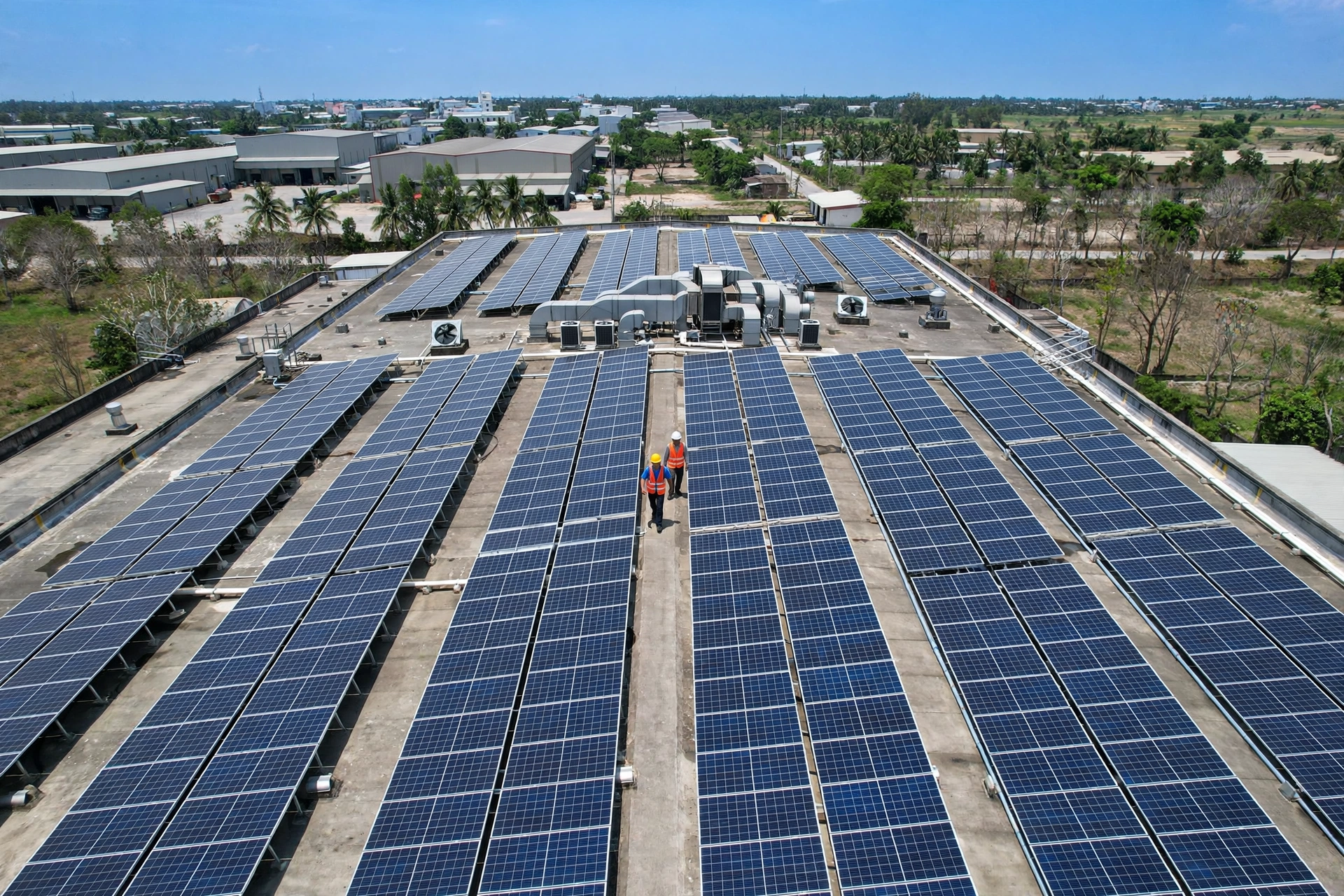
    The economics of a factory rooftop in Vietnam changed on 26 June 2026. Decree 243/2026/ND-CP, signed and effective the same day, more than doubles the share of surplus rooftop solar electricity that a self generation system may sell, from 20 percent to 50 percent of output, and it loosens the rules around direct power purchase at the same time.

    Document facts

    Issuing body: Government of Vietnam

    Document number: Decree 243/2026/ND-CP, amending Decree 57/2025/ND-CP on direct power purchase and Decree 58/2025/ND-CP on renewable and new energy development

    Signed: 26 June 2026

    Effective: 26 June 2026

    Status: In force

    Unofficial English summary for reference only. Not a legal translation and not legal advice. The Vietnamese text linked at the end of this page is authoritative.

    What the document does

    Decree 243/2026 amends the two decrees that have structured Vietnam's new power market since March 2025. Decree 57/2025 sets the direct power purchase mechanism, known as DPPA, under which large consumers buy renewable electricity directly from generators. Decree 58/2025 details the development of renewable and new energy, including the rules for self generated, self consumed power such as rooftop solar on factories, warehouses and homes.

    The headline amendment concerns surplus electricity from self generation systems. A rooftop system built mainly to supply its own site usually produces more than the site can use at sunny midday hours. The question the decree answers is how much of that surplus may be sold, to whom, and at what price.

    What changes in practice

    The cap on surplus sales rises from 20 percent to 50 percent of the system's generation, measured at the output of the inverter. That measurement point matters: it is the electricity the system actually produces, not an estimate, and it is the basis on which the 50 percent is calculated.

    Body image for the Decree 243/2026 explainer showing rooftop solar panels with battery storage containers in Vietnam

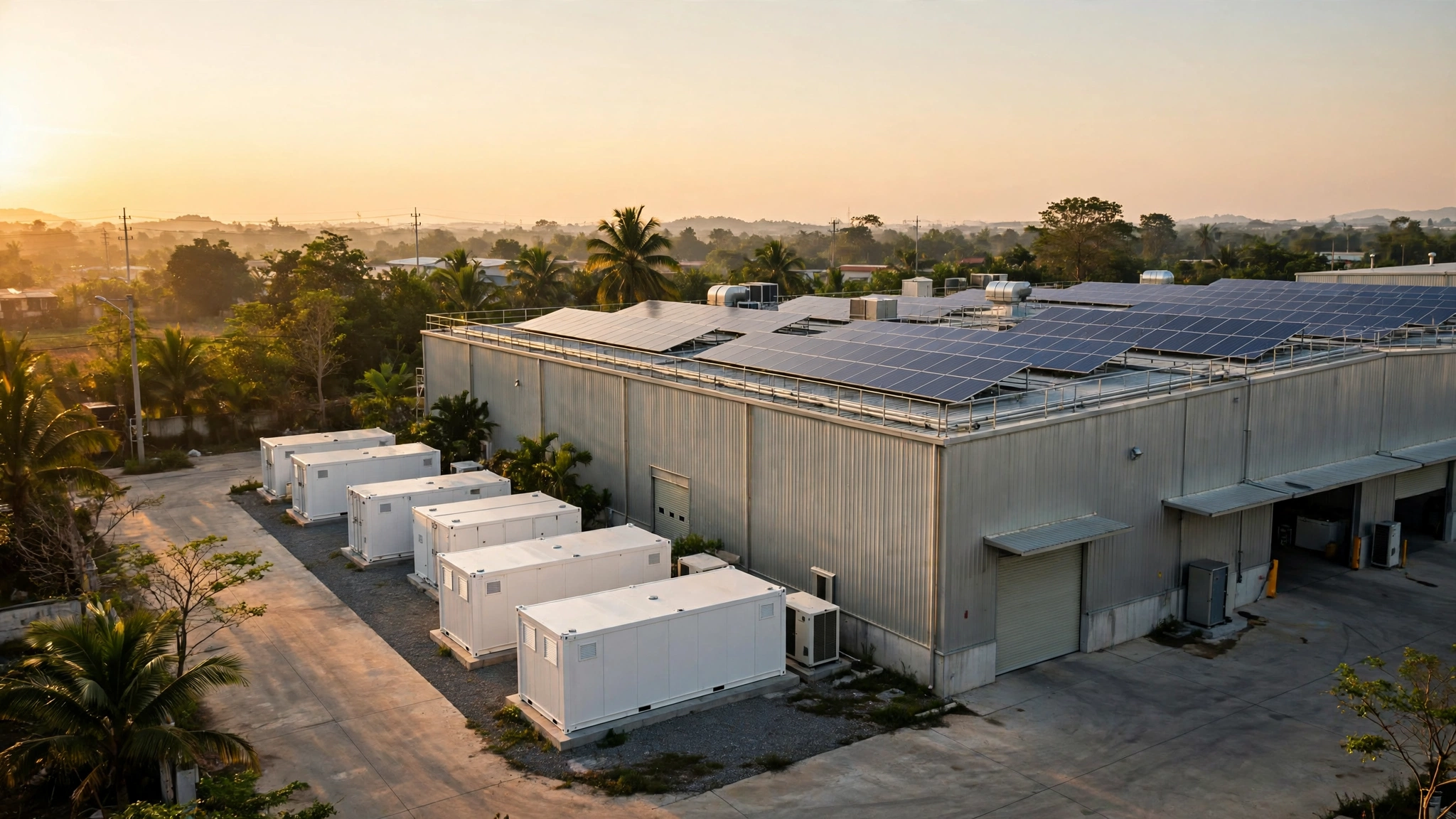
    Two further changes widen the door. First, electricity discharged from a storage system that was charged by the rooftop array now counts as surplus solar electricity for the first time, which means pairing panels with batteries no longer strands stored energy outside the sales rules. Second, the 50 percent ceiling is not absolute during the transition: until 31 December 2030, the seller and the buyer may agree a higher surplus ratio where the local grid can absorb the power and safe operation is ensured. Areas without the national grid, such as mountainous, border and island communities, face no cap at all.

    The price rule is formula based. Surplus electricity is paid at the average market electricity price of the preceding year, as published by the system and market operator, and the price may not exceed the top of the price frame for ground mounted solar power. Sales from systems on public asset buildings must also comply with the law on public assets.

    Who is affected

    Factory and warehouse owners with rooftop arrays are the direct winners, especially exporters whose midday production pattern left them curtailing or wasting surplus under the 20 percent cap. Solar developers and installers gain a stronger sales proposition. Storage providers gain a defined revenue route. On the other side of the meter, Vietnam Electricity and its power corporations remain the default buyers of surplus and the judges of grid capacity, and large consumers using DPPA contracts see the surrounding rules adjusted in the same decree.

    Notes for investors and operators

    Model the 50 percent cap as the bankable case and anything above it as upside. Vietnam Electricity has been clear in its guidance that sales above 50 percent are not automatic: the buyer assesses, case by case, whether the local network can take the power within technical limits. Projects that need the higher ratio should engage the local power company early and document the grid study before committing capital.

    The storage clarification deserves attention in financial models, because it converts batteries from a pure self consumption tool into kit that can support a sales strategy. Finally, note the sunset. The flexibility to agree above 50 percent runs to the end of 2030; from 2031 the 50 percent cap is the ceiling. Contracts signed today should say expressly what happens to surplus volumes when that date passes.

    Sources and the official text

    Official full text: Decree 243/2026/ND-CP and the new rooftop solar mechanisms (Vietnam.vn, official external information portal, Vietnamese)

    Government of Vietnam, Decree 57/2025/ND-CP on direct power purchase and Decree 58/2025/ND-CP on renewable and new energy development, as amended by Decree 243/2026/ND-CP.

    Vietnam Electricity guidance on the application of the surplus ratio, June 2026.

    About this explainer: this page is an unofficial English summary prepared by VoltViet from the official Vietnamese text, for reference only. It is not a legal translation and does not constitute legal advice. Only the Vietnamese original is authoritative. For decisions with legal or financial consequences, consult the official text and a qualified Vietnamese lawyer.

    Related reading

    More explainers from the Policy & Law desk, and reporting from the Clean Energy desk.

  • One Standard for Every Public Charger: QCVN 32:2026 and Circular 61/2026 Explained

    One Standard for Every Public Charger: QCVN 32:2026 and Circular 61/2026 Explained

    One Standard for Every Public Charger: QCVN 32:2026 and Circular 61/2026 Explained

    Vietnam's charging networks have grown faster than the rules that govern them. That changes on 1 July 2027, when QCVN 32:2026/BCT, the country's first national technical regulation for electric vehicle charging, becomes mandatory. It arrives through Circular 61/2026/TT-BCT, signed by the Ministry of Industry and Trade on 29 September 2026.

    Document facts

    Issuing body: Ministry of Industry and Trade

    Document number: Circular 61/2026/TT-BCT, promulgating national technical regulation QCVN 32:2026/BCT on electric vehicle charging pillars and stations

    Signed: 29 September 2026

    Effective: 1 July 2027

    Status: Issued; mandatory from 1 July 2027, with a transition path for chargers already lawfully installed

    Unofficial English summary for reference only. Not a legal translation and not legal advice. The Vietnamese text linked at the end of this page is authoritative.

    What the document does

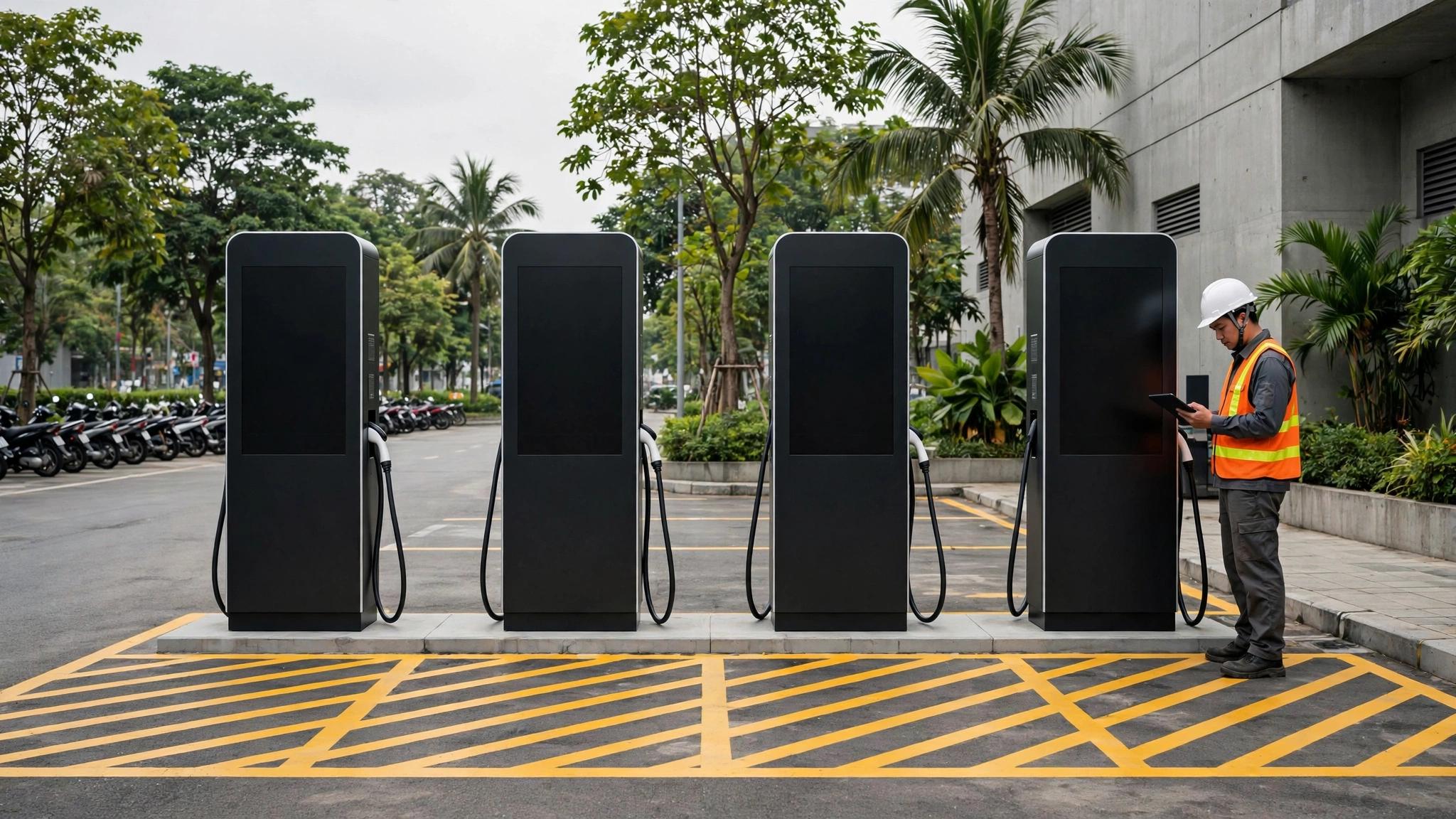
    QCVN 32:2026 sets technical and management requirements for the charging equipment itself and for the stations built around it. Its scope covers the charging pillars, the cabling, distribution and connection hardware, the layout and installation of stations, electrical safety, control systems and the management of station operation.

    The regulation is written for charging stations in public places, collective parking areas, rest stops and similar sites, serving battery electric and plug in hybrid road vehicles. The electrical envelope is wide: supply up to 1,000 volts AC or 1,500 volts DC, and output up to the same limits, which covers everything from destination AC posts to high power DC fast chargers.

    The exclusions are equally deliberate. Wireless charging, in cable control and protection devices for mode 2 charging, on board chargers, off vehicle supply from standalone energy storage, charging for rail, special purpose, off road or industrial vehicles, and units used only for internal testing, research, display or training all sit outside the regulation.

    What changes in practice

    The most commercially significant rule is interoperability. A charging station in a public place must be usable by any electric vehicle whose connector, charging mode and configuration are compatible with the station. Network operators cannot design public sites that only serve one brand's cars, although the open access rule does not extend to charging stations in basement or indoor parking.

    Body image for the QCVN 32:2026 explainer showing a charging connector under technical inspection

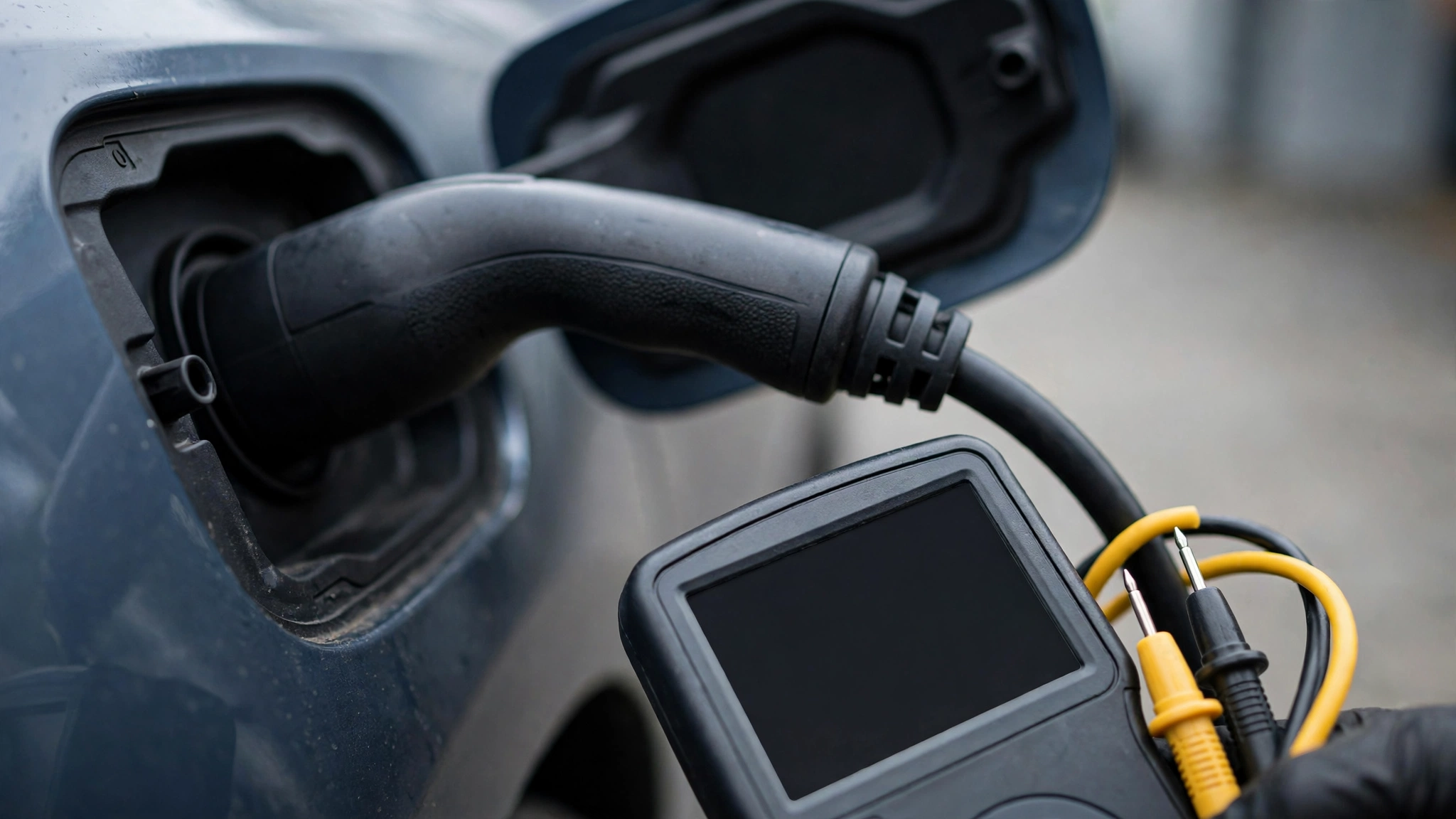
    Paid charging becomes a regulated transaction. Where charging is sold, the driver must be shown the energy delivered, the charging time, the price or pricing method and the total amount, before or during the transaction. Transaction data must be protected against alteration and must be retrievable, so that billing can be checked and disputes resolved after the fact.

    For the installed base, the transition is firm but not abrupt. Chargers that were lawfully manufactured, imported or installed before the effective date may keep operating. Their owners and operators must review the equipment against the regulation's safety requirements within six months of 1 July 2027 and complete any remediation within twenty four months. Where an inspection finds a direct safety risk, the equipment must be dealt with immediately rather than on the transition timetable.

    Who is affected

    Charge point operators carry the largest compliance load, followed by the manufacturers and importers whose equipment must meet the regulation to be sold and installed for public use. Property owners are pulled in as well: shopping centres, office towers, rest stop operators and parking companies that host public chargers share the practical duty to run compliant sites. Drivers are the beneficiaries, through interoperable access and transparent billing.

    Notes for investors and operators

    Treat 1 July 2027 as a design freeze date. Any station planned now will open into the regulated era, so procurement specifications should be written against QCVN 32:2026 from the start, including the display and data retention requirements for paid charging, which affect software and back office systems as much as hardware.

    The installed base audit is the immediate task for networks already operating: inventory every site, test it against the safety requirements, and programme remediation inside the twenty four month window. For new entrants, the standard lowers a different kind of risk. A single national rulebook, with open access at public sites, makes Vietnam's charging market more legible to foreign capital than a patchwork of local practice, and it rewards operators who build interoperable networks over closed ones.

    Sources and the official text

    Official full text: Issuance of QCVN 32:2026/BCT and Circular 61/2026/TT-BCT (Industry and Trade Newspaper, Ministry of Industry and Trade, Vietnamese)

    Vietnam.vn, the official external information portal of Vietnam, on the scope, open access rule and transition timetable of QCVN 32:2026, October 2026.

    Ministry of Industry and Trade, Circular 61/2026/TT-BCT and the text of QCVN 32:2026/BCT.

    About this explainer: this page is an unofficial English summary prepared by VoltViet from the official Vietnamese text, for reference only. It is not a legal translation and does not constitute legal advice. Only the Vietnamese original is authoritative. For decisions with legal or financial consequences, consult the official text and a qualified Vietnamese lawyer.

    Related reading

    More explainers from the Policy & Law desk, and reporting from the EVs & Mobility desk.

  • Zero Registration Fee for Electric Cars to 2030: Decree 202/2026 Explained

    Zero Registration Fee for Electric Cars to 2030: Decree 202/2026 Explained

    Zero Registration Fee for Electric Cars to 2030: Decree 202/2026 Explained

    Vietnam has locked in its longest electric car incentive yet. Decree 202/2026, signed in June 2026, writes a zero first registration fee for battery electric cars into law for a window running from 1 March 2027 to 31 December 2030. It replaces a shorter predecessor decree and removes a price cliff that had been hanging over every electric car sold in the country.

    Document facts

    Issuing body: Government of Vietnam

    Document number: Decree 202/2026/ND-CP, amending Decree 10/2022/ND-CP on registration fees

    Signed: 8 June 2026

    Effective: 1 March 2027

    Status: Issued; the zero rate applies from 1 March 2027 to 31 December 2030 and the decree replaces Decree 51/2025/ND-CP

    Unofficial English summary for reference only. Not a legal translation and not legal advice. The Vietnamese text linked at the end of this page is authoritative.

    What the document does

    Decree 202/2026 is a short, surgical amendment. It rewrites a single provision, point c of clause 5 of Article 8, in Decree 10/2022/ND-CP, the decree that governs the registration fee charged when assets such as cars are registered for the first time. That provision is the one that sets the fee treatment of battery electric cars.

    The amended text states that the first registration fee rate for a battery electric car is 0 percent, and it fixes the period during which that rate applies: from 1 March 2027, the day the decree takes effect, through 31 December 2030. The decree also defines its scope carefully. A battery electric car for this purpose is a car classified as running solely on battery electric power under the classification rules of the Minister of Construction.

    What changes in practice

    The registration fee is a one off charge paid when a car is first registered, calculated as a percentage of the vehicle's taxable value. For petrol cars the standard frame is 10 percent, with Hanoi applying 12 percent, so on a mid priced family car the fee is a visible five figure sum in US dollar terms and a real line in the on the road price. A zero rate removes that line entirely for an electric car.

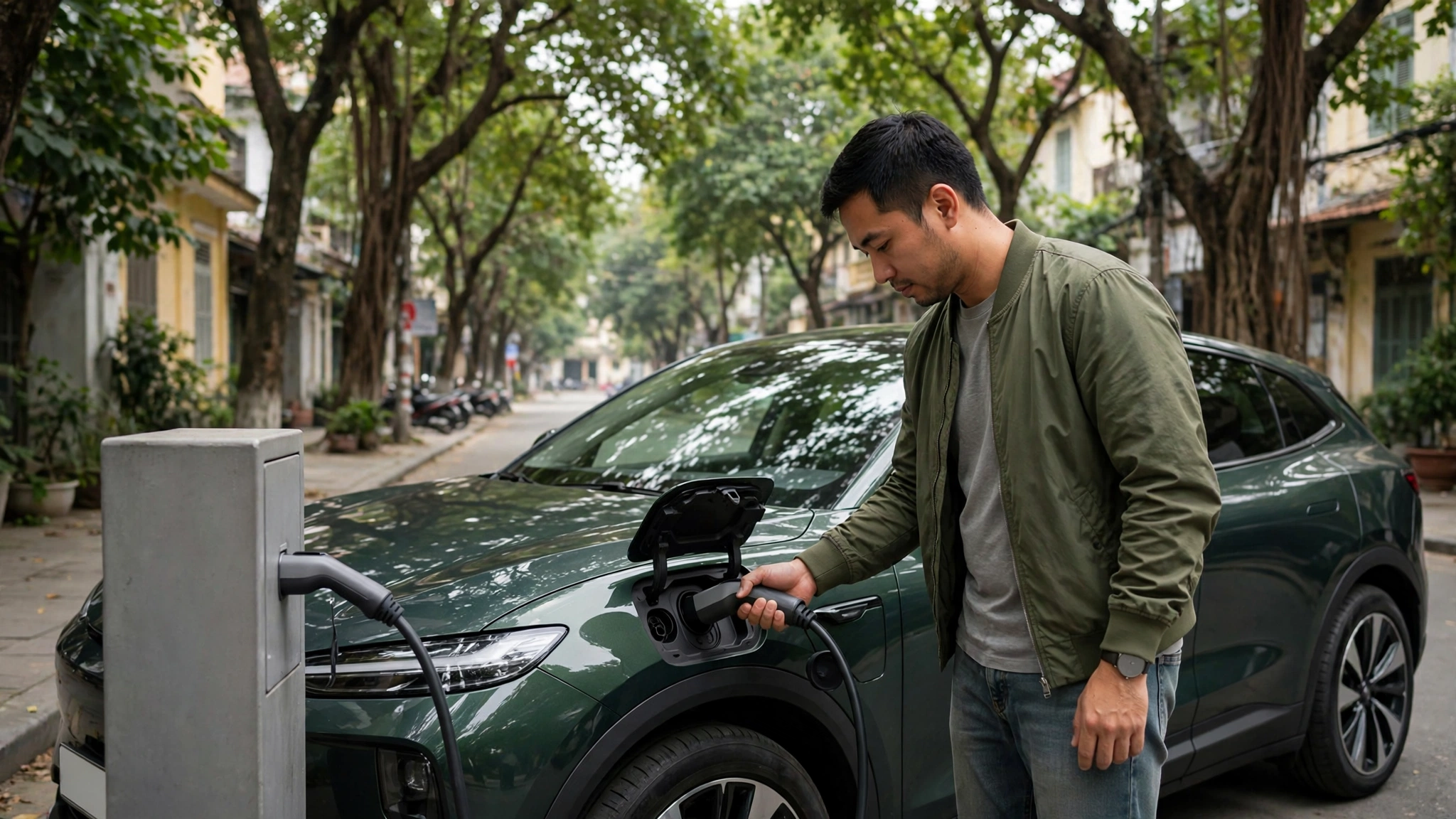
    Body image for the Decree 202/2026 explainer showing a driver plugging in an electric car at a public charger in Vietnam

    The bigger change is the removal of a step down. Under the original Decree 10/2022 schedule, battery electric cars paid zero for three years from March 2022 and were then due to pay half the petrol rate. Decree 51/2025, issued in February 2025, reset the clock: zero for two years from 1 March 2025, then half rate for the following three years. On that schedule, buyers would have started paying a half fee from March 2027. Decree 202/2026 cancels that step. The zero rate now runs without interruption from the current regime through the end of 2030.

    Two limits matter. First, the zero rate covers the first registration only; later transfers follow the general rules. Second, it covers pure battery electric cars only. Hybrid and plug in hybrid models stay outside the zero rate, a distinction that follows the Ministry of Construction classification rather than marketing labels.

    Who is affected

    Buyers of new electric cars gain most directly, whether private households or companies. Fleet buyers gain at scale: for a taxi or ride hailing operator registering hundreds of cars, the fee saving multiplies per vehicle and feeds straight into fleet replacement economics. Carmakers and importers gain a stable pricing assumption through 2030, because the fee no longer has to be modelled as a rising cost from 2027. Provincial registration offices apply the rate but collect nothing on qualifying cars.

    Notes for investors and operators

    The first point is certainty. The window is long, close to four years, and it was announced more than eight months before it takes effect, so pricing, marketing and demand planning for 2027 to 2030 can treat the zero fee as settled law rather than a hope. The second point is continuity: because Decree 51/2025 already sets a zero rate until the end of February 2027, there is no gap and no half fee interlude between the two regimes.

    The third point is classification risk. The benefit turns on a car being classified as a battery electric car under Ministry of Construction rules, so product planners should confirm the classification of each model before advertising the saving. Finally, read this decree alongside the rest of the 2026 rule stack: the QCVN 32:2026 charging standard and the low emission zone roadmap are shaping where electric cars can charge and where petrol vehicles will be restricted, and the fee exemption lands inside that wider push.

    Sources and the official text

    Official full text: Official text of Decree 202/2026/ND-CP (Thu Vien Phap Luat, Vietnamese)

    Government of Vietnam, Decree 10/2022/ND-CP on registration fees, as amended, for the base fee framework and the earlier incentive schedule.

    Government of Vietnam, Decree 51/2025/ND-CP, the predecessor incentive decree replaced by Decree 202/2026.

    About this explainer: this page is an unofficial English summary prepared by VoltViet from the official Vietnamese text, for reference only. It is not a legal translation and does not constitute legal advice. Only the Vietnamese original is authoritative. For decisions with legal or financial consequences, consult the official text and a qualified Vietnamese lawyer.

    Related reading

    More explainers from the Policy & Law desk, and reporting from the EVs & Mobility desk.

VoltViet

Vietnam’s green future, in English. Green economy, clean energy, electric mobility and technology from Vietnam, for a global audience.

© 2026 VoltViet · Ho Chi Minh City, Vietnam

Made in Vietnam · Read everywhere