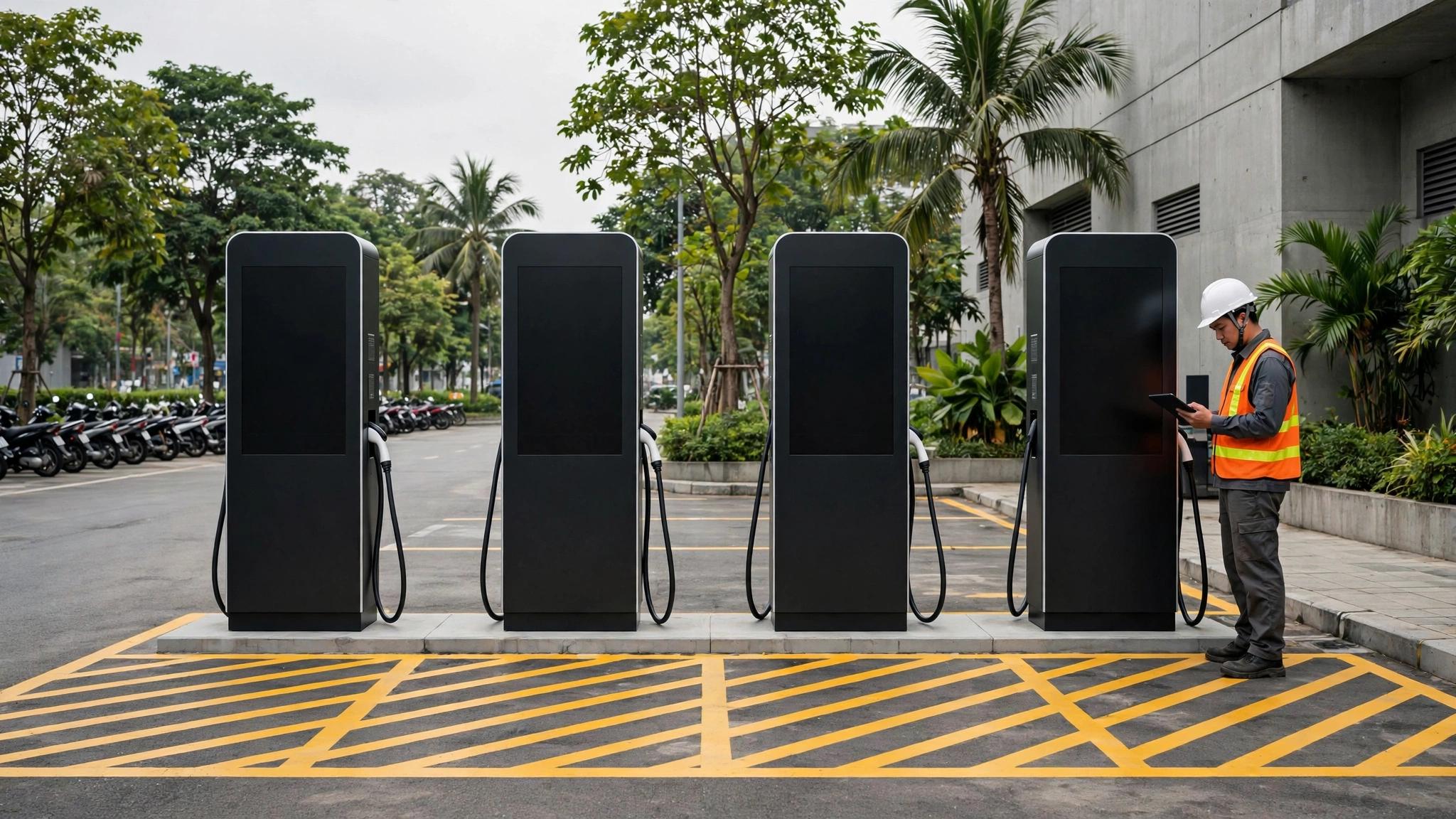
One Standard for Every Public Charger: QCVN 32:2026 and Circular 61/2026 Explained
Vietnam's charging networks have grown faster than the rules that govern them. That changes on 1 July 2027, when QCVN 32:2026/BCT, the country's first national technical regulation for electric vehicle charging, becomes mandatory. It arrives through Circular 61/2026/TT-BCT, signed by the Ministry of Industry and Trade on 29 September 2026.
Document facts
Issuing body: Ministry of Industry and Trade
Document number: Circular 61/2026/TT-BCT, promulgating national technical regulation QCVN 32:2026/BCT on electric vehicle charging pillars and stations
Signed: 29 September 2026
Effective: 1 July 2027
Status: Issued; mandatory from 1 July 2027, with a transition path for chargers already lawfully installed
Unofficial English summary for reference only. Not a legal translation and not legal advice. The Vietnamese text linked at the end of this page is authoritative.
What the document does
QCVN 32:2026 sets technical and management requirements for the charging equipment itself and for the stations built around it. Its scope covers the charging pillars, the cabling, distribution and connection hardware, the layout and installation of stations, electrical safety, control systems and the management of station operation.
The regulation is written for charging stations in public places, collective parking areas, rest stops and similar sites, serving battery electric and plug in hybrid road vehicles. The electrical envelope is wide: supply up to 1,000 volts AC or 1,500 volts DC, and output up to the same limits, which covers everything from destination AC posts to high power DC fast chargers.
The exclusions are equally deliberate. Wireless charging, in cable control and protection devices for mode 2 charging, on board chargers, off vehicle supply from standalone energy storage, charging for rail, special purpose, off road or industrial vehicles, and units used only for internal testing, research, display or training all sit outside the regulation.
What changes in practice
The most commercially significant rule is interoperability. A charging station in a public place must be usable by any electric vehicle whose connector, charging mode and configuration are compatible with the station. Network operators cannot design public sites that only serve one brand's cars, although the open access rule does not extend to charging stations in basement or indoor parking.
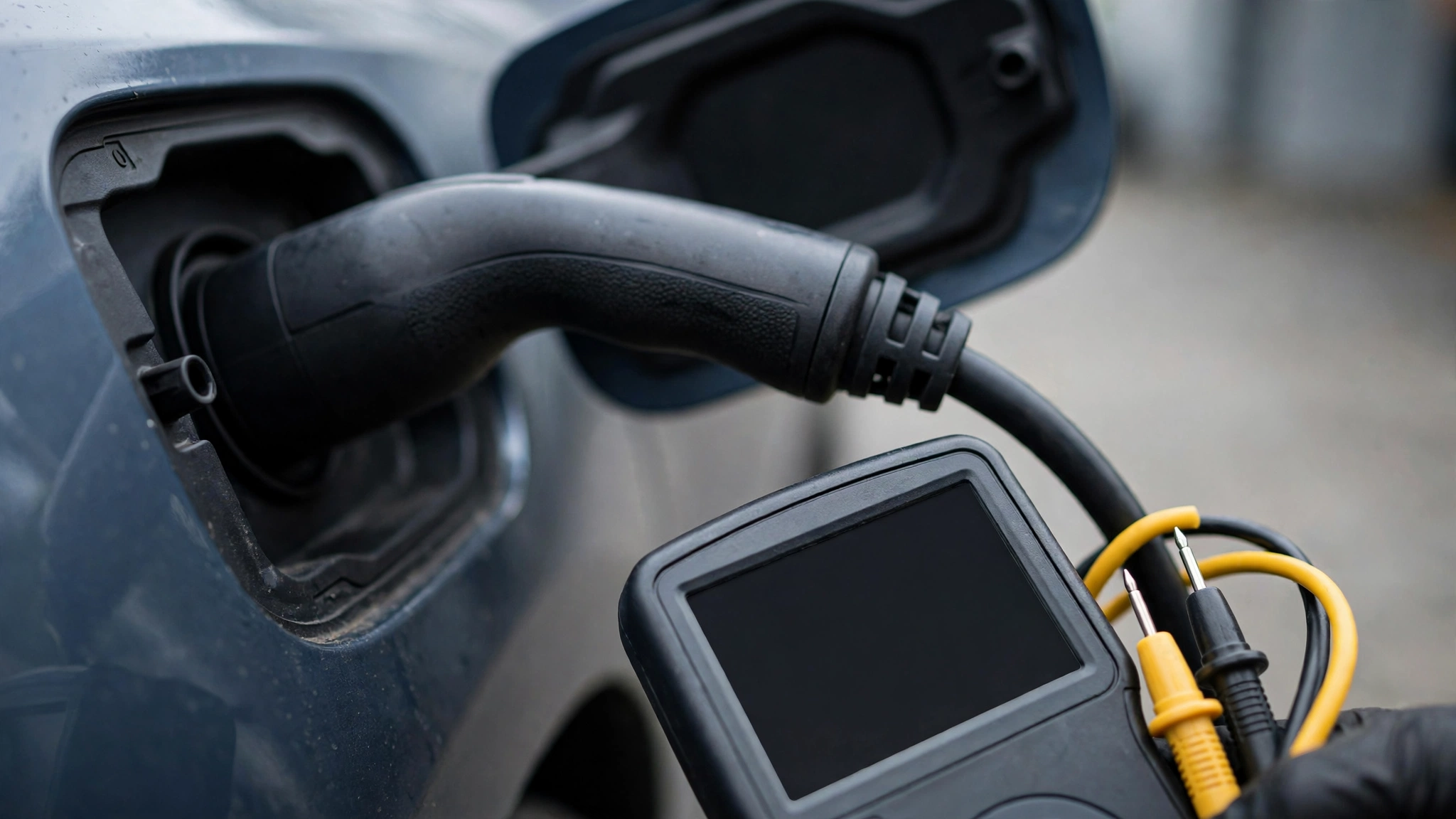
Paid charging becomes a regulated transaction. Where charging is sold, the driver must be shown the energy delivered, the charging time, the price or pricing method and the total amount, before or during the transaction. Transaction data must be protected against alteration and must be retrievable, so that billing can be checked and disputes resolved after the fact.
For the installed base, the transition is firm but not abrupt. Chargers that were lawfully manufactured, imported or installed before the effective date may keep operating. Their owners and operators must review the equipment against the regulation's safety requirements within six months of 1 July 2027 and complete any remediation within twenty four months. Where an inspection finds a direct safety risk, the equipment must be dealt with immediately rather than on the transition timetable.
Who is affected
Charge point operators carry the largest compliance load, followed by the manufacturers and importers whose equipment must meet the regulation to be sold and installed for public use. Property owners are pulled in as well: shopping centres, office towers, rest stop operators and parking companies that host public chargers share the practical duty to run compliant sites. Drivers are the beneficiaries, through interoperable access and transparent billing.
Notes for investors and operators
Treat 1 July 2027 as a design freeze date. Any station planned now will open into the regulated era, so procurement specifications should be written against QCVN 32:2026 from the start, including the display and data retention requirements for paid charging, which affect software and back office systems as much as hardware.
The installed base audit is the immediate task for networks already operating: inventory every site, test it against the safety requirements, and programme remediation inside the twenty four month window. For new entrants, the standard lowers a different kind of risk. A single national rulebook, with open access at public sites, makes Vietnam's charging market more legible to foreign capital than a patchwork of local practice, and it rewards operators who build interoperable networks over closed ones.
Sources and the official text
Official full text: Issuance of QCVN 32:2026/BCT and Circular 61/2026/TT-BCT (Industry and Trade Newspaper, Ministry of Industry and Trade, Vietnamese)
Vietnam.vn, the official external information portal of Vietnam, on the scope, open access rule and transition timetable of QCVN 32:2026, October 2026.
Ministry of Industry and Trade, Circular 61/2026/TT-BCT and the text of QCVN 32:2026/BCT.
About this explainer: this page is an unofficial English summary prepared by VoltViet from the official Vietnamese text, for reference only. It is not a legal translation and does not constitute legal advice. Only the Vietnamese original is authoritative. For decisions with legal or financial consequences, consult the official text and a qualified Vietnamese lawyer.
Related reading
More explainers from the Policy & Law desk, and reporting from the EVs & Mobility desk.