Ho Chi Minh City ● Vietnam

Green tech, read from Vietnam  EN Edition

Est. 2026 · Independent · English Language

Vietnam's green tech & EV voice in English

Category: Clean Energy

Clean energy in Vietnam and the region: solar, wind, storage, grids, JETP delivery and the installation records to watch.

  • Offshore Wind’s Missing Middle: Surveys, Ports and Bankable PPAs

    Offshore Wind’s Missing Middle: Surveys, Ports and Bankable PPAs

    If the potential is 475 GW, why is nothing built yet?

    The World Bank’s technical assessment credits Vietnam with about 475 GW of offshore wind potential in fixed and floating form, one of the largest endowments in Asia, sitting close to the southern demand centres that need the power most. Yet Vietnam has no true offshore wind farm in operation. The gap between the resource map and the construction map is what developers call the missing middle: the years of surveys, port upgrades, grid planning and contract design that turn a windy patch of sea into a financeable project. The adjusted Power Development Plan VIII acknowledges the sequence by placing the newest licensed project, Pacifico Energy’s 1,300 MW Nam Trung Bo 3 in Lam Dong province, at commercial operations somewhere between 2031 and 2035. The resource was never the constraint. The middle is.

    What does a survey licence actually allow?

    In September 2026, Pacifico Energy Vietnam received a sea survey licence from the Ministry of Agriculture and Environment for Nam Trung Bo 3. A survey licence is permission to study, not to build. It authorises the technical and environmental work that establishes whether a project exists at all: desktop assessments first, then a field campaign planned for 2027 covering geotechnical and geophysical surveys of the seabed, wind measurement, meteorological and oceanographic studies, and environmental baseline surveys. Each dataset answers a lender’s question. Geotechnics decides foundation cost. A year or more of measured wind decides the revenue forecast. Environmental baselines decide what mitigation will be demanded. Pacifico now holds two such licences, this 1.3 GW site plus the 500 MW Nam Bo PE2.1 project licensed in February 2026, a combined pipeline of about 1.8 GW. Its chairman Nate Franklin has described the approvals as reflecting long term confidence in Vietnam’s offshore wind potential, and the company says it is working with authorities on a bankable framework for the sector. That word, bankable, is the hinge of the whole story.
    Offshore Wind's Missing Middle: Surveys, Ports and Bankable PPAs

    What makes a power purchase agreement bankable?

    Offshore wind is financed on the strength of one document: the power purchase agreement, the long term contract under which the grid buys the electricity. A PPA is bankable when an international lender can read it and predict, with narrow uncertainty, that debt will be repaid across twenty or more years of storms, currency moves and policy changes. In practice that means a tariff or auction price that covers costs at Vietnamese risk levels, clarity on who bears curtailment risk when the grid cannot take the power, payment security from the offtaker, and rules for what happens if laws change. Vietnam has not yet published the dedicated pricing and contract framework for true offshore wind, and until it does, survey data accumulates without a financial destination. Developers can measure the wind for years. Banks cannot lend against a price that does not exist. This, more than technology or capital scarcity, is why the missing middle is missing.

    Where do ports and supply chains fit?

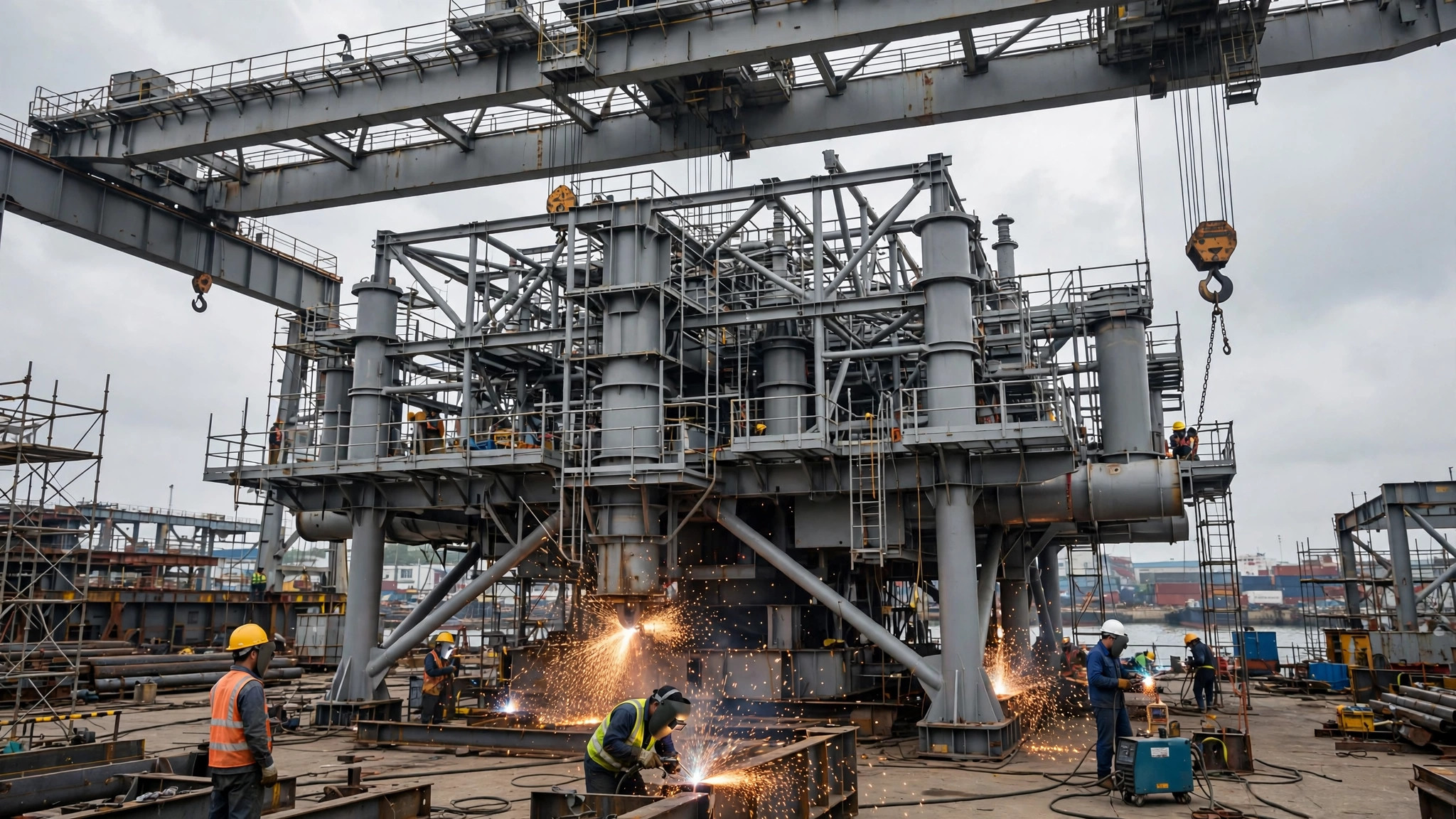
    Assume the contract arrives. The next question is physical. Offshore turbines are among the largest machines ever installed: blades, towers and foundations that need deep water quays, heavy lift cranes, reinforced storage yards and specialised installation vessels. Vietnam starts with real assets. Its oil and gas marine industry, centred on firms such as PTSC, already fabricates offshore structures, and PTSC has exported four 375 MW offshore substations for the Baltica 2 project in Poland, proof that Vietnamese yards can meet European offshore wind specifications. Ports are the harder gap. A marshalling port for gigawatt scale projects needs hectares of laydown space and quay strength that few Vietnamese ports currently offer, and upgrading one is itself a multi year investment that investors will not fund before a project pipeline is certain. The chicken and egg pattern repeats: no ports without projects, no cheap projects without ports.

    So what has to happen, in what order?

    The sequence visible in 2026 is the right one, even if it is slow. First, surveys: licensed, funded and under way, with Pacifico’s 2027 field campaigns set to produce the measured data bankability starts from. Second, the contract framework: a PPA structure and price discovery mechanism that lenders can underwrite, informed by the survey results rather than guessed in advance of them. Third, port and grid investment targeted at the first zones, so early projects share infrastructure instead of each building its own. Fourth, construction, on the plan’s 2031 to 2035 horizon for the current licensed pipeline. Vietnam’s offshore wind story is often told as a delay. Read through the lender’s eyes, it is a queue of prerequisites being cleared in order. The surveys now starting are not the industry marking time. They are the industry doing the only part of the work that cannot be rushed later.

    Related reading

    Sources

    Asian Power, September 2026, on Pacifico Energy’s sea survey licence for the 1,300 MW Nam Trung Bo 3 project, the 2027 field survey scope and the 2031 to 2035 operations window. Pacifico Energy announcement via Business Wire, 23 September 2026, on the survey licence, the February 2026 Nam Bo PE2.1 licence and the combined 1.8 GW pipeline. World Bank, Expanding Offshore Wind to Emerging Markets, on Vietnam’s 475 GW technical potential for fixed and floating offshore wind.
  • Africa’s 17 GW Solar Year, and the Lesson Vietnam Is Reading

    Africa’s 17 GW Solar Year, and the Lesson Vietnam Is Reading

    A record built from rooftops, not mega projects

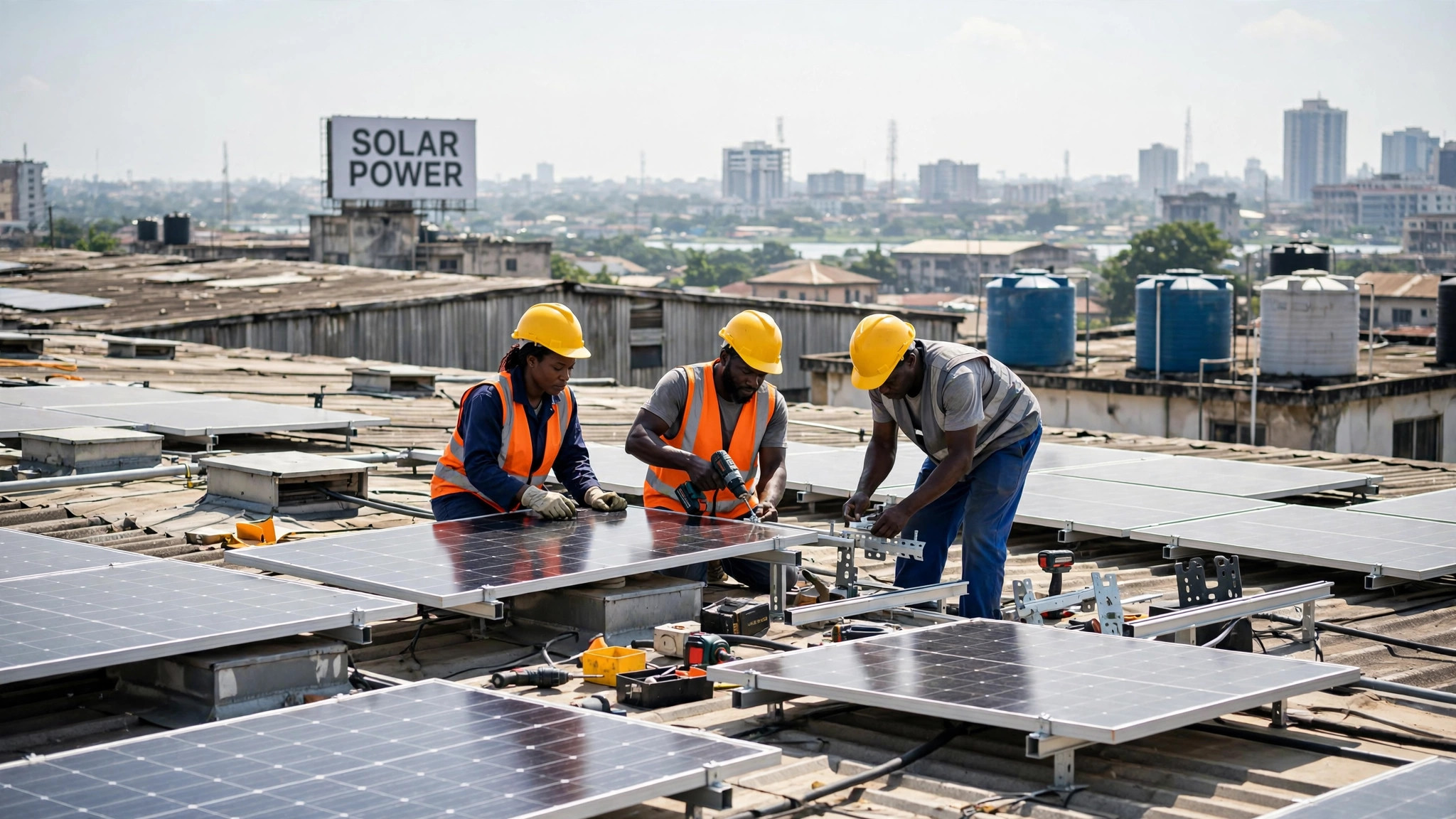
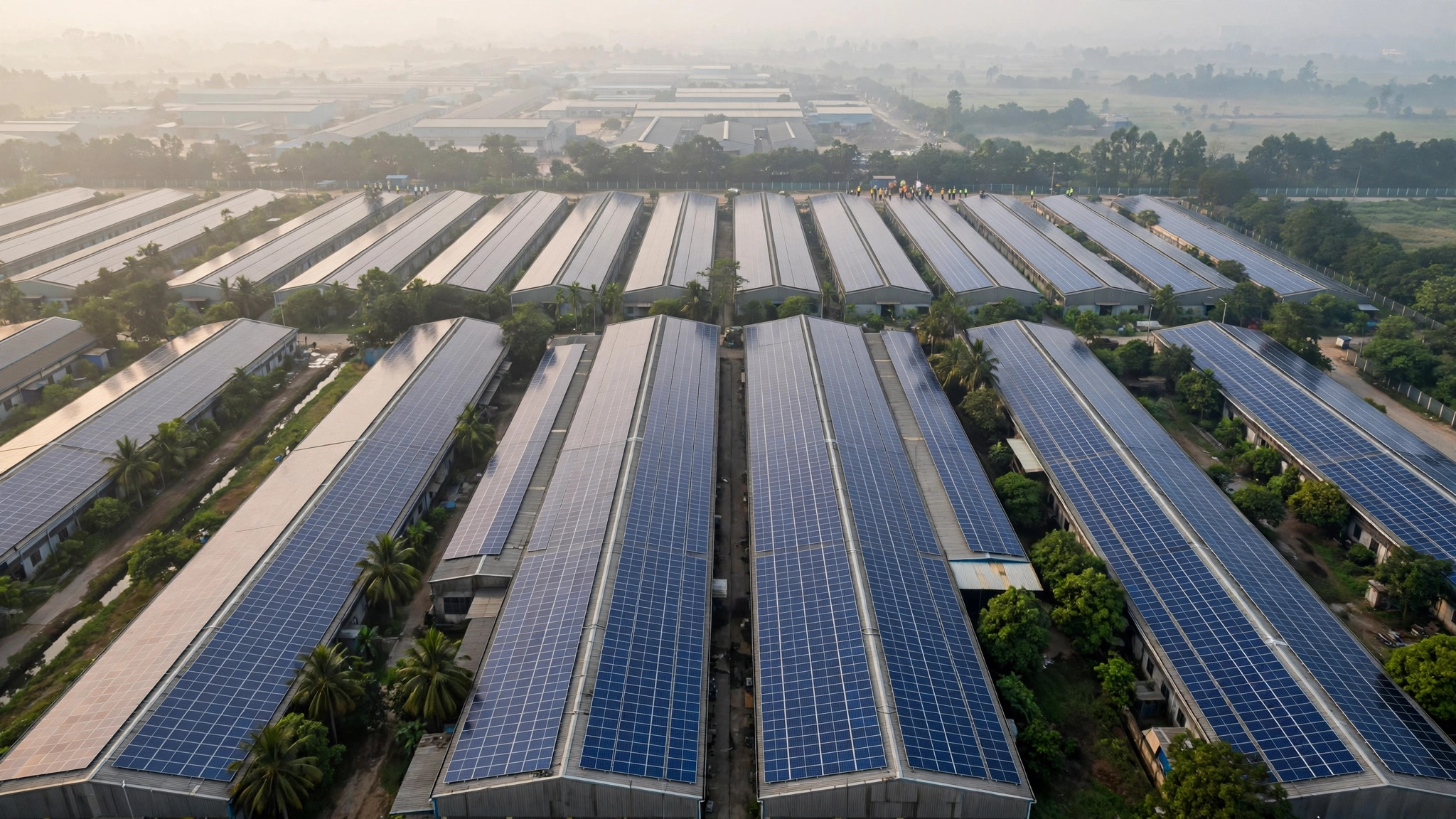
    Africa is expected to install a record 17 gigawatts of solar capacity in 2026, according to analysis published by the energy think tank Ember in October 2026. Installations are rising about 45 percent year on year, after gains of 51 percent in 2025 and 25 percent in 2024, a three year acceleration with few precedents in energy history. The detail that should make planners in Hanoi sit up is the composition. About three quarters of the 17 GW is distributed solar: commercial rooftops, housing estates, hybrid backup systems and small installations that never appear in a ministry’s list of power projects. Africa’s biggest solar year is not being built by utilities. It is being installed, panel by panel, by customers.

    The map is widening

    Ember expects 36 of Africa’s 54 countries to set national installation records in 2026. Six countries have become gigawatt scale markets in a single year: South Africa at 3.3 GW, Egypt at 2.0 GW, Nigeria and the Democratic Republic of the Congo at 1.7 GW each, Algeria at 1.4 GW and Morocco at 1.0 GW. South Africa’s share of the continental total falls below 20 percent for the first time since 2019, which is the real headline: solar growth is no longer a South African story with African footnotes. Growth above 100 percent year on year is estimated in 19 countries, led by the Democratic Republic of the Congo at 544 percent, Zimbabwe at 282 percent, Egypt at 176 percent and Zambia at 117 percent. Much of the demand is defensive as much as environmental. In markets with unreliable grids, solar plus storage is replacing the diesel generator as the default insurance policy, a shift installers describe as a move from emergency backup to designed systems.

    Africa's 17 GW Solar Year, and the Lesson Vietnam Is Reading

    The measurement problem both continents share

    Ember’s method deserves as much attention as its headline. Because so much African solar is distributed and informal, official capacity registers miss it. Ember therefore builds its estimate from customs data on panel imports and installer surveys, adjusted for installation lags, and states plainly that these sources currently describe reality better than some national statistics. Only a minority of African countries publish solar capacity figures, and fewer still publish them quarterly. Vietnam will recognise this problem in its own mirror. Vietnam’s solar boom was also rooftop led and also ran ahead of the paperwork. The country’s authoritative count comes from the utility, not from project registries: EVN data put the national total at 130,811 rooftop systems with more than 11,200 MWp of capacity by the end of July 2026, generating 6.6 billion kWh in the first seven months of the year. Two different continents, the same statistical truth: when solar becomes a consumer product, the people counting panels at borders and on roofs know more than the people counting power stations.

    Vietnam’s version of the same curve

    Set the two stories side by side and the comparison sharpens. Africa’s 17 GW is one year of additions across 54 countries. Vietnam’s rooftop stock alone, 11.2 GWp accumulated in one country of 100 million people, was built mostly in a handful of years, and the flow continues: tens of thousands of new systems a year are still being added under the self consumption framework. The drivers rhyme. High retail electricity prices relative to falling panel costs. Grid stress at peak hours. Households and factories buying control over their own supply. The policy lesson runs in both directions. African regulators can study how Vietnam’s rooftop surge forced rapid rule making on surplus sales, metering and grid connection, including the arguments that produced the 2026 surplus sales framework. Vietnamese planners can study Africa’s warning: a distributed fleet that the system operator cannot see is a fleet it cannot plan around, and visibility, through registration, smart meters and honest statistics, has to be built while the panels go up, not after.

    Access is the unfinished half

    One figure keeps the celebration honest. Under Mission 300, the World Bank Group and African Development Bank initiative to connect 300 million people by 2030, more than 50 million people across 40 countries gained electricity access between July 2023 and June 2026. Yet the International Energy Agency estimates universal access in Africa needs about USD 15 billion a year, against less than USD 2.5 billion committed for new connections in sub Saharan Africa in 2023. Panels are arriving faster than grids, finance and connections. Vietnam’s experience is again instructive, in reverse: its challenge is not first access but absorbing abundance, managing midday surplus and evening peaks in a system that already reaches everyone. Reading Africa’s 17 GW year from Hanoi, the lesson is not that Vietnam is ahead or behind. It is that distributed solar has become the fastest moving part of the power system on two continents at once, and the countries that measure it honestly and wire it into planning will get the most from the flood of panels now arriving at their ports.

    Related reading

    Sources

    Ember analysis published October 2026, carried by APO Group and Zawya, on Africa’s expected record 17 GW of solar installations in 2026, the six gigawatt scale markets, growth rates and the distributed share. African Power Platform reporting, June 2026, on Mission 300 connections by the World Bank Group and the African Development Bank, and IEA estimates of annual access investment needs. EVN data reported by Vietnam.vn, September 2026, on 130,811 rooftop solar systems totalling more than 11,200 MWp by end July 2026 and 6.6 billion kWh generated in seven months.

  • Bac Ai Pumped Hydro: the Battery Vietnam Is Building into a Mountain

    Bac Ai Pumped Hydro: the Battery Vietnam Is Building into a Mountain

    Why Vietnam needs a battery this big

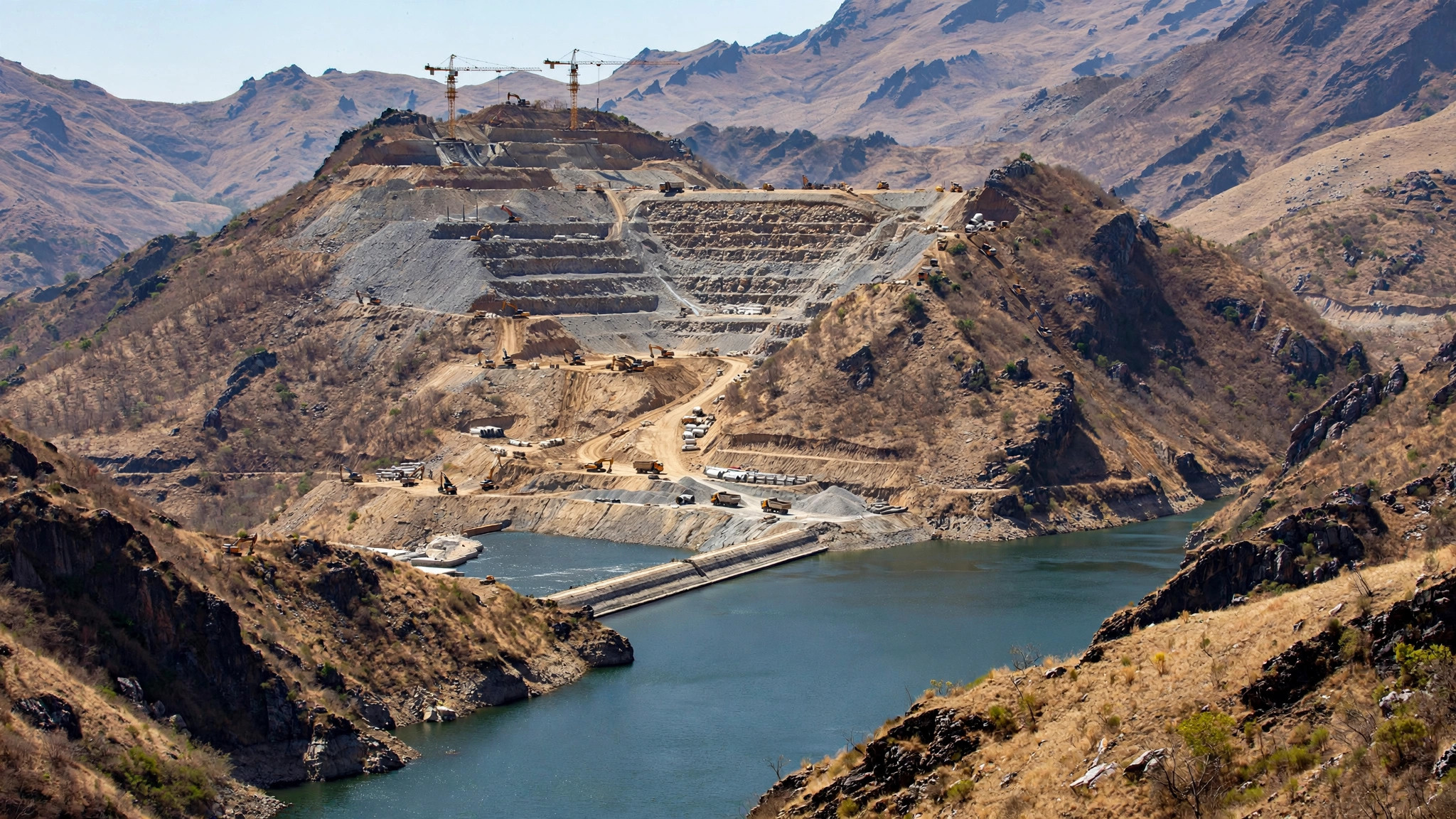
    Vietnam’s solar fleet produces most on the hours when demand is softest, around noon, and fades just as the evening peak arrives. Grid operators can curtail panels, burn more gas or coal at peak, or find somewhere to park the midday surplus. Pumped hydro storage is the oldest and largest answer to that problem: use spare electricity to move water uphill, then let it fall back through turbines when the grid is short. The Bac Ai project in the former Ninh Thuan province of south central Vietnam is the country’s first pumped storage plant, and at 1,200 MW it is sized like a major power station, because that is the point.

    Step one: two reservoirs and a height difference

    Every pumped storage plant is three things: an upper reservoir, a lower reservoir, and machines that can work in both directions. At Bac Ai, the lower reservoir already exists. It is the Tan My irrigation reservoir on the Song Cai river system, whose spillway works formed the project’s first phase, completed in 2021. The upper reservoir is being built new on the mountain above, and it has no natural inflow worth mentioning. Every drop it holds will have been pumped there. That is normal for modern pumped storage, and it underlines what the plant really is: not a water project that happens to generate power, but a storage device that happens to use water.

    Bac Ai Pumped Hydro: the Battery Vietnam Is Building into a Mountain

    Step two: pump up when power is cheap

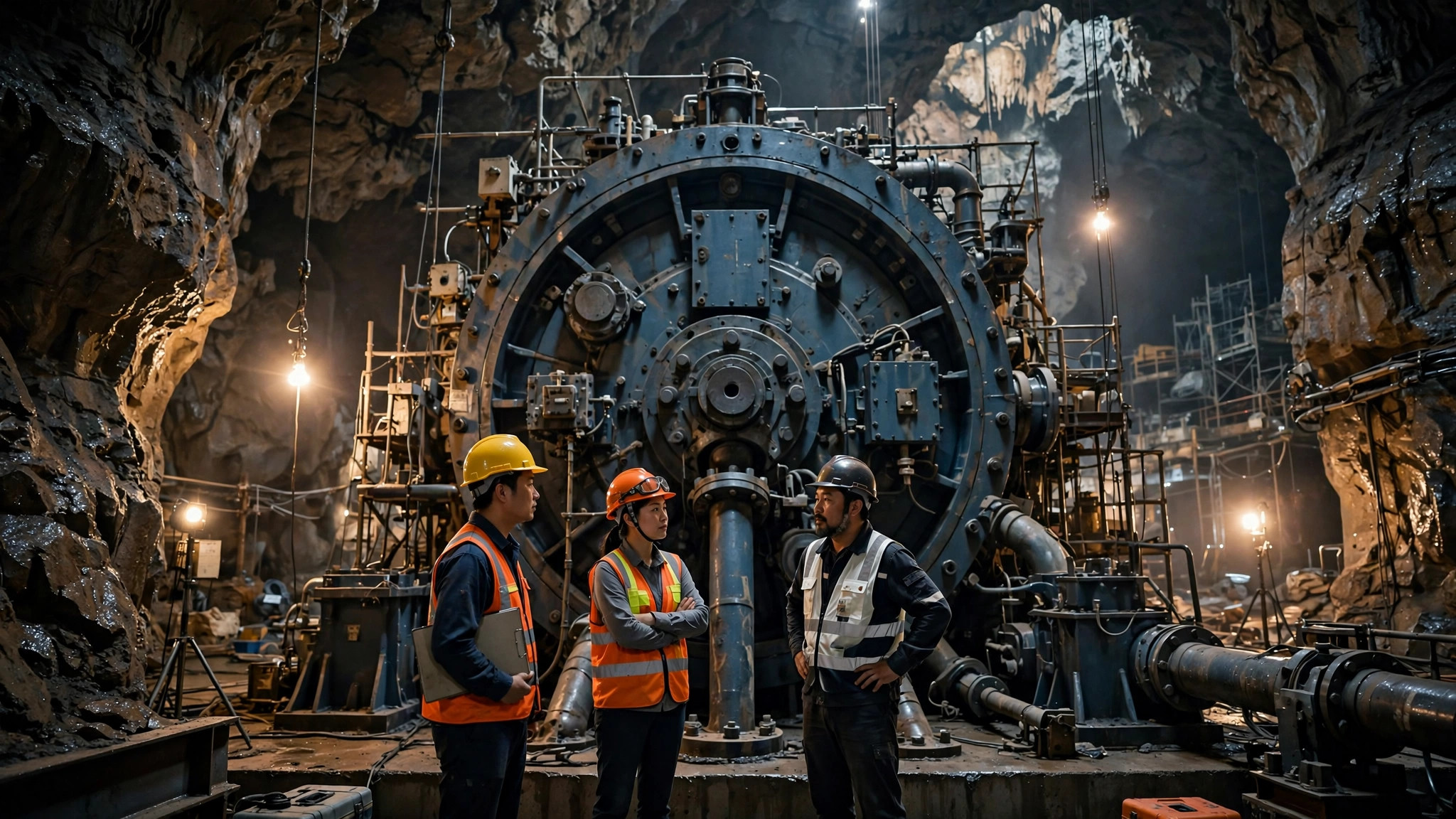
    When the grid has surplus power, typically in the solar hours, Bac Ai’s machines run as pumps. Electricity drives the four units in reverse, pushing water from the lower reservoir up through pressure tunnels to the upper reservoir. The energy is stored as height. Nothing about the process is exotic, which is its virtue. There are no rare minerals, no cells to degrade, and no fire risk. The costs are concrete, steel, tunnels and time: the second phase construction package alone covers the pressure tunnel, surge tanks, an underground powerhouse, the 500 kV switchyard and the discharge works.

    Step three: generate when the peak bites

    In the evening, the flow reverses. Water released from the upper reservoir runs down through the same four units, now acting as turbines and generators, each rated at 300 MW. Together they can put 1,200 MW into the national grid through a 500 kV double circuit connection, fast enough to matter for evening ramps and firm enough to back up variable wind and solar across the south central coast, Vietnam’s densest renewable region. Round trip efficiency in pumped storage is not perfect; some energy is always lost in pumping and generating. What the grid buys with that loss is capacity it can command, which is a different product from energy it merely receives.

    The bill, and who is paying it

    Total investment is about VND 21.1 trillion, roughly USD 812 million at VND 26,000 to USD 1, funded from loans and the capital of Vietnam Electricity, known as EVN, which develops the project through its Power Project Management Board 3. The main construction contract package was awarded at about VND 4.33 trillion to a Vietnamese consortium. European money gives the project its international profile. In October 2025, at the Global Gateway Forum in Brussels, the European Commission and Team Europe partners including the French Development Agency, the European Investment Bank, Germany’s KfW, Italy’s CDP and Proparco announced a package of EUR 430 million, nearly USD 500 million, to advance Bac Ai as a flagship investment under Vietnam’s Just Energy Transition Partnership. A EUR 76 million credit facility with the French Development Agency followed in December 2025. In other words, the storage plant is also a test of whether JETP finance can move from pledges into excavated rock.

    The timetable

    EVN broke ground on phase two in February 2025, and main powerhouse excavation began in January 2026, with tunnel works progressing through the mountain. The first unit is scheduled to generate in December 2029, the fourth unit about a year later, and the full project is due for completion by May 2031. That is a long wait for a grid that needs flexibility now, and it explains why Bac Ai sits alongside faster options rather than replacing them: battery systems for hours of storage today, pumped hydro for decades of storage from 2030.

    What pumped hydro cannot do

    An honest explainer ends with limits. Bac Ai stores energy; it does not create it, and its economics depend on the spread between cheap surplus hours and valuable peak hours, plus the value the system places on firm capacity. It also arrives on a construction clock measured in years, through difficult underground geology, and its 1,200 MW, while large, is one plant against national demand growth. Vietnam will need more storage of every kind. But when Bac Ai’s first unit turns in late 2029, the country will own something it has never had: a mountain that behaves like a battery, charged by the noon sun and discharged into the evening peak.

    Related reading

    Sources

    European Investment Bank press release, October 2025, on the EUR 430 million Team Europe package for the Bac Ai Pumped Hydro Storage Project under JETP. Vietnam Investment Review, February 2025, on EVN signing the Bac Ai construction contract: 1,200 MW in four 300 MW units, VND 21.1 trillion cost, first unit in December 2029 and completion by May 2031. SCI Group and consortium reporting, February 2025, on the phase two construction package scope, including tunnels, underground powerhouse and 500 kV switchyard.

  • Southeast Asia’s Largest Turbines Rise Off Vinh Long

    Southeast Asia’s Largest Turbines Rise Off Vinh Long

    The crews who lift giants

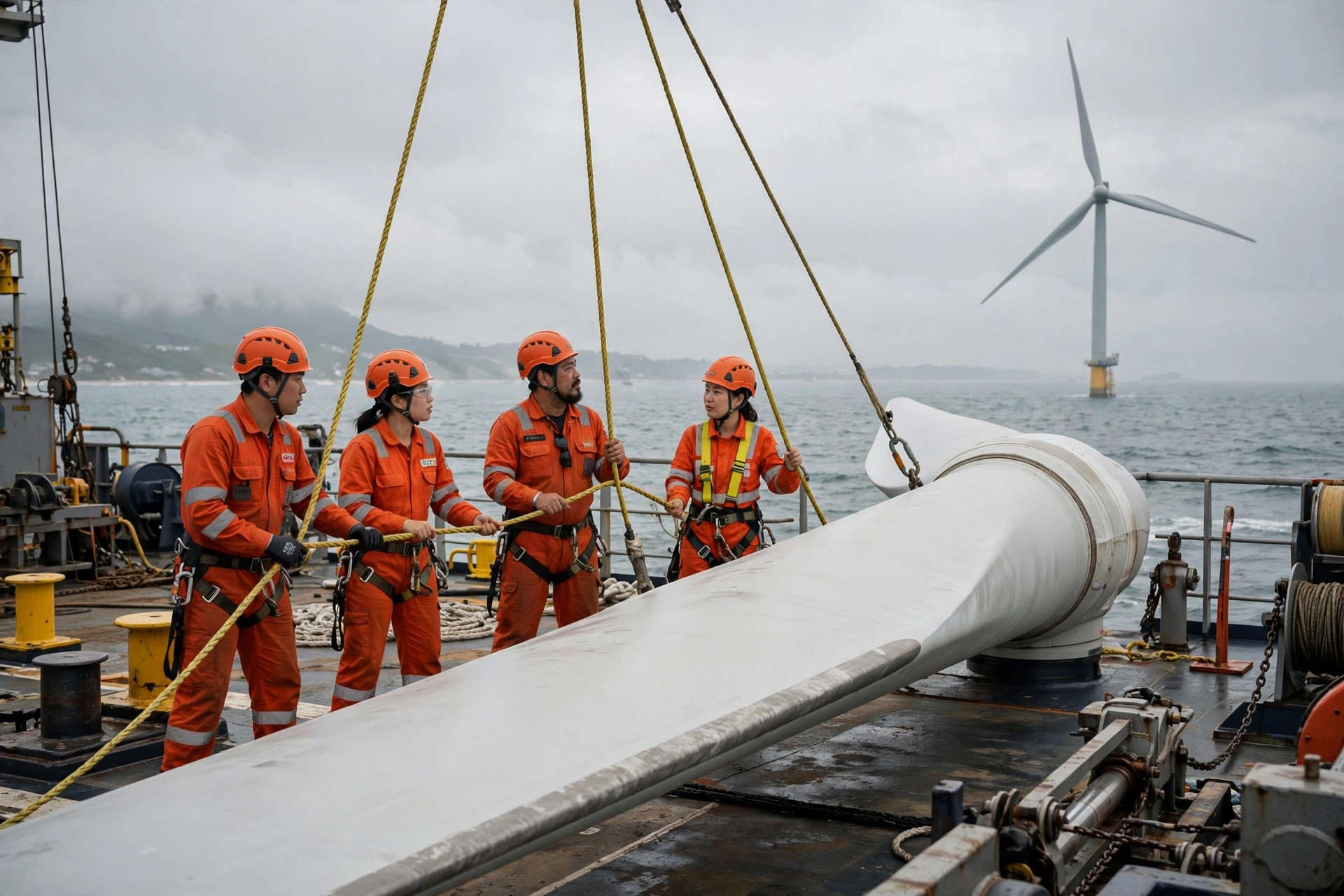
    The most important story off the coast of Vinh Long province is not only about size. It is about the people standing on vessels and platforms in difficult weather, guiding some of the largest machines ever installed in Southeast Asian waters into place, one careful lift at a time.

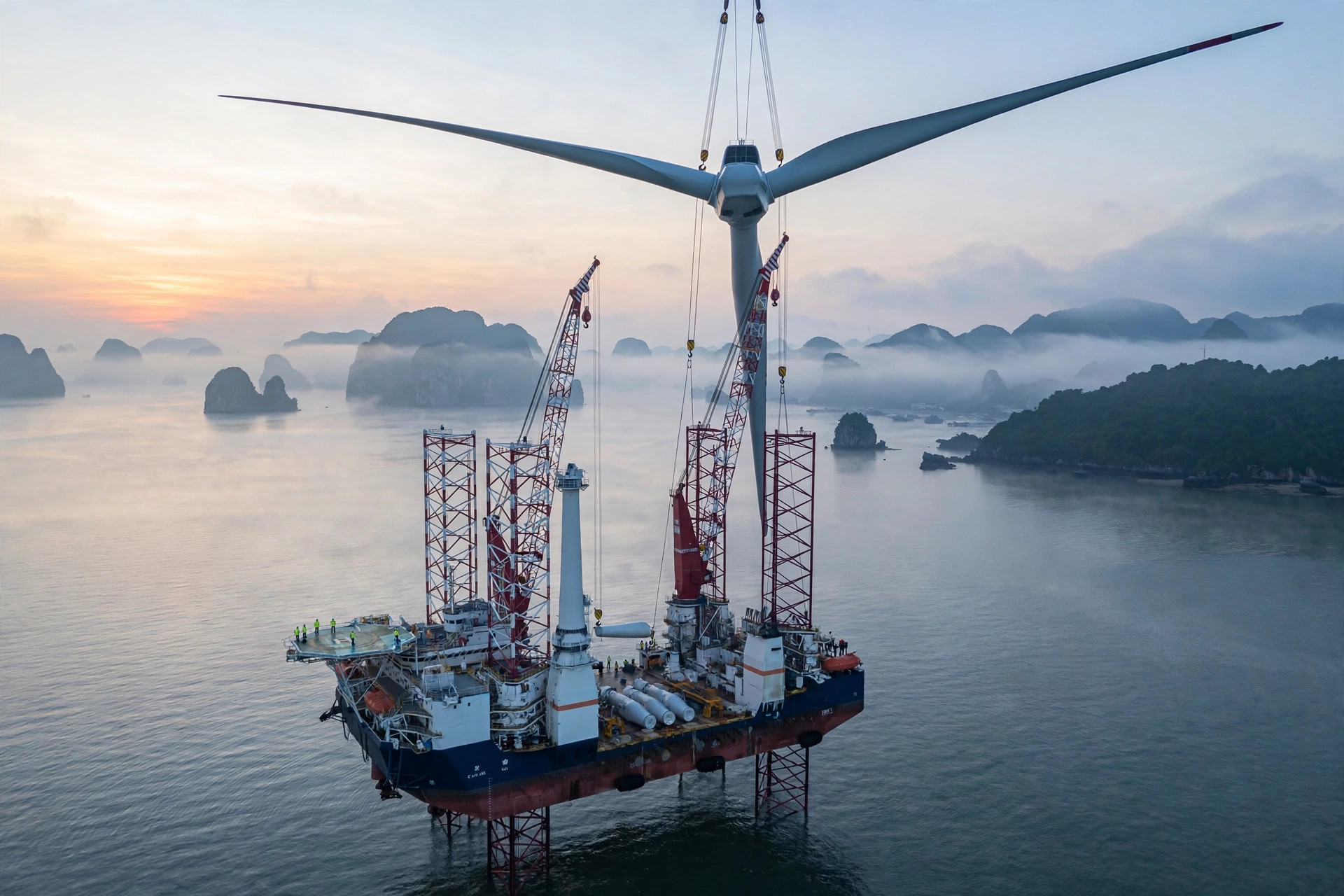
    REE Corporation is building two nearshore wind phases in the area. The first, V1-3 Phase II, has a capacity of 48 MW. The second, covering V1-5 and V1-6 Phase II, has a capacity of 80 MW. Together they total 128 MW. That output will come from just 16 turbines supplied by Envision, each in the 8 MW class and built around the EN-226 model. It is the largest single turbine capacity deployed in Vietnam and in Southeast Asia.

    For installation crews and engineers, fewer and larger machines change the nature of the work. Each turbine matters more. Each foundation, tower section, nacelle and blade carries more value and more risk. A delay on one unit affects a larger share of the total project. A successful installation, by contrast, brings a major block of capacity closer to operation in a single step.

    Southeast Asia's Largest Turbines Rise Off Vinh Long

    Engineering at a new scale for Vietnam

    Combined investment in the two phases is above VND 6,000 billion, which is about USD 230 million at a rate of VND 26,000 to USD 1. The V1-3 phase accounts for more than VND 2,200 billion of that total, while V1-5 and V1-6 account for more than VND 3,800 billion. Those figures show why the work attracts attention well beyond Vinh Long. This is a major capital commitment to a technology that Vietnam is still learning to build at scale.

    The projects are among the first approved under Power Development Plan VIII, the national framework that sets the direction for the power system in the coming years. They are also the first deployment in Vietnam of large capacity offshore turbines with long blades. That first mover status brings prestige, but it also means there is no deep local routine to fall back on. Procedures, logistics, spare parts planning and safety systems must all perform in real conditions, not in a presentation.

    Envision signed the full turbine supply contract in early 2026. The speed after that point tells its own story. The first equipment arrived five months after signing. In a sector where shipping, port handling and site preparation can stretch timelines, that arrival marked the moment when planning turned into physical work at sea.

    Five days, then faster

    The first turbine was installed in under seven days. The second followed in under five days. Anyone who has watched heavy installation work will understand what that improvement means. It does not happen by chance. It reflects a crew learning the sequence, engineers solving small problems before they become large ones, crane and vessel teams coordinating more smoothly, and managers gaining confidence in weather windows and equipment readiness.

    The conditions were not gentle. Crews kept installing through heavy rain, strong winds and typhoons, with limited installation resources. Those words can sound routine in a project summary, but at sea they describe a working environment where visibility changes, decks move, communication must stay clear and judgement about when to proceed and when to pause can protect both people and expensive machinery.

    That human judgement sits at the centre of this project. A turbine in the 8 MW class is a remarkable piece of engineering, with long blades designed to capture more energy from the wind. Yet it generates nothing while it lies in sections at a port or on a vessel. It becomes a power asset only when surveyors, riggers, crane operators, electricians, commissioning engineers and safety officers complete a chain of tasks in the right order. The Vinh Long story is therefore also a story about skills that Vietnam will need again and again if offshore and nearshore wind are to grow.

    Why 16 turbines matter beyond 128 MW

    All 16 turbines are expected to follow in rapid succession, with operations planned for the fourth quarter of 2026. If that schedule holds, the project will move quickly from a construction spectacle to a source of electricity for homes and businesses. The generation itself matters, of course. So does the proof that a Vietnamese developer, an international turbine supplier and local marine conditions can be brought together around machines of this size.

    That proof has several audiences. Lenders and investors will look at whether installation times kept improving and whether commissioning proceeds without major setbacks. Other developers will study the logistics, from equipment arrival to the final lift. Provincial and national officials will see a concrete example of what Power Development Plan VIII can produce when approvals, supply contracts and site work align. Young engineers may see something else, a career path in an industry that did not exist in this form in Vietnam a generation ago.

    The work that remains

    Rapid installation should not hide the work still ahead. Sixteen turbines must be completed, connected, tested and commissioned. Operations in the fourth quarter of 2026 will be the real test of reliability, maintenance planning and grid integration. Marine weather will continue to set the rhythm. A strong start gives the teams confidence, but offshore wind rewards patience and discipline over the full life of a project, not only during its most visible weeks.

    Maintenance deserves attention too. Large turbines reduce the number of units that crews must visit, but each visit can require specialised planning. Building local capability for inspection, repair and spare parts will decide how much long term value stays in Vietnam. The engineers learning on this project, often in hard weather and under time pressure, are forming the core of that capability.

    When the last blade is secured and the rotors begin to turn, the view from shore will look simple. Tall white turbines will stand in a line, moving slowly and quietly at a distance. That calm image will rest on months of demanding work by people whose names rarely appear in headlines. Off Vinh Long, Southeast Asia’s largest turbines are rising because crews learned fast, adapted to the sea in front of them and kept going safely when the weather refused to cooperate.

    Related reading

    Sources

    OE Digital, 16 September 2026, reporting on the REE Corporation nearshore wind phases off Vinh Long and the Envision turbine installation. Envision Energy reporting carried by xe.today, September 2026, on the turbine supply contract, equipment arrival and installation progress.

  • 130,811 Rooftops and Counting: Vietnam’s Solar Policy Meets Its Moment

    130,811 Rooftops and Counting: Vietnam’s Solar Policy Meets Its Moment

    A number that changes the conversation

    Vietnam has quietly built a power station on its roofs. By the end of July 2026, the country had 130,811 rooftop solar systems in operation, with a combined capacity above 11,200 MWp, according to data from EVN. It is a fleet spread across factories, warehouses, offices and homes, and it already feeds serious volumes of electricity into the national grid.

    In the first seven months of 2026 alone, those systems generated 6.6 billion kWh for the grid. That is electricity that did not have to be produced by a central plant during the brightest hours of the day. A briefing from the Ministry of Industry and Trade in October 2026 put total installed rooftop capacity at about 11,000 MWp, a slightly different snapshot from a different date. The policy question has changed. It is no longer whether rooftops can generate at scale. It is whether the rules let owners earn a fair return, whether the grid can absorb the power safely, and whether local authorities will turn a national decree into panels, batteries and contracts.

    The cap change at the heart of Decree 243

    Decree 243/2026 amends two earlier instruments, Decree 57/2025 on direct power purchase agreements and Decree 58/2025 on renewable energy development. Its most consequential change sounds technical, but its effect is commercial. The decree raises the cap on surplus rooftop solar that can be sold under negotiated contracts from 20 percent to 50 percent of generation.

    130,811 Rooftops and Counting: Vietnam's Solar Policy Meets Its Moment

    Under the old limit, a factory that generated more power than it could use on site had limited room to earn money from the excess. That encouraged owners to size systems conservatively, even when their roofs could hold more panels and nearby buyers wanted clean electricity. A cap of 50 percent changes the maths. A larger system becomes easier to justify, because a larger share of its output can find a paying buyer through a negotiated arrangement rather than going to waste.

    The decree goes further for a limited period. Until the end of 2030, parties may agree a ratio higher than 50 percent where regional grid safety allows. After that point, the cap settles at 50 percent. That window creates a reason to move early and to design projects that still perform once the more flexible period ends. Alongside the cap, the decree widens eligibility for direct power purchase agreements, known as DPPAs, so more buyers and sellers can contract directly for renewable electricity. For companies with sustainability commitments or export customers asking about clean supply, that wider door is significant.

    From compliance topic to investment case

    For years, rooftop solar in Vietnam was often discussed as a compliance topic. Companies installed panels to meet customer expectations, prepare for carbon rules in export markets, or show progress in sustainability reports. Those motives still matter, but Decree 243 adds a clearer financial story. An investment case needs a predictable way to sell or use the output, rules stable enough to repay capital, and services that owners can actually access in their province. The higher cap helps with the first point. The period running to the end of 2030 helps with the second, at least for projects that start planning now. The third point is where the story becomes uneven.

    Demand gives the policy urgency. Electricity consumption is growing at about 10 percent a year, according to EVN and the ministry at a briefing on 3 October 2026. Growth at that pace strains generation, transmission and local distribution alike. Rooftop solar cannot solve that challenge on its own, but it adds capacity close to demand, reduces pressure at midday and gives large users a measure of control over their supply.

    Directive 10 adds official momentum

    The decree does not stand alone. Directive 10, issued on 30 March 2026, calls for about 10 percent of public offices and about 10 percent of households to install rooftop solar each year. It targets at least 3 percent in national electricity savings in 2026, rising to 10 percent in peak months, and at least 3,000 MW of peak load reduction.

    The provincial bottleneck

    Here is the weak point. Decree 243 pushes provinces to run support programmes that pair rooftop solar with battery storage, known as BESS. Storage changes the value of rooftop power. A battery can hold midday surplus for the evening, reduce peaks, support backup needs and help a site use or sell energy when it is most valuable. Without storage, solar generation still depends heavily on the timing of sunshine and demand.

    Yet by September 2026, only 2 of 34 provinces and cities, Bac Ninh and Lai Chau, had issued their household support policies. That gap between national direction and provincial action is the bottleneck in the whole story. Households and small businesses deal with local rules, local guidance and local approval processes, not with a decree text alone. If a province has no clear support policy, a family may not know what help exists, which installers are trusted, how a battery should be sized, or how a contract for surplus power should be structured. Installers and battery suppliers will naturally focus first on places where policy is clear, so the next wave of investment could concentrate in a few locations even though sunshine, roofs and rising demand are spread across the country.

    What owners should watch next

    The opportunity is real, but it rewards careful design. A roof owner should start with load data, not panel count. How much electricity is used hour by hour, how much surplus is likely, who could buy that surplus under a negotiated contract, and whether a battery improves the return are the questions that decide whether a project works. The higher cap makes larger systems plausible. It does not make every larger system wise. Grid safety will shape how far the flexibility running to 2030 can go in each region, so early engagement with the local power company and provincial authorities is part of the investment, not an administrative afterthought.

    Vietnam has already proved that rooftops can deliver capacity and energy at national scale, with 130,811 systems and 6.6 billion kWh generated for the grid in seven months. Decree 243 now gives those roofs a stronger commercial logic. Whether that logic spreads beyond a few proactive provinces will decide if this moment becomes a broad investment wave, or a policy that looked better on paper than it performed on the ground.

    Related reading

    Sources

    EVN data reported by vietnam.vn, September 2026, on rooftop solar system numbers, capacity and generation in the first seven months of 2026. Vietstock reporting on Decree 243/2026, July 2026, and on the Ministry of Industry and Trade briefing, October 2026.

VoltViet.

Vietnam’s green tech & EV voice in English. Green economy and clean technology from Vietnam, for a global audience.

© 2026 VoltViet · Ho Chi Minh City, Vietnam

Made in Vietnam · Read everywhere