A number that changes the conversation
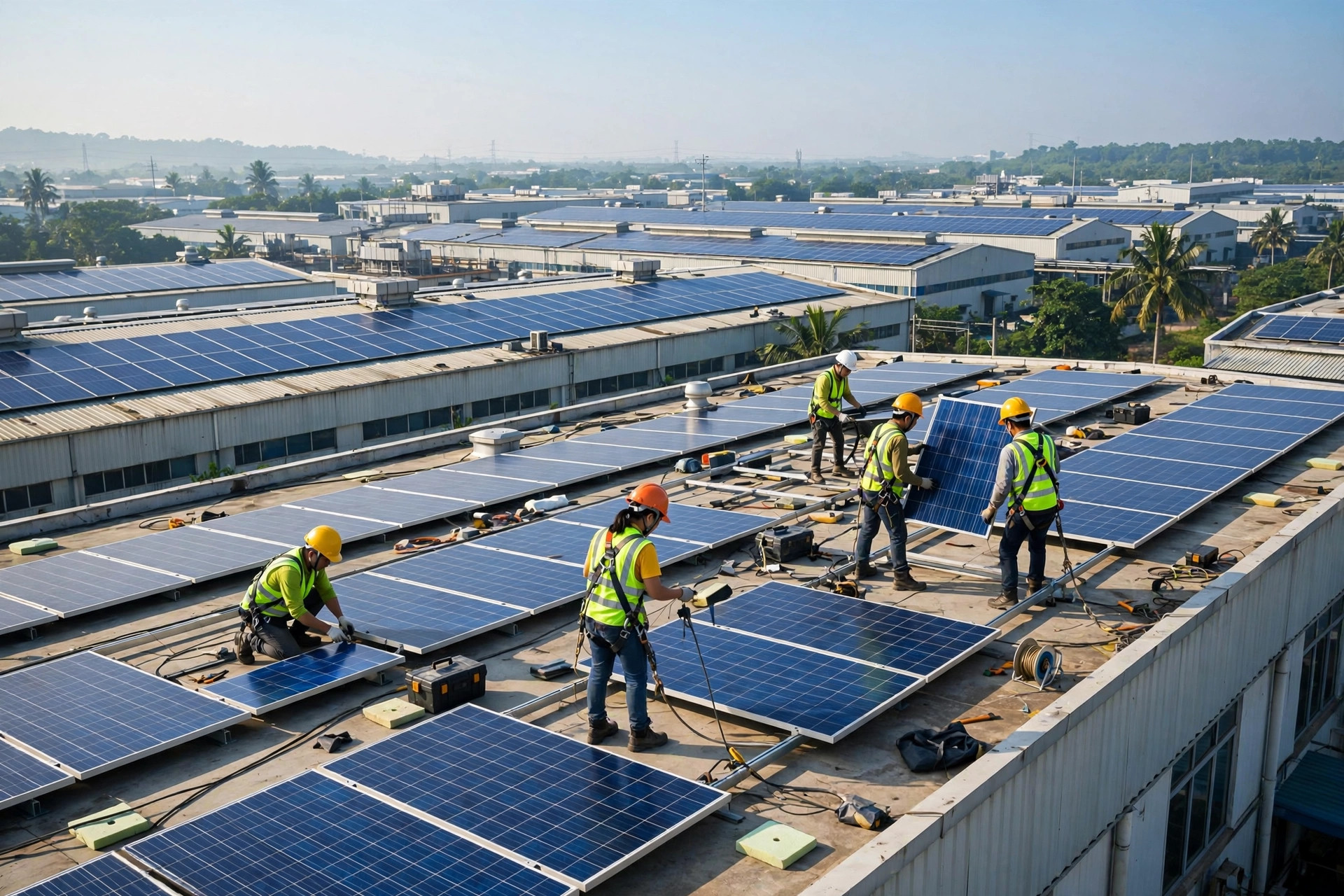
Vietnam has quietly built a power station on its roofs. By the end of July 2026, the country had 130,811 rooftop solar systems in operation, with a combined capacity above 11,200 MWp, according to data from EVN. It is a fleet spread across factories, warehouses, offices and homes, and it already feeds serious volumes of electricity into the national grid.
In the first seven months of 2026 alone, those systems generated 6.6 billion kWh for the grid. That is electricity that did not have to be produced by a central plant during the brightest hours of the day. A briefing from the Ministry of Industry and Trade in October 2026 put total installed rooftop capacity at about 11,000 MWp, a slightly different snapshot from a different date. The policy question has changed. It is no longer whether rooftops can generate at scale. It is whether the rules let owners earn a fair return, whether the grid can absorb the power safely, and whether local authorities will turn a national decree into panels, batteries and contracts.
The cap change at the heart of Decree 243
Decree 243/2026 amends two earlier instruments, Decree 57/2025 on direct power purchase agreements and Decree 58/2025 on renewable energy development. Its most consequential change sounds technical, but its effect is commercial. The decree raises the cap on surplus rooftop solar that can be sold under negotiated contracts from 20 percent to 50 percent of generation.

Under the old limit, a factory that generated more power than it could use on site had limited room to earn money from the excess. That encouraged owners to size systems conservatively, even when their roofs could hold more panels and nearby buyers wanted clean electricity. A cap of 50 percent changes the maths. A larger system becomes easier to justify, because a larger share of its output can find a paying buyer through a negotiated arrangement rather than going to waste.
The decree goes further for a limited period. Until the end of 2030, parties may agree a ratio higher than 50 percent where regional grid safety allows. After that point, the cap settles at 50 percent. That window creates a reason to move early and to design projects that still perform once the more flexible period ends. Alongside the cap, the decree widens eligibility for direct power purchase agreements, known as DPPAs, so more buyers and sellers can contract directly for renewable electricity. For companies with sustainability commitments or export customers asking about clean supply, that wider door is significant.
From compliance topic to investment case
For years, rooftop solar in Vietnam was often discussed as a compliance topic. Companies installed panels to meet customer expectations, prepare for carbon rules in export markets, or show progress in sustainability reports. Those motives still matter, but Decree 243 adds a clearer financial story. An investment case needs a predictable way to sell or use the output, rules stable enough to repay capital, and services that owners can actually access in their province. The higher cap helps with the first point. The period running to the end of 2030 helps with the second, at least for projects that start planning now. The third point is where the story becomes uneven.
Demand gives the policy urgency. Electricity consumption is growing at about 10 percent a year, according to EVN and the ministry at a briefing on 3 October 2026. Growth at that pace strains generation, transmission and local distribution alike. Rooftop solar cannot solve that challenge on its own, but it adds capacity close to demand, reduces pressure at midday and gives large users a measure of control over their supply.
Directive 10 adds official momentum
The decree does not stand alone. Directive 10, issued on 30 March 2026, calls for about 10 percent of public offices and about 10 percent of households to install rooftop solar each year. It targets at least 3 percent in national electricity savings in 2026, rising to 10 percent in peak months, and at least 3,000 MW of peak load reduction.
The provincial bottleneck
Here is the weak point. Decree 243 pushes provinces to run support programmes that pair rooftop solar with battery storage, known as BESS. Storage changes the value of rooftop power. A battery can hold midday surplus for the evening, reduce peaks, support backup needs and help a site use or sell energy when it is most valuable. Without storage, solar generation still depends heavily on the timing of sunshine and demand.
Yet by September 2026, only 2 of 34 provinces and cities, Bac Ninh and Lai Chau, had issued their household support policies. That gap between national direction and provincial action is the bottleneck in the whole story. Households and small businesses deal with local rules, local guidance and local approval processes, not with a decree text alone. If a province has no clear support policy, a family may not know what help exists, which installers are trusted, how a battery should be sized, or how a contract for surplus power should be structured. Installers and battery suppliers will naturally focus first on places where policy is clear, so the next wave of investment could concentrate in a few locations even though sunshine, roofs and rising demand are spread across the country.
What owners should watch next
The opportunity is real, but it rewards careful design. A roof owner should start with load data, not panel count. How much electricity is used hour by hour, how much surplus is likely, who could buy that surplus under a negotiated contract, and whether a battery improves the return are the questions that decide whether a project works. The higher cap makes larger systems plausible. It does not make every larger system wise. Grid safety will shape how far the flexibility running to 2030 can go in each region, so early engagement with the local power company and provincial authorities is part of the investment, not an administrative afterthought.
Vietnam has already proved that rooftops can deliver capacity and energy at national scale, with 130,811 systems and 6.6 billion kWh generated for the grid in seven months. Decree 243 now gives those roofs a stronger commercial logic. Whether that logic spreads beyond a few proactive provinces will decide if this moment becomes a broad investment wave, or a policy that looked better on paper than it performed on the ground.
Related reading
- The 6.6 Billion kWh Rooftop Surplus
- Storage Stops Being Optional: BESS in the New Rooftop Rules
- Net Zero Pledges Meet the Grid: Corporate PPAs in Vietnam
Sources
EVN data reported by vietnam.vn, September 2026, on rooftop solar system numbers, capacity and generation in the first seven months of 2026. Vietstock reporting on Decree 243/2026, July 2026, and on the Ministry of Industry and Trade briefing, October 2026.