If the potential is 475 GW, why is nothing built yet?
The World Bank’s technical assessment credits Vietnam with about 475 GW of offshore wind potential in fixed and floating form, one of the largest endowments in Asia, sitting close to the southern demand centres that need the power most. Yet Vietnam has no true offshore wind farm in operation. The gap between the resource map and the construction map is what developers call the missing middle: the years of surveys, port upgrades, grid planning and contract design that turn a windy patch of sea into a financeable project. The adjusted Power Development Plan VIII acknowledges the sequence by placing the newest licensed project, Pacifico Energy’s 1,300 MW Nam Trung Bo 3 in Lam Dong province, at commercial operations somewhere between 2031 and 2035. The resource was never the constraint. The middle is.
What does a survey licence actually allow?
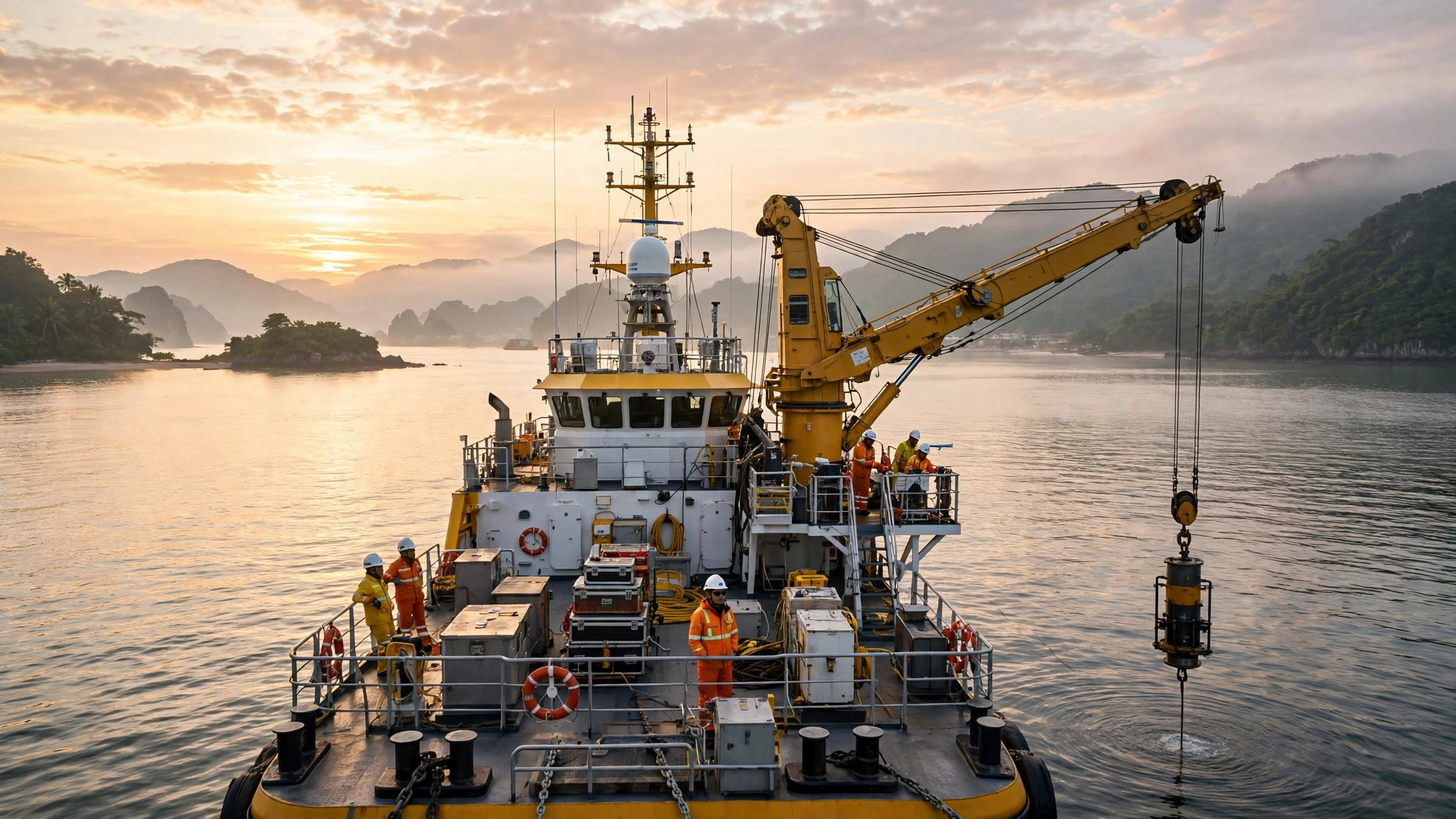
In September 2026, Pacifico Energy Vietnam received a sea survey licence from the Ministry of Agriculture and Environment for Nam Trung Bo 3. A survey licence is permission to study, not to build. It authorises the technical and environmental work that establishes whether a project exists at all: desktop assessments first, then a field campaign planned for 2027 covering geotechnical and geophysical surveys of the seabed, wind measurement, meteorological and oceanographic studies, and environmental baseline surveys. Each dataset answers a lender’s question. Geotechnics decides foundation cost. A year or more of measured wind decides the revenue forecast. Environmental baselines decide what mitigation will be demanded. Pacifico now holds two such licences, this 1.3 GW site plus the 500 MW Nam Bo PE2.1 project licensed in February 2026, a combined pipeline of about 1.8 GW. Its chairman Nate Franklin has described the approvals as reflecting long term confidence in Vietnam’s offshore wind potential, and the company says it is working with authorities on a bankable framework for the sector. That word, bankable, is the hinge of the whole story.
What makes a power purchase agreement bankable?
Offshore wind is financed on the strength of one document: the power purchase agreement, the long term contract under which the grid buys the electricity. A PPA is bankable when an international lender can read it and predict, with narrow uncertainty, that debt will be repaid across twenty or more years of storms, currency moves and policy changes. In practice that means a tariff or auction price that covers costs at Vietnamese risk levels, clarity on who bears curtailment risk when the grid cannot take the power, payment security from the offtaker, and rules for what happens if laws change. Vietnam has not yet published the dedicated pricing and contract framework for true offshore wind, and until it does, survey data accumulates without a financial destination. Developers can measure the wind for years. Banks cannot lend against a price that does not exist. This, more than technology or capital scarcity, is why the missing middle is missing.
Where do ports and supply chains fit?
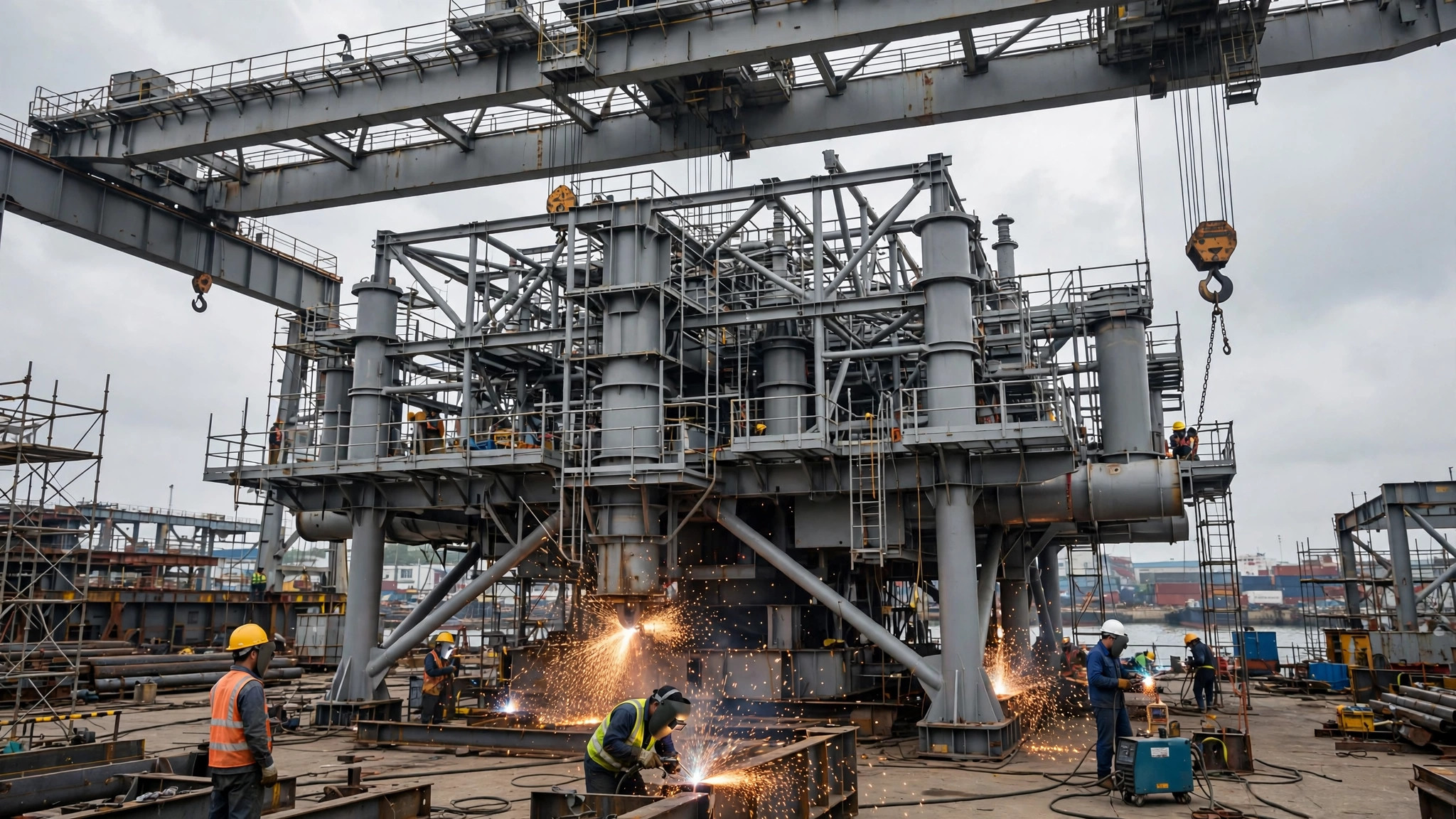
Assume the contract arrives. The next question is physical. Offshore turbines are among the largest machines ever installed: blades, towers and foundations that need deep water quays, heavy lift cranes, reinforced storage yards and specialised installation vessels. Vietnam starts with real assets. Its oil and gas marine industry, centred on firms such as PTSC, already fabricates offshore structures, and PTSC has exported four 375 MW offshore substations for the Baltica 2 project in Poland, proof that Vietnamese yards can meet European offshore wind specifications. Ports are the harder gap. A marshalling port for gigawatt scale projects needs hectares of laydown space and quay strength that few Vietnamese ports currently offer, and upgrading one is itself a multi year investment that investors will not fund before a project pipeline is certain. The chicken and egg pattern repeats: no ports without projects, no cheap projects without ports.
So what has to happen, in what order?
The sequence visible in 2026 is the right one, even if it is slow. First, surveys: licensed, funded and under way, with Pacifico’s 2027 field campaigns set to produce the measured data bankability starts from. Second, the contract framework: a PPA structure and price discovery mechanism that lenders can underwrite, informed by the survey results rather than guessed in advance of them. Third, port and grid investment targeted at the first zones, so early projects share infrastructure instead of each building its own. Fourth, construction, on the plan’s 2031 to 2035 horizon for the current licensed pipeline. Vietnam’s offshore wind story is often told as a delay. Read through the lender’s eyes, it is a queue of prerequisites being cleared in order. The surveys now starting are not the industry marking time. They are the industry doing the only part of the work that cannot be rushed later.
Related reading
- Wind Measurement: the Unglamorous Year Before Any Turbine
- Made in Vietnam, Lighting Poland: PTSC’s Substation Exports
- Insurance, Typhoons and the Cost of Capital for Wind
Sources
Asian Power, September 2026, on Pacifico Energy’s sea survey licence for the 1,300 MW Nam Trung Bo 3 project, the 2027 field survey scope and the 2031 to 2035 operations window. Pacifico Energy announcement via Business Wire, 23 September 2026, on the survey licence, the February 2026 Nam Bo PE2.1 licence and the combined 1.8 GW pipeline. World Bank, Expanding Offshore Wind to Emerging Markets, on Vietnam’s 475 GW technical potential for fixed and floating offshore wind.