The crews who lift giants
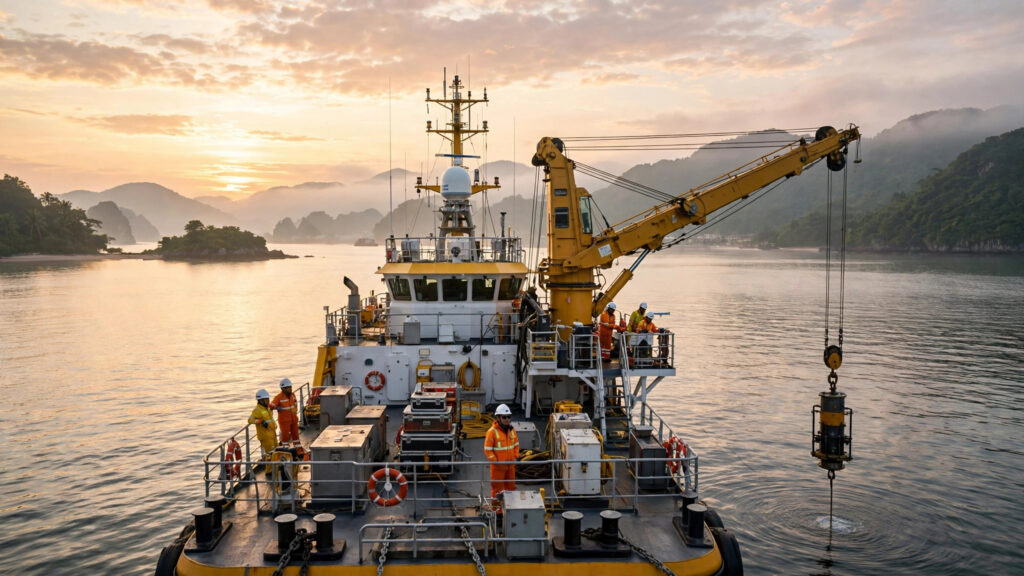
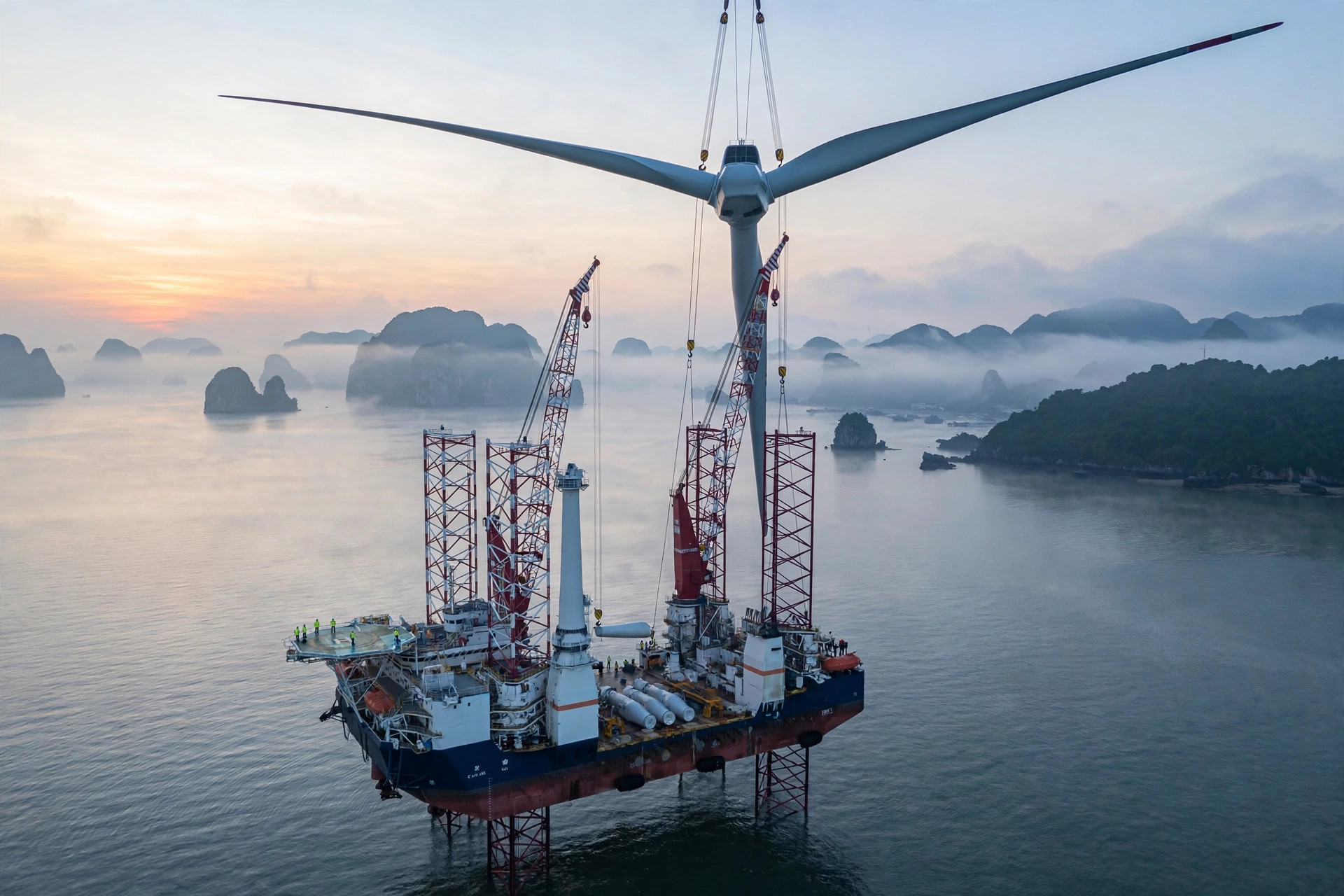
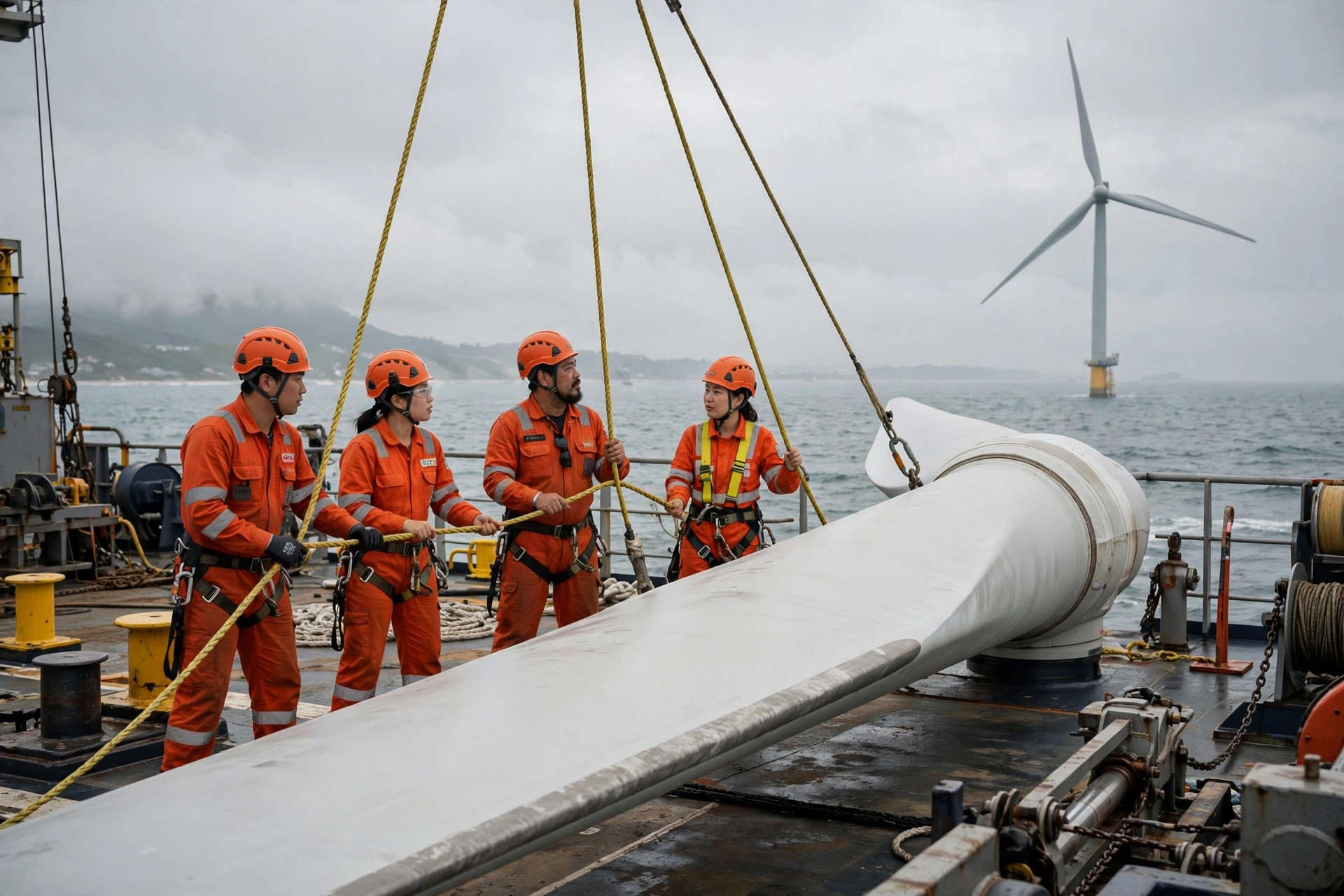
The most important story off the coast of Vinh Long province is not only about size. It is about the people standing on vessels and platforms in difficult weather, guiding some of the largest machines ever installed in Southeast Asian waters into place, one careful lift at a time.
REE Corporation is building two nearshore wind phases in the area. The first, V1-3 Phase II, has a capacity of 48 MW. The second, covering V1-5 and V1-6 Phase II, has a capacity of 80 MW. Together they total 128 MW. That output will come from just 16 turbines supplied by Envision, each in the 8 MW class and built around the EN-226 model. It is the largest single turbine capacity deployed in Vietnam and in Southeast Asia.
For installation crews and engineers, fewer and larger machines change the nature of the work. Each turbine matters more. Each foundation, tower section, nacelle and blade carries more value and more risk. A delay on one unit affects a larger share of the total project. A successful installation, by contrast, brings a major block of capacity closer to operation in a single step.
Engineering at a new scale for Vietnam
Combined investment in the two phases is above VND 6,000 billion, which is about USD 230 million at a rate of VND 26,000 to USD 1. The V1-3 phase accounts for more than VND 2,200 billion of that total, while V1-5 and V1-6 account for more than VND 3,800 billion. Those figures show why the work attracts attention well beyond Vinh Long. This is a major capital commitment to a technology that Vietnam is still learning to build at scale.
The projects are among the first approved under Power Development Plan VIII, the national framework that sets the direction for the power system in the coming years. They are also the first deployment in Vietnam of large capacity offshore turbines with long blades. That first mover status brings prestige, but it also means there is no deep local routine to fall back on. Procedures, logistics, spare parts planning and safety systems must all perform in real conditions, not in a presentation.
Envision signed the full turbine supply contract in early 2026. The speed after that point tells its own story. The first equipment arrived five months after signing. In a sector where shipping, port handling and site preparation can stretch timelines, that arrival marked the moment when planning turned into physical work at sea.
Five days, then faster
The first turbine was installed in under seven days. The second followed in under five days. Anyone who has watched heavy installation work will understand what that improvement means. It does not happen by chance. It reflects a crew learning the sequence, engineers solving small problems before they become large ones, crane and vessel teams coordinating more smoothly, and managers gaining confidence in weather windows and equipment readiness.
The conditions were not gentle. Crews kept installing through heavy rain, strong winds and typhoons, with limited installation resources. Those words can sound routine in a project summary, but at sea they describe a working environment where visibility changes, decks move, communication must stay clear and judgement about when to proceed and when to pause can protect both people and expensive machinery.
That human judgement sits at the centre of this project. A turbine in the 8 MW class is a remarkable piece of engineering, with long blades designed to capture more energy from the wind. Yet it generates nothing while it lies in sections at a port or on a vessel. It becomes a power asset only when surveyors, riggers, crane operators, electricians, commissioning engineers and safety officers complete a chain of tasks in the right order. The Vinh Long story is therefore also a story about skills that Vietnam will need again and again if offshore and nearshore wind are to grow.
Why 16 turbines matter beyond 128 MW
All 16 turbines are expected to follow in rapid succession, with operations planned for the fourth quarter of 2026. If that schedule holds, the project will move quickly from a construction spectacle to a source of electricity for homes and businesses. The generation itself matters, of course. So does the proof that a Vietnamese developer, an international turbine supplier and local marine conditions can be brought together around machines of this size.
That proof has several audiences. Lenders and investors will look at whether installation times kept improving and whether commissioning proceeds without major setbacks. Other developers will study the logistics, from equipment arrival to the final lift. Provincial and national officials will see a concrete example of what Power Development Plan VIII can produce when approvals, supply contracts and site work align. Young engineers may see something else, a career path in an industry that did not exist in this form in Vietnam a generation ago.
The work that remains
Rapid installation should not hide the work still ahead. Sixteen turbines must be completed, connected, tested and commissioned. Operations in the fourth quarter of 2026 will be the real test of reliability, maintenance planning and grid integration. Marine weather will continue to set the rhythm. A strong start gives the teams confidence, but offshore wind rewards patience and discipline over the full life of a project, not only during its most visible weeks.
Maintenance deserves attention too. Large turbines reduce the number of units that crews must visit, but each visit can require specialised planning. Building local capability for inspection, repair and spare parts will decide how much long term value stays in Vietnam. The engineers learning on this project, often in hard weather and under time pressure, are forming the core of that capability.
When the last blade is secured and the rotors begin to turn, the view from shore will look simple. Tall white turbines will stand in a line, moving slowly and quietly at a distance. That calm image will rest on months of demanding work by people whose names rarely appear in headlines. Off Vinh Long, Southeast Asia’s largest turbines are rising because crews learned fast, adapted to the sea in front of them and kept going safely when the weather refused to cooperate.
Related reading
- Offshore Wind’s Missing Middle: Surveys, Ports and Bankable PPAs
- Made in Vietnam, Lighting Poland: PTSC’s Substation Exports
- Wind Measurement: the Unglamorous Year Before Any Turbine
Sources
OE Digital, 16 September 2026, reporting on the REE Corporation nearshore wind phases off Vinh Long and the Envision turbine installation. Envision Energy reporting carried by xe.today, September 2026, on the turbine supply contract, equipment arrival and installation progress.