A record built from rooftops, not mega projects
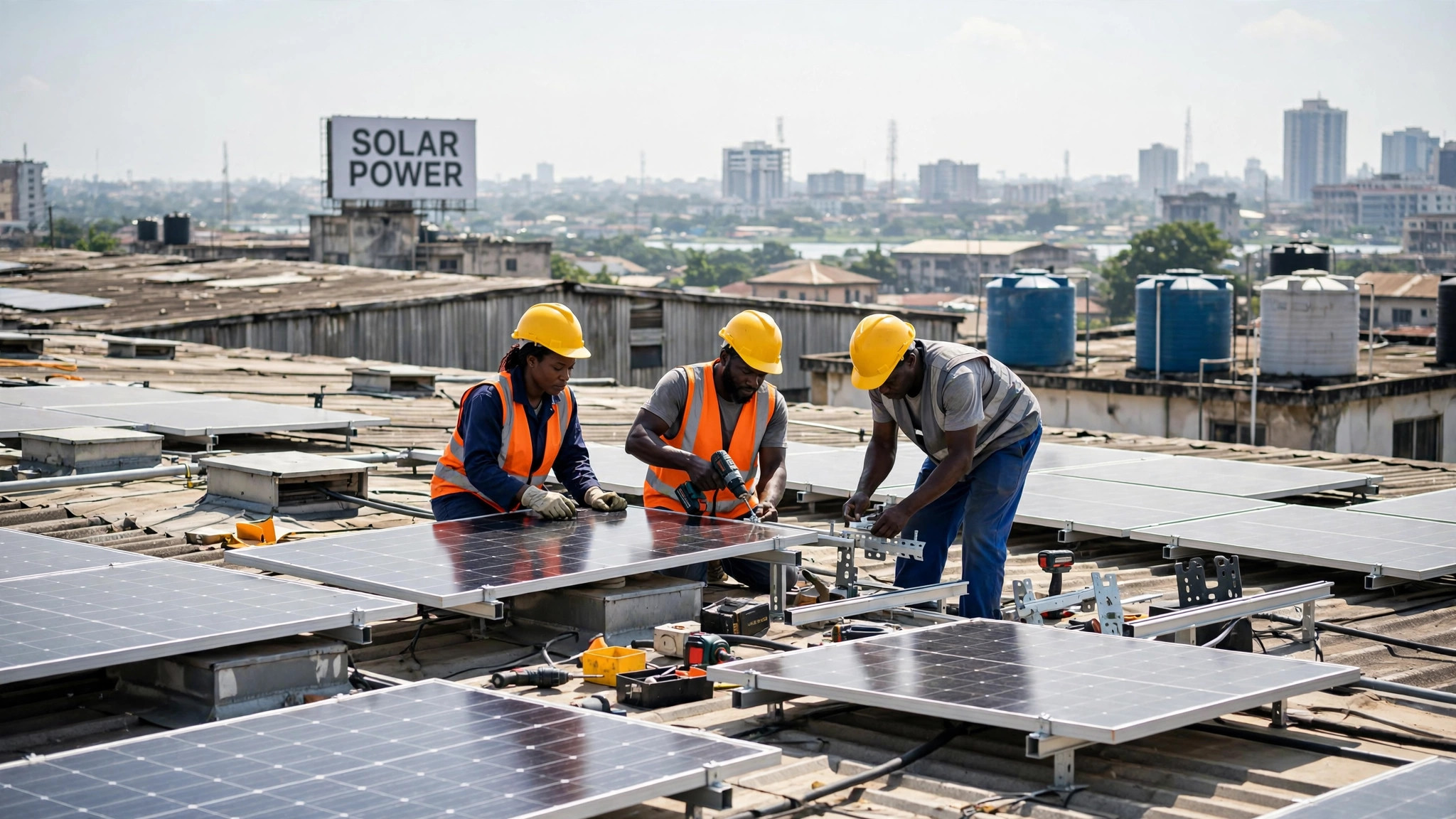
Africa is expected to install a record 17 gigawatts of solar capacity in 2026, according to analysis published by the energy think tank Ember in October 2026. Installations are rising about 45 percent year on year, after gains of 51 percent in 2025 and 25 percent in 2024, a three year acceleration with few precedents in energy history. The detail that should make planners in Hanoi sit up is the composition. About three quarters of the 17 GW is distributed solar: commercial rooftops, housing estates, hybrid backup systems and small installations that never appear in a ministry’s list of power projects. Africa’s biggest solar year is not being built by utilities. It is being installed, panel by panel, by customers.
The map is widening
Ember expects 36 of Africa’s 54 countries to set national installation records in 2026. Six countries have become gigawatt scale markets in a single year: South Africa at 3.3 GW, Egypt at 2.0 GW, Nigeria and the Democratic Republic of the Congo at 1.7 GW each, Algeria at 1.4 GW and Morocco at 1.0 GW. South Africa’s share of the continental total falls below 20 percent for the first time since 2019, which is the real headline: solar growth is no longer a South African story with African footnotes. Growth above 100 percent year on year is estimated in 19 countries, led by the Democratic Republic of the Congo at 544 percent, Zimbabwe at 282 percent, Egypt at 176 percent and Zambia at 117 percent. Much of the demand is defensive as much as environmental. In markets with unreliable grids, solar plus storage is replacing the diesel generator as the default insurance policy, a shift installers describe as a move from emergency backup to designed systems.
The measurement problem both continents share
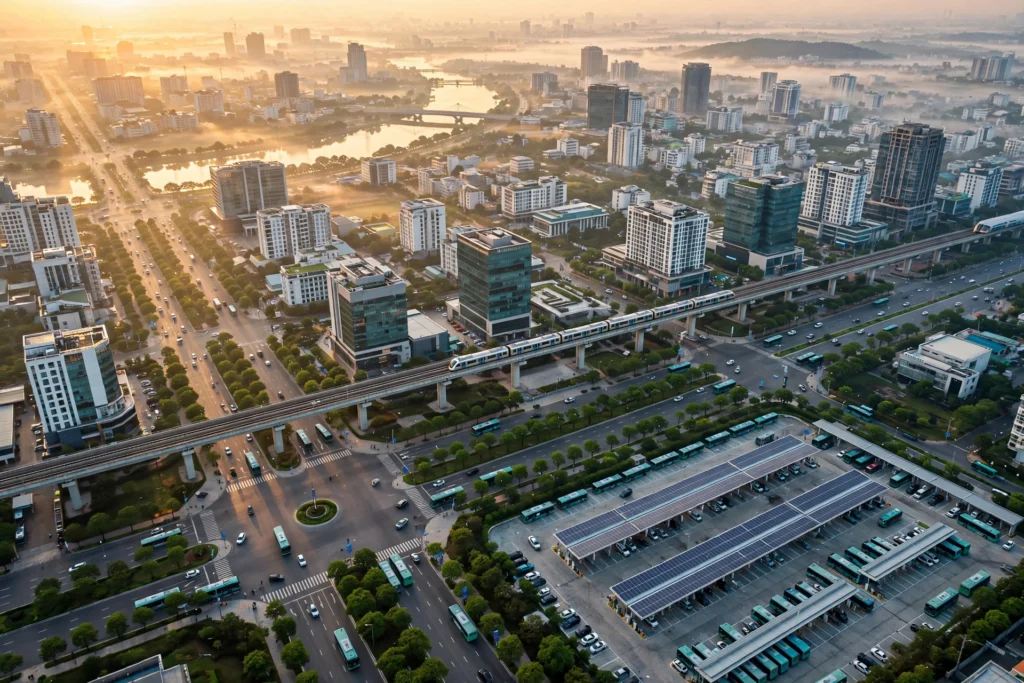
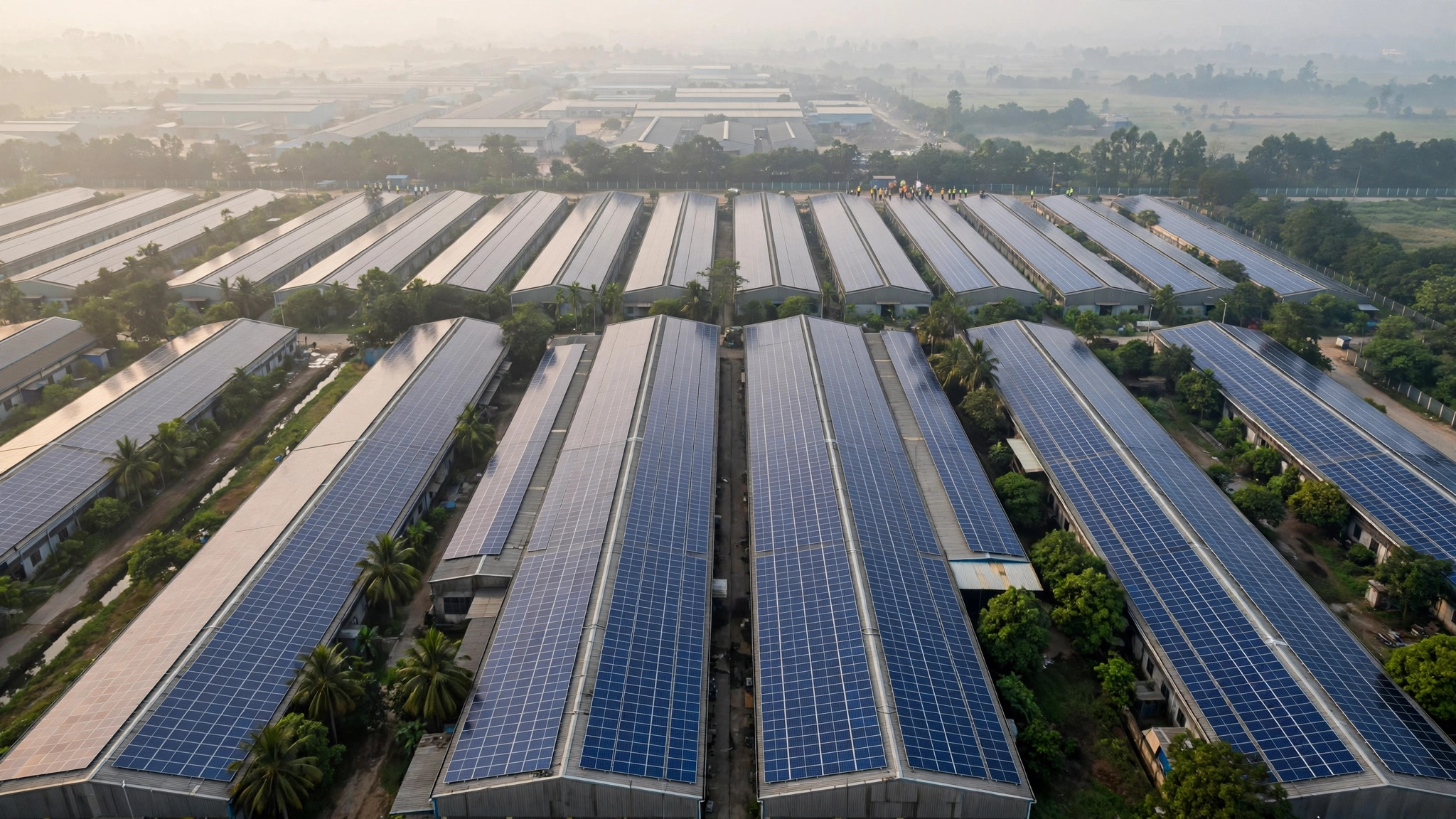
Ember’s method deserves as much attention as its headline. Because so much African solar is distributed and informal, official capacity registers miss it. Ember therefore builds its estimate from customs data on panel imports and installer surveys, adjusted for installation lags, and states plainly that these sources currently describe reality better than some national statistics. Only a minority of African countries publish solar capacity figures, and fewer still publish them quarterly. Vietnam will recognise this problem in its own mirror. Vietnam’s solar boom was also rooftop led and also ran ahead of the paperwork. The country’s authoritative count comes from the utility, not from project registries: EVN data put the national total at 130,811 rooftop systems with more than 11,200 MWp of capacity by the end of July 2026, generating 6.6 billion kWh in the first seven months of the year. Two different continents, the same statistical truth: when solar becomes a consumer product, the people counting panels at borders and on roofs know more than the people counting power stations.
Vietnam’s version of the same curve
Set the two stories side by side and the comparison sharpens. Africa’s 17 GW is one year of additions across 54 countries. Vietnam’s rooftop stock alone, 11.2 GWp accumulated in one country of 100 million people, was built mostly in a handful of years, and the flow continues: tens of thousands of new systems a year are still being added under the self consumption framework. The drivers rhyme. High retail electricity prices relative to falling panel costs. Grid stress at peak hours. Households and factories buying control over their own supply. The policy lesson runs in both directions. African regulators can study how Vietnam’s rooftop surge forced rapid rule making on surplus sales, metering and grid connection, including the arguments that produced the 2026 surplus sales framework. Vietnamese planners can study Africa’s warning: a distributed fleet that the system operator cannot see is a fleet it cannot plan around, and visibility, through registration, smart meters and honest statistics, has to be built while the panels go up, not after.
Access is the unfinished half
One figure keeps the celebration honest. Under Mission 300, the World Bank Group and African Development Bank initiative to connect 300 million people by 2030, more than 50 million people across 40 countries gained electricity access between July 2023 and June 2026. Yet the International Energy Agency estimates universal access in Africa needs about USD 15 billion a year, against less than USD 2.5 billion committed for new connections in sub Saharan Africa in 2023. Panels are arriving faster than grids, finance and connections. Vietnam’s experience is again instructive, in reverse: its challenge is not first access but absorbing abundance, managing midday surplus and evening peaks in a system that already reaches everyone. Reading Africa’s 17 GW year from Hanoi, the lesson is not that Vietnam is ahead or behind. It is that distributed solar has become the fastest moving part of the power system on two continents at once, and the countries that measure it honestly and wire it into planning will get the most from the flood of panels now arriving at their ports.
Related reading
- 130,811 Rooftops and Counting: Vietnam’s Solar Policy Meets Its Moment
- Energy Efficiency: the Cheapest Gigawatt
- Numbers That Matter: Vietnam’s Emissions Profile in Five Charts
Sources
Ember analysis published October 2026, carried by APO Group and Zawya, on Africa’s expected record 17 GW of solar installations in 2026, the six gigawatt scale markets, growth rates and the distributed share. African Power Platform reporting, June 2026, on Mission 300 connections by the World Bank Group and the African Development Bank, and IEA estimates of annual access investment needs. EVN data reported by Vietnam.vn, September 2026, on 130,811 rooftop solar systems totalling more than 11,200 MWp by end July 2026 and 6.6 billion kWh generated in seven months.