Why Vietnam needs a battery this big
Vietnam’s solar fleet produces most on the hours when demand is softest, around noon, and fades just as the evening peak arrives. Grid operators can curtail panels, burn more gas or coal at peak, or find somewhere to park the midday surplus. Pumped hydro storage is the oldest and largest answer to that problem: use spare electricity to move water uphill, then let it fall back through turbines when the grid is short. The Bac Ai project in the former Ninh Thuan province of south central Vietnam is the country’s first pumped storage plant, and at 1,200 MW it is sized like a major power station, because that is the point.
Step one: two reservoirs and a height difference
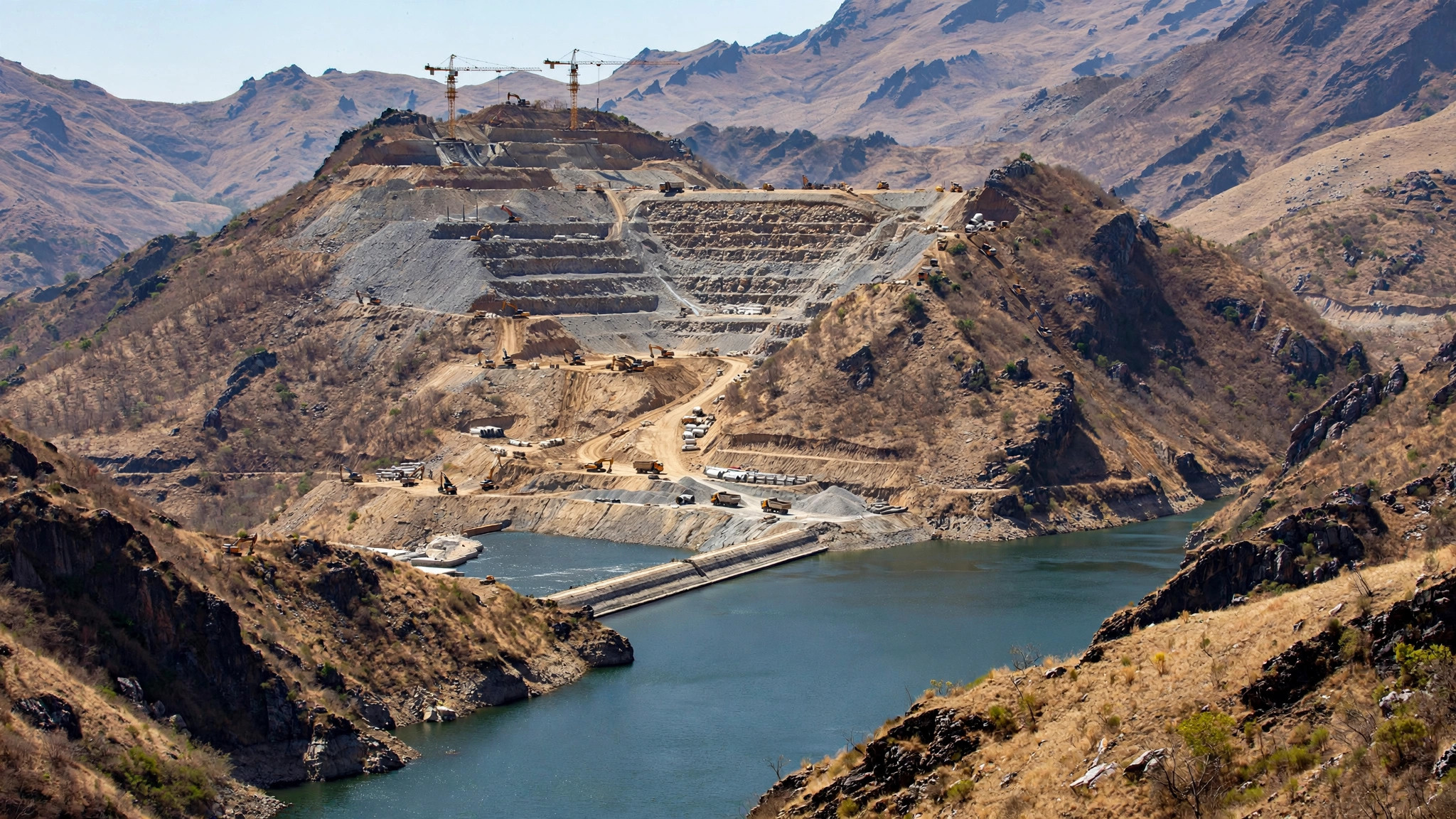
Every pumped storage plant is three things: an upper reservoir, a lower reservoir, and machines that can work in both directions. At Bac Ai, the lower reservoir already exists. It is the Tan My irrigation reservoir on the Song Cai river system, whose spillway works formed the project’s first phase, completed in 2021. The upper reservoir is being built new on the mountain above, and it has no natural inflow worth mentioning. Every drop it holds will have been pumped there. That is normal for modern pumped storage, and it underlines what the plant really is: not a water project that happens to generate power, but a storage device that happens to use water.
Step two: pump up when power is cheap
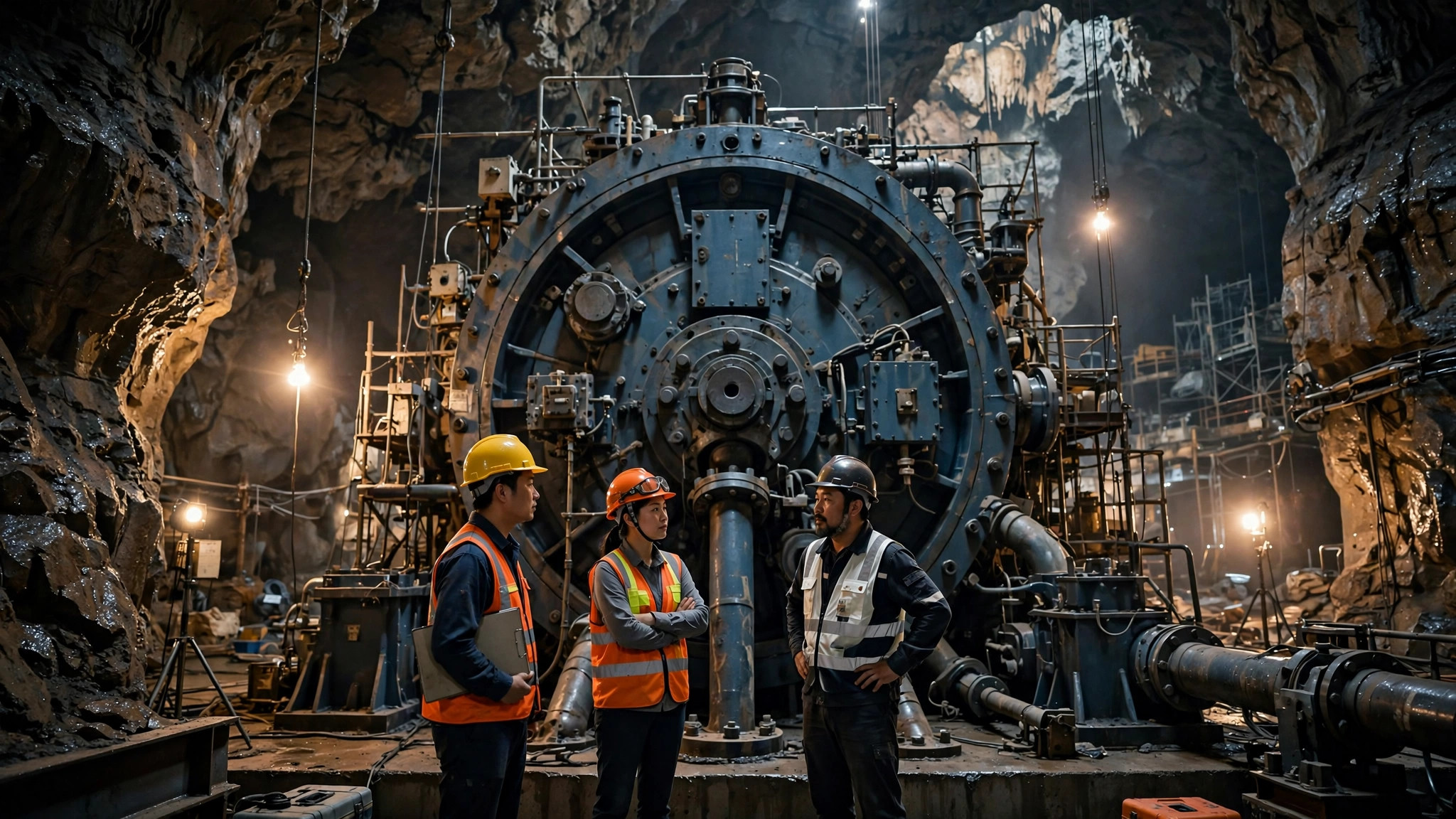
When the grid has surplus power, typically in the solar hours, Bac Ai’s machines run as pumps. Electricity drives the four units in reverse, pushing water from the lower reservoir up through pressure tunnels to the upper reservoir. The energy is stored as height. Nothing about the process is exotic, which is its virtue. There are no rare minerals, no cells to degrade, and no fire risk. The costs are concrete, steel, tunnels and time: the second phase construction package alone covers the pressure tunnel, surge tanks, an underground powerhouse, the 500 kV switchyard and the discharge works.
Step three: generate when the peak bites
In the evening, the flow reverses. Water released from the upper reservoir runs down through the same four units, now acting as turbines and generators, each rated at 300 MW. Together they can put 1,200 MW into the national grid through a 500 kV double circuit connection, fast enough to matter for evening ramps and firm enough to back up variable wind and solar across the south central coast, Vietnam’s densest renewable region. Round trip efficiency in pumped storage is not perfect; some energy is always lost in pumping and generating. What the grid buys with that loss is capacity it can command, which is a different product from energy it merely receives.
The bill, and who is paying it
Total investment is about VND 21.1 trillion, roughly USD 812 million at VND 26,000 to USD 1, funded from loans and the capital of Vietnam Electricity, known as EVN, which develops the project through its Power Project Management Board 3. The main construction contract package was awarded at about VND 4.33 trillion to a Vietnamese consortium. European money gives the project its international profile. In October 2025, at the Global Gateway Forum in Brussels, the European Commission and Team Europe partners including the French Development Agency, the European Investment Bank, Germany’s KfW, Italy’s CDP and Proparco announced a package of EUR 430 million, nearly USD 500 million, to advance Bac Ai as a flagship investment under Vietnam’s Just Energy Transition Partnership. A EUR 76 million credit facility with the French Development Agency followed in December 2025. In other words, the storage plant is also a test of whether JETP finance can move from pledges into excavated rock.
The timetable
EVN broke ground on phase two in February 2025, and main powerhouse excavation began in January 2026, with tunnel works progressing through the mountain. The first unit is scheduled to generate in December 2029, the fourth unit about a year later, and the full project is due for completion by May 2031. That is a long wait for a grid that needs flexibility now, and it explains why Bac Ai sits alongside faster options rather than replacing them: battery systems for hours of storage today, pumped hydro for decades of storage from 2030.
What pumped hydro cannot do
An honest explainer ends with limits. Bac Ai stores energy; it does not create it, and its economics depend on the spread between cheap surplus hours and valuable peak hours, plus the value the system places on firm capacity. It also arrives on a construction clock measured in years, through difficult underground geology, and its 1,200 MW, while large, is one plant against national demand growth. Vietnam will need more storage of every kind. But when Bac Ai’s first unit turns in late 2029, the country will own something it has never had: a mountain that behaves like a battery, charged by the noon sun and discharged into the evening peak.
Related reading
- JETP Money: Has the USD 15.5 Billion Started to Move?
- Storage Stops Being Optional: BESS in the New Rooftop Rules
- The Evening Peak Problem in Numbers
Sources
European Investment Bank press release, October 2025, on the EUR 430 million Team Europe package for the Bac Ai Pumped Hydro Storage Project under JETP. Vietnam Investment Review, February 2025, on EVN signing the Bac Ai construction contract: 1,200 MW in four 300 MW units, VND 21.1 trillion cost, first unit in December 2029 and completion by May 2031. SCI Group and consortium reporting, February 2025, on the phase two construction package scope, including tunnels, underground powerhouse and 500 kV switchyard.