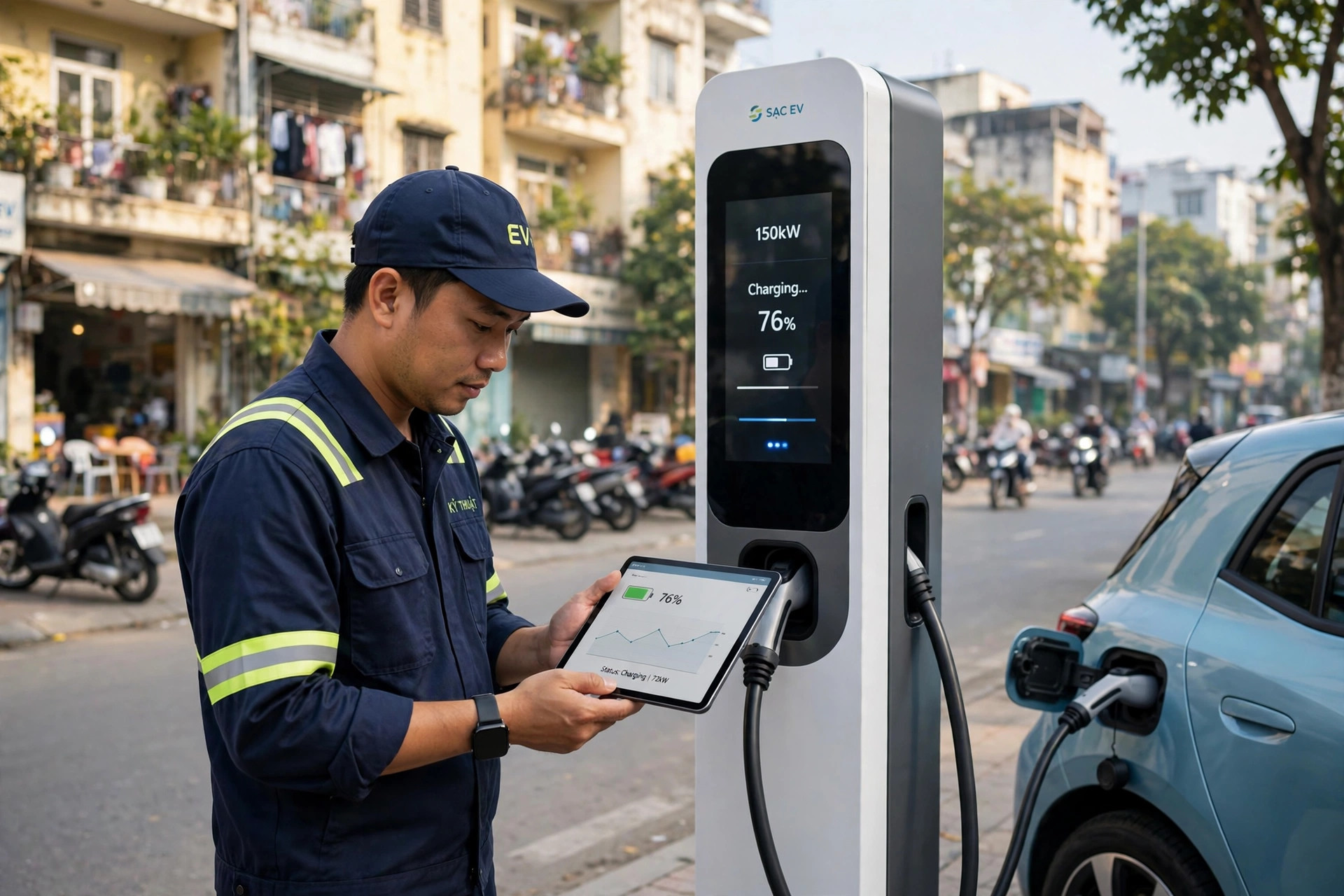
What has Vietnam actually decided?
On 29 September 2026, Vietnam’s Ministry of Industry and Trade issued Circular 61/2026/TT-BCT together with a national technical regulation called QCVN 32:2026/BCT. The circular and the regulation were issued on the same day, and both take effect on 1 July 2027.
In plain language, the decision sets the rules that public electric vehicle charging stations in Vietnam must follow. A technical regulation of this kind is not advice and it is not a voluntary label. Drivers may never read the document itself, but they will feel its effects every time they plug in, pay, and drive away. The regulation organises its demands into five groups: electrical and equipment safety; metering accuracy and transparent billing; connector and interoperability standards; fire prevention and protection; and the operation, monitoring and data reporting duties of station operators.
Why does a charger need a national rulebook at all?
Public charging looks simple from the driver’s seat. You arrive, you connect, energy flows, you pay. Behind that sequence sit questions that matter at national scale. Is the equipment electrically safe? Is the amount you are billed for the amount you actually received? Will the connector fit a vehicle from a different brand? What happens if something overheats? Who is watching the station, and what records does the operator keep?
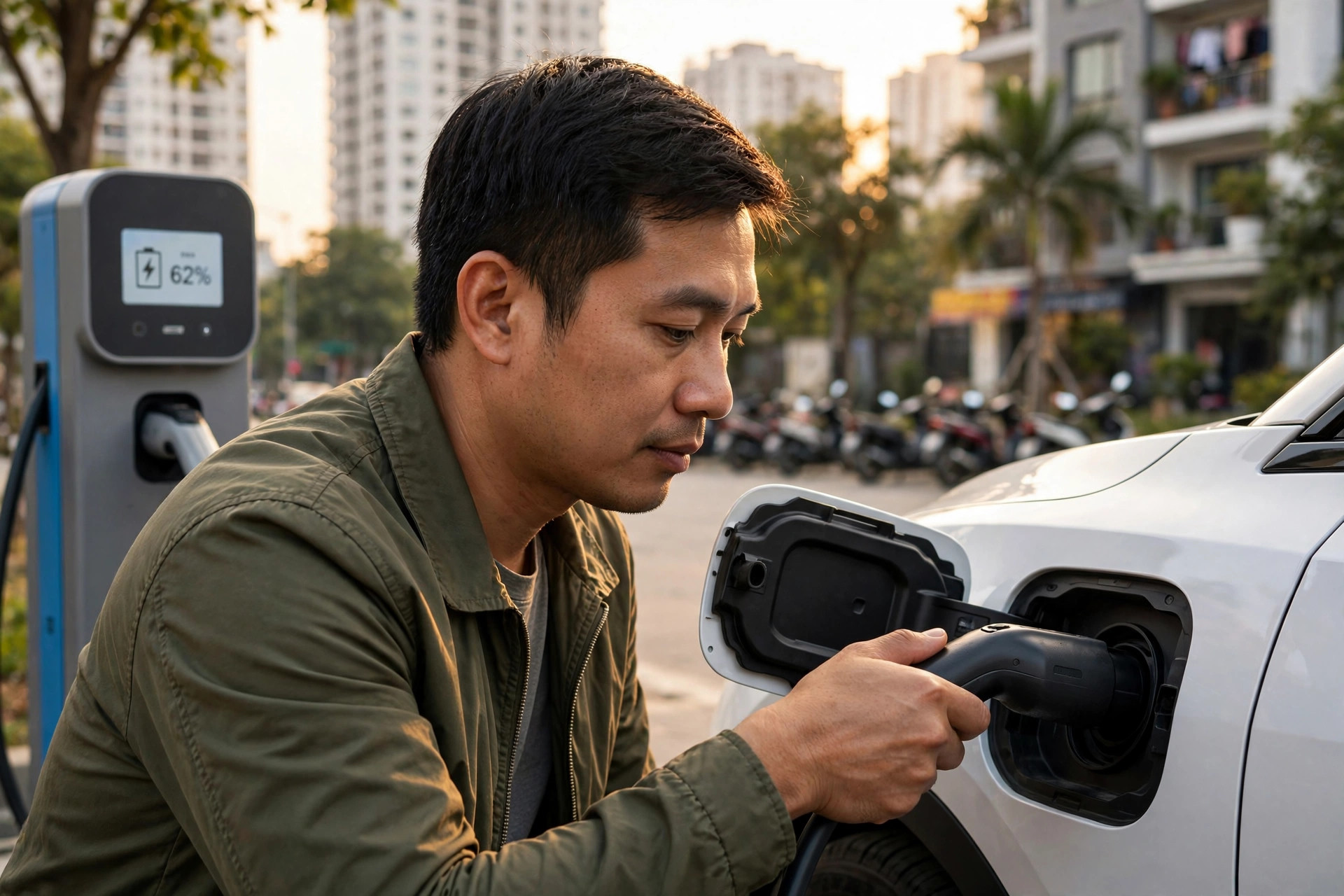
Vietnam’s market is no longer small. VinFast alone delivered 177,697 cars in the first nine months of 2026. Ho Chi Minh City is also rolling out battery swap cabinets toward supporting about 400,000 ride hailing and delivery riders, a reminder that public energy for electric two wheelers is becoming working infrastructure too.
Without common requirements, stations can differ so much that drivers cannot predict whether a charger will fit their vehicle, whether its meter can be trusted, or whether its safety systems meet a shared standard. QCVN 32:2026/BCT sets that shared baseline before fragmentation hardens.
Group one: electrical and equipment safety
The first group covers electrical and equipment safety. This is the foundation on which every other promise rests. A public charger handles significant electrical power, outdoors or in shared parking spaces, used by members of the public in all kinds of weather and at all hours. The regulation requires stations to meet safety requirements for the equipment itself and for its electrical installation and use.
For drivers, the benefit is straightforward. A compliant station is one they can use with confidence, knowing it has been built and checked against a national safety standard rather than the judgement of a single installer. For operators, a clear safety group also defines what good looks like, so investment can be planned against known duties instead of guesswork.
Group two: metering accuracy and transparent billing
The second group covers metering accuracy and transparent billing. It deals with a question every driver understands immediately. How much energy did I take, and how was my bill worked out?
Accurate metering means the measurement of electricity delivered can be trusted. Transparent billing means the driver can see and verify pricing, including pricing per kWh, rather than facing an unexplained total. One kWh is one kilowatt of power delivered for one hour, and it is the unit that lets drivers compare the cost of charging in the same way they compare the price of a litre of petrol.
This group protects trust in the whole system. If the meter is accurate and the price per kWh is clear and verifiable, charging becomes a normal purchase that can be checked like any other.
Group three: connector and interoperability standards
The third group covers connector and interoperability standards, with the stated aim that different vehicle brands can use the same station. Interoperability simply means that equipment made by different companies works together as the driver expects.
This group decides whether a public network feels like one network. A driver should be able to plan a trip around stations along the way without asking whether each was designed for a single brand only. Common requirements also help operators, because a station that can serve more vehicles has more potential customers, and vehicle makers can design for a known national standard.
Group four: fire prevention and protection
The fourth group covers fire prevention and protection. Charging stations combine electrical equipment, vehicles, and batteries in places where people gather, park, live, and work. The regulation treats fire safety as its own group of requirements rather than as a footnote to general electrical safety.
For station hosts, such as car parks, commercial buildings, and roadside sites, this clarity matters. A site owner needs to know that fire prevention and protection have been addressed under national rules, and drivers and neighbours gain confidence that a new facility has been planned with its risks properly managed.
Group five: operation, monitoring and data reporting
The fifth group covers operation, monitoring and data reporting duties for station operators. Building a compliant station is only the start. It must also be run properly, watched while it operates, and accounted for through the data and reports the regulation requires operators to provide.
This group turns one off construction standards into continuing duties. A station still needs to be maintained, monitored for faults, and managed by an operator who can answer for its performance. Data reporting also gives authorities a clearer picture of the network as it grows, supporting better planning for where charging is needed next.
What do drivers gain, and what happens to existing stations?
Taken together, the five groups give drivers three practical gains. They gain certified safe charging under a national standard. They gain per kWh pricing they can verify, based on accurate metering and transparent billing. They gain stations that accept any brand, because connector and interoperability rules are part of the same regulation.
Existing stations are not expected to change overnight. They get a transition window until 1 July 2027 to comply, the date the circular and regulation take effect. The window gives operators time to assess equipment, metering, connectors, fire protection, and operating systems against the five groups, and to upgrade where needed.
From 1 July 2027, a public charger in Vietnam will no longer be just a plug in a car park. It will be regulated national infrastructure, judged on safety, honest measurement, openness to different brands, fire protection, and accountable operation. Most drivers will never quote QCVN 32:2026/BCT by name. They will simply notice that charging feels safer, clearer, and more predictable, which is exactly what a good standard is for.
Related reading
- Standards Are the Market: Why QCVN 32 Matters Beyond Chargers
- Is the Grid Ready for a Million Electric Motorbikes in One City?
- 20,000 Sidewalk Cabinets: Ho Chi Minh City Bets on Battery Swapping
Sources
Ministry of Industry and Trade, Circular 61/2026/TT-BCT and national technical regulation QCVN 32:2026/BCT, issued 29 September 2026, effective 1 July 2027. VoltViet desk reporting from kynguyenso.com.vn and gocnhinxanh.com, October 2026, on Vietnam EV deliveries and Ho Chi Minh City battery swap cabinet rollout.