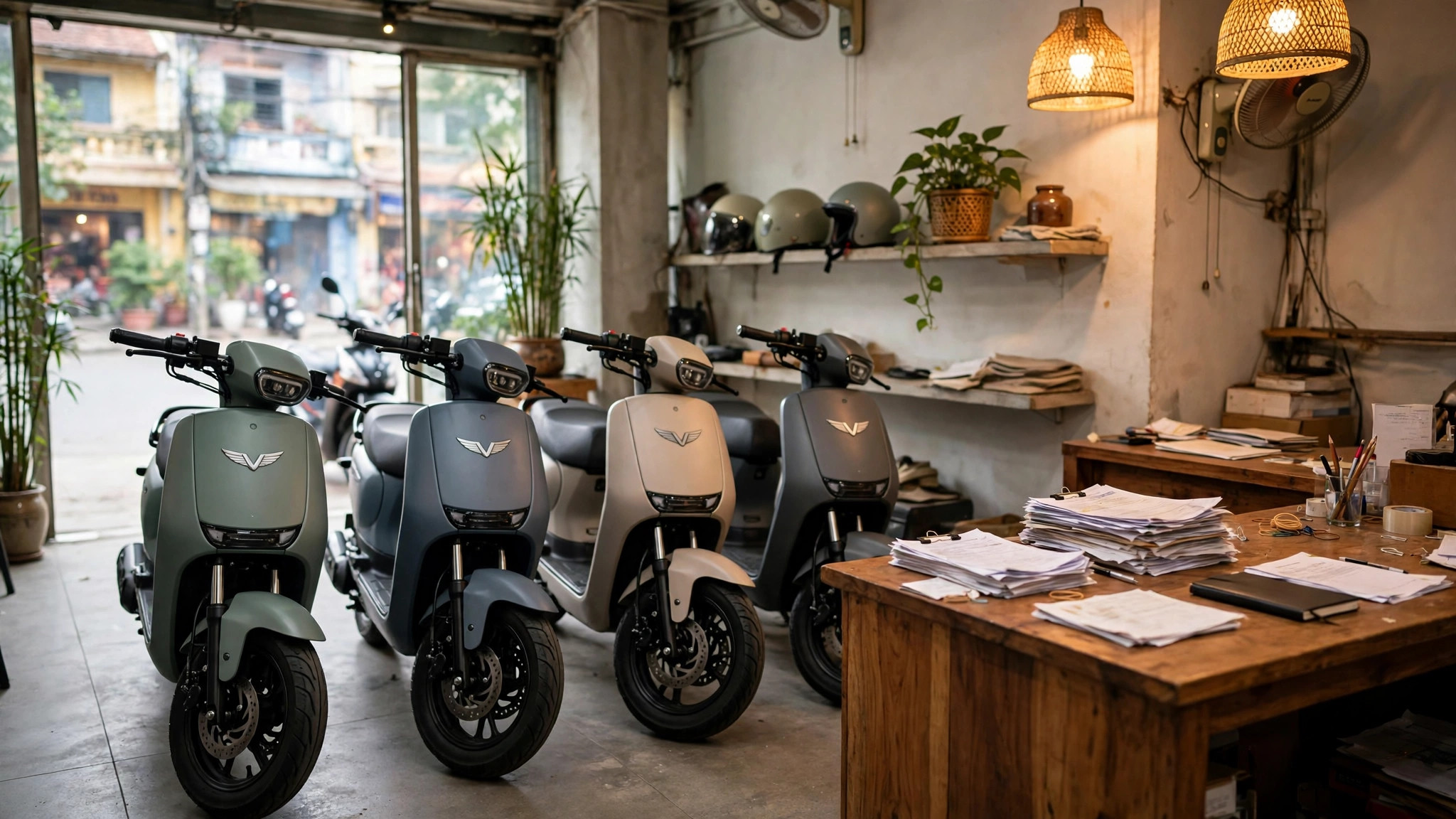
Hanoi wants to pay poor households the full price of a new electric motorbike, up to VND 20 million (about US$770), if they give up their petrol bikes. The city’s Department of Construction submitted the draft support plan to the Hanoi People’s Committee on November 2, in what would be the capital’s first direct cash subsidy for private electric two-wheelers.
The draft implements Resolution 68/2026/NQ-HDND, a resolution by the city’s People’s Council backing the conversion of road vehicles from fossil fuels to clean energy and encouraging public transport use. It is still a draft: the People’s Committee has yet to approve it, and nothing is being disbursed yet.
How the money would work
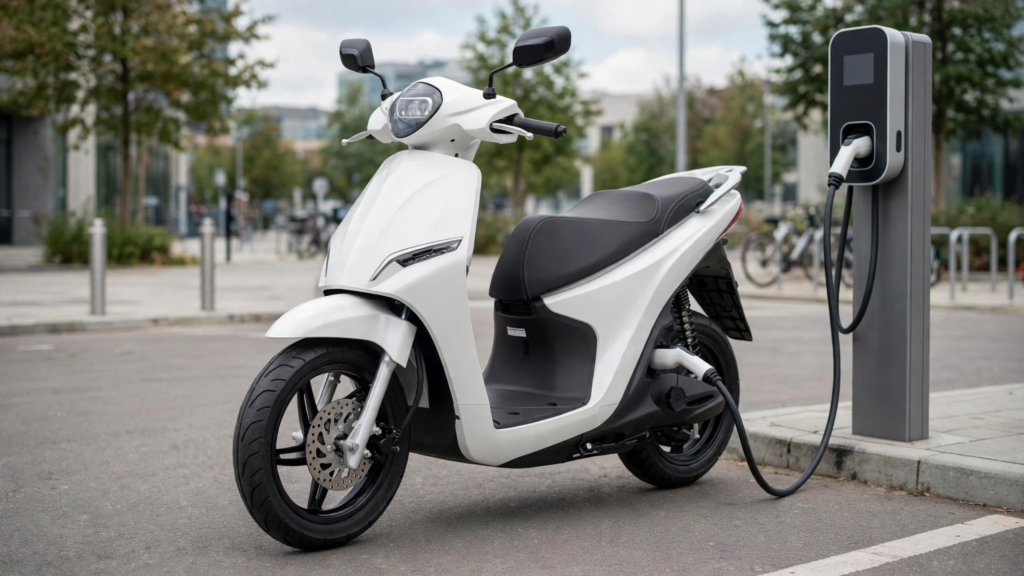
The proposed support is straightforward. It would cover 100 percent of the new vehicle’s price, capped at VND 20 million. The basis for the calculation is the price on the legal purchase invoice, including value-added tax but excluding accessories, insurance, financial service charges and other incidental costs.
An electric motorbike priced at VND 18 million would draw VND 18 million in support, the full amount. A VND 25 million model would draw the VND 20 million maximum, with the buyer paying the remaining VND 5 million. Each person could receive the support once, for one motorcycle or scooter, and the policy window would run from the resolution’s effective date through December 31, 2027.
Who qualifies, and what they must do
The draft sets four conditions. The applicant must belong to a poor household under the multidimensional poverty standard approved by the city People’s Committee for 2026 and 2027. Their “place of residence” or “current address” on the VNeID system must be in Hanoi, confirmed by the commune People’s Committee. They must own a fossil-fuel motorcycle or scooter registered before the resolution took effect. And the switch must be completed within the policy window: the old vehicle transferred, assigned or removed from low-emission zones, or otherwise disposed of under city rules, while the new green vehicle is registered.
The procedure leans on population data and VNeID to keep the paperwork light, a deliberate choice for applicants who are least able to navigate bureaucracy. Subsidies that the poor cannot claim do not reach the poor, and the draft’s authors appear to know it.
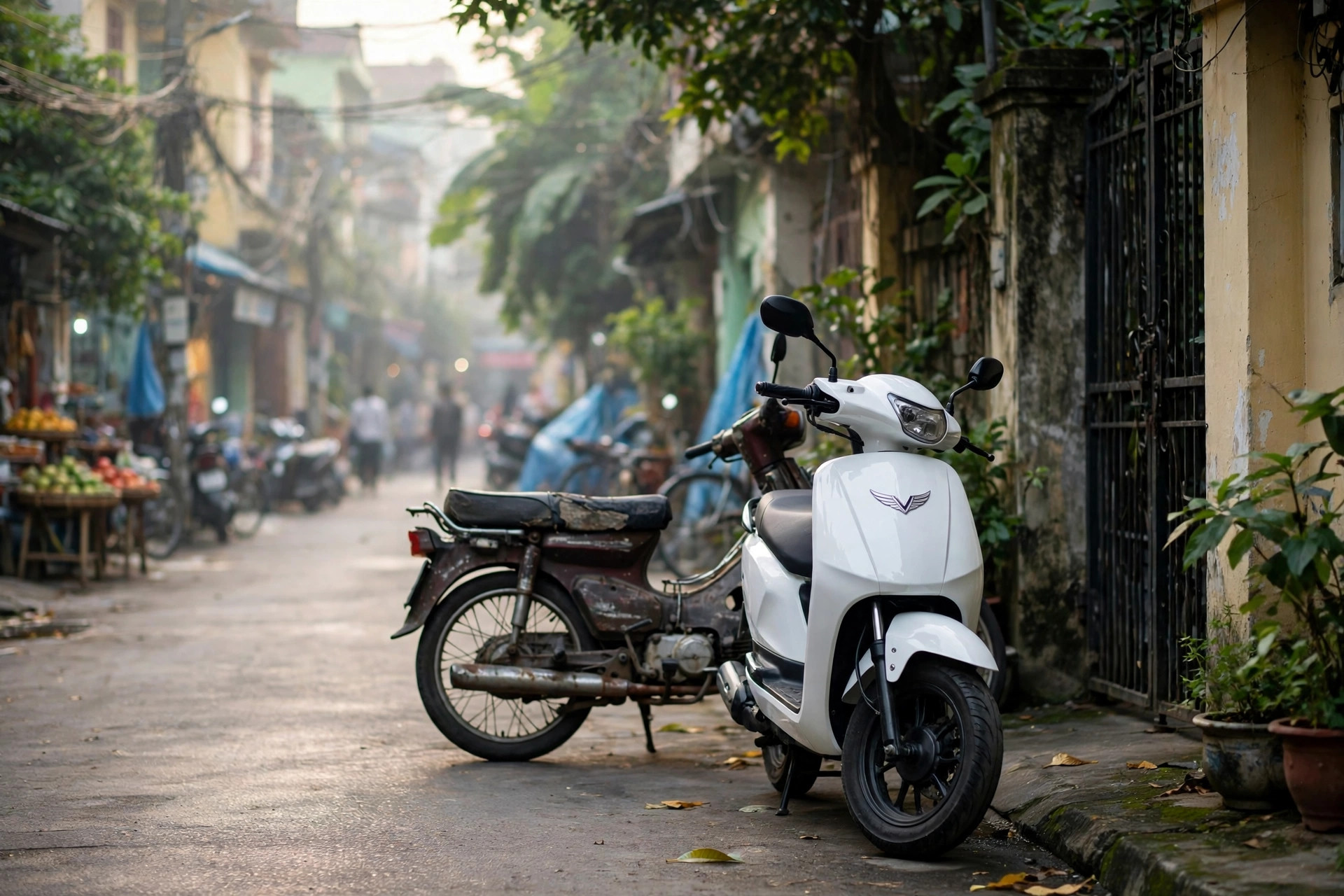
The old-vehicle rule is the clause that makes the whole design work. The draft does not pay people to buy an electric bike while the old petrol one keeps running on Hanoi’s streets: the fossil-fuel vehicle must be transferred, assigned or removed from the low-emission zone, or otherwise disposed of under city rules. Without that condition, the program would move the problem rather than solve it, subsidizing new purchases while the old exhausts stay inside the zone.
Why the poorest riders come first
The subsidy answers the hardest question in Hanoi’s transport transition. Since July 1, the capital has been running a low-emission-zone pilot around Ring Road 1, putting the city’s roughly 450,000 central motorbikes at the center of a managed shift (see the zone’s roadmap). The zone asks private owners to change how they move, and the owners least able to afford a new vehicle are the ones the zone would otherwise punish first.
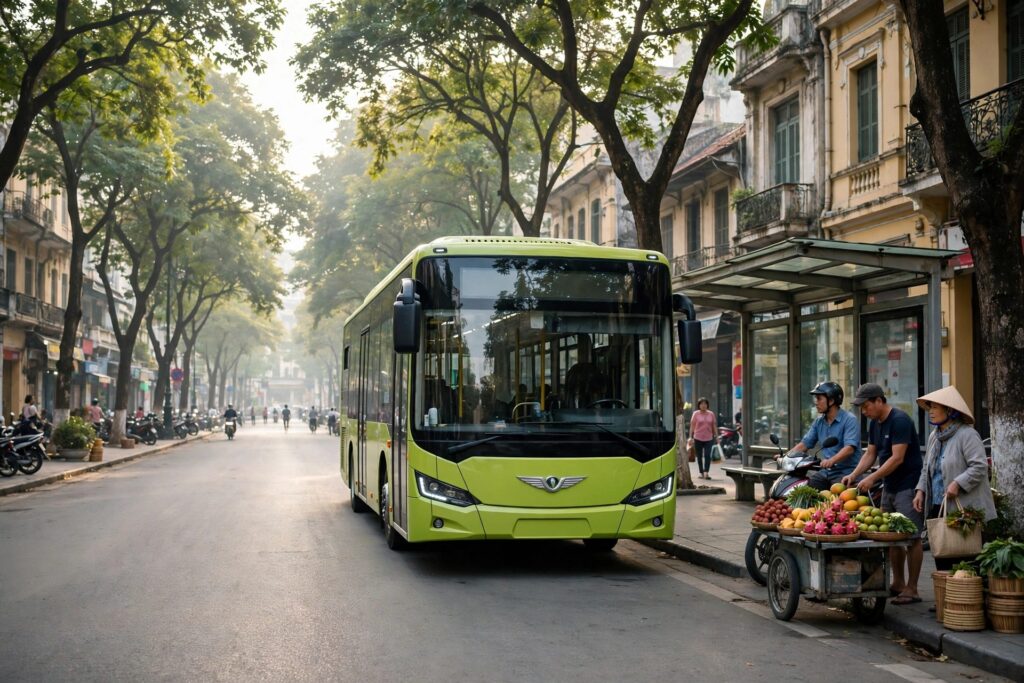
Hanoi has already shown it will convert what it owns first: the city switched bus route 40 to full electric operation on November 1, part of an October wave that put 94 electric buses on the streets. Subsidizing private switches is the harder half of the same program, because the city controls neither the purchase nor the timing.
The market the subsidy would feed is already moving fast. Affordable domestic electric models have been driving the segment’s growth, and the VND 20 million ceiling is sized to cover an entry-level electric motorbike in full, judging by the draft’s own example of a VND 18 million model. For background on the market, see our overview of Vietnam’s electric two-wheeler sales.
What to watch
Two caveats. First, this is a draft submitted for approval, not a policy in force, and the disbursement machinery, commune-level verification, invoice checks, and the old-vehicle disposal chain all exist on paper so far. Second, the subsidy’s success will be measured in completed switches, not submitted applications. Hanoi’s poor households will need the new bikes to be at least as useful as the petrol ones they replace: range for a working day, charging they can reach, and workshops that can fix them.
The clock is also part of the design. The window runs to the end of 2027, giving the city roughly fourteen months from now to turn a draft into disbursed money. That is not generous for a program that must stand up commune-level verification and an old-vehicle disposal chain from scratch, which is why the VNeID-based procedure matters: every month lost to paperwork is a month of the window burned.
If the draft clears those hurdles, it sets a template other Vietnamese cities can copy as low-emission zones spread beyond the capital. The transition has a fairness problem built into it. Hanoi is now drafting an initial answer.
Sources
VOV (Vietnam’s national radio broadcaster), November 2, 2026: Hanoi Department of Construction submitted to the city People’s Committee a draft decision on direct cash support procedures for poor-household individuals switching fossil-fuel motorbikes to green transport; support of 100 percent of the new vehicle price, maximum VND 20 million; invoice price including VAT, excluding accessories, insurance and financial service fees; examples of VND 18 million (full support) and VND 25 million (VND 20 million maximum); once per person for one motorcycle or scooter; policy applies until December 31, 2027; eligibility under the city People’s Committee’s multidimensional poverty standard for 2026 and 2027; VNeID Hanoi residence confirmed by the commune People’s Committee; fossil-fuel bike registered before the resolution took effect; conversion within the policy period; implements Resolution 68/2026/NQ-HDND of the Hanoi People’s Council. https://vov.vn/xa-hoi/ha-noi-du-kien-ho-tro-ho-ngheo-toi-da-20-trieu-dong-khi-doi-sang-xe-may-dien-post1346573.vov
vietnam.vn (the state’s official external information portal, English edition, sourced from ANTD.VN), November 2, 2026: confirms the draft submission, the 100-percent support capped at VND 20 million, the VAT-inclusive invoice basis, the 18-million and 25-million examples, the once-per-person rule, the December 31, 2027 window, the poverty-standard and VNeID conditions, the pre-resolution registration condition, and the requirement to transfer, assign or remove old vehicles from low-emission zones or apply other city-prescribed disposal measures while registering the new green vehicle. https://www.vietnam.vn/en/ho-ngheo-o-ha-noi-co-the-duoc-ho-tro-den-20-trieu-dong-khi-doi-sang-xe-dien