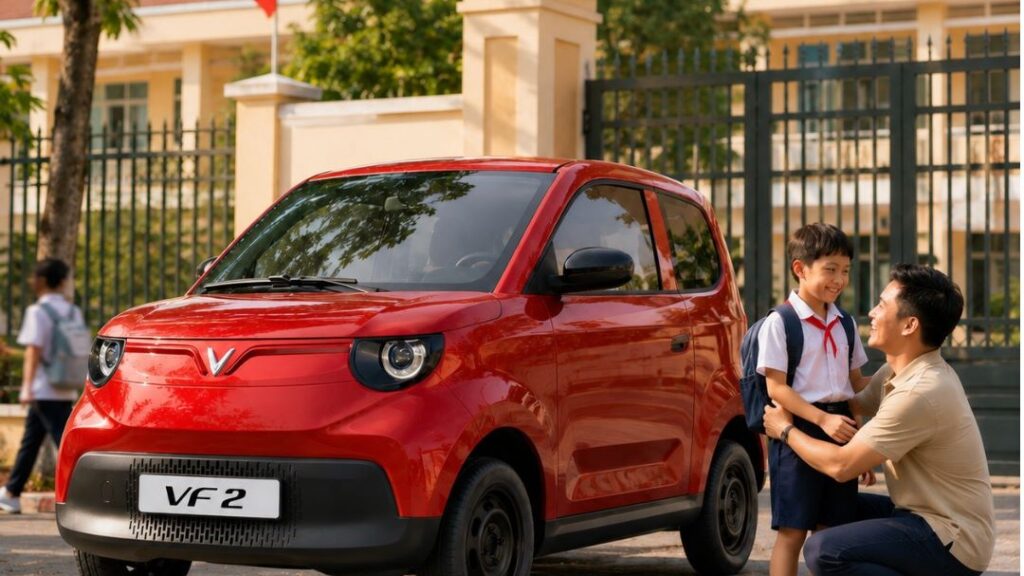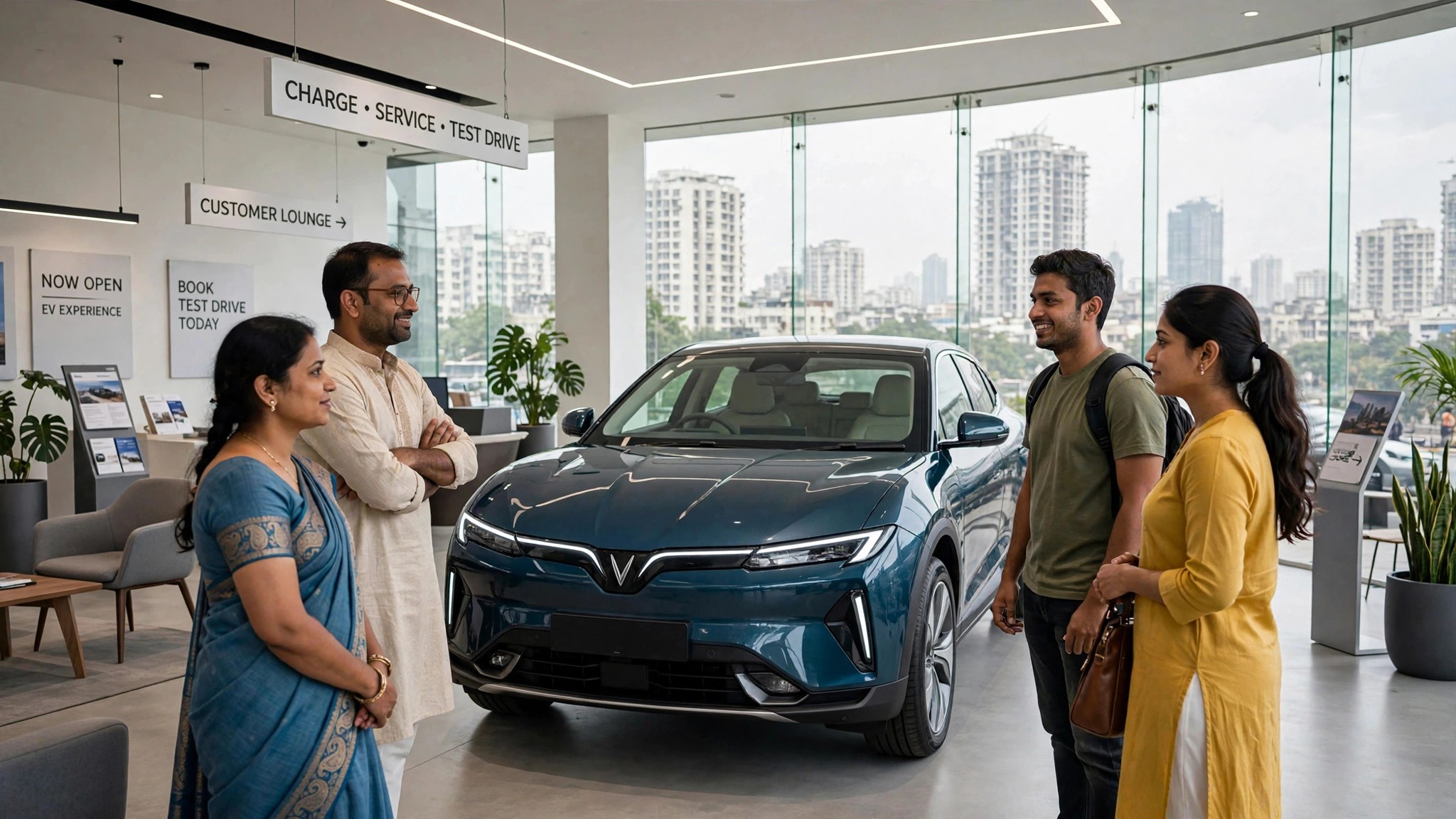
A showroom network is growing faster than the supply chain behind it. VinFast says it will reach 75 showrooms and more than 230 workshops across India by the end of 2026, a retail footprint that would suit a maker selling far more cars than it does today. The company has sold about 10,000 vehicles in India since launching in September 2025, including deliveries to its affiliated ride-hailing company Green SM, according to Reuters reporting in September 2026. That gap, between a national sales network and a still modest sales base, is the heart of the export wager. VinFast is building the visible parts of a mass-market business first, and betting that volume follows before the fixed costs bite.
The retail build-out is real, and it is broadening
The latest product step came with the VF MPV 7, the third model in India after the VF 6 and VF 7 sport utility vehicles, priced at Rs 24.49 lakh before registration costs, with a fleet version called Limo Green to follow on the same platform. Moneycontrol reported in April 2026 that the company plans to launch two new electric cars every year in India, quoting VinFast India chief executive Tapan Ghosh in paraphrased remarks at the launch briefing. A maker adding two models a year needs dealers who believe the showroom floor will stay fresh, and a workshop network wide enough that buyers outside the biggest cities trust the brand with servicing.
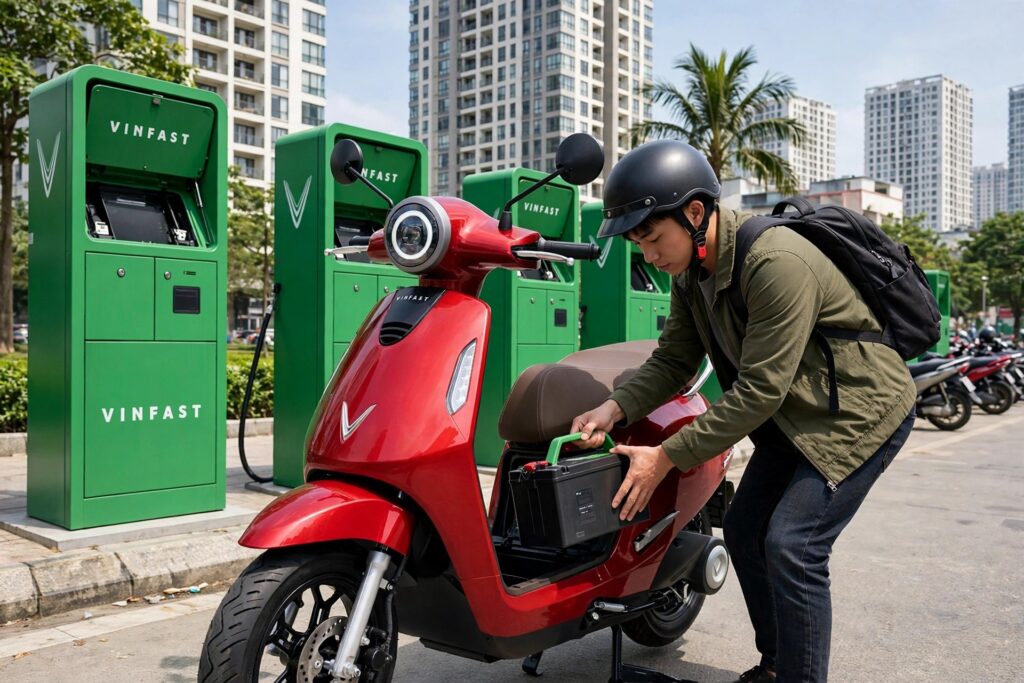
The two-wheeler push shows the same pattern. In early October 2026, letters of intent were signed at the Hai Phong complex in Vietnam with more than 50 dealers covering 34 cities in 15 states and territories, for electric scooters including the Evo, Feliz and Viper, to be assembled from kits at Thoothukudi. Retail first, product close behind, manufacturing depth later: the sequence is consistent across both vehicle lines.
The factory is in India, the value chain is still catching up
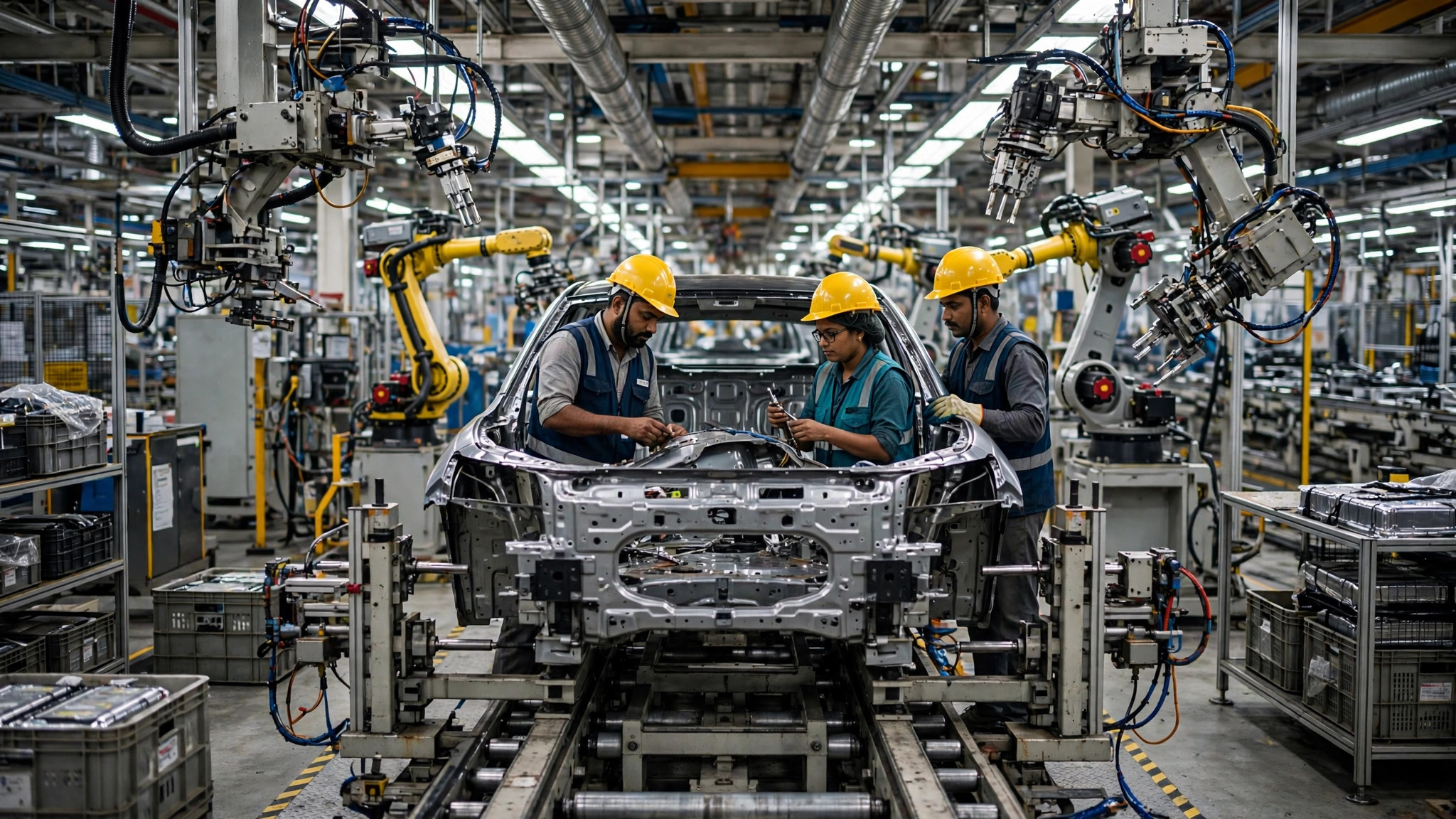
The title of this analysis needs one clarification. The cars are no longer simply exported from Vietnam. VinFast assembles vehicles at Thoothukudi in Tamil Nadu, a plant of about 400 acres with initial capacity of 50,000 vehicles a year, expandable to 150,000. Yet assembly is not the same as a local cost base. Reuters reported on September 1, 2026 that the company had temporarily paused development work with Indian suppliers on local parts for the VF 3, VF 6 and VF 7 after failing to meet its planned costs for developing those parts locally, and had asked suppliers to detail what they had invested so far. Local sourcing is what would let VinFast avoid expensive imported components and price more sharply against Tata Motors, Mahindra and Hyundai.
The company response, also reported by Reuters, was that current VF 6 and VF 7 assembly continues and that India remains central to its long-term manufacturing strategy. A follow-up report on September 10, 2026 described a shift toward two India-specific models built with tooling and components already available from Indian suppliers, including an entry model aimed below USD 12,000. For context, the VF 6 currently starts at about USD 19,000 and the VF 7 at about USD 24,250 in that reporting. The pivot is an admission that global models with imported kits struggle at Indian price points, and a plan to fix the cost base at the design stage rather than at the discount stage.
The second phase money tells the longer story
Beyond cars, the expansion agreement signed with Tamil Nadu in late 2025 adds about 200 hectares next to the existing plant and a planned USD 500 million investment in production lines for electric buses and electric scooters, inside a broader USD 2 billion commitment to India, according to ETAuto reporting in September 2026. That is not the spending pattern of a company testing a market with imports. Buses and scooters are volume businesses with thin margins, local tenders and demanding service expectations. They only make sense if the India operation becomes a manufacturing base in its own right, supplying its home market first and regional export markets over time.
What volume would change the maths
Consider the capacity ladder. At 50,000 vehicles a year of initial capacity, and about 10,000 vehicles sold in roughly the first year including fleet deliveries to an affiliate, sales still run well below the plant’s initial design capacity, and each car carries a heavy share of plant, network and brand costs. That comparison sets sales against design capacity rather than measured assembly output, and the plant is still in its ramp-up phase. Registration data also show the monthly trend improving. VinFast retailed 2,963 electric cars in India in September 2026, fourth in the passenger EV market at about 8.23 percent of the segment. That was up from 2,239 in August, and it took the cumulative total for the first half of fiscal 2027 to 10,826 vehicles. At sustained retail volumes several times higher, three things change. First, supplier economics improve, because Indian parts makers invest when order books justify tooling, which is precisely the step that stalled in 2026. Second, the workshop network of more than 230 sites becomes an asset that supports resale values instead of a fixed cost looking for work. Third, the scooter and bus lines gain a shared service and charging ecosystem, lowering the cost of launching each new category.
The demand side offers genuine room. Reuters noted that electric models now account for more than 7 percent of car sales in India and that the government targets 30 percent by 2030. A market growing into that target can absorb a determined new entrant, but only at prices Indian families accept, which circles back to local content.
What to watch next
Watch three signals into 2027. First, whether the two India-specific models reach the market with high local content and the promised entry pricing. Second, whether showroom growth to 75 sites is matched by retail sales to private buyers, not only fleet deliveries within the group. Third, whether the bus and scooter lines at Thoothukudi move from agreement to production, because they would confirm that India is becoming the second factory system of the group, not a showroom outpost of the Vietnamese one. The wager is coherent. Its cost is front-loaded, its payoff depends on localization, and its deadline is set by how long a 75-showroom network can wait for the volume it was built to serve.
Related reading
- 23,624 Cars in One Month: Reading VinFast’s September Numbers
- Free Charging Until 2029: the Economics of V-Green’s Long Bet
- Southeast Asia’s EV Scoreboard, First Half 2026
Sources
Moneycontrol, April 2026, on the VF MPV 7 launch, two new models a year, and the target of 75 showrooms and more than 230 workshops by the end of 2026. Reuters, September 1, 2026 and September 10, 2026, on about 10,000 vehicles sold in India, the pause in local parts development, current model pricing and the India-specific model plan. ETAuto, September 4, 2026, on the Tamil Nadu expansion agreement, USD 500 million for bus and scooter lines, the USD 2 billion India commitment and capacity rising toward 150,000. Autocar Professional, October 2026, on September 2026 VAHAN registration data.