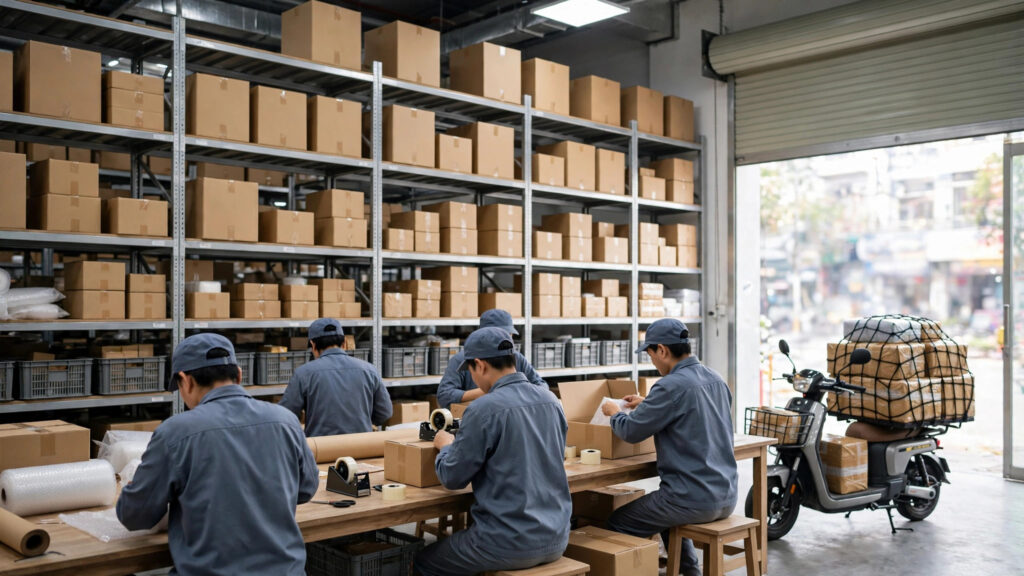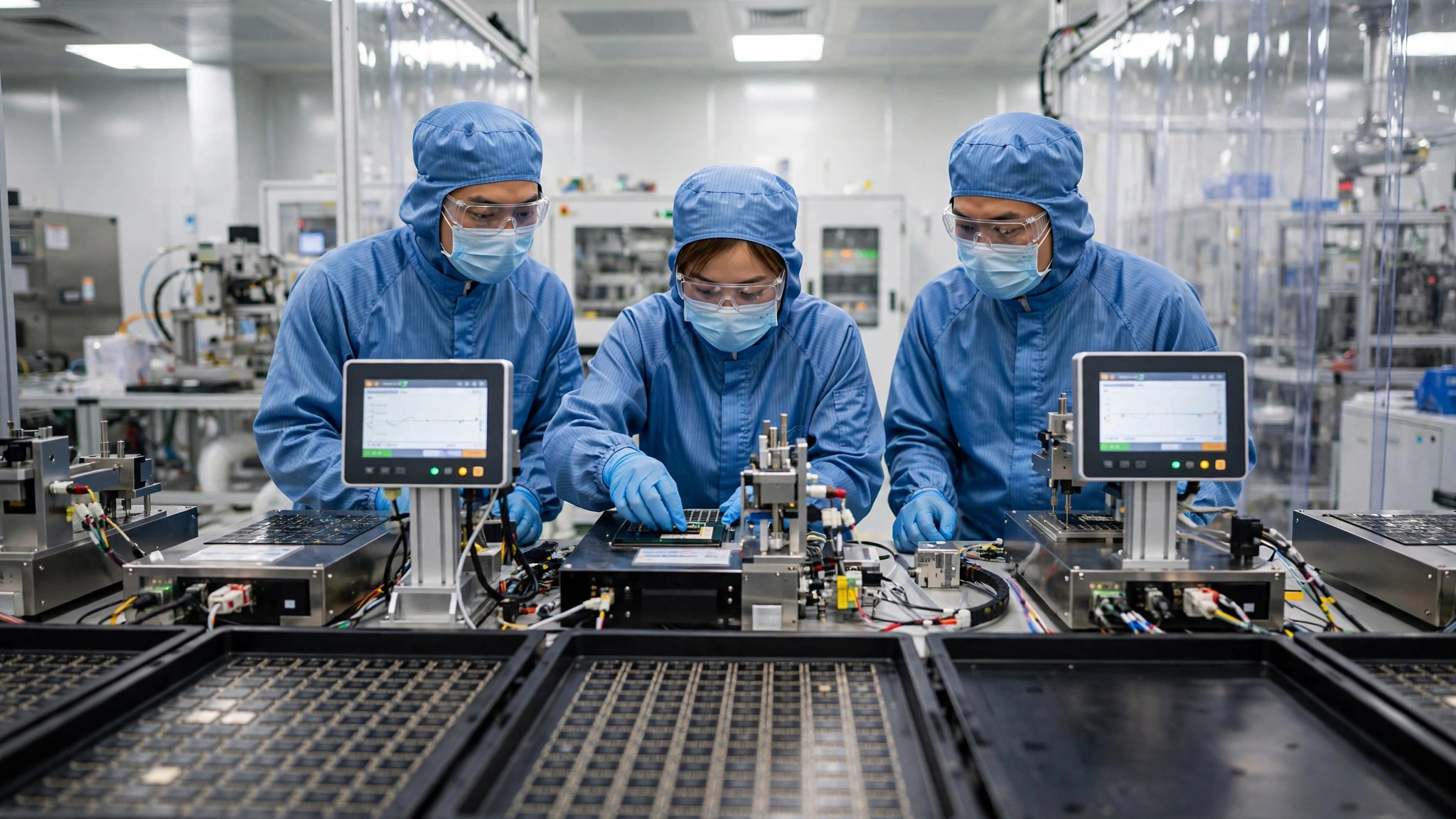
For decades, Vietnam’s place in electronics was the final pair of hands: assemble the product, test the finished box, ship it. The high value middle, where chips are designed, fabricated, tested and packaged, happened somewhere else. On January 28, 2026, in Hanoi, FPT Corporation announced a plant that moves one of those middle steps onto Vietnamese soil under Vietnamese ownership: an Advanced Semiconductor Testing and Packaging Plant in Yen Phong II-C Industrial Park, in the northern province of Bac Ninh. It is a modest building by the standards of the industry it enters, 1,600 square meters in its first phase. The people story inside it is larger, because testing and packaging is where a generation of Vietnamese engineers stops watching the chip industry and starts working in it.
A factory announced like a promise
The announcement ceremony set the tone. Representatives of the Ministry of Science and Technology attended, alongside leaders of Viettel Group, universities, research institutes and partners from Japan, South Korea, Taiwan and beyond. FPT signed cooperation agreements with Viettel and international partners at the event, and set out a research direction on edge AI system on chip products. Deputy Minister Bui Hoang Phuong said, in paraphrase, that the plant would fill a gap in Vietnam’s semiconductor ecosystem. FPT Chairman Truong Gia Binh framed the ambition in the company’s own terms: Vietnamese professionals worldwide have strong potential in semiconductors, and the critical challenge is linking those people together to build a domestic ecosystem, bringing chips developed in Vietnam into real products through cooperation with Viettel and other domestic partners. These are careful words for an unglamorous discipline. Testing and packaging does not photograph like a fabrication plant. It is, however, where chips either become trustworthy products or expensive scrap.
What the lines actually do
Phase one, covering 2026 to 2027, installs six functional testing lines built around automated test equipment and handlers, plus a dedicated area for reliability and durability testing: burn in, reliability testing and failure analysis, all to global semiconductor standards. In plain language, chips arrive from fabrication, much of it still overseas for FPT’s own designs, and the Bac Ninh lines interrogate them. Does each device perform to specification, at speed, at temperature, after stress? Which failures are random, and which reveal a design or process problem that engineering must fix? Phase two, from 2028 to 2030, expands the site to about 6,000 square meters, adds conventional and advanced packaging lines alongside more testing, and targets capacity in the billions of products per year. The plant will also strengthen testing for high end chips serving the Internet of Things, automotive applications and edge AI. FPT has designed chips in Vietnam while manufacturing them overseas. Bac Ninh brings the verification stage home, closing the loop between the design desk and the physical device.
The students in the corridor
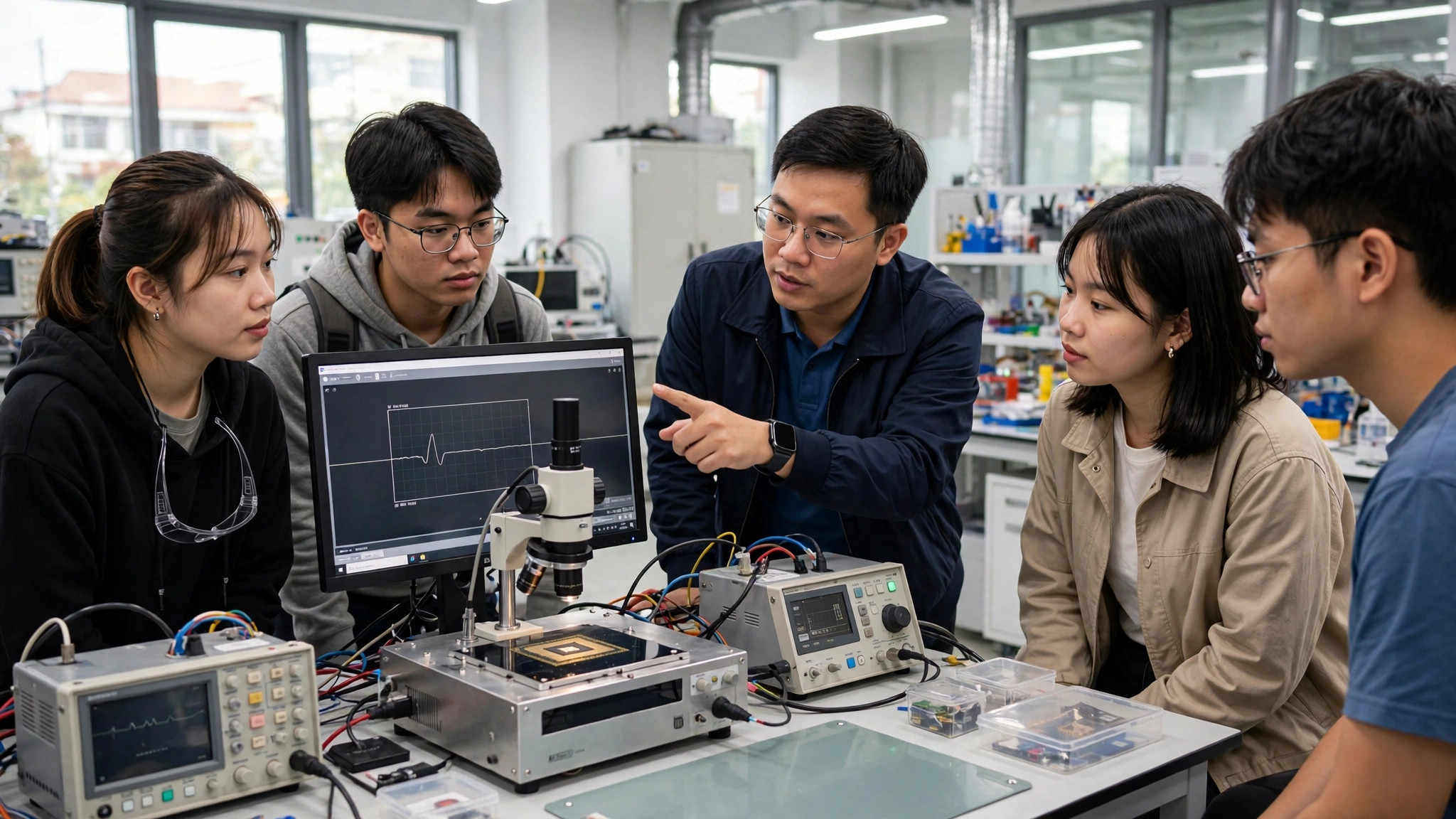
The plant’s second product is people. FPT and the ministry both stressed that the facility will provide hands on practice and experimentation for semiconductor students in Vietnam, against a national goal of 50,000 semiconductor professionals by 2030, including at least 35,000 in manufacturing, packaging, testing and related stages. That ratio tells the real story of the industry. For every celebrated chip designer, the value chain needs many more test engineers, process technicians, reliability specialists and packaging engineers, roles that cannot be learned from slides alone because they live in the behavior of real machines and real defective parts. A working line in Bac Ninh, an hour from Hanoi’s universities, is a classroom that lectures cannot replicate. A student who has watched a handler jam, traced a test escape, or read a failure analysis report owns a different kind of knowledge, the kind employers in Intel, Amkor and Hana Micron facilities in Vietnam already pay for. Foreign firms built substantial testing and packaging capacity in Vietnam first, as industry reporting by The Investor notes. FPT’s step is distinct because the owner is Vietnamese, which changes where the profits, the process knowledge and the career ladders accumulate.
Why this step, in this order
Sceptics ask why Vietnam celebrates the back end of the chip chain when the front end, fabrication, carries the prestige. The answer is sequence. Assembly, testing and packaging is the segment where Vietnam’s existing manufacturing base, workforce discipline and foreign investment already give it standing, and where a domestic firm can enter without betting billions on a fab. Design came first for FPT, which sells chip design services and its own products. Testing and packaging follow naturally, because they sit adjacent to design feedback: the test floor tells the design team the truth about its work faster than any simulation. The national strategy points the same way, targeting ten advanced testing and packaging facilities by 2030, with FPT’s plant counted as an early Vietnamese owned contribution. Viettel’s parallel moves in fabrication, covered elsewhere in this bank, address the front end. The ecosystem argument only works if every stage has a domestic practitioner somewhere, learning by doing.
What success will look like
Success will not arrive as a headline. It will arrive as yield statistics that improve quarter by quarter, as automotive and edge AI customers who accept Bac Ninh test results without sending parts abroad for confirmation, as graduates who choose the plant because it teaches them a trade the region respects, and as a phase two expansion that is justified by full phase one lines rather than by ceremony. The plant is small, the ambition around it is national, and the distance between those two facts is exactly the work. On the evidence of January 2026, FPT has chosen the step it can actually climb: from assembling other people’s products, through designing its own, to proving them, chip by chip, at home.
Related reading
- Vietnam’s First Chip Fab: What a 32nm Line Can and Cannot Do
- A Prototyping Center Tries to Cut the Cost of a First Chip
- The Talent Equation: 50,000 Engineers Do Not Appear by Decree
Sources
VietnamPlus (VNA), January 28, 2026, on the FPT Advanced Semiconductor Testing and Packaging Plant announcement, Yen Phong II-C Industrial Park location, phase one of 1,600 square meters with six testing lines and phase two expansion to 6,000 square meters. VOV English, January 29, 2026, on the plant as the first of its kind owned by Vietnamese, its reliability testing systems and the national goal of 50,000 semiconductor personnel by 2030 including 35,000 in manufacturing, packaging and testing. EE Times Asia and PR Newswire, January 2026, on cooperation agreements with Viettel and partners, edge AI system on chip direction and the national target of ten advanced testing and packaging facilities by 2030.