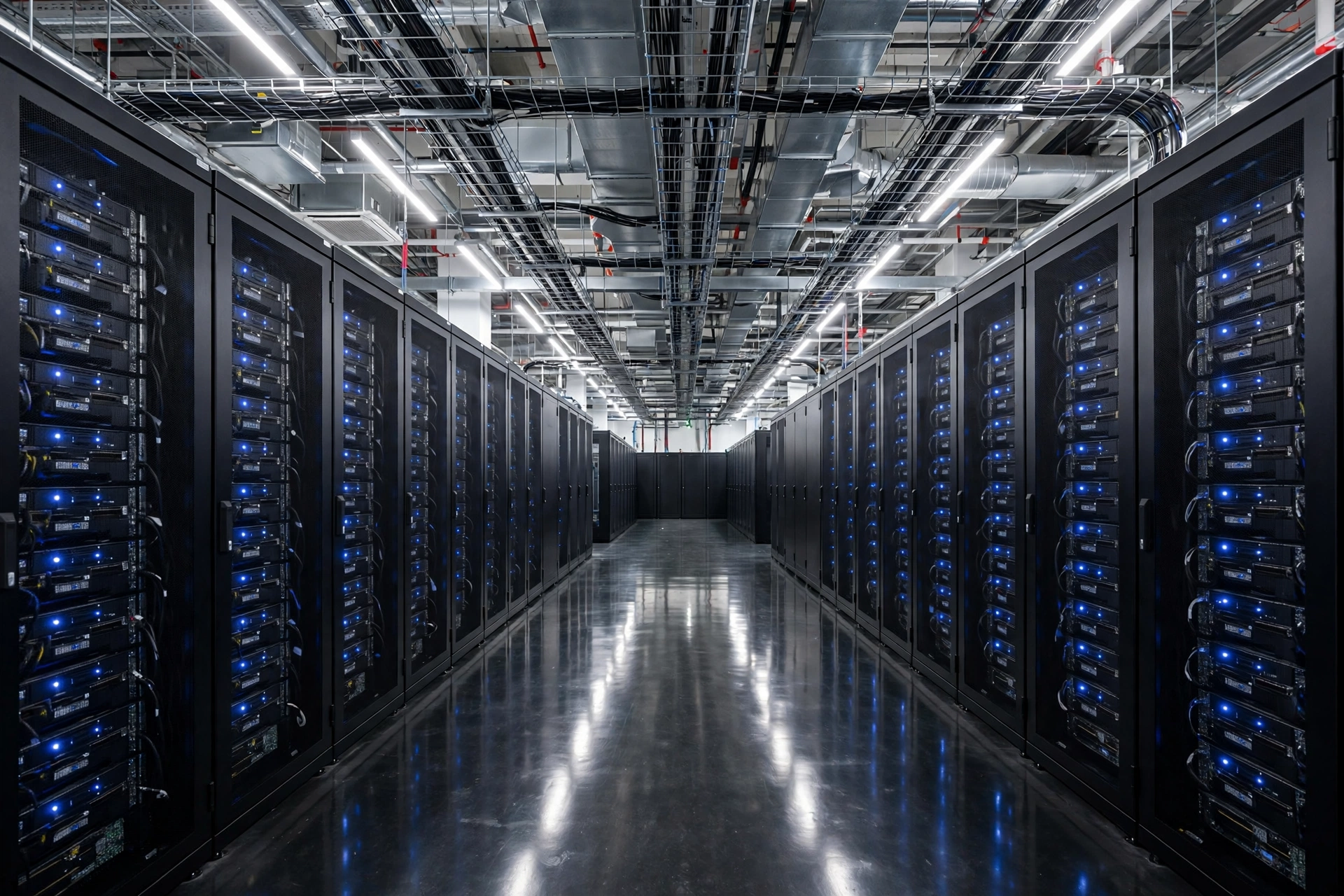
A major Vietnamese bet on AI infrastructure is starting to pay for itself. FPT says its two AI Factory clusters, in Vietnam and Japan, ran above 90 percent utilization and turned profitable in the second quarter of 2026. Analysts at ACBS and SSI estimate the AI Factory business generated about USD 12 million in revenue in the first half of the year. This provides strong early evidence that GPU capacity in Vietnam can be a viable business, not just a capital project.
Profitable at 90 percent
The numbers come from two directions. FPT itself announced that both AI Factory clusters crossed 90 percent utilization and made a profit in the second quarter, according to Vietnamese business press. SSI research put it the same way: the AI Factory has been profitable since the second quarter of 2026 and is running at above 90 percent capacity. Vietcap added that bringing the Vietnam AI Factory into operation helped lift margins in FPT’s domestic technology segment.
A note of caution accompanies this milestone. Profitable is not the same as paid back. FPT has not disclosed the full capital each cluster actually cost or their separate cash flows, so the distance from quarterly profit to recovering the investment cannot be measured yet. What can be measured is demand: 90 percent utilization means customers are paying for nearly all the compute on offer.
The contract structure explains why revenue follows slowly. FPT vice chairman Nguyen The Phuong addressed that gap at an online workshop hosted by Ho Chi Minh City Securities on July 31, 2026. He said AI Factory contracts in Japan typically run two to three years. The full contract value is counted in new signings when the deal is signed, while revenue is recognized gradually as the service is delivered. In the first half of 2026, new contract signings in FPT’s overseas IT business rose 32.3 percent while recognized revenue grew 13.4 percent; Japan alone grew 24.4 percent. The pipeline is filling faster than the revenue line shows.
What the nine-month numbers show

The AI Factory milestone is reflected within a strong nine-month result. FPT reported revenue of VND 40,023 billion for the first nine months of 2026, up 12.4 percent from a year earlier. Pretax profit reached VND 8,770 billion, up 17 percent, and net profit attributable to parent shareholders VND 7,778 billion, up 13.3 percent. Those growth rates are on a like-for-like basis: FPT Telecom is no longer consolidated as a subsidiary, so the comparison excludes it from last year’s base. On a straight reported basis the headline figures declined.
The third quarter alone set a record. Revenue reached VND 13,754 billion, up 12.1 percent, and pretax profit VND 3,056 billion, up 15 percent. Parent net profit hit VND 2,723 billion, up 11.8 percent from a year earlier and 6 percent from the previous quarter, the highest quarterly net profit in the company’s history. The pretax margin widened to 22.2 percent from 21.7 percent a year earlier, according to HSC. Net profit grew more slowly than pretax profit because corporate income tax incentives at FPT’s facilities in Ho Chi Minh City expired in June 2026.
AI is now a visible line in the accounts. Revenue from AI and data analytics reached VND 2,915 billion in the first nine months, up 55 percent from a year earlier. That is about 10 percent of FPT’s overseas IT revenue, and roughly USD 112 million at VND 26,000 to the dollar. The technology segment, which now drives the group after the telecom deconsolidation, contributed 89 percent of revenue. FPT won 16 projects worth more than USD 10 million each in the nine-month period.
Where the growth comes from
Two engines are running at once. Overseas IT, the larger one, brought in VND 28,538 billion in nine months, up 11.6 percent. Digital transformation services grew 16 percent and now make up 51 percent of that revenue. Europe was the fastest-growing region at 35.4 percent. In the third quarter Europe added VND 1,242 billion, up 28 percent, and the United States VND 2,226 billion, up 8 percent.
The domestic business is smaller but accelerating. Domestic IT revenue reached VND 6,977 billion in nine months, up nearly 30 percent, while pretax profit more than doubled to VND 542 billion. The third-quarter pretax margin hit 8.5 percent, up three percentage points from a year earlier. HSC called the result above expectations. Vietcap pointed to public-sector digitalization: the upgraded national legal database of the Ministry of Justice, the social assistance facility database of the Ho Chi Minh City Department of Health, and the Digital Union app on the city’s Digital Citizen platform all went live this year.
The valuation gap
The market has not rewarded the numbers. FPT shares have fallen about 30 percent since the start of the year, trading around VND 57,800 in late October. They are down nearly half from their peak. The price-to-earnings ratio, measured on year-end market value against audited parent net profit, compressed from 28.6 times in 2024 to 17.4 times in 2025. Profits are rising while the market pays less for each dong of them.
Analysts describe two pressures. In a June 5, 2026 report, Vietcap cut its target P/E for FPT’s overseas IT business from 26 to 17 times. The reason given was short-term concern about AI-driven price deflation, as clients expect productivity gains to show up in service prices. In an August 11 report, SSI cut its target P/E for the technology segment from 17 to 14 times, arguing that high interest rates could last longer than expected. As AI shortens coding, testing, and maintenance time, contracts priced by headcount or hours face pressure before new AI service demand is large enough to offset it.
Why this matters
The AI Factory result matters beyond one company’s quarter. Vietnam’s data center pipeline rests on the assumption that compute demand will pay for the power and the concrete. A GPU cluster running above 90 percent utilization and turning a profit provides the first strong local indication that the demand side of that assumption holds, and it comes from a Vietnamese operator rather than a foreign hyperscaler.
The test now is conversion: turning signed contracts into recognized revenue, profit, and cash, quarter after quarter, while the valuation debate runs its course. If FPT can do that, its AI Factory becomes the template for monetizing AI infrastructure in a market that has talked about AI mostly in policy documents. If it cannot, the 90 percent figure will read as a peak, not a floor.
Sources
vietnamdaily, October 23, 2026: FPT’s AI machine starts making money, AI Factory above 90% utilization: https://vietnamdaily.kienthuc.net.vn/co-may-ai-cua-fpt-bat-dau-kiem-ra-tien-doanh-thu-gan-3000-ty-dong-ai-factory-chay-tren-90-cong-suat-post4296608196.html
bbw.vn, October 15, 2026: FPT, CMC profits rise while shares keep falling: https://bbw.vn/fpt-cmc-loi-nhuan-tang-co-phieu-van-giam-60962.html
24hmoney, October 21, 2026: FPT reports record profit: https://24hmoney.vn/news/fpt-bao-lai-ky-luc-c2a2847820.html