Vietnam's Carbon Exchange Now Has an Operating Rulebook: Decree 29/2026 Explained
A carbon market is only as real as its plumbing. Decree 29/2026/ND-CP, issued by the Government on 19 January 2026 and effective the same day, supplies that plumbing for Vietnam: it is the first complete rulebook for organising and operating the domestic carbon exchange, covering registration, custody, trading and settlement of emission allowances and carbon credits.
Document facts
Issuing body: Government of Vietnam
Document number: Decree 29/2026/ND-CP, on the domestic carbon exchange
Signed: 19 January 2026
Effective: 19 January 2026
Status: In force; the exchange operates on a pilot basis to 31 December 2028
Unofficial English summary for reference only. Not a legal translation and not legal advice. The Vietnamese text linked at the end of this page is authoritative.
What the document does
The decree runs to six chapters and thirty five articles. It defines what may be traded on the exchange: greenhouse gas emission allowances and carbon credits that qualify for trading under Decree 06/2022/ND-CP, the framework decree on greenhouse gas mitigation, as amended by Decree 119/2025/ND-CP. Units that do not qualify under that framework cannot be listed, however they were created.
It then builds the market around a register first principle. Before an allowance or a credit can be deposited or traded, it must be registered on the National Registration System managed by the Ministry of Agriculture and Environment. The ministry records the information on each unit and its owner, issues a single unified domestic code, and sends the resulting lists to the securities infrastructure that runs the market.
What changes in practice
The operating roles are assigned to institutions that already run Vietnam's securities market. The Hanoi Stock Exchange, HNX, organises and operates the trading system for carbon. The Vietnam Securities Depository and Clearing Corporation, VSDC, performs custody and settlement. The Vietnam Stock Exchange supervises the market as a whole. Trading members are securities companies approved to join the carbon depository and settlement system, and each participant trades through a single dedicated carbon trading account, kept fully separate from its other trading activity.

Settlement discipline is strict by design. Trading is organised so that a seller must hold the units and a buyer must hold the funds before a trade is executed, and results are recorded on the system at the time of the transaction. For participants, the practical consequence is that carbon behaves like a security operationally, with the same account opening, custody and reporting habits, even though what changes hands is a tonne of carbon dioxide equivalent.
The cost of learning the market is deliberately low during the pilot. Under the roadmap article of the decree, VSDC, the Vietnam Stock Exchange and HNX charge no service fees on the domestic carbon exchange during the pilot period to the end of 2028. From 1 January 2029, fees apply as provided by law.
Who is affected
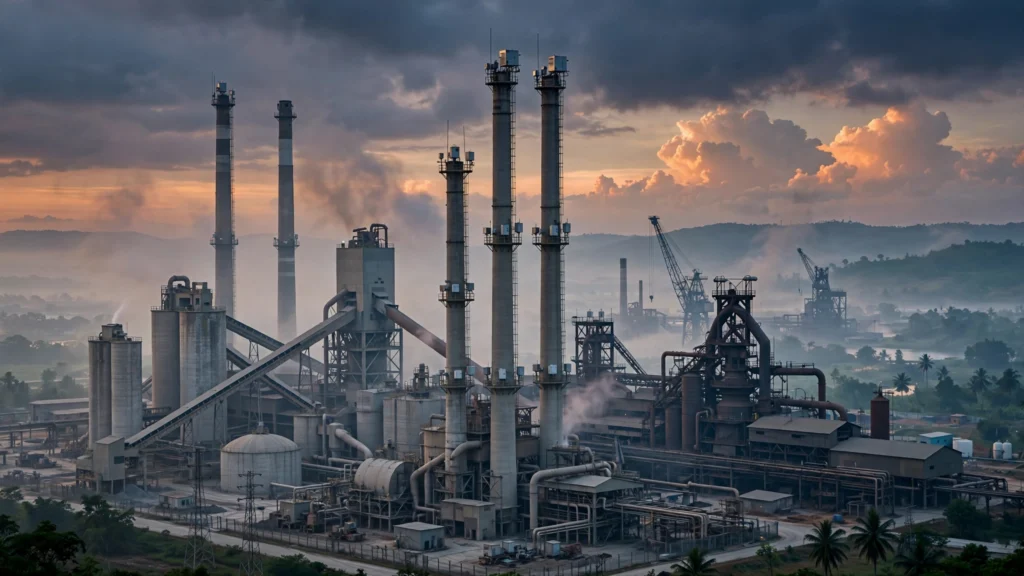
The first circle is the covered facilities, initially thermal power, steel and cement plants holding allocated allowances, which now have a defined venue and procedure for balancing their positions. The second circle is the supply side: project developers generating carbon credits, from forestry to renewables and methane capture, who must register their credits before they can reach a buyer. The third circle is financial: securities companies acting as trading members, and the advisers and verifiers who will build services around the market.
Notes for investors and operators
The choice to build on securities infrastructure is the strategic signal. Vietnam did not create a bespoke platform with untested operators; it gave the carbon market the same rails, surveillance culture and settlement discipline as its stock market, which shortens the learning curve for institutional participants.
Expect liquidity to follow compliance deadlines rather than enthusiasm. The pilot runs to the end of 2028, the first surrenders concentrate buying, and fee free trading removes one excuse for waiting. Organisations that expect to be short of allowances should complete account opening and custody arrangements early, while the market is quiet, rather than in the first surrender season. For credit developers, the registry first rule means documentation quality decides market access: a credit that cannot be registered cannot be sold on the exchange at any price.
Sources and the official text
Full text in English (Thu Vien Phap Luat): Decree 29/2026/ND-CP on the domestic carbon exchange
Government of Vietnam, Decree 06/2022/ND-CP on greenhouse gas mitigation and ozone layer protection, as amended by Decree 119/2025/ND-CP, for the eligibility of traded units.
Ministry of Finance and Hanoi Stock Exchange materials on the operation of the domestic carbon exchange, 2026.
About this explainer: this page is an unofficial English summary prepared by VoltViet from the official Vietnamese text, for reference only. It is not a legal translation and does not constitute legal advice. Only the Vietnamese original is authoritative. For decisions with legal or financial consequences, consult the official text and a qualified Vietnamese lawyer.
Related reading
More explainers from the Policy & Law desk, and reporting from the Green Economy desk. See also our analysis of the exchange in practice: Seven Trades and 1,310 Allowances: Vietnam’s Carbon Exchange Finds Its First Price.