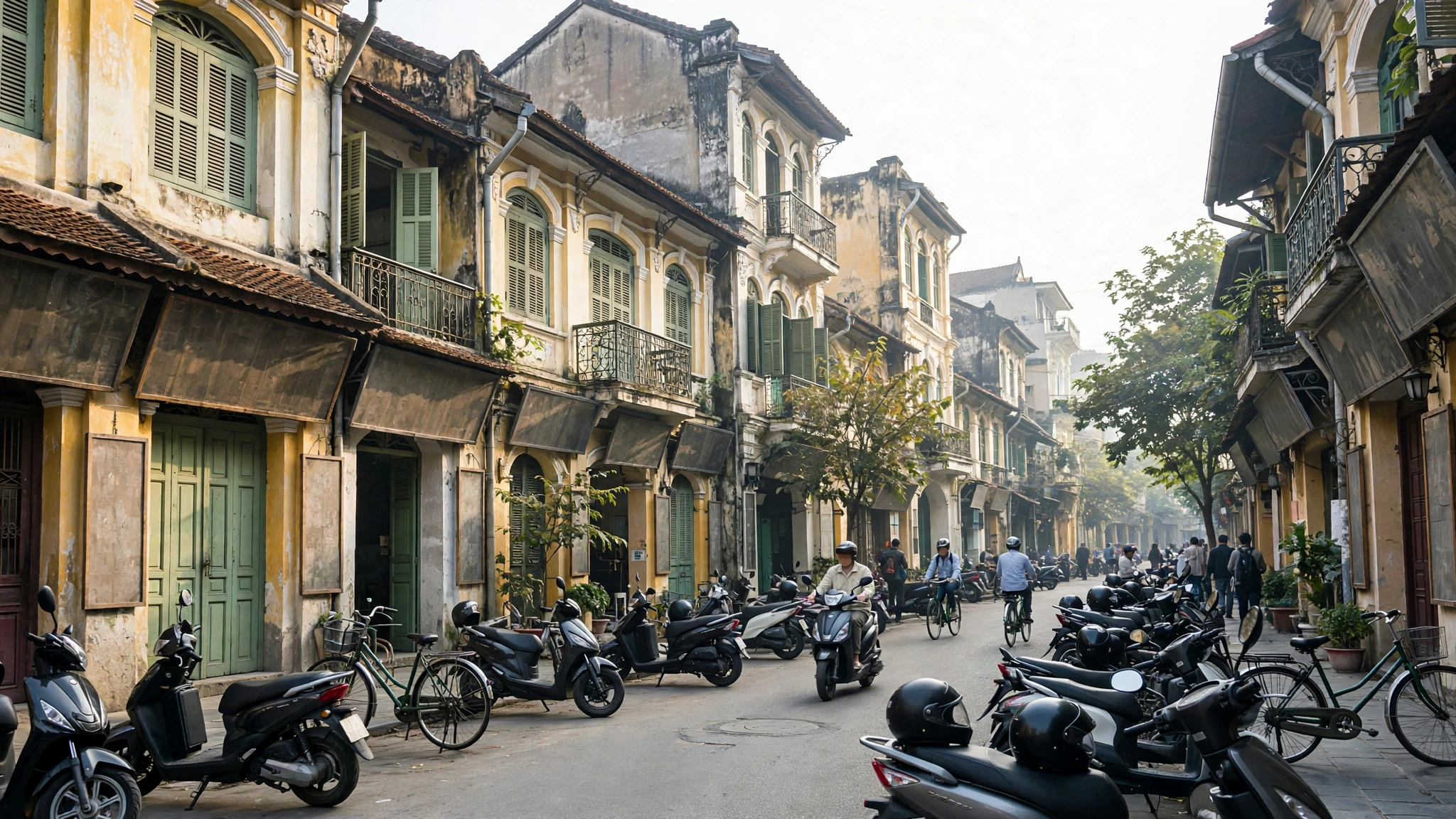
Hanoi's Petrol Motorbike Clock Is Ticking: Directive 20/CT-TTg Explained
Most transport rules announce a direction. Directive 20/CT-TTg announced dates. Signed by the Prime Minister on 12 July 2025 as an urgent instruction on environmental pollution, it orders Hanoi to clear fossil fuel motorbikes from inside Ring Road 1 by 1 July 2026, widen the restrictions in 2028, and extend them again from 2030. The first of those dates has now passed, which makes the directive the live experiment every large Vietnamese city is watching.
Document facts
Issuing body: Prime Minister of Vietnam
Document number: Directive 20/CT-TTg, on urgent and resolute tasks to prevent and address environmental pollution
Signed: 12 July 2025
Effective: 12 July 2025
Status: In force; Hanoi milestones run from July 2026 to 2030
Unofficial English summary for reference only. Not a legal translation and not legal advice. The Vietnamese text linked at the end of this page is authoritative.
What the document does
A directive is an instruction instrument: it does not itself create new offences, but it tasks named ministries, agencies and city governments with specific jobs and deadlines, and those jobs are then carried out through existing law and city regulations. Directive 20/CT-TTg is broad, covering air, water and waste enforcement nationwide, but its transport chapter, aimed at Hanoi, is the part with the sharpest commercial consequences.
For Hanoi, the Prime Minister requires the city to publish a low emission zone scheme, to build out multi modal public transport with priority for electric buses and urban rail, to develop charging stations and services for clean energy vehicles, and to adopt support policies for the companies that make clean vehicles and the infrastructure they need. The Ministry of Finance is tasked with studying an environmental protection fee on vehicle emissions, and with reviewing support and incentives for green transport businesses. The Ministry of Construction is tasked with completing national emission standards for road vehicles.
What changes in practice
The roadmap has three steps. From 1 July 2026, no motorbike or motorcycle using fossil fuel may circulate inside Ring Road 1, the ring that encloses the historic centre of the capital. From 1 January 2028, the motorbike restriction extends across Ring Roads 1 and 2, and private cars using fossil fuel are restricted in the same area. From 2030, the measures expand again inside Ring Road 3.
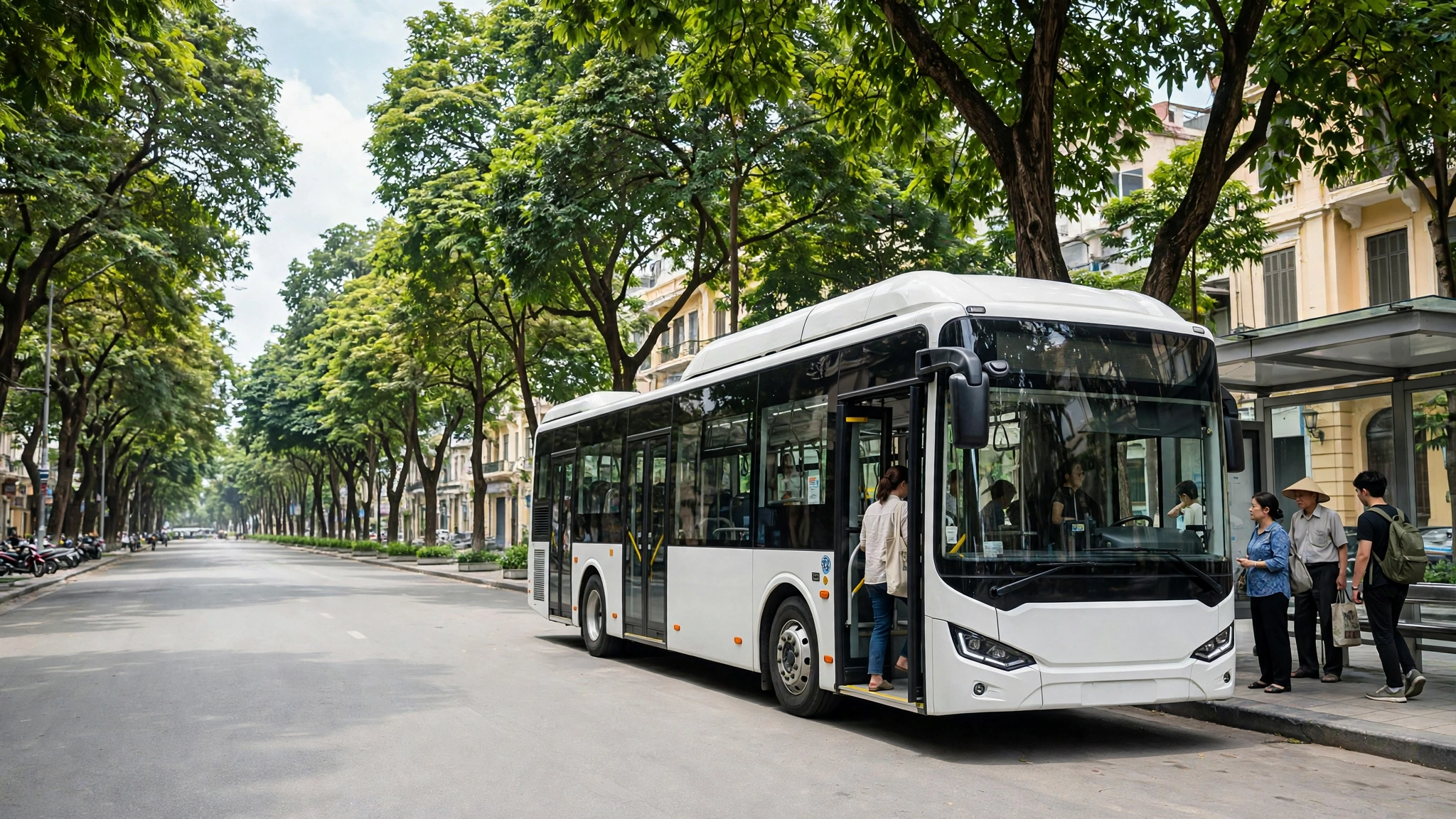
The city is expected to make the restrictions workable rather than merely prohibitive. Hanoi must balance its budget and mobilise social resources to fund public transport, charging and battery swap infrastructure, and it must study raising registration fees, plate fees and parking charges for fossil fuel vehicles in the centre, with a roadmap adjusted year by year. The city's own People's Council has set the criteria and conditions for low emission zones in its Resolution 57, and a city working group has been surveying sites for charging and battery swap stations for electric motorbikes.
The directive reaches beyond vehicles. Inside Ring Road 1, restaurants, hotels, cafes and eateries piloted a phase out of single use plastics from the fourth quarter of 2025, and environmental inspections and penalties across the capital were tightened in parallel. The first milestone date, 1 July 2026, has passed with the zone being phased in under the city's scheme; the 2028 and 2030 steps are the ones operators should now plan against.
Who is affected
Riders and delivery fleets feel the rule first: a petrol motorbike that cannot enter the centre loses its usefulness for exactly the trips that dominate Hanoi traffic. Dealers and manufacturers feel it as demand rotation, from petrol models to electric ones with swappable or chargeable batteries. Charging and battery swap operators gain a policy backed map of where their infrastructure is wanted. Hotels, restaurants and retailers inside Ring Road 1 carry the plastics phase out and should expect customers arriving by different means. Other large cities are affected by precedent: Hanoi is the test case for low emission zones nationally.
Notes for investors and operators
Demand certainty is the story. A dated, staged restriction on the incumbent fleet is the strongest demand signal a regulator can send to electric two wheeler makers, battery swap networks and electric bus suppliers, and the signal strengthens automatically in 2028 and 2030 without new decisions being required.
The open variables are fiscal. The fee studies ordered by the directive, on registration, plates, parking and emissions, will decide how sharp the economic edge against petrol vehicles becomes in the centre; businesses modelling fleet renewal should track the Ministry of Finance work and Hanoi's annual adjustments. Enforcement design also matters: the city's phased approach rewards operators who convert early and visibly, and leaves late movers exposed if the timetable hardens.
Sources and the official text
Official full text: Full text of Directive 20/CT-TTg (Thu Vien Phap Luat, Vietnamese)
Hanoi People's Council, Resolution 57, on criteria and conditions for low emission zones in the capital.
Hanoi Department of Construction statements on low emission zone implementation and charging and battery swap site surveys, 2026.
About this explainer: this page is an unofficial English summary prepared by VoltViet from the official Vietnamese text, for reference only. It is not a legal translation and does not constitute legal advice. Only the Vietnamese original is authoritative. For decisions with legal or financial consequences, consult the official text and a qualified Vietnamese lawyer.
Related reading
More explainers from the Policy & Law desk, and reporting from the EVs & Mobility desk.