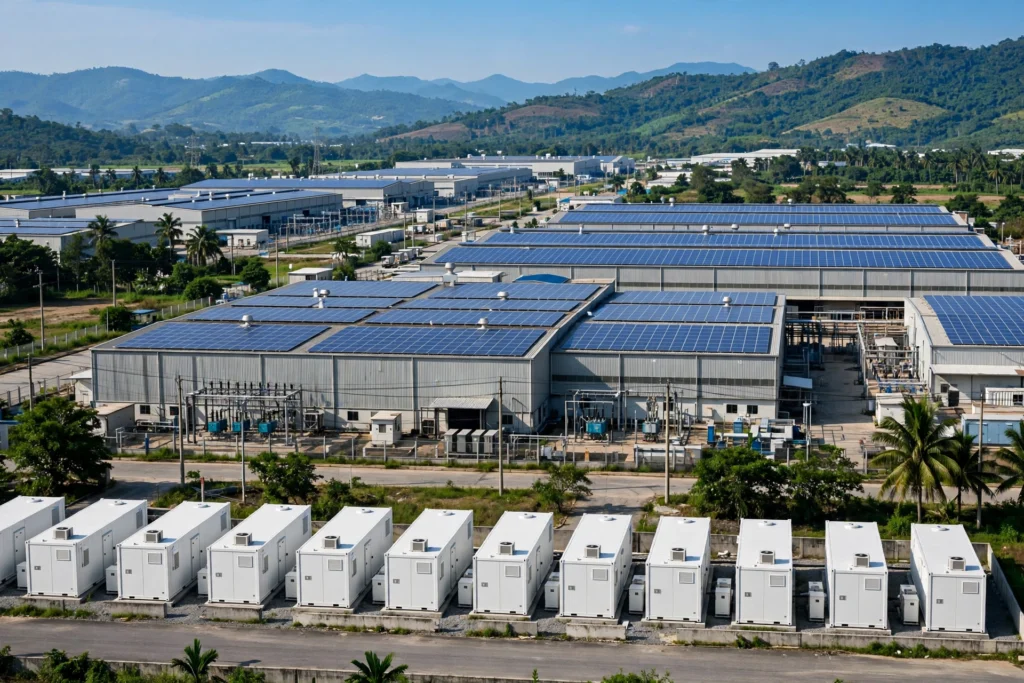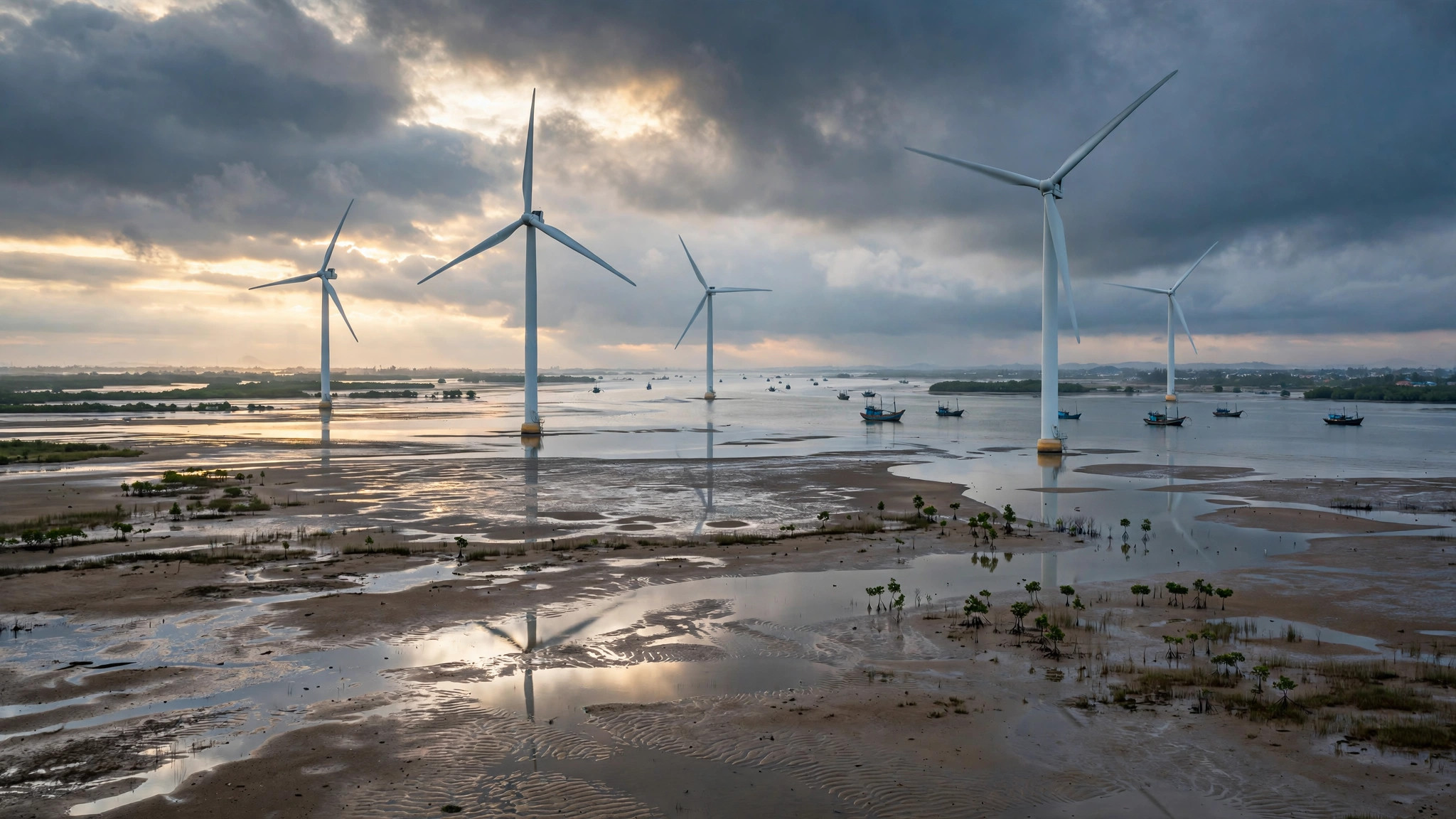
Vietnam’s southernmost province has put numbers and dates on its ambition to become an energy hub. On October 21, 2026, the Ca Mau People’s Committee issued its energy project plan for 2026 to 2030, setting a target of 2,409 MW of additional wind and solar capacity in operation by 2028. The plan pairs each wave of new generation with the 220 kV substations and lines needed to move the power out of the Mekong Delta, and it ends the decade with about 1,000 MW of offshore wind. Provincial plans in Vietnam often stay vague. This one names yearly milestones, which makes it possible to judge, year by year, whether the province is keeping pace.
The schedule, year by year
The plan’s headline figure is the 2,409 MW to be operational by 2028, delivered by 24 wind projects and 2 solar projects. The build-up starts quickly. In 2026, Ca Mau targets 300 MW of new capacity in operation, from three projects plus part of a fourth wind project, and the completion of the 220 kV Nam Can substation and its connection lines. The same year, the province aims to start construction on 11 wind projects with a combined 744 MW, and to complete investment policy decisions and investor selection for a further 22 wind projects totaling 1,393 MW and 2 solar projects totaling 100 MW.
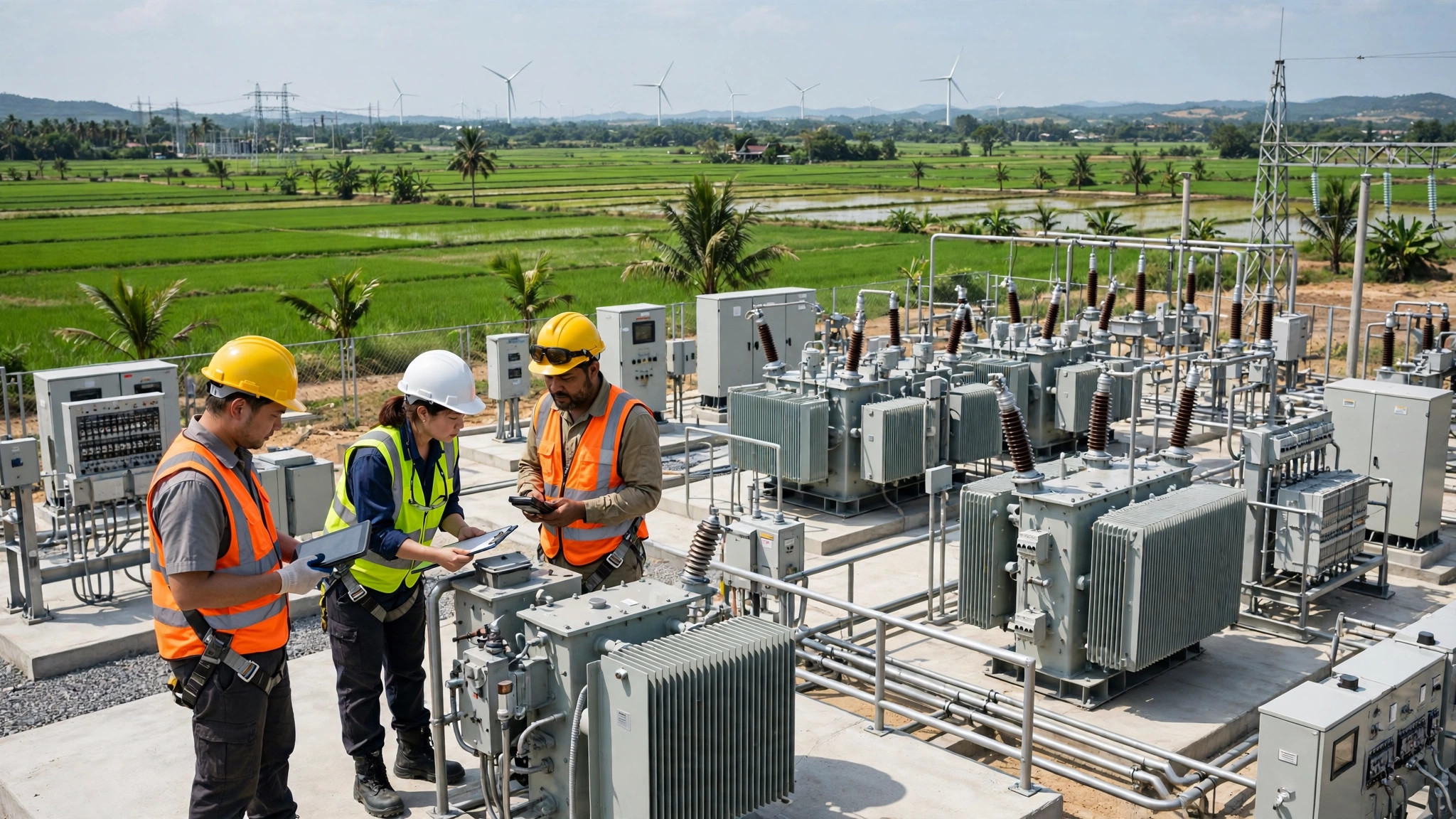
In 2027, a further 202 MW of wind capacity is due to enter operation, together with the 220 kV Hoa Binh substation. In 2029, the plan adds 317 MW of wind plus 40 MW of waste-to-energy and biomass capacity. By 2030, Ca Mau expects about 1,000 MW of offshore wind in operation, with five additional 220 kV transmission works completed. The province puts its assessed offshore wind potential at about 11,500 MW, so even the 2030 target uses under a tenth of the resource it has identified. The stated goal behind the numbers is for Ca Mau to become an energy center and a power export hub for the region.
A project that shows how the plan is meant to work
One approval from the same week shows the machinery in motion. Under Decision 3816/QD-UBND, the province has approved the investment policy for the Ngoc Hien, Tam Giang Tay wind power plant, a 100 MW project in the communes of Tan An, Tam Giang, Nam Can and Dat Moi. The plant will install 12 turbines of about 8.5 MW each and connect via its own 220 kV substation (rated 125 MVA and known as Ca Mau 3) to a roughly 24 km double-circuit 220 kV line joining the Nam Can to Ca Mau 2 line. The substation is designed with room to expand, so later projects nearby can share the connection infrastructure instead of each building its own.
The investment is VND 3,932 billion, about USD 151 million at VND 26,000 to the dollar, with the investor contributing 20 percent as equity and mobilizing the remaining 80 percent. The approval is a policy decision, not a built plant. The investor still has to be selected under investment law. Construction is expected to start within 18 months of that selection, and commercial operation is targeted within 36 months, with a 50-year project term. That sequence, approval first, investor second, construction third, is exactly the pipeline the wider plan depends on, repeated project by project.
Targets, approvals and operation are three different things
Read carefully, the plan contains three layers that should not be merged. The first is the target layer: 2,409 MW by 2028 and about 1,000 MW of offshore wind by 2030 are goals the province has set for itself, not capacity that exists today. The second is the approval layer: projects such as Ngoc Hien, Tam Giang Tay hold investment policy approval but still need an investor, committed financing, completed land and sea area procedures, and a signed power purchase agreement before construction. The third is operation, and on that layer the plan’s own near-term numbers are deliberately modest: 300 MW in 2026 and 202 MW in 2027.
The province is also coordinating with the Ministry of Industry and Trade on a proposal to add a 1,500 MW expansion of the Ca Mau 1 and 2 thermal power plants to the adjusted national power plan. That item is a proposal under discussion, not an approval, and it sits outside the renewable totals above. Keeping it separate matters for readers tracking the plan’s green share: the 2,409 MW figure counts wind and solar only.
Why Ca Mau is worth watching
Ca Mau has the geography for this role: a long coastline on two seas, shallow intertidal water where turbines can be installed without full offshore foundations, and an existing power cluster built around its gas-fired plants. Its constraint has never been the availability of wind. It has been transmission and procedure, the two things this plan schedules most explicitly, with a named substation or line in almost every year. VoltViet’s earlier coverage of wind risk pricing in Vietnam explains why investors price that execution risk carefully. If Ca Mau hits even its 2026 and 2027 operating targets, 300 MW and then 202 MW, the province will have shown that a Delta province can move from plan documents to spinning turbines on schedule. The 2028 figure will then deserve to be taken seriously as a pipeline, not as a slogan.
Sources
Lao Dong, “Ca Mau targets an additional 2,409 MW of power in operation in 2028,” October 21, 2026
Ca Mau People’s Committee, Decision 3816/QD-UBND approving the investment policy for the Ngoc Hien, Tam Giang Tay wind power plant, as reported in the source above.