Two numbers describe Vietnam’s skills problem from opposite ends. At one end, an AI study application launched a live tutoring feature for Vietnamese students in May 2026, offering one to one style help at the scale of software. At the other end, Bac Ninh province alone projected business recruitment demand above 260,000 people in 2026, with about 120,000 workers still needed before the end of the year, much of it in electronics and related industry. Between those numbers sits the question this comparison tries to answer: what can AI tutors actually close, and what still needs teachers, laboratories and time?
The tutor pipeline: fast, personal, shallow by design
Gauth, a global AI study application, launched its Live Tutor feature in Vietnam on May 5, 2026 as part of a Southeast Asia rollout covering Indonesia and the Philippines as well. The product imitates one to one tutoring: students ask questions in real time, receive step by step explanations, and work through problems in mathematics, science and English at their own pace and level. The company presents it as an equity tool, giving students in underserved provinces access to support that urban families buy from human tutors.
Measured as distribution, the tutor model is formidable. It needs no classroom, no timetable and no commute, and its marginal cost per extra student is close to the cost of computing. It can drill algebra, correct English and rehearse exam technique for millions of learners at once. For a country trying to raise the general level of mathematics and English, the base on which all technical training stands, that is not trivial. Every future chip technician first has to pass through school mathematics.
The cohort pipeline: slow, physical, deep by necessity
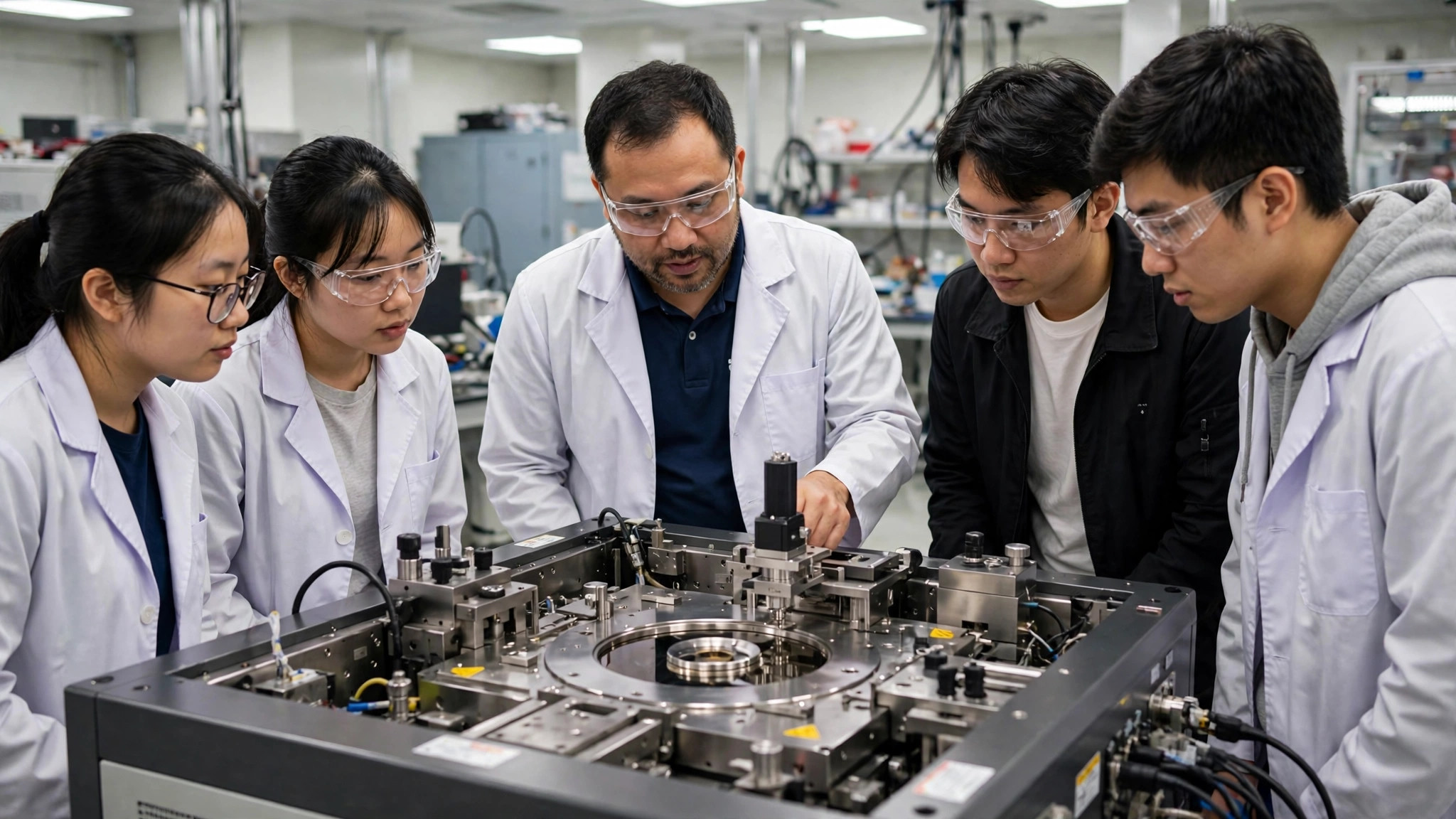
Against that, set the formal programs built for the green and chip economy. Vietnam’s semiconductor human resources program targets at least 50,000 people with bachelor degrees or higher by 2030: about 15,000 in integrated circuit design and 35,000 in manufacturing, packaging and testing, including at least 5,000 with deep expertise in AI serving the semiconductor industry, plus intensive training for 1,300 lecturers. About 35 higher education institutions are involved in semiconductor training, with student numbers in related fields expected to reach around 6,000 by 2027.
Private capital is building a parallel track. Vingroup has announced free training for 20,000 AI professionals, with a monthly allowance of VND 8 million per participant, about USD 308. The program reported by VinUni runs 12 weeks: three weeks of foundations and nine weeks working on real AI projects inside the Vingroup ecosystem, built on the SFIA competency framework used by thousands of organizations worldwide. Its premise, stated plainly by its organizers, is that the market faces a serious shortage of AI staff who can do practical work, not merely hold certificates.
Where the two pipelines meet, and where they do not
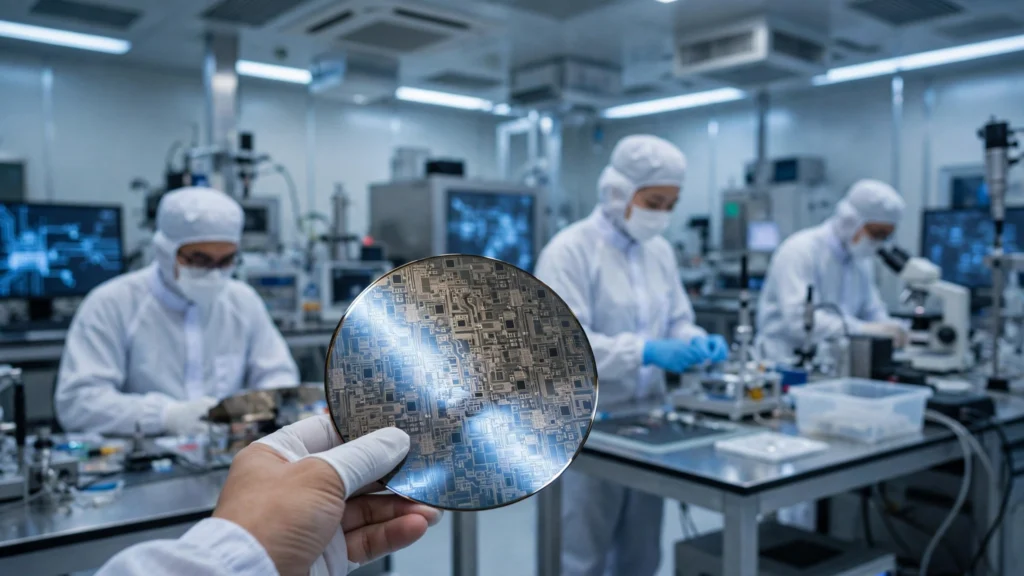
The comparison turns on one distinction: knowledge delivery versus capability formation. AI tutors are excellent at the first. They explain, quiz, correct and encourage, and they do it patiently at midnight before an exam. The green skills gap, however, is mostly about the second. A solar module line does not need people who can describe a cleanroom. It needs people who have worked in one. A fab does not hire examination scores in semiconductor physics alone. It hires process judgement formed on real equipment, under supervision, over months.
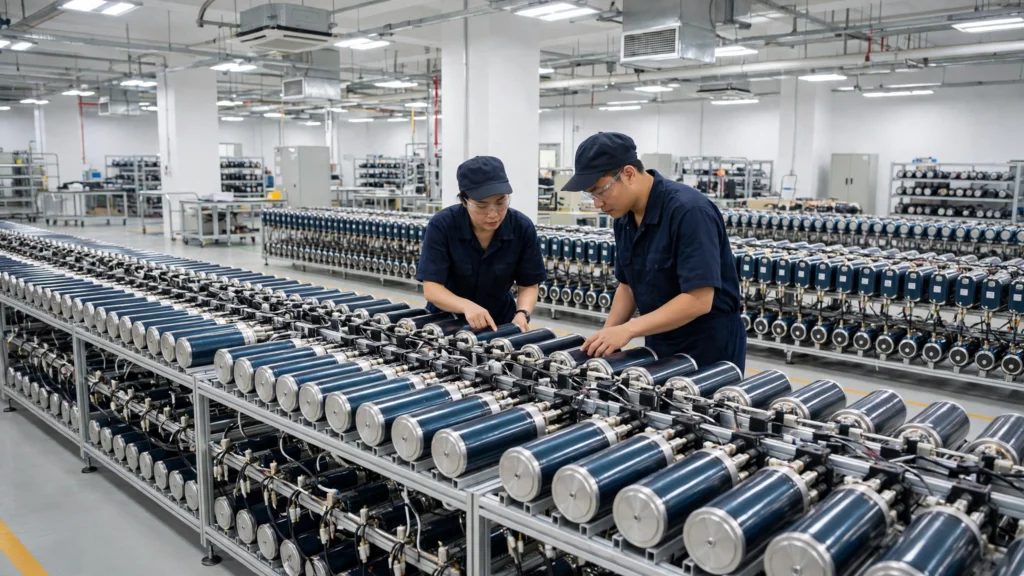
Bac Ninh shows the shape of the demand. The province hosts 15 universities, 32 colleges and 35 vocational schools, and its institutions are rewriting curricula toward AI, semiconductors, microchips, automation, precision mechanics and logistics, because the industrial parks around them are shifting production toward automation and digital systems. Local officials describe recruitment demand above 260,000 in 2026 against more than 26,000 operating businesses employing over 820,000 workers. No tutoring application fills a controls engineer vacancy. But a tutoring application can raise the mathematics level of the vocational students who will become controls technicians, if it is aimed at them deliberately.
A fair scorecard
On reach, the tutor wins by orders of magnitude: national, instant, and cheap per learner. On depth, the cohort programs win just as clearly: laboratories, lecturers and project placements cannot be streamed. On speed to first impact, the tutor wins again, because it is live now, while the 50,000 engineer target lands in 2030. On employer trust, the formal pipeline wins, because a hiring manager can inspect a curriculum, a laboratory and a lecturer in a way no app dashboard yet matches. On equity, honours are shared: the tutor reaches remote students, while public programs and employer allowances, such as the VND 8 million monthly support in the Vingroup scheme, reach students who cannot afford to study unpaid.
The sensible conclusion is not a contest. It is a division of labour. Let AI tutors carry the broad base: school mathematics, science, English and the first steps of coding, for the largest possible number of learners. Let universities, colleges and employer programs carry the narrow peak: fabrication, power systems, automation and AI engineering, where competence is physical and supervised. Vietnam’s gap is wide enough to need both, and the mistake would be believing that success in the first pipeline excuses delay in the second. The tutor can teach a student how a transistor works tonight. Only the slower system can put that student, years later, in front of the machine that makes one.
Related reading
- Vietnam’s First Chip Fab: What a 32nm Line Can and Cannot Do
- The Talent Equation: 50,000 Engineers Do Not Appear by Decree
- A Prototyping Center Tries to Cut the Cost of a First Chip
Sources
GlobeNewswire, May 5, 2026, announcing the Gauth Live Tutor launch in Vietnam, Indonesia and the Philippines, with step by step personalized support in mathematics, science and English. vietnam.vn, 2026, reporting the Vingroup plan to train 20,000 AI professionals free with a VND 8 million monthly allowance, the 12 week VinUni program structure, and Bac Ninh recruitment demand above 260,000 in 2026. Ministry of Planning and Investment program under Decision 1017, reported 2024 to 2026, setting the target of 50,000 semiconductor personnel by 2030, including 15,000 design engineers, 5,000 AI specialists and 1,300 lecturers.