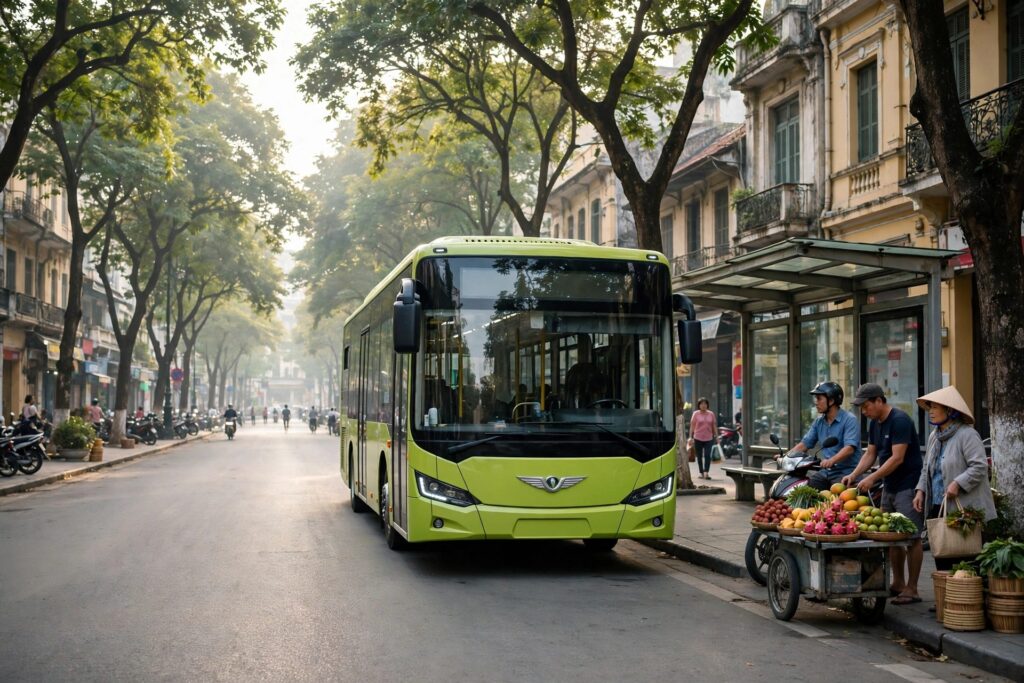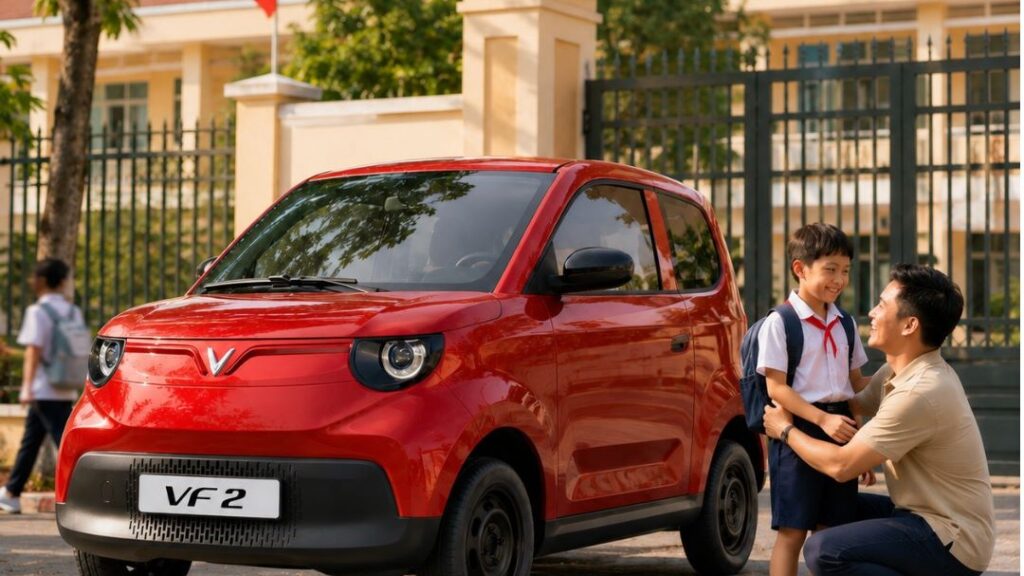
Every fast growing technology eventually invents its own manners. Petrol stations needed a century to teach drivers to queue, move on, and not smoke at the pump. Electric charging in Vietnam is having to learn the same lessons in about three years, because the fleet arrived faster than the customs. In the first nine months of 2026, VinFast delivered 177,697 cars in Vietnam, about 36 percent of a combined national market of 495,138 vehicles, according to TNGlobal reporting of company and association figures. When more than a third of new cars plug in, charging stops being a hobbyist topic and becomes shared infrastructure, with shared frustrations.
The queue is the first classroom
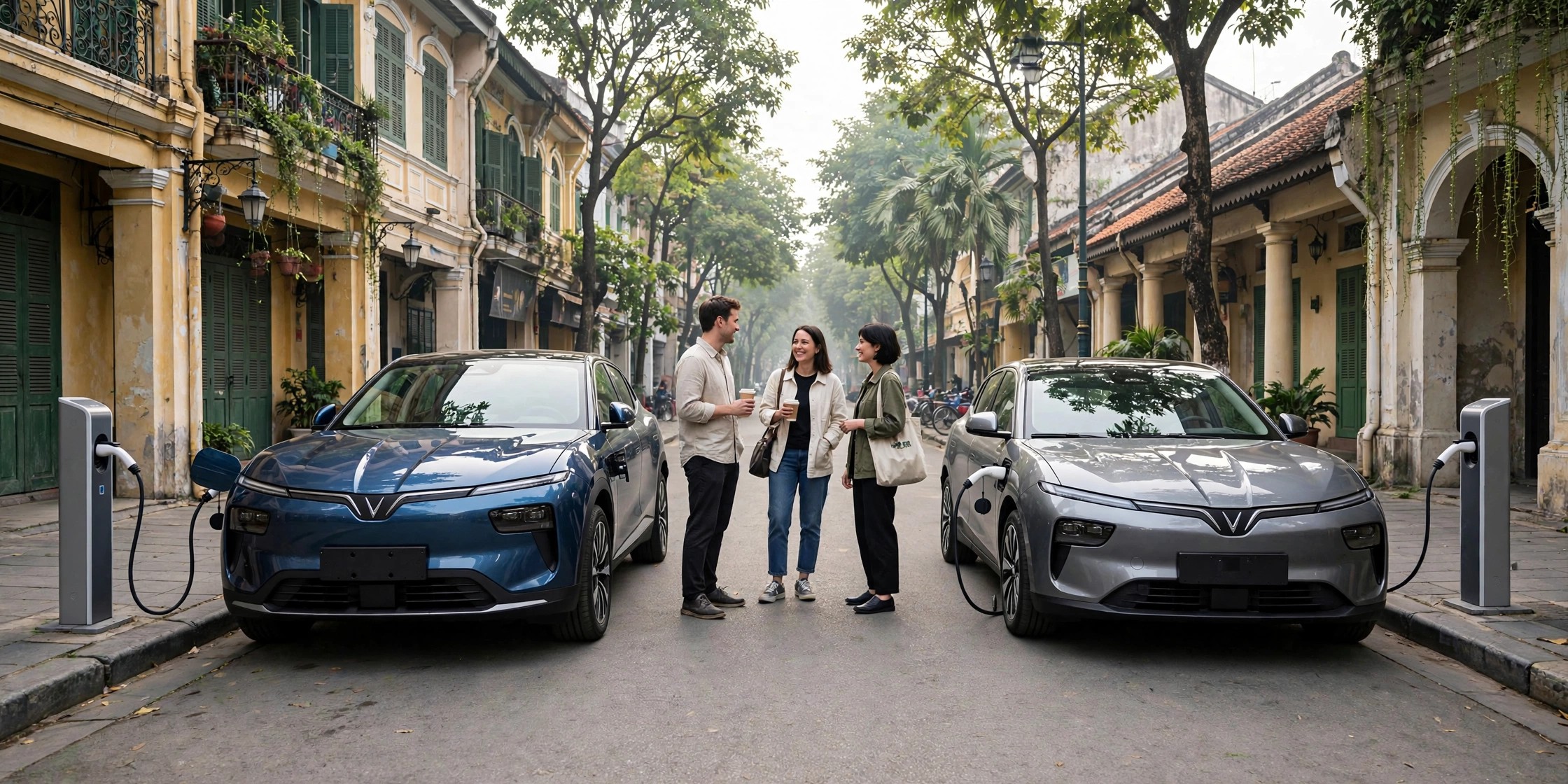
The classic conflicts are now familiar to any driver who uses public fast chargers. A car that has finished charging stays plugged in while its owner shops. A petrol car parks in a marked charging bay. A driver charges to 100 percent at a busy station even though charging slows sharply in the final stretch, while two cars wait. None of these behaviors requires bad intent. They require only that a new user treats a charger like a private parking space, which is exactly what it is not.
Operator guidance published internationally in September 2026 by charging network SWTCH reads like a draft social contract for this moment: move the vehicle when charging is complete, park in a charging bay only while actively charging, charge only what you need at busy times, respect the queue whether it is a line or an informal order, and never unplug another vehicle without permission. Vietnam’s networks will write their own versions, through app notifications, idle fees and station design. The direction is the same everywhere adoption reaches this scale: etiquette becomes policy, and policy becomes pricing.
Apartments are the harder problem
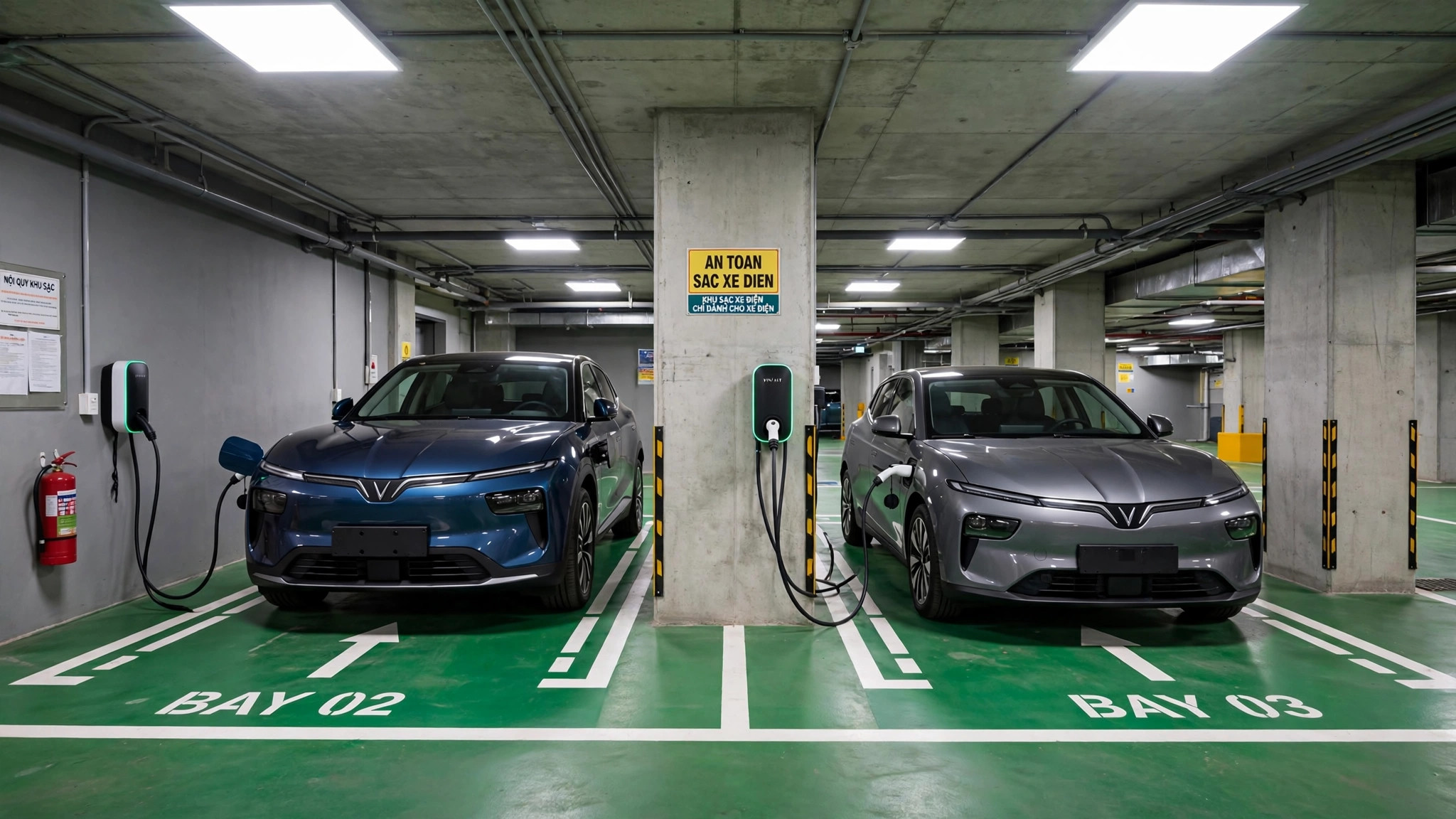
If the public queue is a manners problem, the apartment basement is a governance problem. Vietnam currently counts about 6.7 million cars, roughly 3 percent of them electric, and about 70 million motorbikes, with electric models at about 4.3 percent, figures cited by the Ministry of Construction in its 2026 proposals. Most electric vehicles concentrate in large cities, where residents park in shared basements that were designed for petrol vehicles and wired for lighting, not for hundreds of charging points.
Reporting from Ho Chi Minh City in 2026 shows how uneven the local answers still are. Some buildings ban electric vehicles in basements entirely. Others allow only electric motorbikes, move charging to the ground floor, set shared charging points with a flat monthly fee, or restrict charging to before 10 in the evening. In smaller rental housing, tenants described flat charging fees with no safety guidance, tightly packed bikes and improvised wiring. The variation is not hypocrisy; it is what happens when national rules lag local demand.
The state is now writing the missing rules. The Ministry of Construction has proposed amending the apartment technical regulation QCVN 04 to require separated charging zones, with fire compartments limited to 20 car charging bays or up to 150 two-wheeler spaces, basement charging equipment capped at 22 kW, battery swapping kept outside residential buildings, and bans on charging in lobbies, corridors and emergency exits or running cables from private units. Circular 31 of 2026 issued the amendment in June 2026, taking effect on December 15, 2026, so through most of this year buildings have been operating in the gap between a published future standard and present improvisation. Separately, the industry ministry has clarified that its QCVN 32 charging station standard does not govern chargers inside buildings, which remain under construction and fire safety law. Two rulebooks, one basement: owners and management boards need both.
What good looks like at 36 percent
Mature charging behavior is boring, which is the compliment. Drivers unplug and move. Apps show live availability so nobody queues behind a finished car. Buildings publish one clear charging arrangement instead of a patchwork of bans, designed around the coming QCVN 04 zones. Operators price idle time rather than arguing about it. None of this needs new technology. It needs the social layer of the transition to catch up with the sales layer, which at 177,697 cars in nine months is moving very fast indeed.
Vietnam’s EV story is usually told in deliveries, factories and market share. The 36 percent figure deserves its headline. But the experience that will decide whether the next buyers feel confident sits at a slower scale: a free bay when you need one, a neighbor who moves their car, and a basement where charging feels routine and safe. Growing pains are not a sign the market chose wrong. They are the receipt showing it grew up quickly, and the etiquette now being written, in apps, building rules and national standards, is how a third of a car market learns to share.
Related reading
- 23,624 Cars in One Month: Reading VinFast’s September Numbers
- From July 2027, Every Public Charger in Vietnam Must Meet Five Groups of Requirements
- Is the Grid Ready for a Million Electric Motorbikes in One City?
Sources
TNGlobal, October 12, 2026, reporting VinFast deliveries of 177,697 cars in January to September 2026 and its roughly 36 percent share of the combined national market. Vietnam News, 2026, on the Ministry of Construction proposals for separate EV parking and charging areas in apartment buildings, including fire compartment limits, capacity caps and current fleet figures. SGGP English, 2026, reporting Ho Chi Minh City apartment charging arrangements and safety challenges in existing buildings. vietnam.vn, October 2026, on Circular 31 of 2026 amending QCVN 04 for apartment EV charging areas, effective December 15, 2026, and on the scope of QCVN 32. SWTCH Energy support guidance, updated September 2026, setting out public charging etiquette norms for network users.