Document facts
Issuing body: Government of Vietnam (signed by Deputy Prime Minister Pham Gia Tuc)
Document number: Decree 344/2026/ND-CP on the application of science and technology and the development of the manufacturing industry in the electric power sector (details Article 8 of the Electricity Law 61/2024/QH15; amends and replaces nothing)
Signed: September 4, 2026
Effective: October 20, 2026
Status: In force since October 20, 2026; operative incentives depend on product lists the Prime Minister has yet to issue
Unofficial English summary for reference only. Not a legal translation and not legal advice. The Vietnamese text linked at the end of this page is authoritative.
What the document does
Decree 344/2026/ND-CP lays out the implementing rules for Article 8 of the Electricity Law (61/2024/QH15): how Vietnam will apply science and technology and build a domestic manufacturing industry for the power sector. The decree covers the lists of critical equipment to be produced domestically at certain stages, the research programs behind them, the incentive mechanisms, the localization-ratio targets, and a new instrument called the energy industrial-service complex. Its stated objective is to master critical technologies, especially for national energy security, renewable energy, new energy and smart grids. Legal bases include the Electricity Law and National Assembly Resolutions 198/2025/QH15 and 253/2025/QH15 (see our explainer on Resolution 253).
What changes in practice
The decree is already in force, so this section describes binding law, with one large caveat developed below: the incentives attach to product lists that do not exist yet.
First, the lists. Article 4 sets the criteria for critical equipment: items that directly and decisively affect national energy security, from stable supply and transmission reliability to data security and avoiding dependence on risky technologies, plus consulting for complex high-tech power projects and control-system security services. The Ministry of Industry and Trade must propose two lists to the Prime Minister: the critical list, whose items must be made domestically at certain stages, and the encouraged list.
Second, the incentives. Manufacturers of listed equipment get the key-mechanical-engineering-product incentive package: investment, tax, land, and accounting incentives. Large high-tech projects involving Vietnamese firms in domestic value chains can access special investment incentives. Listed components and materials draw supporting-industry or high-tech-law incentives.
Third, the ordering mechanism. First-time domestically produced critical items are procured through the Bidding Law’s ordering mechanism: eligible if domestically manufactured and tested or certified to standards, or formed from research results. The order price is reasonable production cost plus reasonable profit, separately accounted and independently audited, with a price preference of up to 10 percent above comparable import cost. Experience requirements are waived, and those who fully follow the procedures, with no self-interest or fraud, are shielded from administrative, civil and criminal liability. Contractors can tap the National Science and Technology Development Fund and the National Technology Innovation Fund.
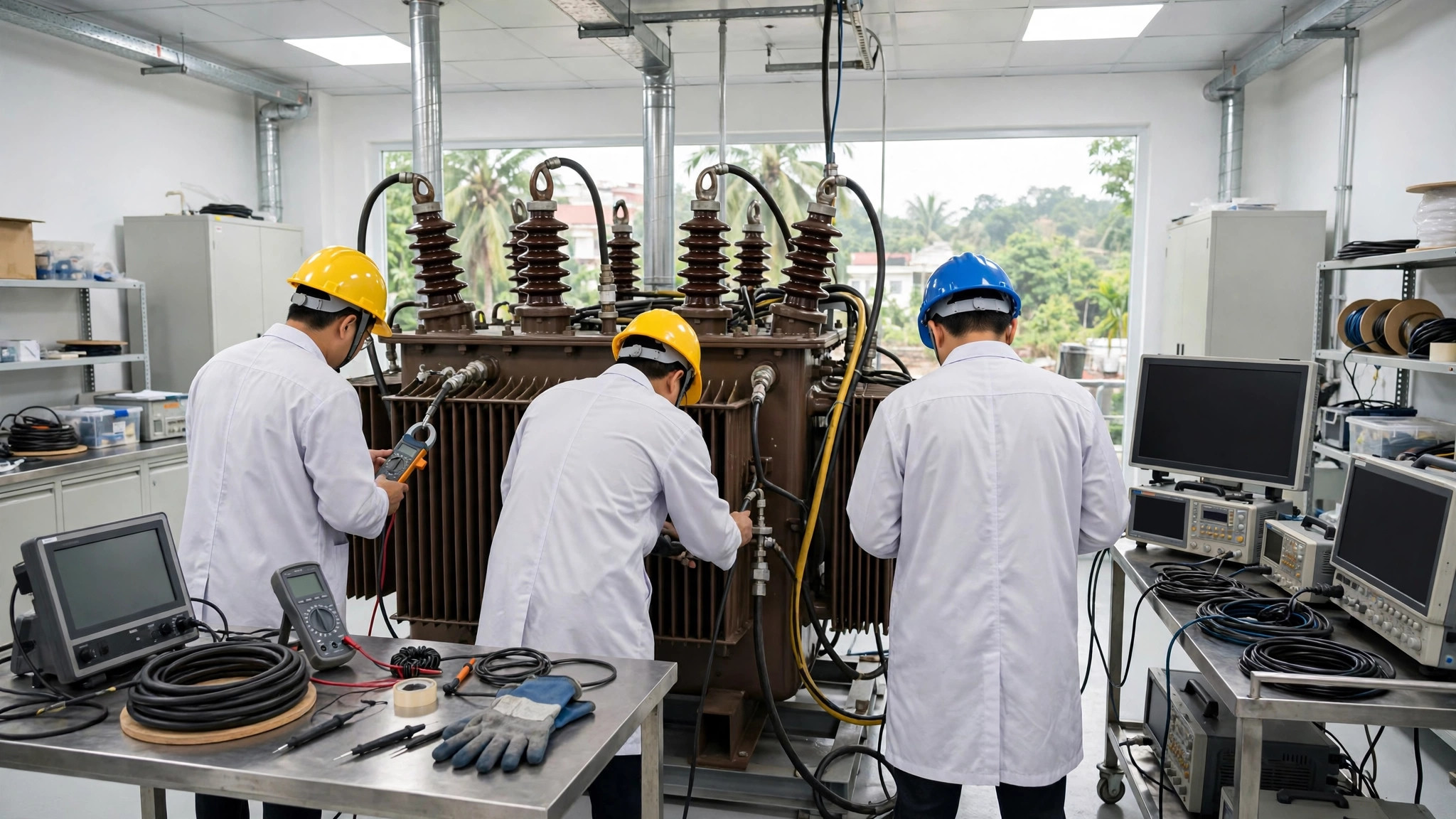
Fourth, concrete support money. The support package the decree defines includes 50 percent of the cost of using state laboratories and testing, measurement, inspection, and certification facilities for research on critical items, and up to 70 percent of the cost of hiring experts and scientists. Eligible enterprises are entitled to priority borrowing from state investment-credit and science and technology funds.
Fifth, the energy industrial-service complexes: integrated zones for equipment research, pilot manufacturing and production, plus construction, installation, operation, and maintenance services. Site criteria include proximity to large power-project zones, deep-water port access, and offshore-wind value-chain cluster potential. Incentives run from one-off land-rent payment to tax breaks and land-rent exemption or reduction.
What changed from the previous rules
Nothing was replaced. Decree 344 is a first-generation detailing instrument for Article 8 of the 2024 Electricity Law, so there is no predecessor text to compare against and no continuity check to run. Readers should treat it as new law, not as a revision: the critical-equipment lists, the ordering mechanism, the 10-percent price preference and the industrial-service complexes did not exist in this form before October 20, 2026.
Who is affected
In practice the decree touches three groups: domestic equipment manufacturers and their component suppliers, who will gain the incentive and ordering routes once the lists issue; power-project developers and contractors, who will face mandatory domestic supply of listed items meeting standards; and the Ministry of Industry and Trade plus provincial People’s Committees, who carry the program-building and monitoring duties.
Renewable-energy and offshore-wind equipment firms sit squarely in the target zone: the decree names renewable energy, new energy and smart grids as priority fields, and the industrial-service complexes are designed with offshore-wind value-chain clustering in mind (see our analysis of offshore wind’s supply-chain gaps).
Notes for investors and operators
For equipment investors, the decree converts a policy direction into claimable instruments, but the claims are list-dependent: until the Prime Minister promulgates the Article 4 lists, no manufacturer can invoke the ordering mechanism or the key-mechanical-engineering incentives. The 10-percent price preference is the number to watch, with the premium justified by audited cost-plus accounting, and the liability shield for compliant research and ordering is the parallel signal to state buyers.
What businesses should do next: track MOIT’s forthcoming list proposals to the Prime Minister and check whether your products fall in the critical or encouraged categories; line up testing and certification to the applicable standards now, since certification is the gateway to order eligibility; and watch MOIT’s per-phase development programs, which will set the product requirements and timelines the incentives attach to.
Sources and the official text
Thu Vien Phap Luat (legal database), full text of Decree 344/2026/ND-CP in Vietnamese, signed September 4, 2026, effective October 20, 2026, detailing Article 8 of the Electricity Law 61/2024/QH15; document number, issuing body, signer, signing and effective dates verified against the official text header and Article 24; operative provisions verified against Articles 1 through 6 and the decree’s English summary of the incentive articles. https://thuvienphapluat.vn/documents/law.aspx?id=A=pJek5qWTTn&mode=
About this explainer: VoltViet prepared this summary in English from the official Vietnamese text so that investors and operators can follow what the document does. It is a reading aid, not a translation of record and not legal advice. Where any wording here differs from the Vietnamese text, the Vietnamese text governs. For decisions with legal or financial consequences, rely on the official text linked above and take advice from a qualified Vietnamese lawyer.
Related reading
More explainers from the Policy & Law desk, and reporting from the Clean Energy desk.