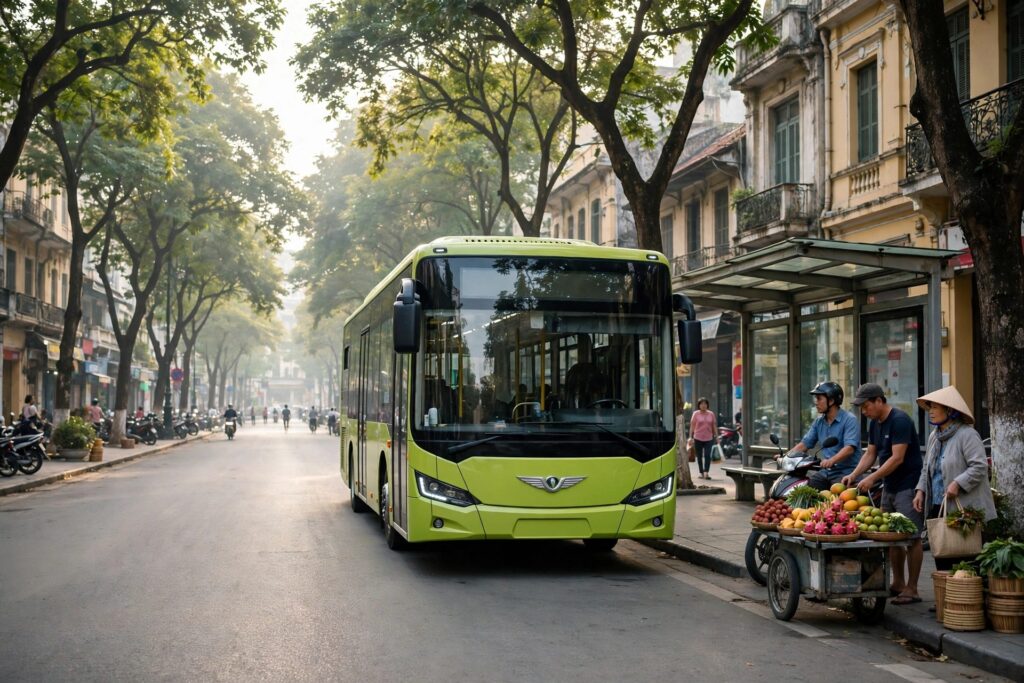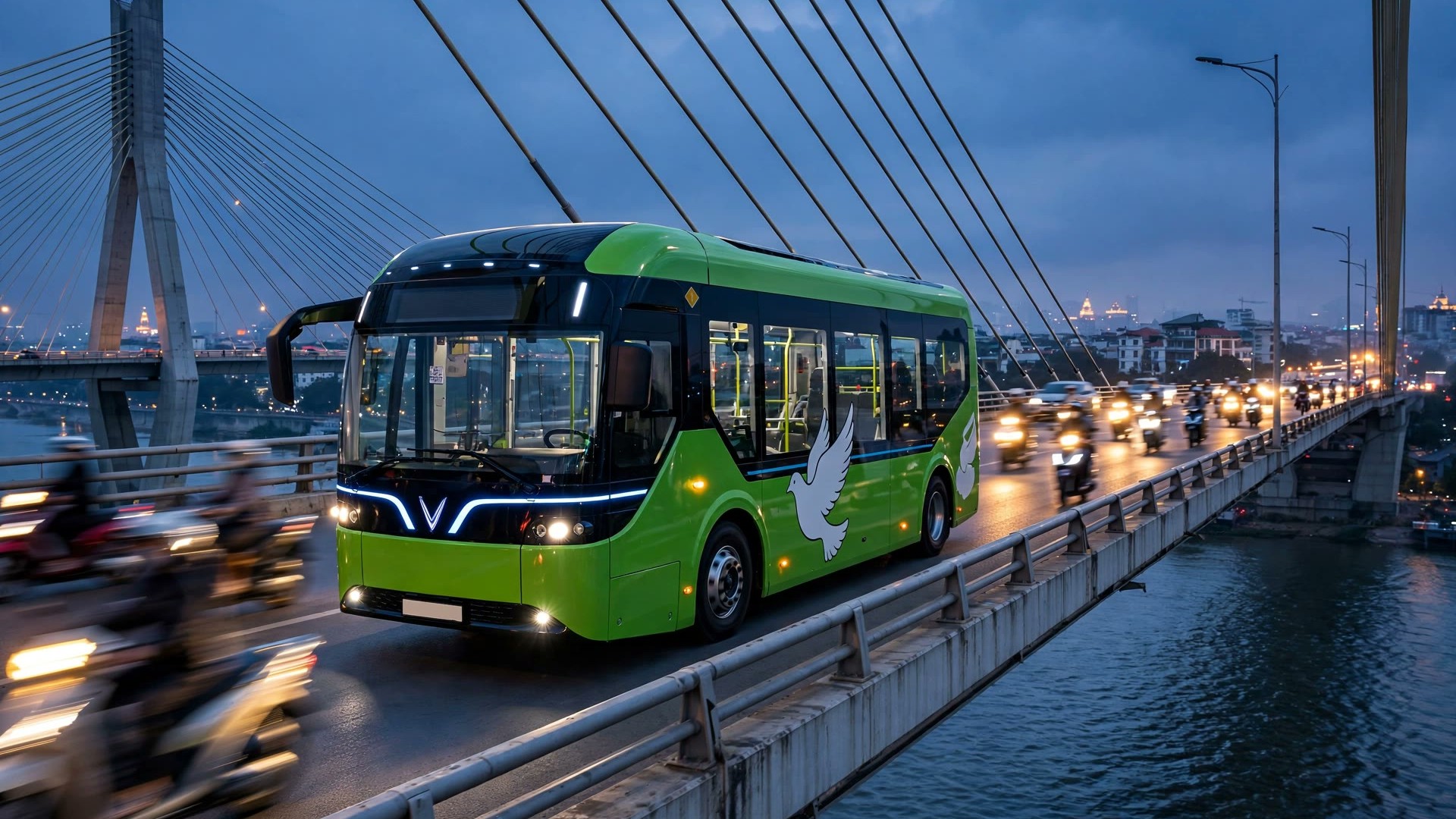
On October 15, 2026, passengers on Hanoi bus route 31 boarded a completely new fleet. The Hanoi Bus Enterprise, a unit of the state-owned transport operator Transerco, put 15 VinFast EB 8 electric buses into service on the route between Bach Khoa and Chem, home to the Hanoi University of Mining and Geology, replacing every diesel bus that previously ran the line, according to information the company published. It was Transerco’s fourth fleet replacement announcement in eleven days.
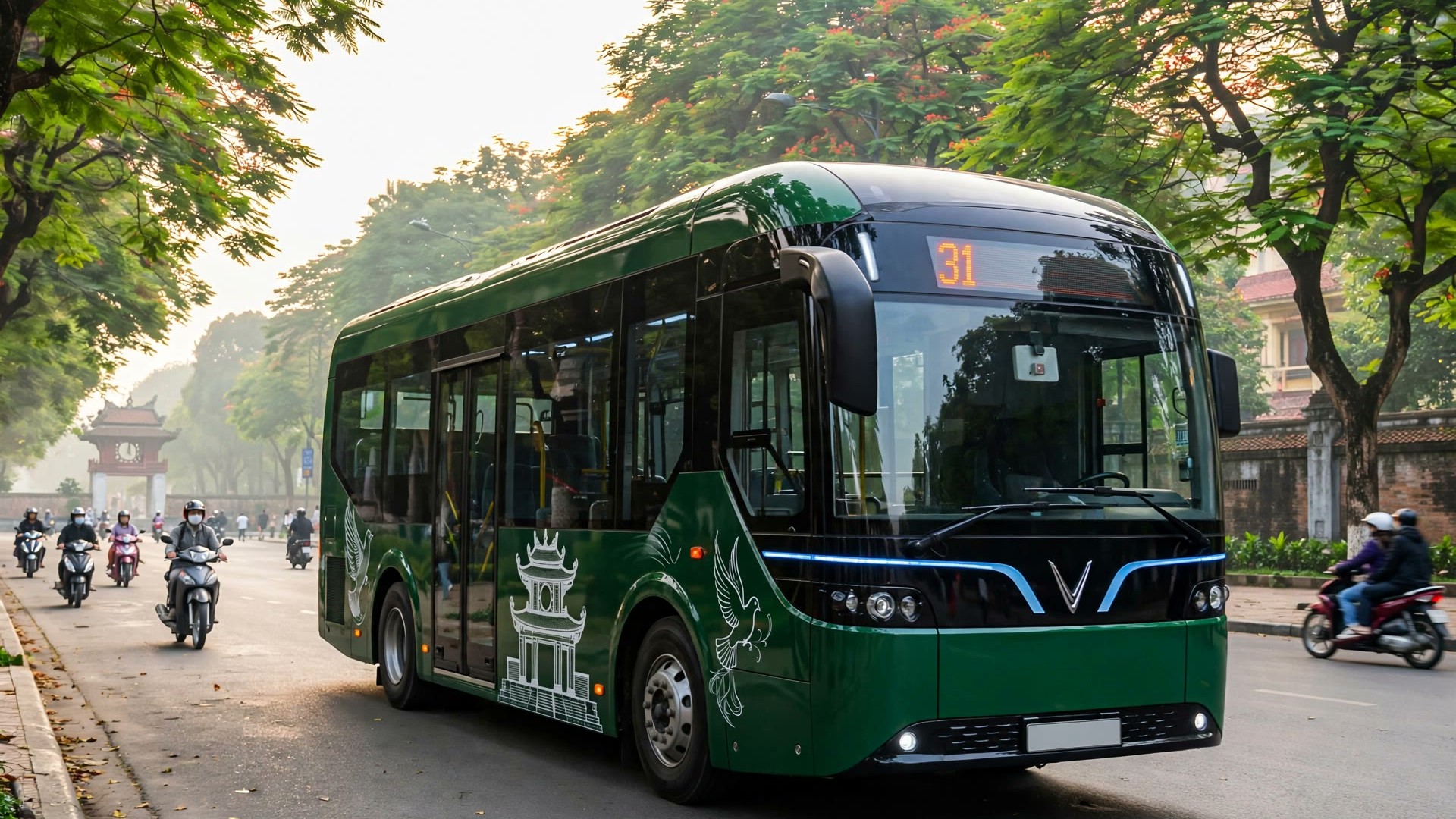
The buses are built for access as much as for emissions. Each EB 8 carries 60 passengers, with 24 seats, 35 standing spaces and one dedicated wheelchair space served by an electric ramp and a low floor, features the diesel fleet did not offer. The vehicles wear Hanoi’s Hanoibus identity in deep green, decorated with a dove motif and an image of Khue Van Cac, the pavilion that symbolizes the capital’s scholarly tradition. Route 31 keeps its familiar timetable, running from 5:00 in the morning to 21:00 at night with departures every 10 to 20 minutes.
The technical package is sized for a full day of city duty. According to specifications VinFast publishes, the EB 8 is an 8.61-meter mid-size bus with a 200 kW central motor, a 359 kWh battery rated for more than 290 kilometers per charge under SORT 1 conditions, and 120 kW fast charging. A full air suspension and a standard safety set of anti-lock brakes, electronic brakeforce distribution, brake assist and hill-start assist complete the specification. For an operator, the range figure matters most: a bus that covers a day’s route work on one charge can refuel overnight at the depot, which is how green public transport fleets stay operationally simple.
Route 31 is the latest step in a rapid October sequence. On October 5 and 6, Transerco replaced 53 conventional fuel buses with electric buses on routes 22A, 22B, 30 and 50. On October 8, 15 more electric buses entered service on route 83, linking Gia Lam bus station with Hung Yen. On October 12, 11 EB 8 buses replaced the diesel fleet on route 33 between the Thanh Oai industrial cluster and Xuan Dinh, with the route’s schedule adjusted at the same time. Across the announcements from October 5 to 15, the operator put 94 electric buses into service.
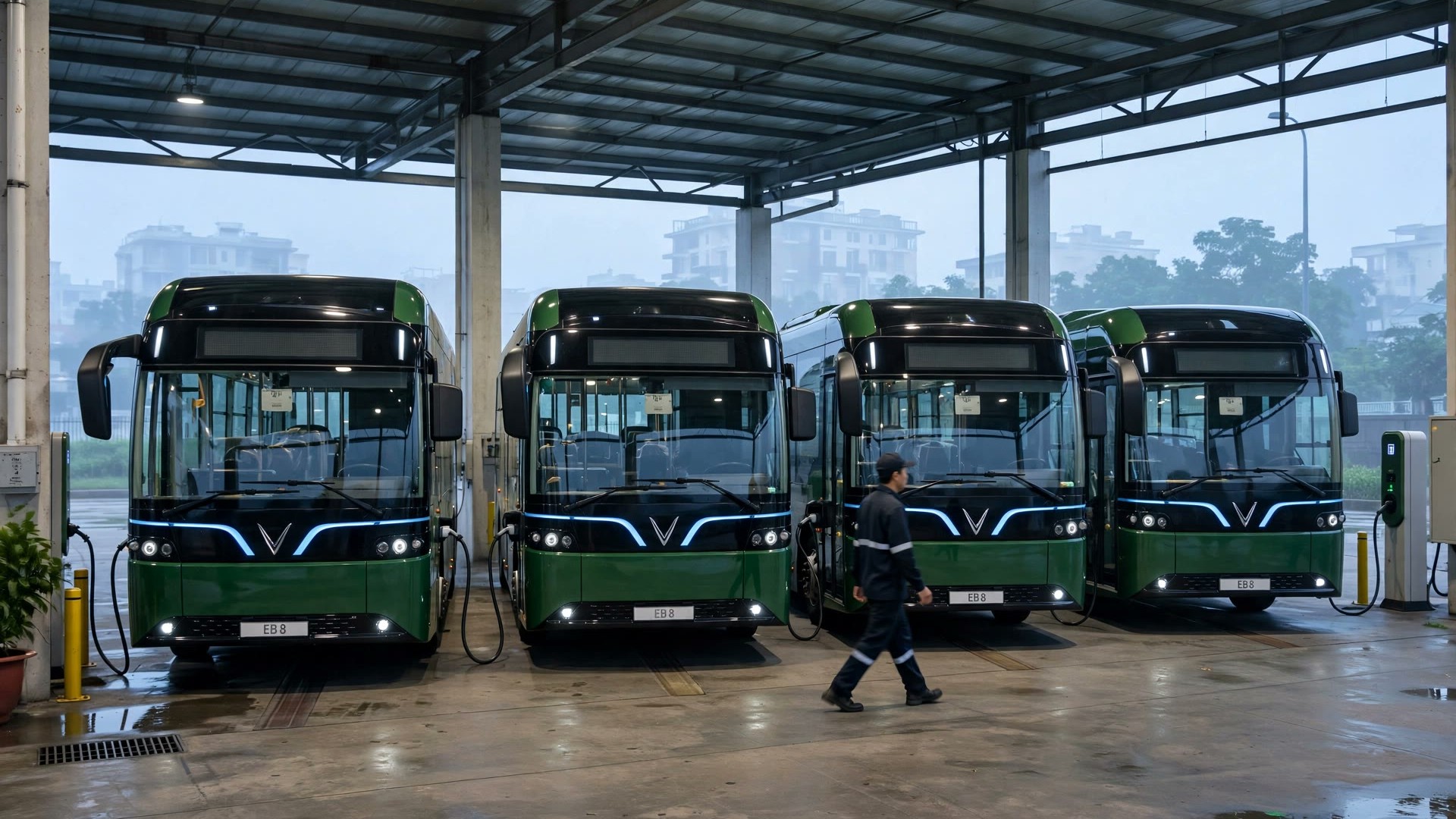
The method is deliberate. Replacing a route’s entire fleet in a single day gives passengers a uniform experience, with no alternating mix of old and new vehicles, and lets the operator concentrate chargers, spare parts and driver training at one depot at a time. It is the same route-by-route approach that early electric bus cities used to scale, and it turns each conversion into a visible public event rather than an invisible procurement line.
The stated destination is a fleet milestone. Transerco says the conversions are steps toward lifting the share of green-converted vehicles in its bus fleet above 51% by the end of 2026. Whether the target is met will depend less on vehicle supply than on depot charging capacity and on holding the October pace through the remaining routes, because each new electric route adds a depot load that has to be built before the buses arrive.
For Vietnam’s electric vehicle industry, the program marks a widening of the market. VinFast began operating electric buses domestically in 2021 and, by its own account at the Busworld Europe exhibition in October 2025, had more than 300 electric buses in service across five Vietnamese cities. Public fleet orders of this kind give the manufacturer high-utilization reference fleets at home, while giving city operators a local supplier for vehicles, parts and service, a combination that private car sales alone cannot demonstrate.
What to watch next is pace and replication. If Transerco sustains the October cadence, Hanoi will pass its 51% milestone with months to spare, and other Vietnamese cities weighing bus electrification will have a working domestic template: convert whole routes, build depot charging first, and treat accessibility as a headline benefit rather than an afterthought. The green EB 8, with its dove livery and quiet running, is becoming part of the street picture of the capital.
Sources: Hanoi city portal via the Government Portal, Hanoi continues to expand its electric bus network; Vietnam.vn, Route 31 in Hanoi replaced with electric buses; VinFast, VinFast officially launches the EB 8 and EB 12 in Europe