A working day measured in kilometres
For Steve Muigai, the day is not measured in hours. It is measured in kilometres, in passengers carried, and in the money left in his pocket when the riding finally stops.
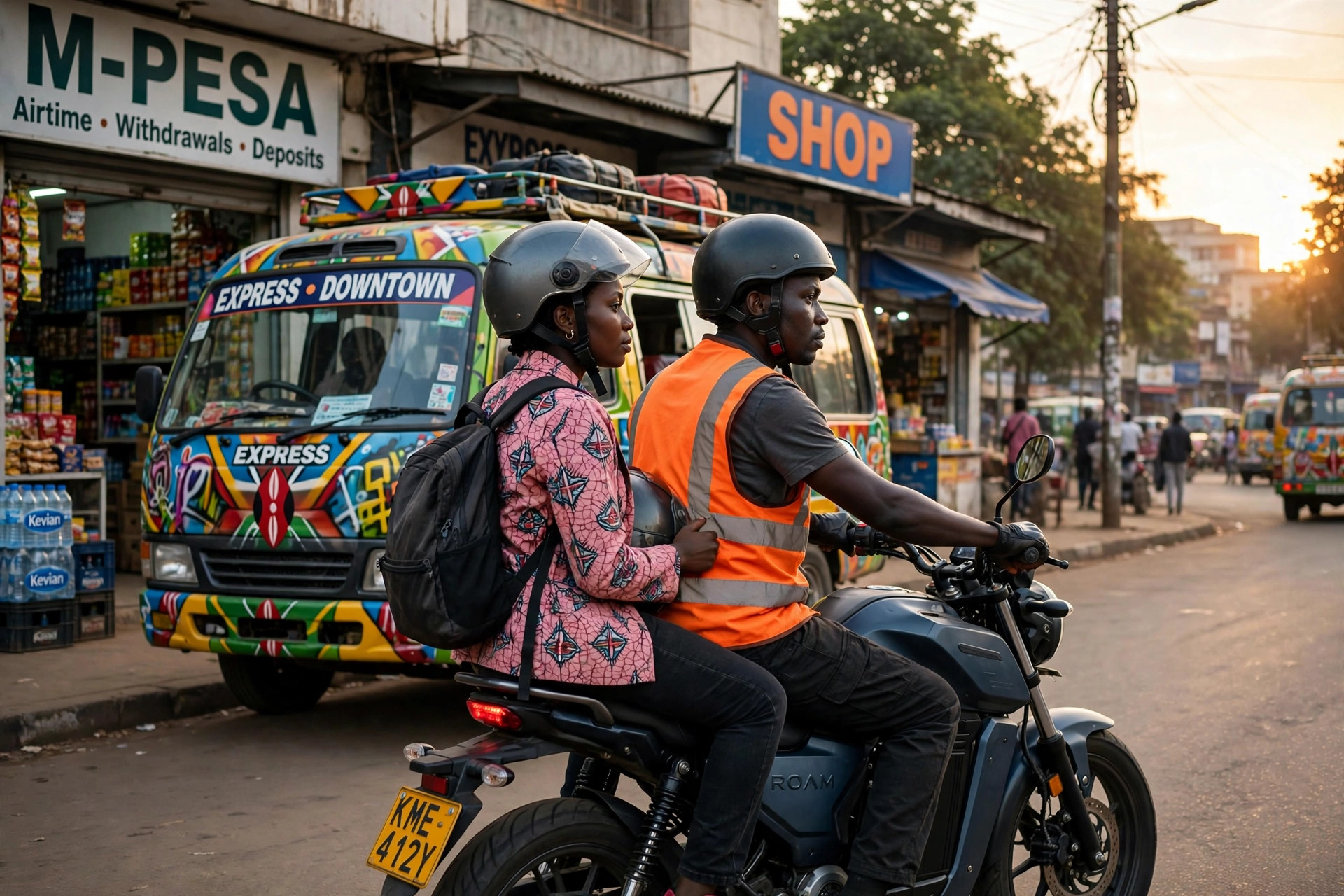
Muigai is a boda boda rider in Nairobi, Kenya. Boda boda is the local name for the motorcycle taxis that carry people and parcels through the city, filling gaps between buses and reaching streets that larger vehicles serve poorly. It is demanding work. On a busy day, Muigai rides up to 150 km, a distance that turns fuel from a background cost into the central fact of his working life.
When your income depends on distance, every shilling spent on energy is a shilling taken from the fare. That is why Muigai’s switch from a petrol motorbike to an electric one matters. It changed the maths underneath every trip. According to the United Nations Environment Programme, which published his story, Muigai says in translation that the electric bike costs him less than half the money he used to spend on petrol. For a rider covering up to 150 km a day, that is the difference between a cost that dominates the day and a cost that the day can carry.
The swap that takes about two minutes
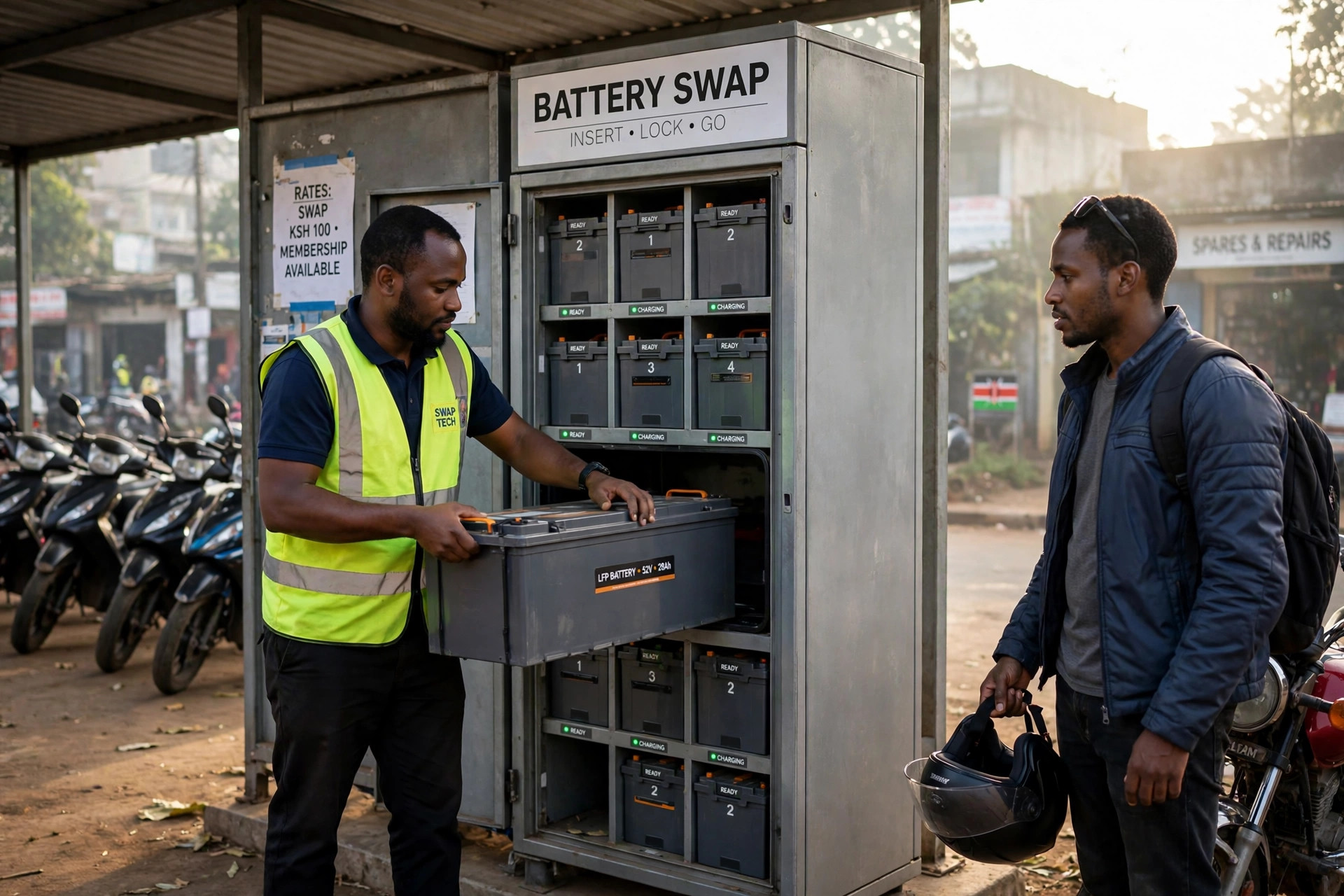
The practical heart of the change is battery swapping. Instead of waiting for a battery to recharge, a rider exchanges a depleted battery for a full one. Reporting by AFP, carried by Citizen Digital, puts a swap at about 2 minutes. That speed matters in a trade where a stopped bike earns nothing.
A full battery runs about 80 km and costs 265 Kenyan shillings. At the conversion used in this article, 1 Kenyan shilling is about VND 200 and about USD 0.0077, so 265 shillings is about VND 53,000 and about USD 2.05. AFP reporting puts that at roughly half the petrol cost for the same distance. Worked out per kilometre, the electricity costs near 660 VND per km, against about 1,320 VND per km for petrol.
Muigai also describes a bike that runs smoothly and quietly, with less fatigue at the end of the day. Noise and vibration are not minor discomforts when they last all day, every day. A quieter ride does not appear on a receipt, but it is felt in the shoulders and in the energy a rider has left when he gets home. The saving is financial, and it is physical too.
A second rider, the same maths
Muigai is not a lone exception. The Star Kenya profiled another driver, Joshua Mwithya, whose daily energy cost fell from about 1,400 Kenyan shillings on petrol to about 450 Kenyan shillings on battery swaps. Converted, that is a fall from about VND 280,000 a day to about VND 90,000 a day, or from about USD 10.78 to about USD 3.47.
The two stories use different measures, one comparing cost per distance and one comparing a full day, yet they point in the same direction. The electric option is not slightly cheaper on a good day. In both accounts, the reduction is large enough to reshape a daily budget, and for riders whose earnings are gathered fare by fare, a saving of that size is the most persuasive argument any new technology can make. It does not need to be believed in advance. It can be counted at the end of the day.
Cleaner air for the city he rides through
There is a wider gain that no single rider can pocket, but every rider and passenger breathes. The Clean Air Fund puts road transport at about 40 percent of Nairobi’s PM2.5 pollution. PM2.5 refers to fine airborne particles that are small enough to be inhaled deeply. When two wheelers form such a large part of daily movement, changing how they are powered changes part of the air of the whole city.
Kenya also starts from a strong position on electricity. About 90 percent of the country’s grid is renewable, so an electric kilometre in Nairobi draws on a power system that is already largely clean. The benefit is therefore twofold. The exhaust disappears at street level, where people wait, walk, and ride, and much of the electricity behind the trip comes from renewable generation.
Momentum is visible in sales as well. Kenya’s National Transport and Safety Authority, known as the NTSA, puts electric models at about 15 percent of new motorbikes sold. The transition is not complete, and petrol bikes remain part of the fleet, but electric motorbikes have moved beyond a handful of trials. They are now a measurable share of what buyers choose when they buy new.
What Nairobi says to Ho Chi Minh City
Vietnamese readers have a local reason to follow Muigai’s arithmetic. In the pricing round of 8 October 2026, the Ministry of Industry and Trade capped petrol E10 RON95-III at VND 28,254 per litre. Every rider who fills a tank in Vietnam knows that kind of figure in a practical way, even if the exact number changes from one round to the next. Fuel is paid for in cash, day after day.
There is already a Vietnamese version of the saving story. Saigon Giai Phong reporting, carried by vietnam.vn, told of a Ho Chi Minh City rider saving more than VND 6 million a year after switching. The cities are different, the currencies are different, and the vehicles and charging systems are not identical. The underlying question is the same one Muigai asks in Nairobi. What does a working kilometre cost, and how much of the fare gets to stay with the person who rode it?
That is why his story travels well. It is not mainly a story about a new machine. It is a story about a working day that became cheaper to run, quieter to endure, and easier to finish. A battery swapped in about 2 minutes. A full battery good for about 80 km. Energy at near 660 VND per km instead of about 1,320 VND per km on petrol. For a boda boda rider covering up to 150 km a day, those numbers are not a promise about tomorrow. They are the reason today ended better than it used to.
Related reading
- 20,000 Sidewalk Cabinets: Ho Chi Minh City Bets on Battery Swapping
- Two Wheels, Three Models: Swapping, Plugging and Leasing Compared
- From July 2027, Every Public Charger in Vietnam Must Meet Five Groups of Requirements
Sources
UNEP, 2026. Story on Steve Muigai and electric boda boda riding in Nairobi. AFP via Citizen Digital, 2026. Reporting on battery swapping times, range and costs in Kenya. The Star Kenya, 2026. Profile of Joshua Mwithya and his daily energy cost saving. Clean Air Fund. Figure on road transport and Nairobi PM2.5 pollution, as cited in the brief research.