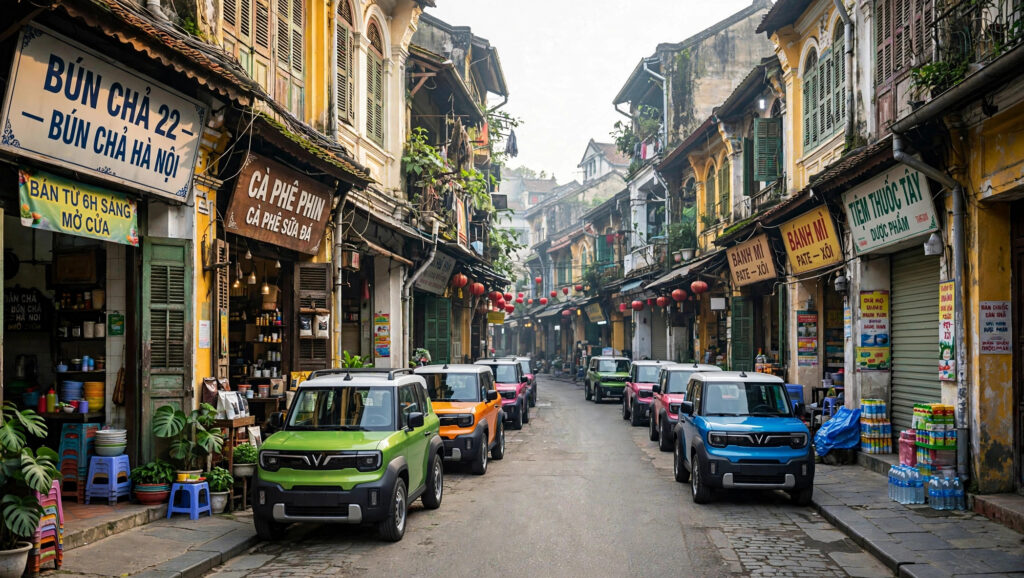
The question sounds simple, and every driver forum in Vietnam asks a version of it. A petrol motorbike earns a known amount each day. An electric one promises cheaper running costs but demands a purchase price, a loan, and somewhere to charge. What is left at the end of the month is what decides whether Ho Chi Minh City can convert about 400,000 ride hailing and delivery riders, as its roadmap intends, with conversion targets of 30 percent by the end of 2026, 80 percent by 2027 and completion by 2028, and no petrol bikes on platforms from 2029. The answers below use the figures drivers, platforms and city researchers have actually published.
How much does a driver earn before any switch?
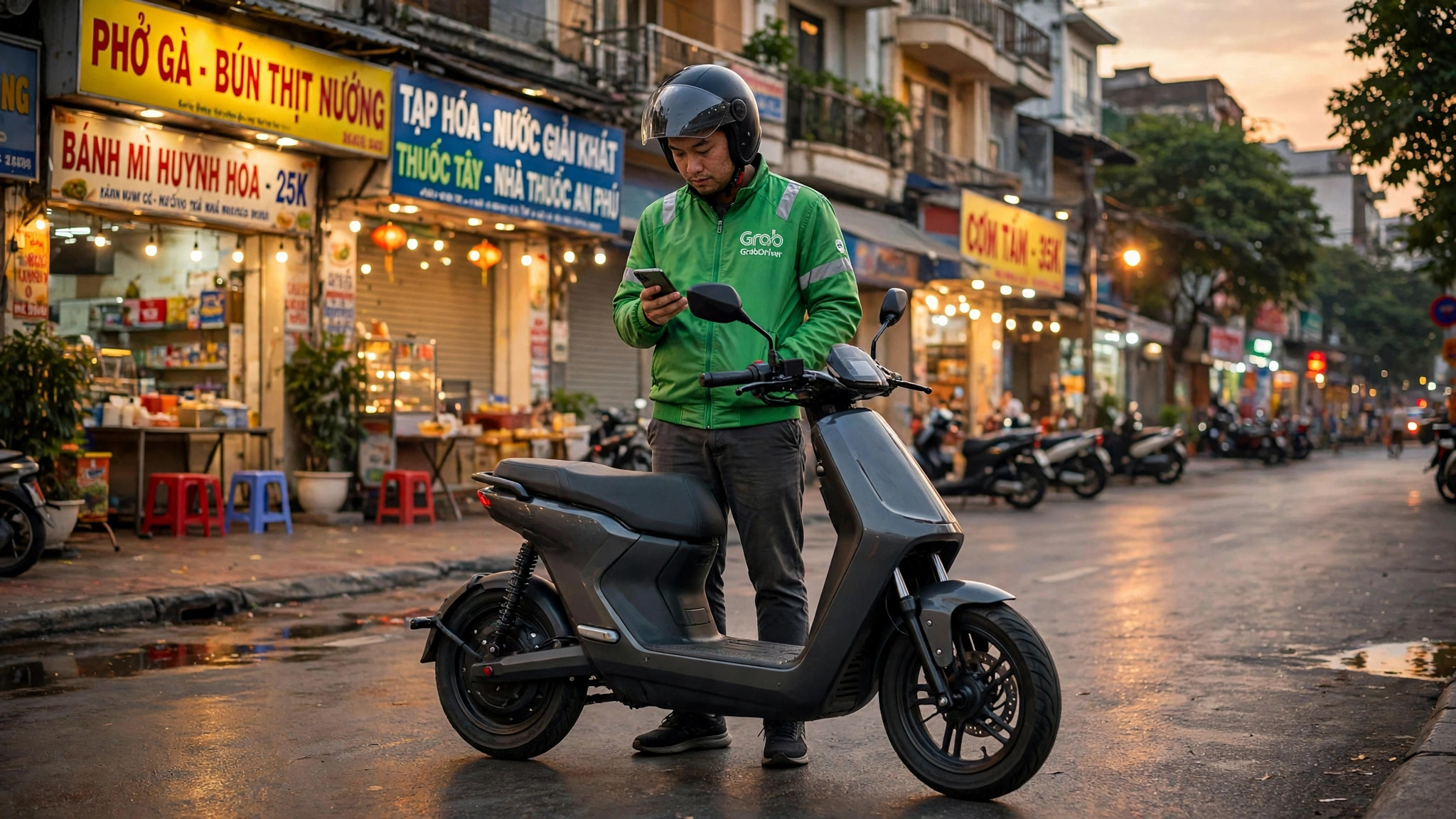
Gross earnings are only the starting point. In September 2026, Reuters reported driver claims, carried by VTC News, that platform deductions since a July payment change could reach as much as 50 percent of the fare, leaving net earnings of roughly VND 2,600 per kilometer for motorcycle rides before fuel, maintenance and depreciation. Grab told Reuters it was engaging with drivers and working to keep operations stable. An earlier survey by the Vietnam Labour Confederation, the Center for Health Consultation and Community Development and Oxfam found an average Grab motorbike driver income of about VND 7 million a month, or about USD 269 at VND 26,000 to USD 1, with most drivers working six to twelve hours a day. The lesson is that margins are thin before fuel is even counted, which is why running costs matter so much in this debate.
What does petrol actually cost a working rider each day?
City research gives the clearest baseline. A survey of more than 400 drivers by the Ho Chi Minh City Institute for Development Studies found riders covering an average of 80 to 120 kilometers a day and spending about VND 70,000 to VND 100,000 a day on petrol, rising by 20 to 40 percent in heavy traffic periods. Against that, the same research put electric running costs at around VND 20,000 a day. Vietnam Investment Review, reporting the city plan, cited the institute director Le Thanh Hai noting that electricity costs around 80 percent less per kilometer than petrol and that electric bikes need less maintenance, putting average savings at about USD 40 to USD 50 per month. The institute survey range is wider, at VND 1 million to VND 2 million a month, or about USD 38 to USD 77. Either way, the saving is real but modest next to a vehicle price.
What does the electric bike itself cost, and can the saving pay for it?
This is where the arithmetic tightens. VnExpress International reported that electric motorbikes suitable for ride hailing, with the payload near 200 kilograms and daily range near 150 kilometers that operators ask for, typically cost VND 25 million to VND 50 million, or about USD 962 to USD 1,923. Models at the top of that range approach VND 50 million. If a driver borrows the full price and the monthly instalment stays close to the fuel saving, the switch can be close to cash neutral, which is the logic behind the city proposal: use the fuel saving to finance the new vehicle so the driver needs little upfront money. The affordability line discussed in driver research sits near the top of the saving range, roughly VND 2 million a month, or close to USD 80. An instalment above that line eats into income the driver currently keeps, and an instalment below it leaves a small monthly gain. Trade in support, registration fee relief and subsidised green loans, all proposed in the city package, exist precisely to keep instalments under that line.
Where can the driver charge, and what does waiting cost?
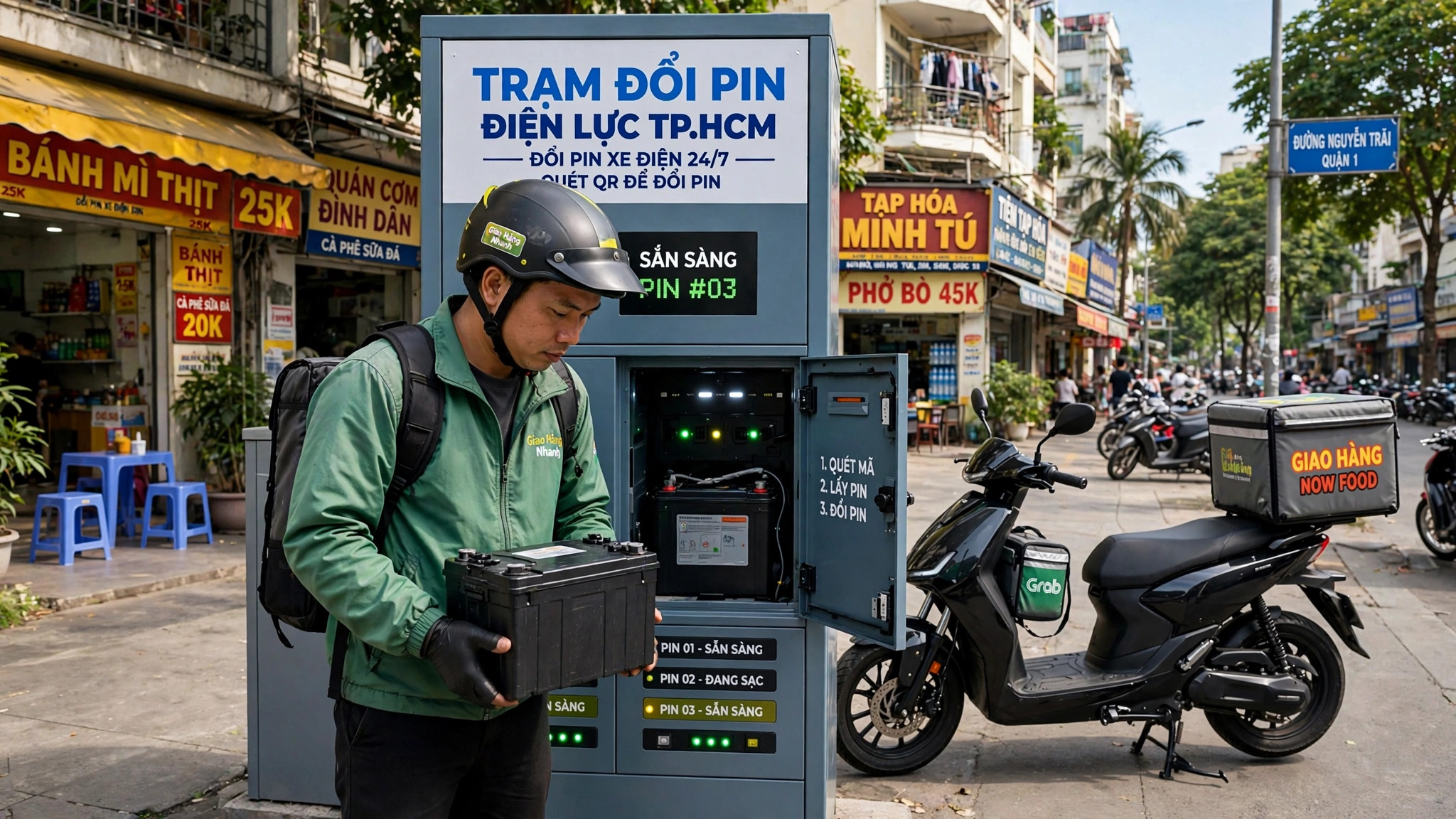
Charging access is the second budget line, because time spent charging is time not earning. Grab surveyed 8,300 of its own driver partners and found that only about a third said they could charge an electric vehicle at home, a figure reported by the Business Times. Landlords are often reluctant to allow home charging, and many riders live in rented rooms without a dedicated parking space. Public infrastructure is still thin relative to the fleet: Ho Chi Minh City has an estimated 100,000 electric motorbikes but only around 300 fast charging stations and about 50 battery swap points, according to city figures reported by VnExpress International. Proposals from V-Green and Great Wealth would add about 20,000 sidewalk battery swap cabinets, each company pledging about 10,000 units funded from its own capital, with completion targeted for the first quarter of 2026. Swapping changes the earnings question, because a two minute swap protects earning hours in a way that a long plug in charge at midday cannot.
So what is left at the end of the month?
Add the pieces together. A rider who switches keeps the same gross earnings, subject to platform deductions that apply equally to petrol and electric work. Petrol spending of VND 70,000 to VND 100,000 a day falls to roughly VND 20,000 a day in electricity, releasing about VND 1 million to VND 2 million a month. Maintenance falls as well, since an electric drivetrain has fewer moving parts and no oil changes, though tyres, brakes and suspension wear at similar rates. Against the gain sit the loan instalment, any battery swap subscription or per swap fee, and the risk cost of charging delays on days when cabinets or chargers are busy. For a driver whose instalment is covered by the fuel saving, the honest answer is that monthly take home rises only slightly at first, by the maintenance saving and whatever part of the fuel saving the loan does not absorb. The bigger gain arrives when the loan ends, when the full saving becomes income. The honest risk is the reverse case, a high instalment, no home charging and paid swapping, where the driver can be worse off despite cheaper energy. That is why the city package pairs the mandate with finance and infrastructure rather than relying on the fuel saving alone, and why drivers are asking platforms for guidance and support before they sign anything.
Related reading
- 20,000 Sidewalk Cabinets: Ho Chi Minh City Bets on Battery Swapping
- Hanoi’s Ring Road 1 Experiment: 450,000 Motorbikes at the Centre of a Ban
- Two Wheels, Three Models: Swapping, Plugging and Leasing Compared
Sources
Vietnam Investment Review, 2025 to 2026, on the Ho Chi Minh City conversion roadmap, per kilometer electricity savings and average monthly savings of USD 40 to USD 50. Ho Chi Minh City Institute for Development Studies survey of more than 400 drivers, reported 2025 to 2026, on daily distances of 80 to 120 kilometers, petrol spending of VND 70,000 to VND 100,000 a day and electric running costs near VND 20,000 a day. VnExpress International, 2025 to 2026, on suitable electric motorbike prices of VND 25 million to VND 50 million and city charging infrastructure counts. Reuters, September 10, 2026, on driver claims about platform deductions and net earnings per kilometer, with a Grab response. Business Times, 2025 to 2026, on the Grab survey of 8,300 driver partners and home charging access.