A ban that starts with eleven streets
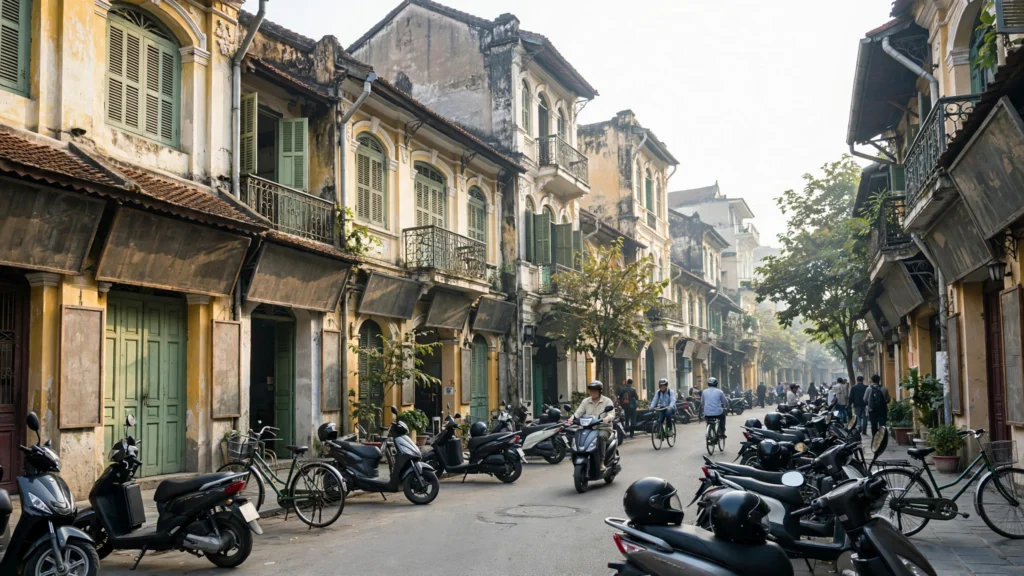
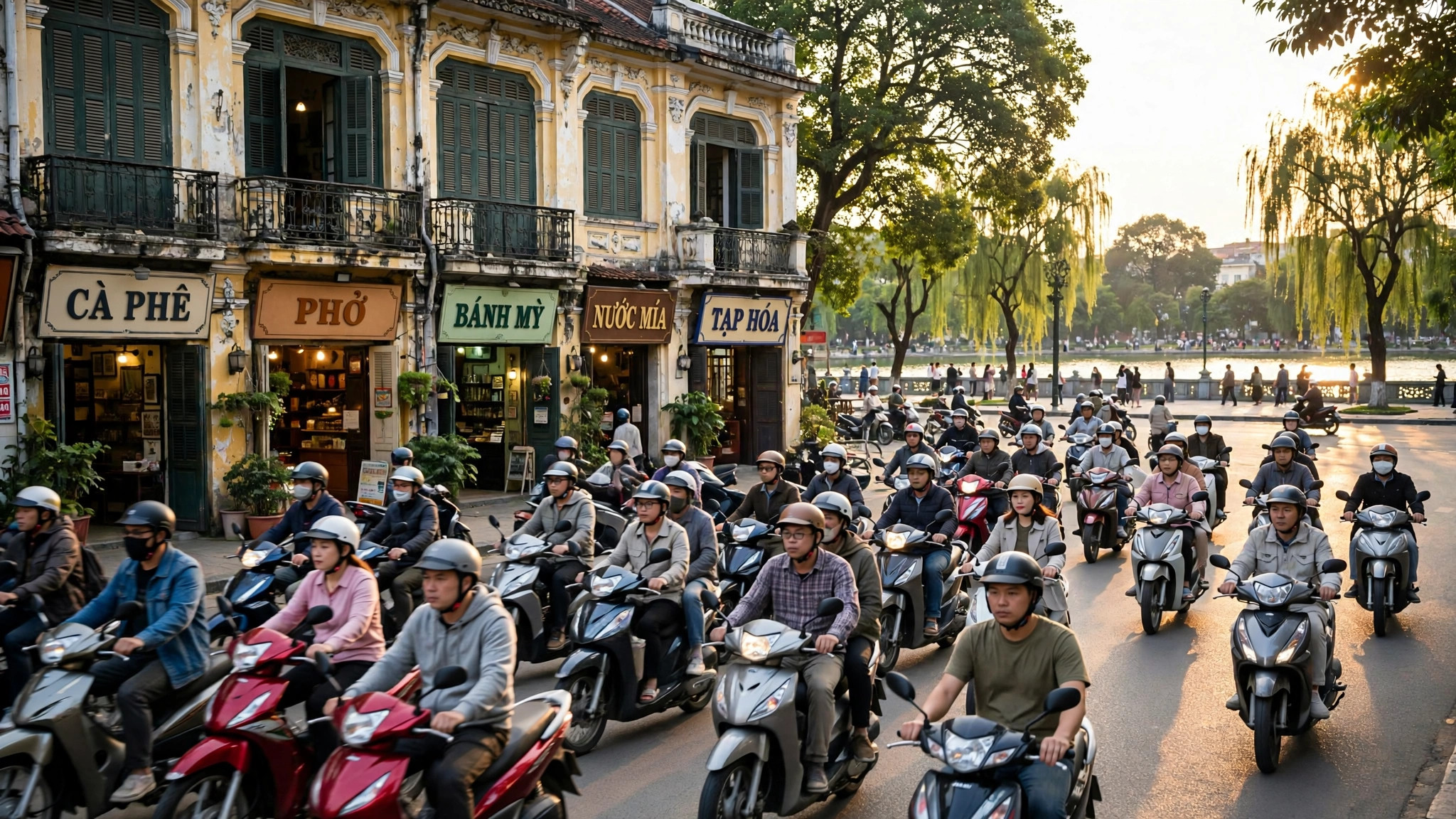
On paper, the instruction was absolute. Directive 20, issued by the Prime Minister in July 2025, told Hanoi to ensure that no fossil fuel motorbikes remained in circulation inside Ring Road 1 from 1 July 2026. On the ground, the experiment that actually began on that date is narrower and more interesting. Under the city’s pilot plan, the low emission zone opens in Hoan Kiem ward, on 11 named streets around the old centre, including Trang Tien, Hang Khay, Le Thai To and Hang Dao. Petrol motorbikes are barred only at set weekend hours: Friday evenings from 6pm to midnight, and weekends from 6am to midnight. The restriction covers ride hailing bikes as well as private ones.
The gap between the directive and the pilot is not a failure of nerve. It is the story. Ring Road 1 encloses about 26 square kilometres, a 25 kilometre perimeter and roughly 625,000 residents across nine wards. About 450,000 of Hanoi’s 6.9 million motorbikes operate inside it. A full ban on day one would not have been an environmental policy. It would have been a transport shutdown. The phased design, set out after the People’s Council adopted Resolution 57 in November 2025, is Hanoi’s attempt to learn how a ban behaves before making it total.
The phase map
Phase two, running through 2027, extends the pilot from Hoan Kiem into Cua Nam ward, adding 14 streets such as Tran Hung Dao, Dien Bien Phu and Le Duan. Phase three, from 2028 to the end of 2029, takes the zone to the whole of Ring Road 1. Beyond the pilot, the wider roadmap in Directive 20 still points outward: restrictions reaching Ring Road 2 in 2028, with limits on petrol cars joining the motorbike rules, and Ring Road 3 by 2030.

Read the phases as a pressure valve. Each step widens the restricted map only after the previous one has shown how riders reroute, where queues form, and which streets just outside the line absorb the displaced traffic. The risk is equally clear. A weekend hours ban on 11 streets may be too gentle to change buying decisions, and a rider who expects the rules to soften again has every reason to keep a petrol bike and wait.
The subsidy arithmetic
Hanoi’s answer to that hesitation is money. Under the support package the city has put forward, residents who own a petrol motorbike and switch to an electric model priced from VND 10 million would receive support worth 20 percent of the new vehicle’s value, capped at VND 5 million, about USD 192 at VND 26,000 to USD 1. Poor households could receive up to 100 percent of the cost, capped at VND 20 million, about USD 769. Near poor households could receive 80 percent, capped at VND 15 million. Registration and number plate fees would be cut by half for switchers, and waived entirely for poor and near poor households. Buyers on instalment plans could have 30 percent of their loan interest covered for up to 12 months.
City vice chairman Duong Duc Tuan has said the package aims to cover nearly all the transition costs for residents in the zone, including registration and plate fees. The structure tells a more precise story. For a middle income rider buying a VND 25 million electric motorbike, the capped VND 5 million grant plus fee relief is meaningful but not decisive. For a poor household, the near full subsidy removes the price barrier entirely. The policy is therefore best understood as equity first: it protects those least able to switch, while asking better off riders to move because the rules, rather than the grant, make petrol ownership steadily less convenient.
What happens to 450,000 petrol bikes
The least discussed part of the experiment is the exit door. A banned bike does not vanish. It is sold, and the obvious market is everywhere outside the zone: outer Hanoi districts, neighbouring provinces, and smaller cities where no restriction applies. Expect a two tier resale market to form as phase three approaches. Well kept petrol models with years of life left will hold value with buyers beyond Ring Road 3. Older, smokier machines, the very vehicles the policy most wants gone, will be discounted hardest and pushed furthest from the centre, exporting the emissions rather than eliminating them.
City officials have floated buyback style support, and scrappage discipline will matter. Without a retirement channel, Hanoi risks cleaning its centre by dirtying its periphery. The waste question compounds this. Environmental managers in the city have warned that a fast phase out could produce a surge of end of life motorbikes needing proper handling, from fuel and oil to batteries in the replacement fleet.
The alternatives being built alongside
A ban is only credible if the substitutes exist. Hanoi plans small electric buses of eight to twelve seats and four seat electric vehicles inside Ring Road 1, faster work on urban rail lines beyond the two already serving the area, and charging points in parking lots, public garages and residential buildings. Delivery and ride hailing riders, who cross the zone boundary dozens of times a day, are the stress test: a rule that works for a resident commuting outward can still break the working day of a driver whose income is measured in trips per hour.
What to watch
Three signals will judge the experiment. First, electric motorbike sales inside the ring during the pilot months, which will show whether weekend hours move purchase decisions at all. Second, the subsidy take up rate among poor and near poor households, the group the package is truly built for. Third, traffic and air readings on the boundary streets, where displaced petrol bikes will concentrate. If those readings worsen while the centre improves, Hanoi will have drawn a clean island in a dirtier sea, and the case for phases two and three will need the scrappage and public transport legs to move faster than the ban itself.
Related reading
- Honda’s Dilemma in Its Biggest Motorbike Market
- What Does a Ride-Hailing Driver Actually Earn After Switching to Electric?
- 20,000 Sidewalk Cabinets: Ho Chi Minh City Bets on Battery Swapping
Sources
VnEconomy, 2026, on the Hanoi People’s Committee draft low emission zone pilot: phases, the 11 Hoan Kiem streets, weekend hours, zone population and the 450,000 motorbikes operating inside Ring Road 1. VnExpress International, July 2025, on Directive 20, the July 2026 start and the subsidy programme for about 450,000 petrol motorbikes. Vietnam News, 2025, on the proposed support levels: 20 percent capped at VND 5 million, up to VND 20 million for poor households and VND 15 million for near poor households, plus fee and interest support. Vietnam Investment Review, 2026, on Resolution 57/2025 and the low emission zone roadmap.