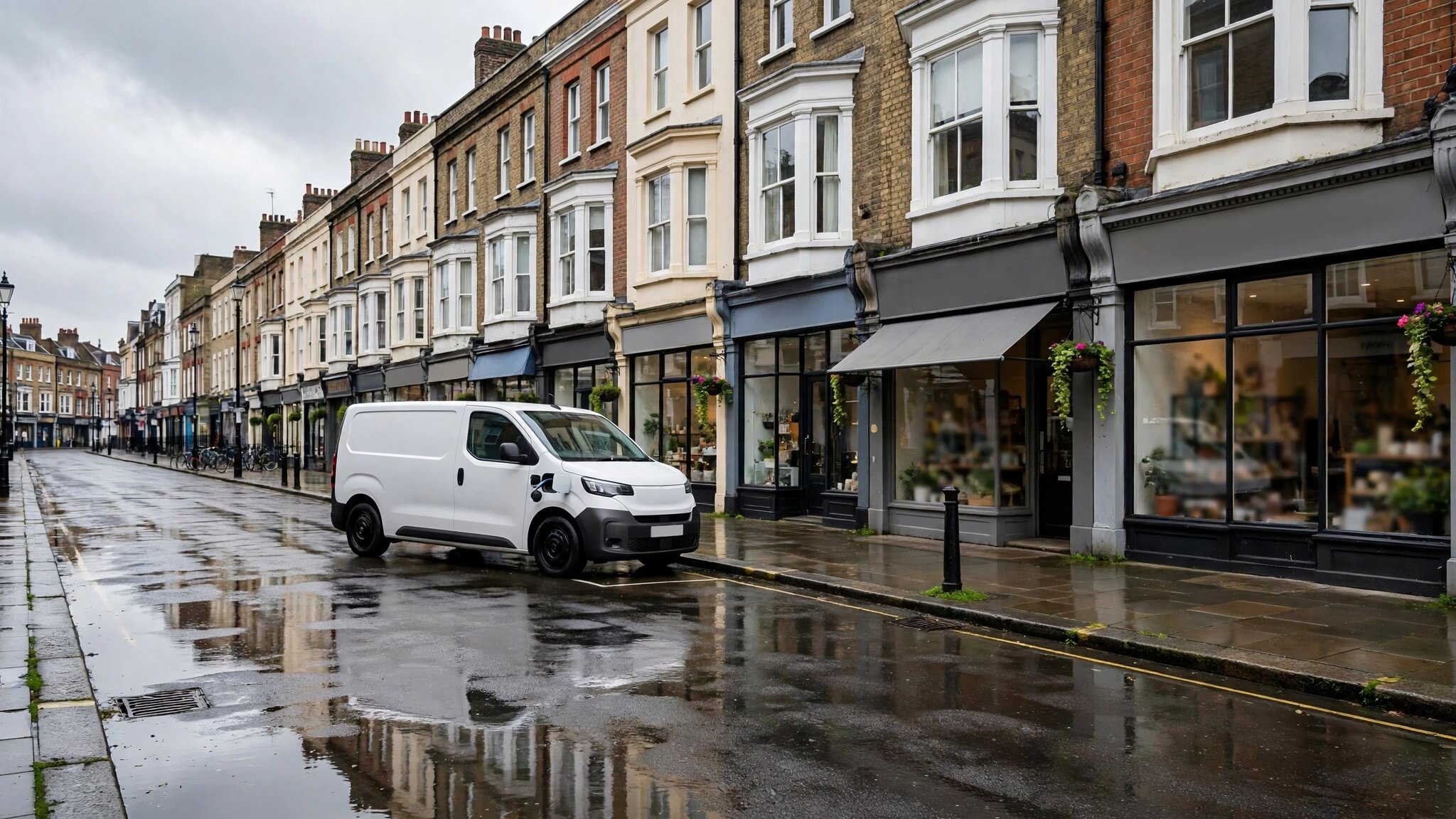
Electric van registrations in the UK jumped 58% in October to 3,369, the best October on record. The year-to-date share reached 11%, but the gap with the 24% government target keeps widening.
October 2026 was the best October ever for electric vans in the UK. New figures from the Society of Motor Manufacturers and Traders (SMMT) show battery-electric van registrations rose 58% year on year to 3,369 units, taking a 12.9% share of the light commercial vehicle market.
The wider van market grew for a seventh month in a row, up 11.4% to 25,510 registrations. Yet behind the record sits a wide gap: the year-to-date electric share is 11%, less than half the 24% target the UK government set for 2026.
Large vans drove most of the growth, up 12.9% to 18,560 units, or 72.8% of the market. Medium vans rose 14.3% to 3,825 units, and 4x4s more than doubled to 899 units. Small vans fell 11.7% to 462 units, and pickups dropped 17.7% to 1,764 units, with pickup demand down 52.9% across the year after tax changes that treat double-cab pickups as cars.
Most of the 3,369 electric vans were under 3.5 tonnes, at 2,781 units, up 42.6%. Battery-electric rigids over 3.5 to 4.25 tonnes surged 223.1% to 588 units, although from a small base. Over the first ten months, electric van registrations reached 30,728 units, up 26.7% from 24,250 a year earlier. The Ford Transit Custom was the best-selling van in October with 2,963 registrations, and leads the year-to-date ranking with 42,326 units.
Diesel still dominates. Diesel vans under 3.5 tonnes took 20,735 registrations in October, a 79.5% share, and 230,151 units over ten months, or 82.1% of the total. SMMT said more than 40 zero-emission models are now on sale in the UK, supported by the government's Plug-in Van Grant and Depot Charging Scheme. Even so, manufacturers have been forced to offer heavy discounts to avoid even higher ZEV Mandate compliance costs.
The outlook shows the gap widening. The industry expects the overall van market to grow 4.2% to 329,000 units in 2026, with battery-electric vans up to 3.5 tonnes reaching only a 10.4% share, 13.6 percentage points below the 24% mandated target. The forecast puts the electric share at 14.9% in 2027 and 18.8% in 2028, still less than half the respective 34% and 46% annual targets. SMMT chief executive Mike Hawes said demand remains far behind the optimistic and unrealistic expectations of the mandate, and called for clear and meaningful change to the trajectory before the end of the year.
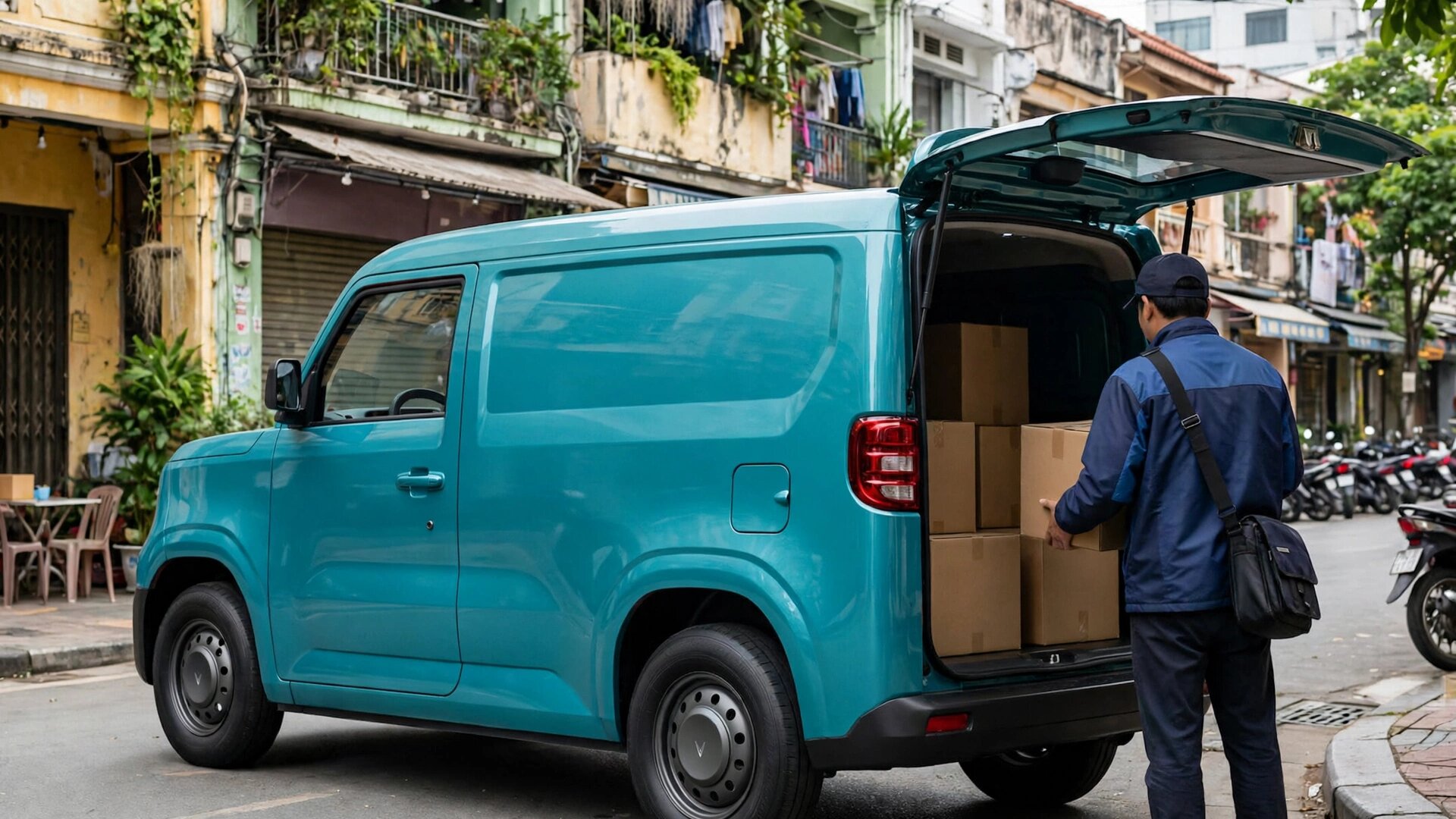
In Vietnam, electric vans have started rolling. The VinFast EC Van, the company's first purpose-built electric cargo van, launched on May 13, 2025, with deliveries from November 2025. The two-seat van measures 3,767 mm long, carries 2,600 liters of cargo with a maximum payload of 650 kg, and runs 175 km per charge on an 18.3 kWh usable battery. It is priced from 268 million dong, battery included. In July 2026, logistics provider GEODIS deployed the EC Van for last-mile deliveries in Ho Chi Minh City, one of the first electric urban distribution fleets in Vietnam. Since February 10, 2026, VinFast buyers have charged free at V-Green stations nationwide until February 10, 2029, up to 10 sessions a month for private customers.
Why it matters: For fleet operators, the record October shows electric vans can serve urban delivery duty, with more than 40 models to choose from and lower energy costs than diesel. But the mandate gap shows depot charging and grid connection waits remain the bottleneck, not the vehicles. For Vietnam, the lesson is sequencing: support policies must move with charging infrastructure for fleets, and electric vans must prove real-world running costs through pioneer fleets like GEODIS, rather than relying on administrative targets alone.
Source: SMMT, electrive, Payload Asia, VinFast Vietnam