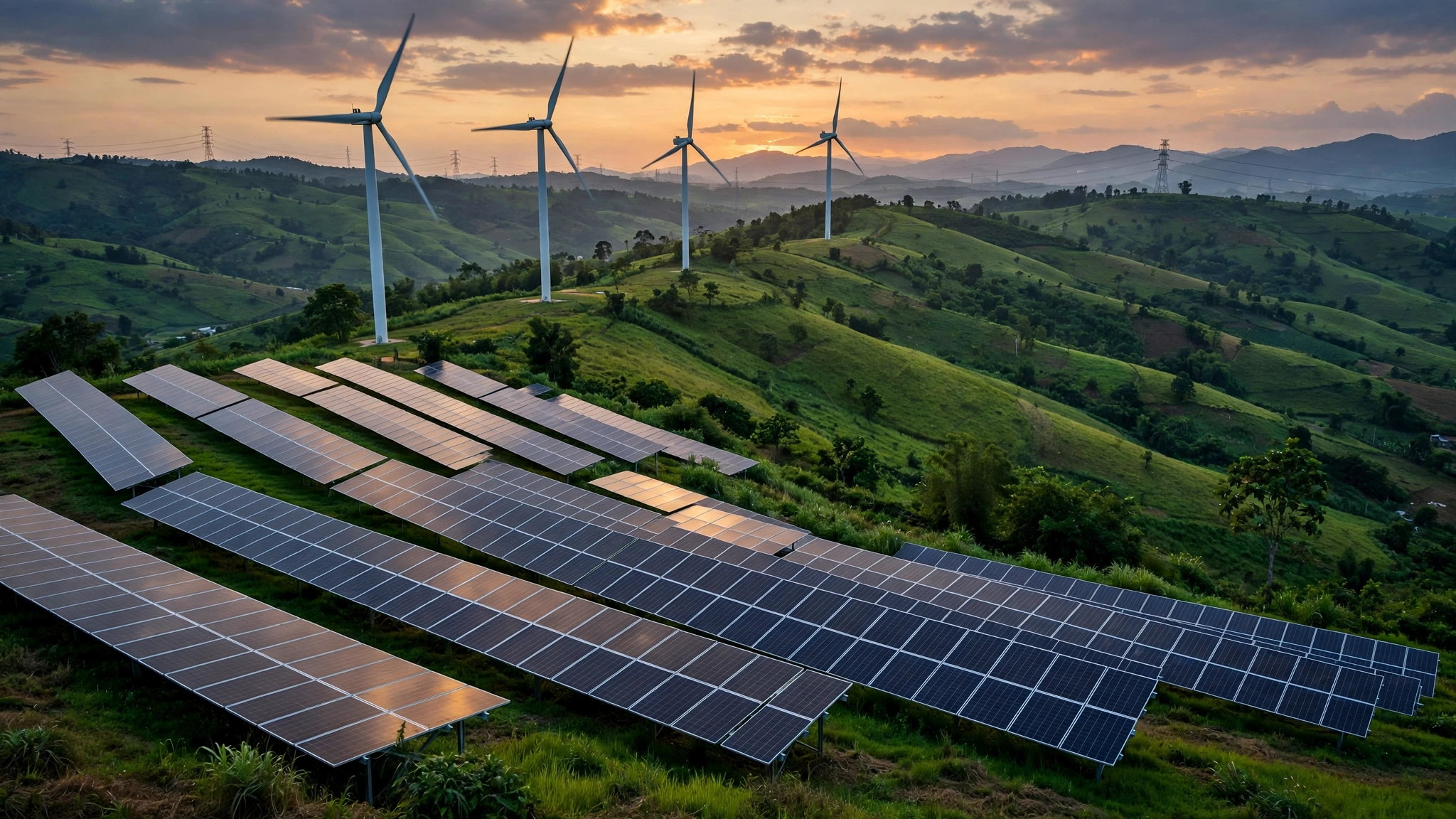
Vietnam has set the 2026 price ceilings for wind and solar power. The Ministry of Industry and Trade issued two decisions on November 5, 2026, one for solar plants and one for onshore and nearshore wind plants, both in force from the day they were signed. The ceilings are the maximum prices developers and Vietnam Electricity (EVN) may agree in power purchase agreements. They are not the prices EVN pays, and they are not feed-in tariffs.
The update matters because it resets the negotiating range for every new wind and solar project that signs a power purchase agreement under the current framework. Ceilings rose in every category from the 2025 frameworks, and plants paired with battery storage keep a clear premium. Offshore wind is outside both decisions and keeps its own separate framework.
Document facts
Issuing body: Ministry of Industry and Trade
Document number: Decision 2946/QD-BCT, approving the 2026 generation price framework for solar power plants
Signed: 5 November 2026, by Deputy Minister Truong Thanh Hoai
Effective: 5 November 2026 (from the date of signing)
Status: In force; two articles
Document facts
Issuing body: Ministry of Industry and Trade
Document number: Decision 2945/QD-BCT, approving the 2026 generation price framework for onshore and nearshore wind power plants
Signed: 5 November 2026, by Deputy Minister Truong Thanh Hoai
Effective: 5 November 2026 (from the date of signing)
Status: In force
Unofficial English summary for reference only. Not a legal translation and not legal advice. The Vietnamese text linked at the end of this page is authoritative.
What the documents do
Both decisions approve a 2026 generation price framework under the method set by Circular 09/2025/TT-BCT, as amended by Circular 25/2025/TT-BCT. The framework applies to solar and wind plants within the scope of point a, clause 2, article 1 of that circular. Each decision sets maximum prices, excluding value added tax, by region (North, Central, and South) and by plant type. The actual price for a project is negotiated between the generator and EVN within the ceiling. The negotiating range runs from zero to the published figure. The ceiling is not a guaranteed payment.
For solar, Decision 2946 sets twelve ceilings. Ground-mounted plants without storage may agree up to VND 1,591.02 per kWh in the North, VND 1,293.17 in the Central region and VND 1,104.32 in the South. Floating solar without storage runs higher: VND 1,939.74 in the North, VND 1,560.63 in the Central region and VND 1,340.21 in the South. Plants paired with battery storage get higher ceilings again. Ground-mounted solar with storage reaches VND 1,813.48 in the North, VND 1,469.90 in the Central region and VND 1,254.97 in the South. Floating solar with storage reaches the highest figure in the whole framework, VND 2,120.31 per kWh in the North, with VND 1,703.21 in the Central region and VND 1,461.39 in the South. At about VND 26,000 to the dollar, the highest ceiling is roughly 8.2 US cents per kWh and the lowest about 4.2 cents.
For wind, Decision 2945 sets four ceilings. Onshore wind may agree up to VND 2,187.83 per kWh in the North, VND 1,893.61 in the Central region and VND 2,035.37 in the South. Nearshore wind carries a single flat ceiling of VND 2,126.92 per kWh in all three regions. Onshore wind in the North, at about 8.4 US cents, is the highest wind ceiling in the framework.
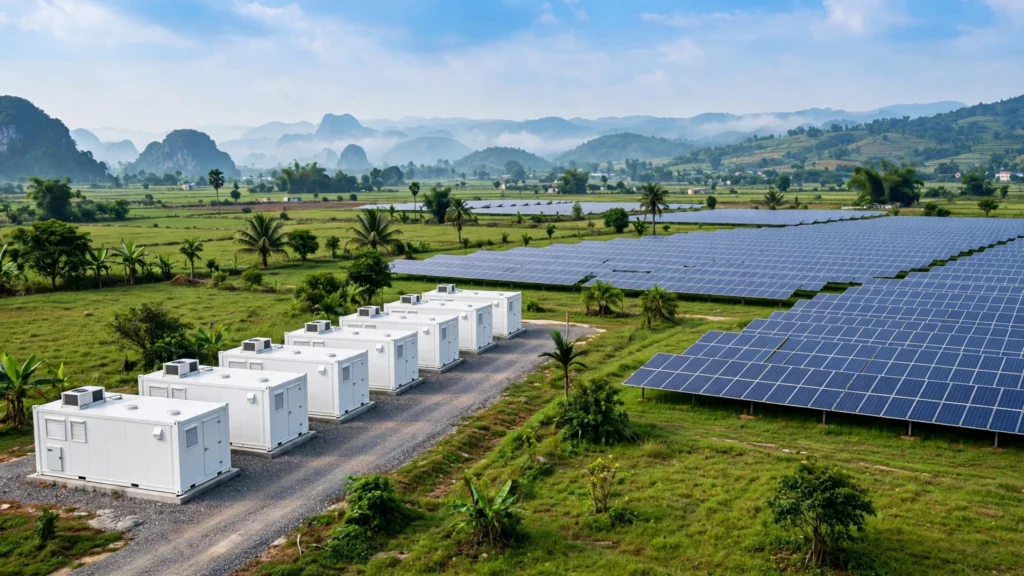
The storage premium in the solar decision is not a free uplift. The ceilings for plants with storage were calculated on the basis of a battery system with power capacity of at least 10 percent of the plant’s capacity. The storage and discharge duration used in the calculation is two hours. Those parameters are calculation inputs for the ceiling. They do not require every solar plant to install storage, and they do not set a storage obligation for any project.
Both decisions use the same regional appendix. Thirty-four provinces and cities are assigned to the three regions: eighteen in the North, eight in the Central region and eight in the South. The North runs from Dien Bien and Lai Chau through Hanoi, Hai Phong and Quang Ninh to Thanh Hoa, Nghe An and Ha Tinh. The Central region covers Quang Tri, Hue, Quang Ngai, Da Nang, Gia Lai, Dak Lak, Khanh Hoa and Lam Dong. The South covers Dong Nai, Tay Ninh, Ho Chi Minh City, Dong Thap, An Giang, Vinh Long, Can Tho and Ca Mau.
What changes in practice
For developers, the immediate effect is a wider negotiating range. A solar project in the North can now negotiate up to about 15 percent higher than under the 2025 framework. A floating project with storage in the North can negotiate up to VND 2,120.31 per kWh. But the ceiling is a cap, not a price. The revenue a project actually earns still depends on its power purchase agreement with EVN, on the generation service pricing method the ministry prescribes, and on the project’s own costs. No developer should model the ceiling as contracted revenue.
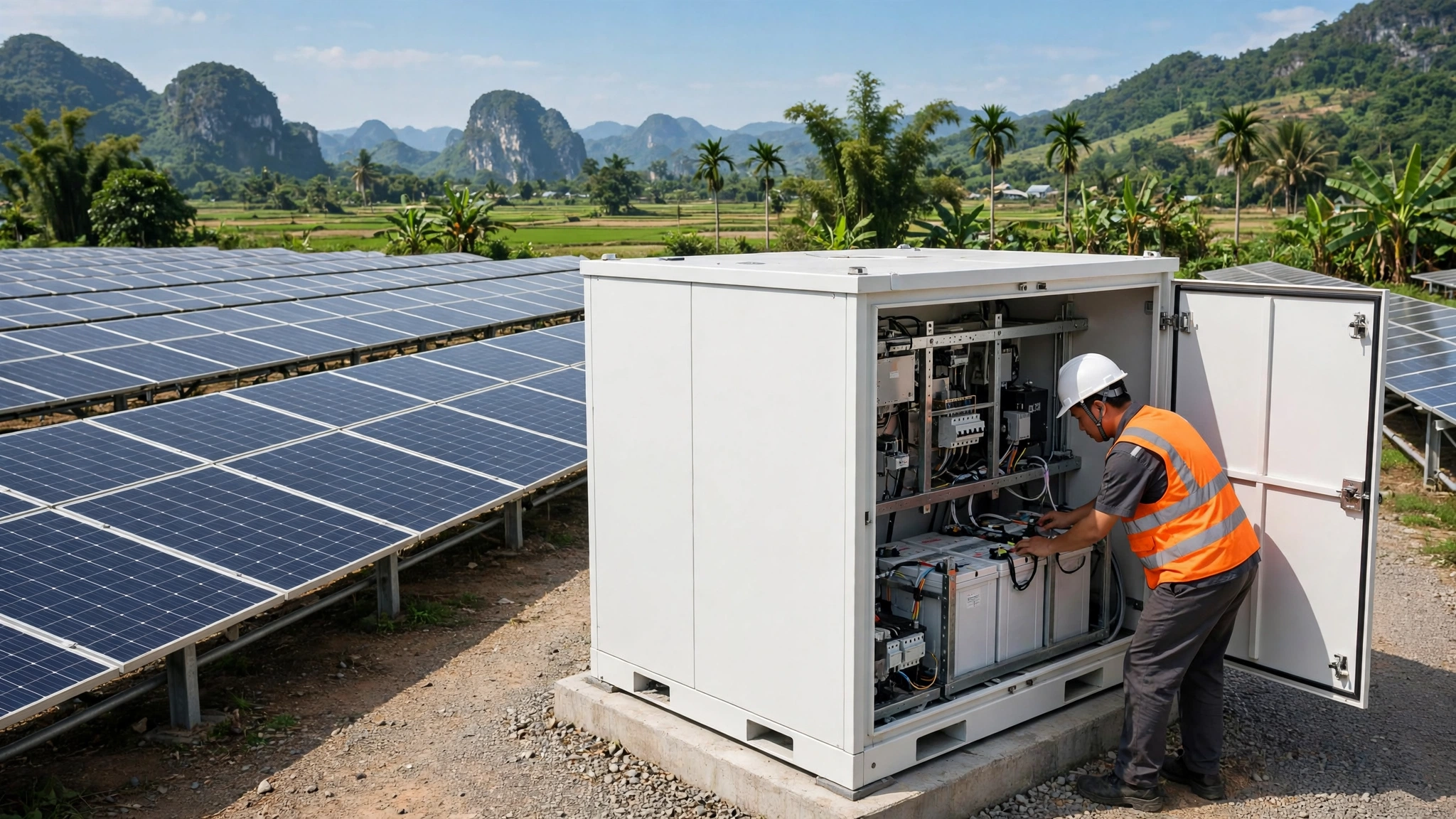
The storage premium changes the arithmetic for pairing batteries with solar, without mandating it. A ground-mounted plant in the Central region, for example, may negotiate up to VND 1,469.90 per kWh with storage, against VND 1,293.17 without it. That gap is the framework’s way of valuing the flexibility storage adds to the grid, particularly at the evening peak. It is a pricing signal, not a build order, and developers will weigh it against battery costs and the separate battery storage pricing mechanism the ministry is still drafting for December 2026.
For EVN, the decisions give the utility a current basis for signing power purchase agreements with wind and solar generators. The ministry assigned implementation to its own chief of office, the director of the Electricity Department, and the director of the Legal Department. The EVN general director and the heads of the generation units concerned share the duty. The frameworks themselves need no further implementing circular. The separate tracks that remain open, the battery storage pricing circular and the rooftop solar targets by province, are not part of these two decisions and should not be read into them.
What changed from the previous rules
The 2026 frameworks succeed the 2025 frameworks without replacing their structure. The solar predecessor is Decision 988/QD-BCT of April 10, 2025. The wind predecessor is Decision 1508/QD-BCT of May 30, 2025. Neither 2026 decision repeals its predecessor. Each annual framework stands for its own year.
Every ceiling rose. For solar without storage, ground-mounted ceilings rose by VND 208.32 in the North, VND 186.07 in the Central region and VND 92.32 in the South. In percentage terms that is about 15.1 percent in the North, 16.8 percent in the Central region and 9.1 percent in the South. Floating solar without storage rose by the same percentages: VND 253.94 in the North, VND 224.53 in the Central region and VND 112.01 in the South. With storage, ground-mounted ceilings rose by VND 241.50 in the North, VND 212.85 in the Central region and VND 105.11 in the South. Floating solar with storage rose by VND 243.74 in the North, VND 216.03 in the Central region and VND 94.26 in the South. The largest single increase in money terms is floating solar without storage in the North, up VND 253.94. The largest percentage increase is ground-mounted solar with storage in the Central region, up about 16.9 percent.
For wind, onshore ceilings rose by VND 228.43 in the North, VND 86.21 in the Central region and VND 195.07 in the South, or about 11.7 percent, 4.8 percent and 10.6 percent. Nearshore wind rose by VND 139.52 in every region, about 7.0 percent, keeping its flat structure across the three regions.
What carried over unchanged is as important as what rose. The three-region structure is the same. The 34-province appendix is the same. The storage calculation parameters, at least 10 percent of plant capacity and two hours of duration, are the same. The method, Circular 09/2025 as amended by Circular 25/2025, is the same. The 2026 decisions raise the numbers inside an unchanged framework. They do not change how ceilings are calculated, which plants they cover, or how prices are negotiated.
Who is affected
Wind and solar developers negotiating power purchase agreements are the most directly affected, since the ceilings set the top of their negotiating range for 2026. EVN and its generation units are affected on the other side of the same negotiation. Lenders and investors assessing project bankability should use the new ceilings as the cap in their models, not as the expected tariff. Battery suppliers and storage developers gain a clearer, if still indirect, signal: storage now carries a quantified premium in the solar framework, but the premium is only realized through a negotiated agreement. Provinces in the appendix are affected only in the sense that their region determines which ceiling applies to a project on their territory; the decisions create no new provincial obligation.
Notes for investors and operators
Read the ceilings as caps. A project that budgets on the ceiling figure as if it were a contracted price will overstate its revenue. The negotiated price, the generation service pricing method and the project’s cost base decide the outcome.
Check the region before the model. The same plant type can carry a ceiling more than 40 percent higher in the North than in the South. For example, ground-mounted solar without storage is VND 1,591.02 in the North against VND 1,104.32 in the South. The appendix, not a developer’s own reading of geography, decides which region a project falls in.
Do not confuse the storage parameters with a storage mandate. A solar plant is not required to install batteries by these decisions, and a plant without storage still has a ceiling. Storage only changes which ceiling applies, and only on the stated calculation basis of at least 10 percent of plant capacity and two hours of duration.
What businesses should do next: generators with projects in negotiation should re-run their power purchase agreement models against the 2026 ceilings for their region and plant type. They should confirm with EVN whether the agreement will be priced under the new framework. Developers considering storage should test whether the storage premium covers battery cost on their project. They should also track the separate battery storage pricing circular due in December 2026, rather than treating these decisions as the final word on storage revenue. Anyone planning an offshore wind project should note that these decisions do not cover it. Finally, keep the two pending tracks separate in planning: the rooftop solar targets by province and the battery storage mechanism are still to come, and neither is decided by Decisions 2945 or 2946.
Sources and the official text
Ministry of Industry and Trade, Decision 2946/QD-BCT, full text (PDF, issuing body): https://moit.gov.vn/upload/2005517/fck/files/quyet-dinh-2946-qd-bct-khung-gia-mat-troi-2026_be0dc.pdf
Ministry of Industry and Trade portal, announcement of Decision 2946/QD-BCT (issuing body): https://moit.gov.vn/tin-tuc/bo-cong-thuong-phe-duyet-khung-gia-phat-dien-loai-hinh-nha-may-dien-mat-troi-nam-2026.html
Thu Vien Phap Luat, Decision 2946/QD-BCT summary and download (legal database): https://thuvienphapluat.vn/banan/tin-tuc/quyet-dinh-2946-qd-bct-khung-gia-phat-dien-loai-hinh-nha-may-dien-mat-troi-tu-05112026-chi-tiet-the-54276.html
Nang Luong Viet Nam (Vietnam Energy Magazine), reproduction of the Decision 2946 text and the 2025-2026 solar comparison table (trade publication): https://nangluongvietnam.vn/phe-duyet-khung-gia-phat-dien-loai-hinh-nha-may-dien-mat-troi-nam-2026-36878.html
Nang Luong Viet Nam (Vietnam Energy Magazine), reproduction of the Decision 2945 text, including the regional appendix (trade publication): https://nangluongvietnam.vn/phe-duyet-khung-gia-phat-dien-cho-nguon-nang-luong-gio-tren-dat-lien-va-gan-bo-nam-2026-36876.html
Bao Hai Phong, on Decision 2945/QD-BCT and its signer, Deputy Minister Truong Thanh Hoai (provincial press, citing Vietnam News Agency): https://baohaiphong.vn/cong-bo-khung-gia-dien-gio-nam-2026-theo-3-mien-558130.html
Thu Vien Phap Luat, Decision 1508/QD-BCT of May 30, 2025, the 2025 wind framework, full text (legal database): https://thuvienphapluat.vn/van-ban/EN/Tai-chinh-nha-nuoc/Decision-1508-QD-BCT-2025-approving-electricity-generation-price-bracket-for-wind-power-plants/660083/tieng-anh.aspx?tab=7
pv magazine, November 10, 2026, on the 2026 solar ceilings and the year-on-year increases: https://www.pv-magazine.com/2026/11/10/vietnam-increases-solar-tariffs-for-2026-maintains-storage-premiums/
About this explainer: VoltViet prepared this summary in English from the official Vietnamese text of Decision 2946/QD-BCT and reputable press reproductions of Decision 2945/QD-BCT, so that investors and operators can follow what the documents do. It is a reading aid, not a translation of record and not legal advice. Where any wording here differs from the Vietnamese text, the Vietnamese text governs. For decisions with legal or financial consequences, rely on the official text linked above and take advice from a qualified Vietnamese lawyer.
Related reading: Policy & Law archive and Decree 344 Backs Homegrown Power Equipment Makers.