The depot gate opens before dawn, and the first thing a visitor notices is what is missing: noise, fumes and the line of buses idling to warm up. In their place, rows of electric buses sit plugged into chargers, each waiting for a scheduled departure that its battery, not a fuel tank, must be ready to serve. Across Vietnam in 2026, that scene stopped being a pilot project. Electric buses are doing the unglamorous work of a maturing fleet: school runs, dense city routes and, increasingly, the longer intercity work that once belonged entirely to diesel coaches.
The school run that made the fleet visible
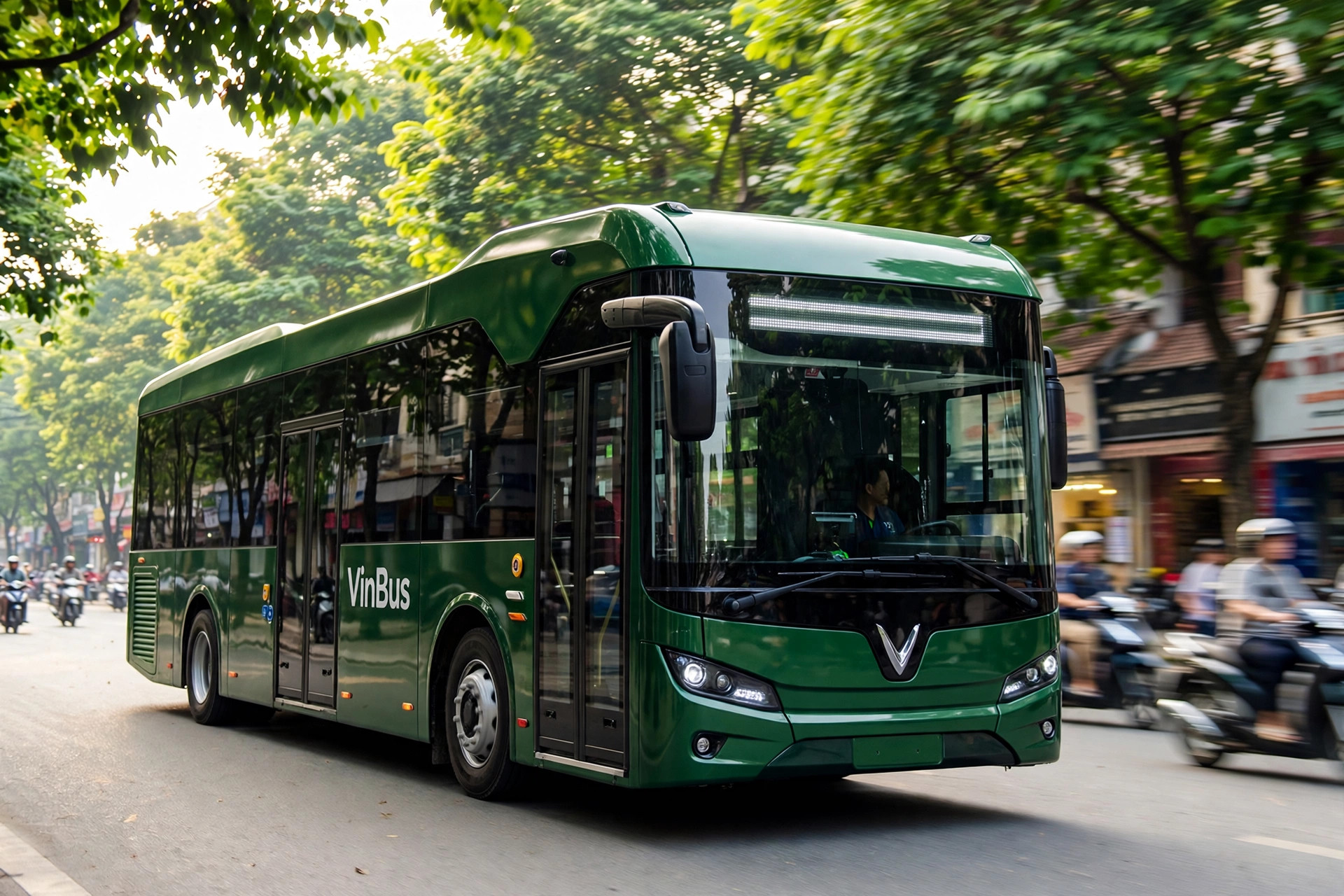
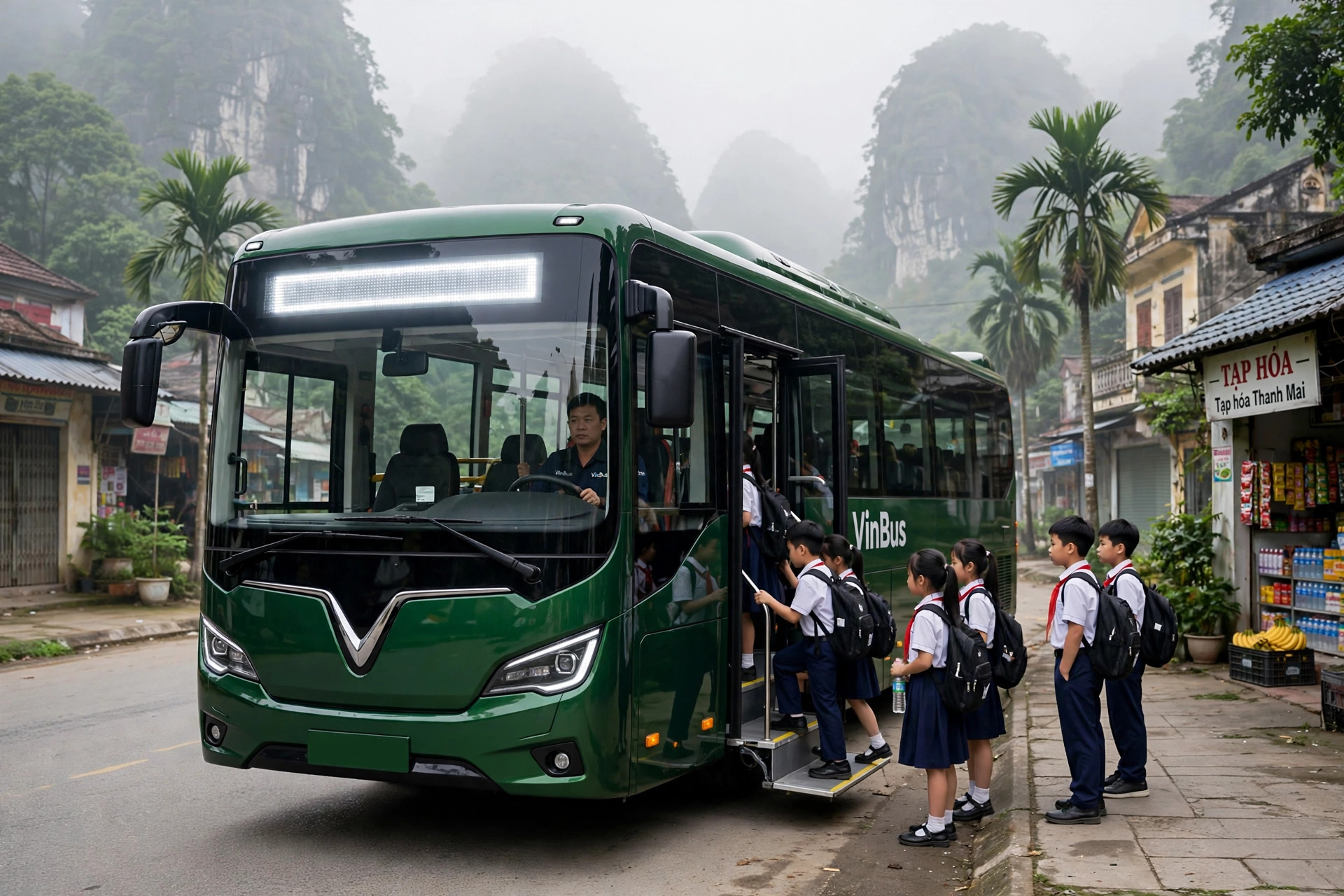
Quang Ninh province gave the transition its most human face. For the 2026 to 2027 school year, the province launched a free electric school bus program using 50 VinFast buses across six main routes serving Ha Long, Hong Gai and Ha Tu, with operations scheduled to begin on September 5, 2026. Local authorities described it as the first program of its kind in Vietnam dedicated to students. By 19 August, 1,728 students at 14 schools had registered. For parents, the innovation was not the battery. It was a guaranteed, free and cleaner ride. For operators watching from other provinces, the lesson was that an electric fleet can carry a public service promise, not only a route timetable, and be judged on reliability every single school morning.
The city network underneath
School buses are the visible tip of a larger build out. By May 2026, about 2,000 VinFast electric buses were operating in Vietnam, including about 600 run directly by VinBus, the Vingroup operator founded in 2019, according to Sustainable Bus reporting. In March 2026, VinBus deployed another 169 electric buses across nine routes in Ho Chi Minh City, replacing combustion buses on those services. City operation teaches the disciplines that intercity work later demands: charging windows fitted between peaks, drivers retrained to use regenerative braking and gentle acceleration, and maintenance teams learning high voltage systems, battery diagnostics and software updates alongside brakes and tyres.
A second maker, and a fleet buyer thinking bigger
The market is no longer one company’s story. On July 24, 2026 in Hue, Kim Long Motor signed a contract to supply 100 electric city buses to Phuong Trinh Buslines, in 30 seat, 40 seat and 60 seat versions built at Kim Long’s Hue factory. The models use BYD batteries and offer a range of 270 to 350 km on a single charge, with air conditioning, surveillance cameras and LED route displays among their equipment. Before this order, Kim Long electric buses were already working in Ho Chi Minh City, Da Nang, Con Dao and Dak Lak. A private buslines company ordering 100 units at once is a different kind of milestone from a city tender. It signals that operators are beginning to trust electric buses with their own capital, on routes where a missed departure is a commercial failure, not a press event.
What changes inside the depot
Operators describe the same three adjustments, in Vietnam as everywhere else. Charging becomes a scheduling problem: buses must return, plug in and reach the right state of charge for the next duty, which favors depots that plan energy as carefully as rosters. Range becomes a planning number rather than a brochure number, matched to route length, air conditioning load and traffic. And warranties become a core part of procurement. VinFast’s European bus specifications, useful here as published reference points for the same manufacturer’s approach, offer a five year unlimited mileage vehicle warranty and up to eight years for the high voltage battery and anti corrosion protection, with production capacity of 1,500 to 2,000 buses a year at the Hai Phong complex, ranges up to 400 km and fast charging at up to 140 kW taking about two to three hours. Depot managers read those numbers the way airlines read engine contracts: they define who carries the risk while the fleet learns.
The intercity step
City success does not automatically transfer to intercity coaches, where distances stretch, luggage and air conditioning loads rise, and a charger must exist at the far end as surely as at the depot. Yet the building blocks visible in 2026 point that way: city models already rated at 270 to 350 km, a second domestic manufacturer, fleet orders at the 100 unit scale, and school and city services accumulating the operating data that lenders and insurers ask for. Orders of this size also create work for trainers, electricians and parts teams far beyond the factory gate. The grown up phase of electric buses will be measured less in launches than in renewals, when operators who have run the buses for years choose them again for longer work. Vietnam’s fleets have spent 2026 earning that choice, one dawn departure at a time.
Related reading
Sources
Sustainable Bus, September 2026, on the Quang Ninh free electric school bus program with 50 VinFast buses, and on VinBus deployments in Ho Chi Minh City and the national fleet of about 2,000 electric buses. Vietnam.vn reporting VietNamNet, July 24, 2026, on Kim Long Motor’s contract to supply 100 electric buses to Phuong Trinh Buslines, with model versions, BYD batteries and ranges of 270 to 350 km. VinFast corporate release via EQS News on the EB 8 and EB 12 electric buses, on warranty terms, battery cover and annual production capacity.