
Late on October 20, the first containers carrying components of the MEVION S250-FIT proton therapy system, valued at nearly VND 2 trillion, arrived at Tam Anh Hospital in Phu My Hung, Ho Chi Minh City. It is the first proton therapy system in Vietnam, the first in Asia, and only the second in the world, bringing a form of cancer treatment designed to target tumors with remarkable precision while sparing healthy tissue.

A nearly VND 2 trillion arrival from California
Just eight months after Tam Anh Hospital signed the purchase agreement with American manufacturer Mevion in Washington, D.C., witnessed by Vietnamese Party General Secretary To Lam, the first critical components have reached Ho Chi Minh City. Shipped from California under strict transport and preservation protocols, the containers were carefully lowered into place late on October 20.
According to Dr Pham Xuan Dung, Director of the Oncology Centre at Tam Anh General Hospital in Ho Chi Minh City, the Mevion system is the only proton therapy platform cleared by the US Food and Drug Administration with a compact design. On Mevion’s official partner map, Stanford Medicine in the United States became the world’s first user in April 2026, making Tam Anh the second globally and the first in Asia.
Treatment in a seated position, a world first
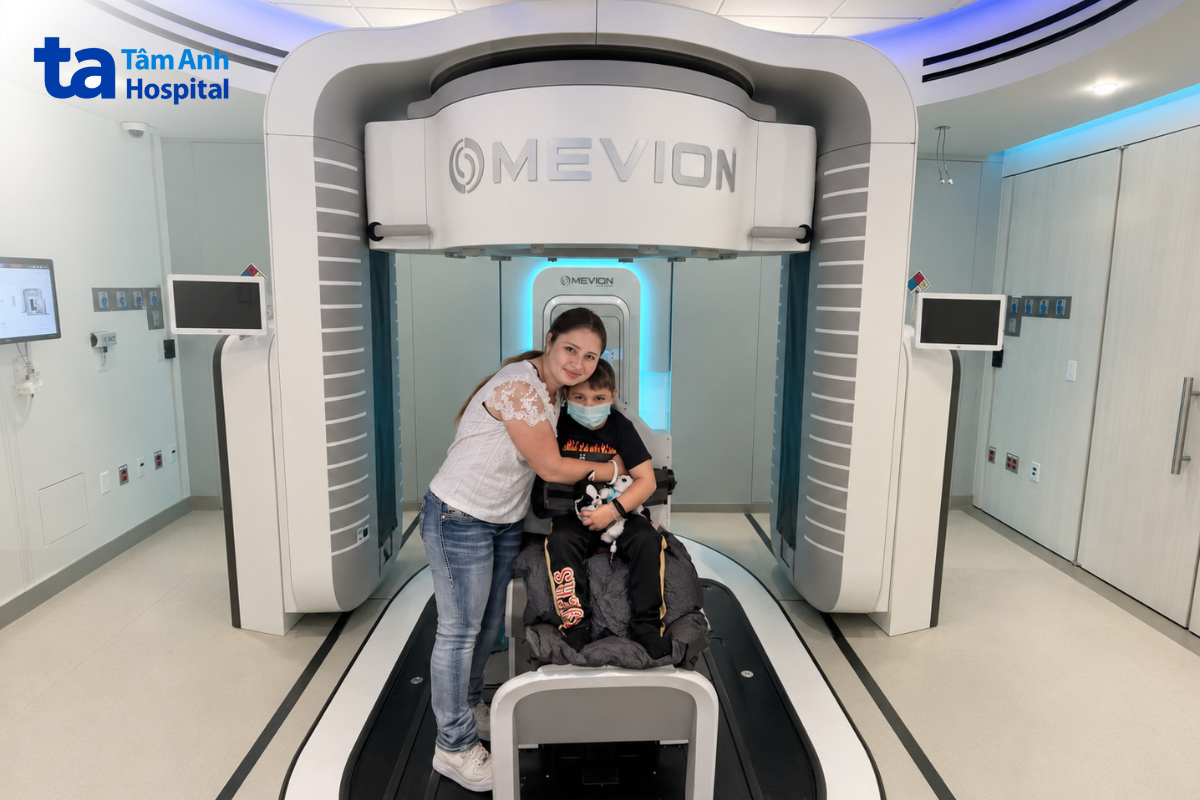
The S250-FIT’s most distinctive feature is how it positions patients. Instead of rotating a massive machine around a patient lying on a treatment couch, the system keeps the proton source fixed and uses precise positioning equipment to rotate and align the patient while seated upright.
Tam Anh expects the seated position to offer practical advantages for people who struggle to lie flat for extended periods, including elderly patients and those with spinal pain, breathing difficulties or obesity. Sitting upright may also allow more natural lung expansion, potentially letting clinicians reduce the safety margin around tumors and limit unnecessary radiation to healthy tissue.
Artificial intelligence guides the proton beam
Proton therapy differs fundamentally from conventional X-ray radiotherapy in the physics of the particles. X-ray beams pass through the body, damaging healthy tissue beyond the tumor. Proton beams, by contrast, are calibrated to stop precisely at the tumor site, releasing nearly all their energy to destroy cancer cells without continuing onward.
Professor Quynh-Thu Le, Chair of Radiation Oncology at Stanford University, explains that artificial intelligence analyses beam energy in depth to pinpoint tumor locations, including very small tumors or those in difficult positions such as the brain, head and neck. AI also supports treatment planning and automatic adjustments when a patient’s anatomy changes during the course of therapy, for instance through weight loss or tumor shrinkage.
Two hundred times more compact, yet still requiring a dedicated bunker
Another breakthrough of the S250-FIT is its size. The installation footprint is only about 100 to 111.5 square metres, compared with up to 24,000 square metres for traditional proton centres with separate buildings, distant accelerators and rotating structures weighing hundreds of tonnes. Mevion integrates the accelerator directly into the system, eliminating the giant rotating assembly entirely.
At Phu My Hung, however, the hospital is still constructing a dedicated underground bunker with specially designed foundations, reinforced steel and shielding for radiation safety. The system features a 10-tesla superconducting magnet, HYPERSCAN beam scanning technology claimed to be up to 20 times faster than conventional approaches, and RayStation treatment planning software from RaySearch Laboratories.
From blueprint to hardware in eight months
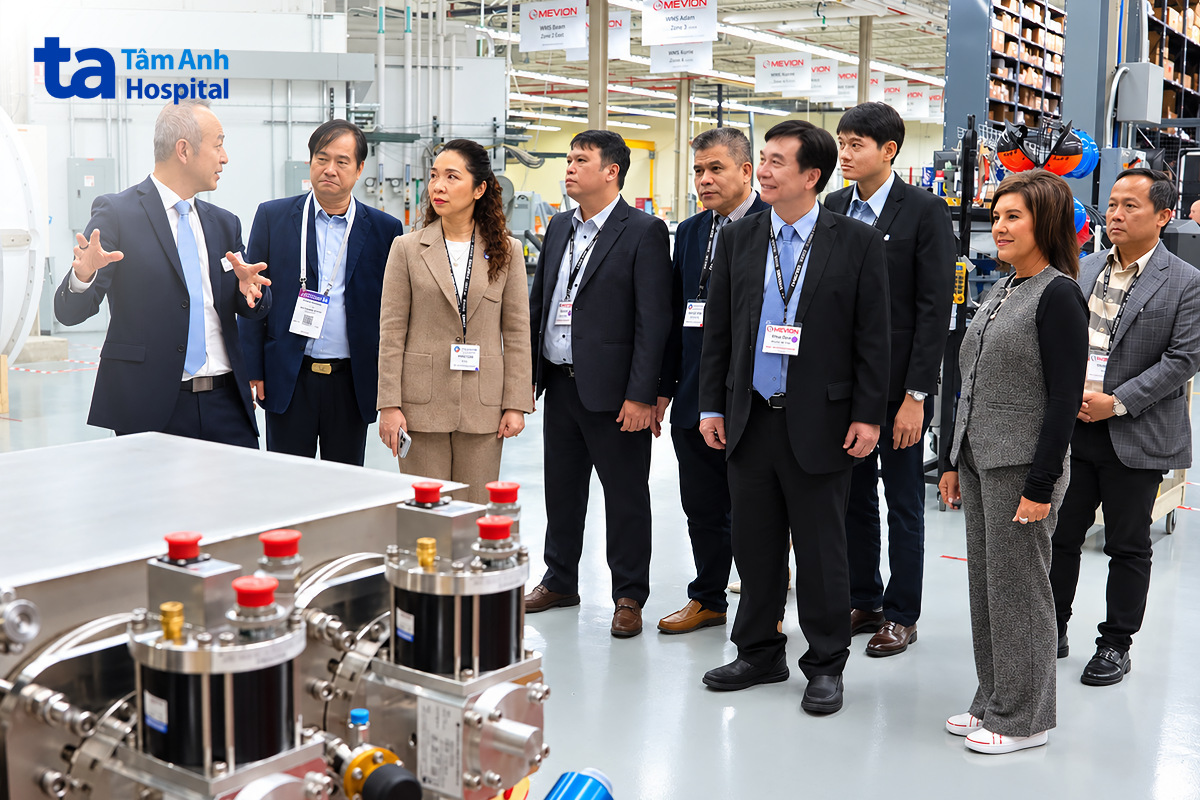
The next components are expected to arrive in early December 2026. The hospital plans to begin installation in early 2027, while manufacturer Mevion says the system could become operational as early as late 2027. Tam Anh Phu My Hung General and Oncology Hospital is expected to open in 2028.
Alongside installation, both sides have committed to three parallel goals: technology transfer, intensive training for doctors and medical physicists, and knowledge exchange with Stanford. From late November 2026, Tam Anh medical teams will travel to Stanford for training, with further sessions to follow until Vietnamese specialists can operate the system safely and independently.
Bringing a new-generation proton therapy system to Vietnam is more than a medical equipment purchase. It is a step that brings Vietnamese medicine closer to the world’s highest standard of cancer care, at a cost expected to be many times lower than treatment abroad and covered by health insurance under current regulations. With around 60 percent of cancer patients needing radiotherapy, a machine that knows how to “stop at the right spot” could change the lives of countless families.
Read more: New VinFast VF 8 Praised for Ride Comfort, Now VND 854 Million After Incentives
Source: Tam Anh Hospital