Vietnam’s largest private conglomerate is set to manufacture electric vehicles in the Philippines. On October 21, 2026, the Philippine Department of Trade and Industry (DTI) announced that Vingroup, the parent company of VinFast, will invest USD 500 million in a flagship EV plant in the country, its first manufacturing base there. Construction is targeted to begin in the first quarter of 2027. For a Vietnamese group that started building cars less than a decade ago, the project moves its overseas expansion from sales networks to factories.
What was announced
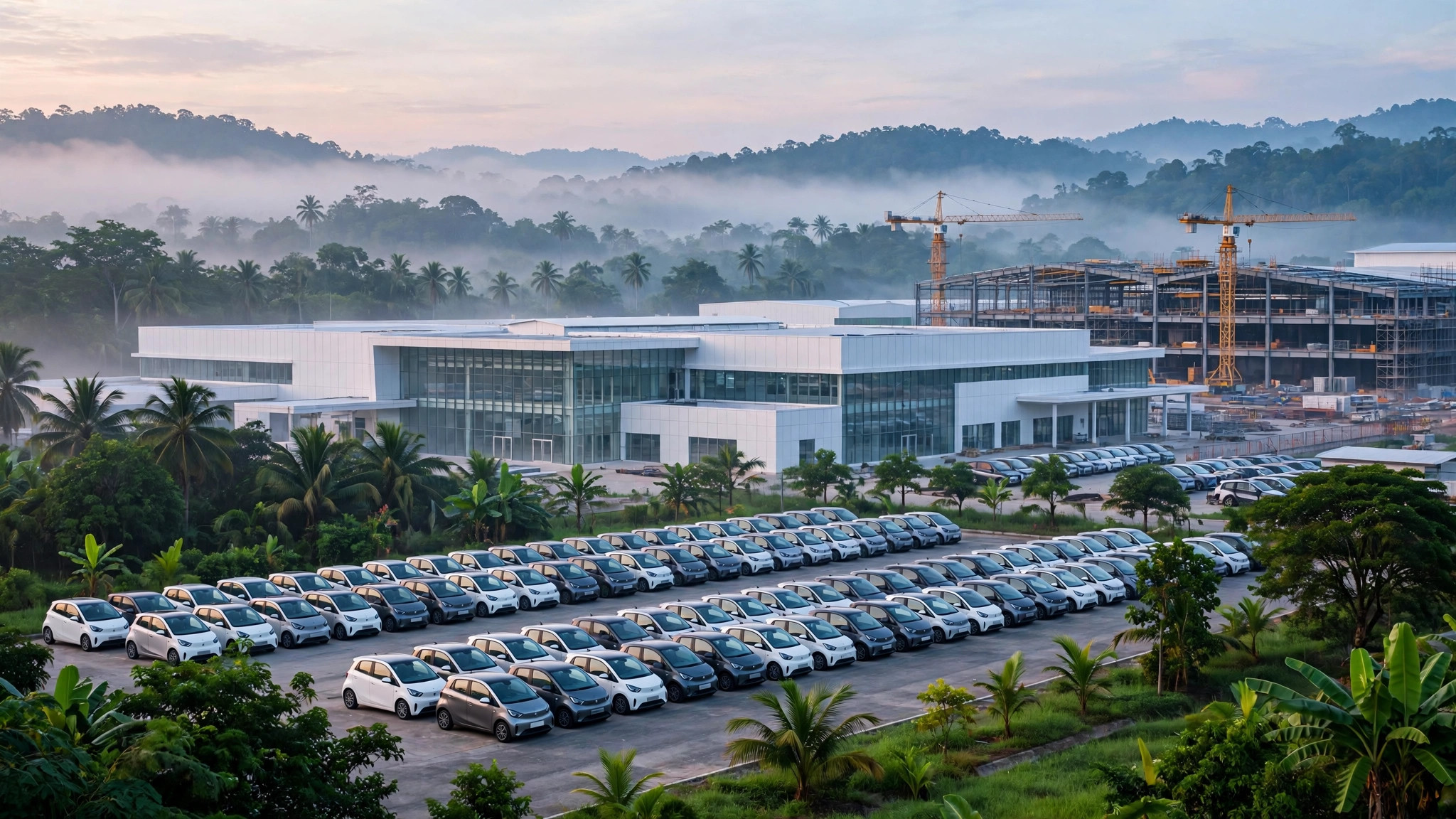
The DTI put the investment at USD 500 million, or PHP 31.74 billion. The plant is designed for an initial capacity of 200,000 vehicles a year, serving both the Philippine market and export destinations, and it will produce four-wheeled electric vehicles. Construction is expected to take one to one and a half years from its start in early 2027, according to the DTI. The department did not disclose the plant’s location.
The announcement followed a meeting between Trade Secretary Cristina Roque and Nguyen Quoc Tuan, a vice chairman of Vingroup and chairman of GSM Global. The DTI said the project will qualify for tax incentives under the CREATE MORE Act, Republic Act No. 12066, and for faster permit processing through the Green Lanes system set up under Executive Order No. 18. Alongside the car plant, Vingroup is also bringing its electric scooter line to the Philippine market, the department said, citing high fuel prices as part of the opportunity.
“Vingroup’s USD 500 million investment underscores the Philippines’ rising status as Southeast Asia’s destination of choice for advanced manufacturing and green technology,” Roque said. She added that the department is mobilized to provide end-to-end facilitation for the project. Speaking earlier in the week, she also said Vingroup is interested in expanding into healthcare and entertainment in the Philippines, including theme parks and hospitals. That wider interest is separate from the EV plant and, at this stage, is still an expressed intention, not a firm commitment.
A beachhead that is already selling
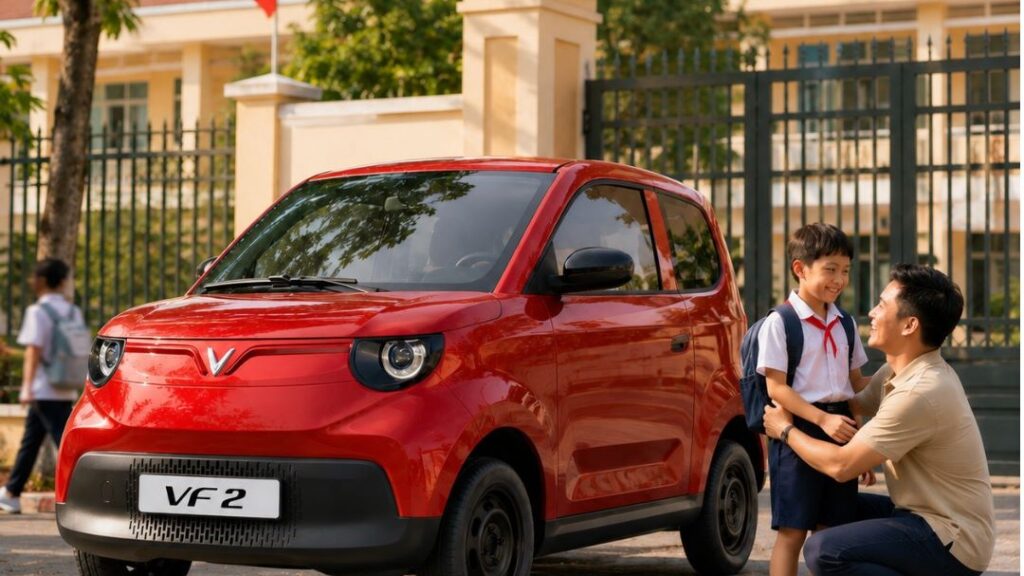
The factory plan does not land in an empty market. One day earlier, on October 20, VinFast announced that its smallest model, the VF 3, was the best-selling battery electric vehicle model in the Philippines in the first eight months of 2026. The company put sales at 2,906 units, citing a report by the Chamber of Automotive Manufacturers of the Philippines (CAMPI). The ranking covers a single model in a young market, and the absolute volume is modest. It still gives the group something most new entrants lack: a product that local buyers already recognize.
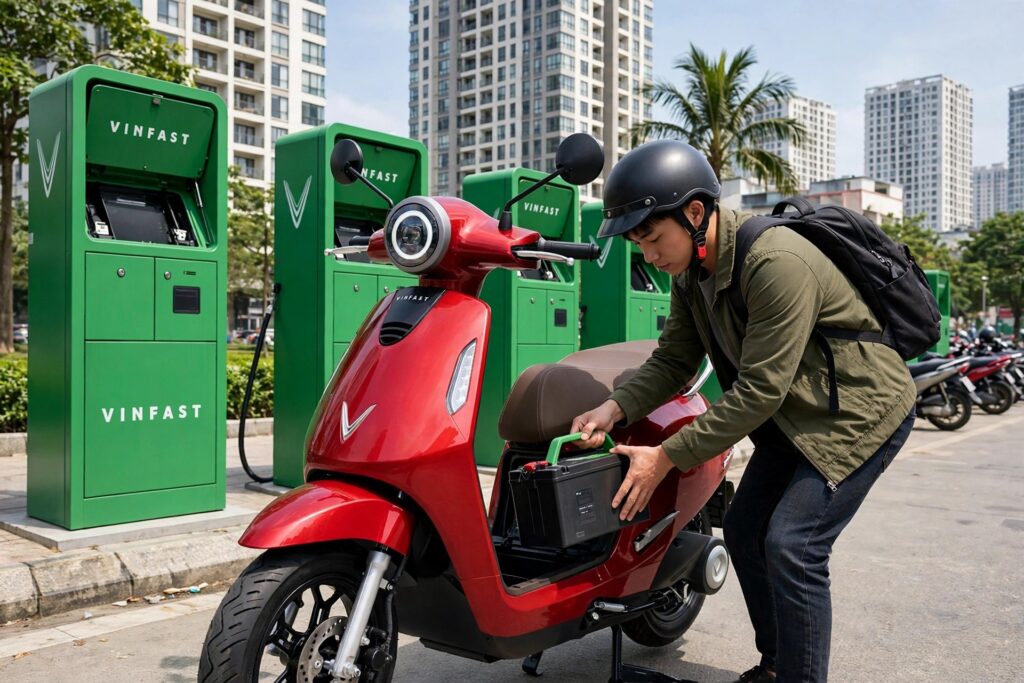
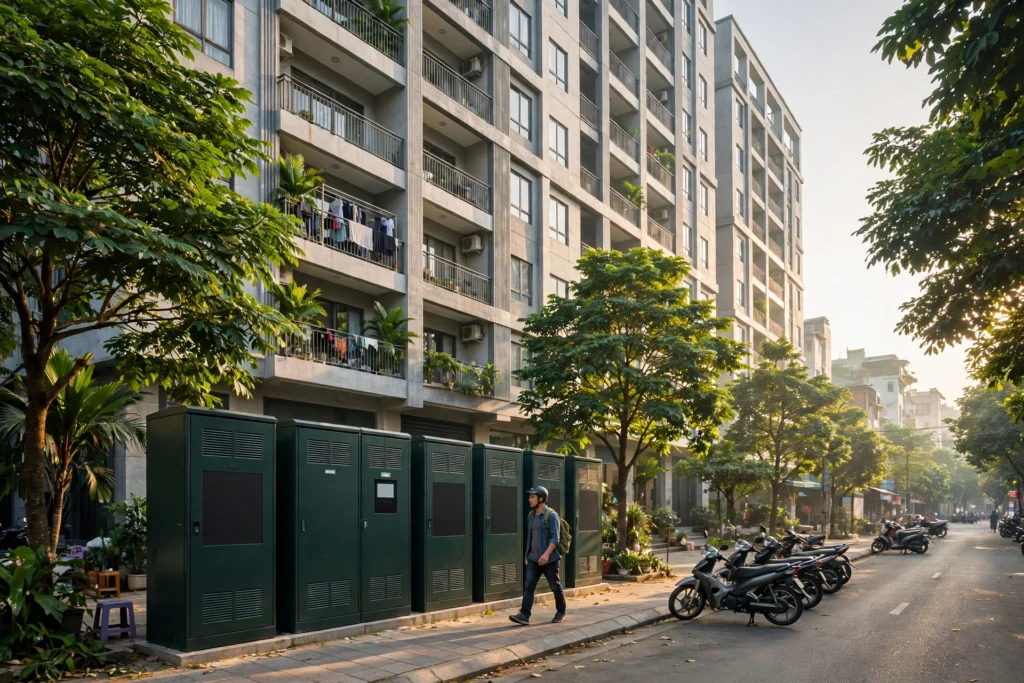
VinFast attributes the VF 3 result to the ownership package that comes with the car rather than to the car alone. Its battery subscription lowers the upfront price, a residual value guarantee program addresses resale anxiety, and free charging runs until March 31, 2029, while the company expands its dealer network and its V-Green charging network in the country. Antonio Zara, the head of VinFast Philippines, said the result shows Filipino drivers are ready to switch to electric vehicles when an ownership ecosystem supports the full journey. VoltViet has covered the incentive framework behind this market in its analysis of the Philippine EV incentive program and in its Southeast Asia EV scoreboard for the first half of 2026.
Capacity is a regional bet, not a local sales forecast
The honest tension in the announcement is scale. Initial capacity of 200,000 vehicles a year is roughly sixty-nine times the 2,906 units of the VF 3 that VinFast sold in the Philippines in eight months, and the VF 3 figure covers one model line only. Read literally as a response to current Philippine demand, the plant would be oversized. Read as the DTI frames it, as a base for the domestic market and exports, it is a regional manufacturing bet placed ahead of demand. The logic resembles the group’s existing operations in Indonesia and India, which the DTI cited as the foundation for this expansion.
That reading carries real execution questions that the announcement does not answer. The site has not been named. The model mix has not been stated, so it is not yet clear whether the Philippine plant will build the small cars that sell locally today or a wider range for export. Power supply, supplier depth and the pace of the Green Lanes processing will decide whether the first-quarter 2027 construction target holds. None of that diminishes the significance of the commitment itself: a Vietnamese manufacturer is now investing at a scale in the Philippines that, a generation ago, only Japanese and Korean groups attempted in Southeast Asia.
What to watch next
Three confirmations will show how firm the timeline is: the plant’s location, the construction start date, and the first models assigned to the line. The scooter launch and the continued growth of the V-Green charging network will show whether the ecosystem strategy that sold the VF 3 can scale with a local manufacturing base. If construction does begin in early 2027, the Philippines will become the clearest test of whether Vietnam’s EV champion can manufacture abroad as effectively as it sells abroad.
Sources
BusinessWorld, “VinFast to build Philippine EV plant for nearly P32 billion,” October 21, 2026
VinFast Philippines announcement on VF 3 sales, October 20, 2026, reported by Manila Republic