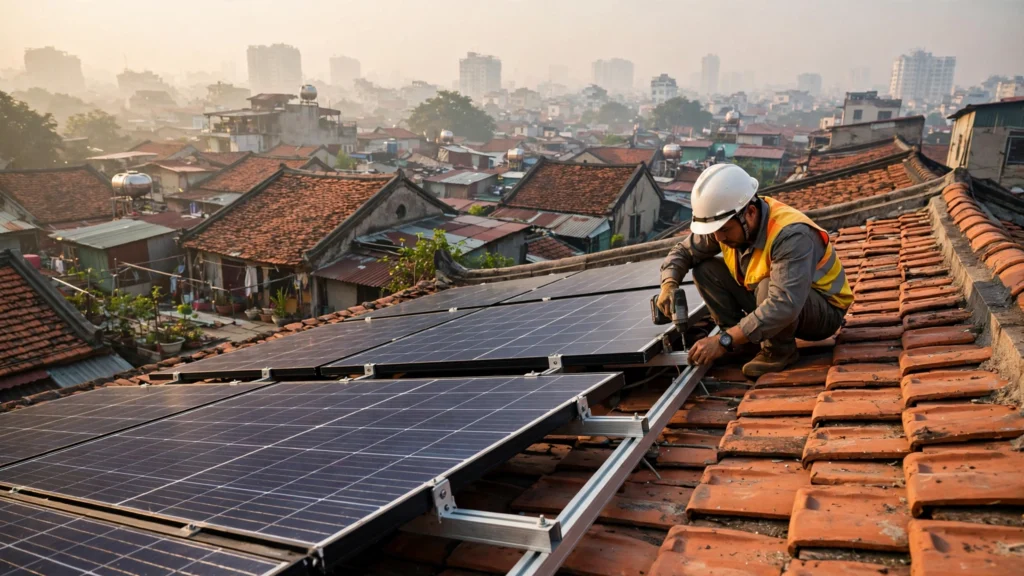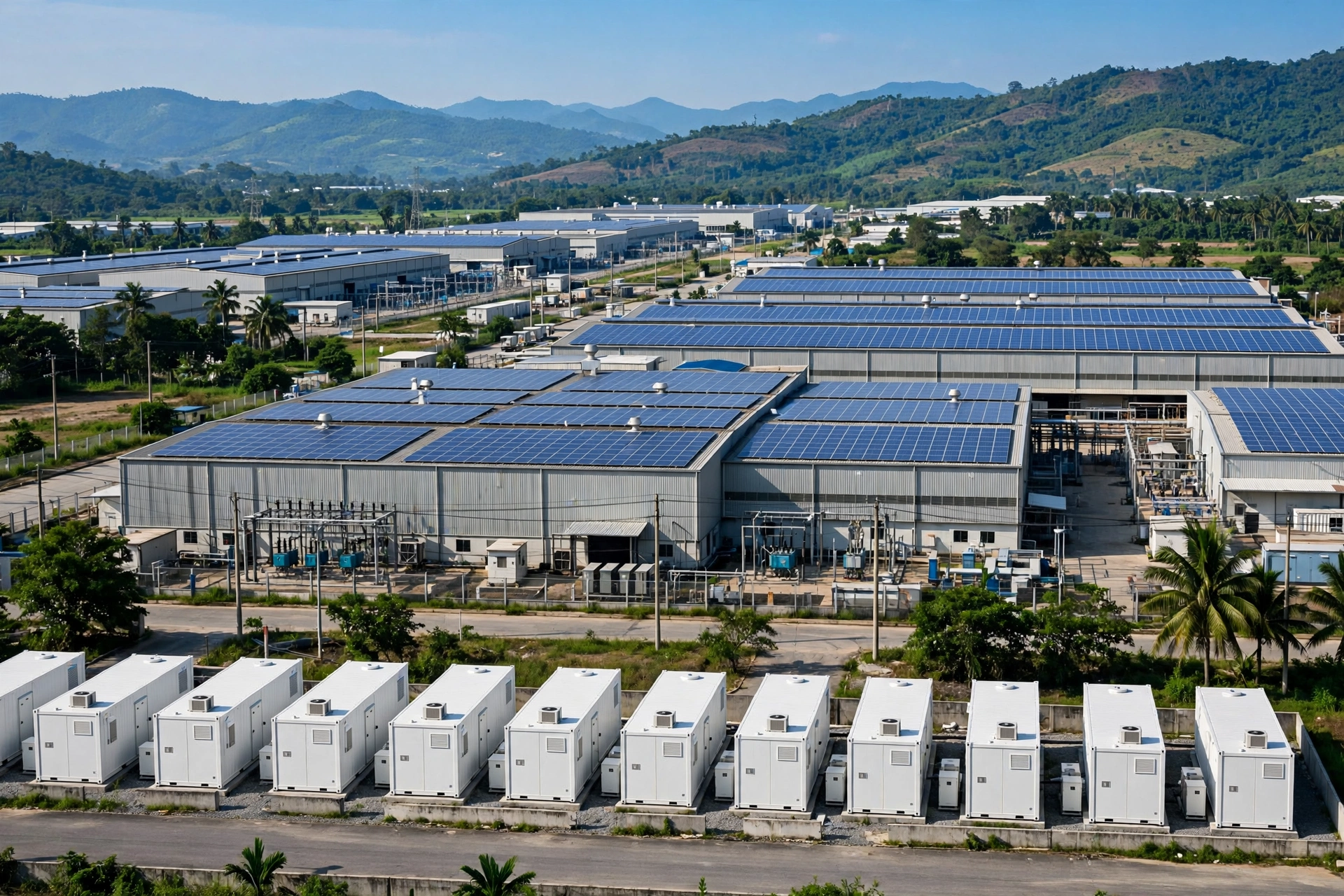
VinEnergo put a 22 MWp rooftop solar array paired with a 45 MWh battery energy storage system into operation at the Vung Ang Economic Zone in Ha Tinh on October 28, 2026, according to Vietnamese press reports of the company’s announcement. The project is VinEnergo’s first to run under Vietnam’s direct power purchase agreement (DPPA) mechanism, selling renewable electricity directly to industrial customers inside the Vingroup manufacturing complex.
VinEnergo is the energy company of billionaire Pham Nhat Vuong, the founder of Vingroup. The company’s Deputy General Director, Nguyen Huong Giang, said at the commissioning ceremony that the project marks VinEnergo’s entry into operations under the DPPA framework. The framework lets large power consumers buy electricity straight from renewable generators rather than through the national grid.
What was switched on
The installation combines 22 MWp of rooftop solar panels with a 45 MWh battery energy storage system, or BESS. The battery stores surplus solar electricity generated at midday so the factories can draw on it later, bridging the gap between solar generation and plant consumption.
Based on materials the company publishes, VinEnergo expects the system to generate about 39 million kWh of clean electricity a year. It also projects a cut of more than 25,000 tonnes a year in carbon dioxide emissions and savings of about VND 3.5 billion a year in electricity costs. Those are the company’s own projections, reported in Vietnamese press roundups of the announcement, and they will be worth checking against metered output once the system has a full year behind it.
To clarify the units: 22 MWp is installed capacity, the peak power the panels can deliver, while 39 million kWh is expected annual generation, the energy those panels actually produce over a year. The 45 MWh figure is the battery’s storage capacity, the amount of energy it can hold for later discharge.
Who buys the power
The buyers under the DPPA contracts are three plants inside the same industrial complex. The first is the company that owns and operates the VinFast electric vehicle factory at Ha Tinh. The second is the VinES battery plant in Ha Tinh, which makes the cells and packs that go into those vehicles. The third is the V-G battery joint venture plant. All three sit within the Vung Ang Economic Zone, so the power travels a short distance from rooftop to factory floor.
This is the point of the DPPA mechanism. Instead of feeding solar electricity into the national grid at a fixed feed-in rate, VinEnergo contracts directly with the on-site end users. VoltViet has explained how corporate power purchase agreements work in Vietnam in a separate analysis; the Vung Ang project is now a working example of the mechanism applied to an industrial cluster.
Why the timing matters
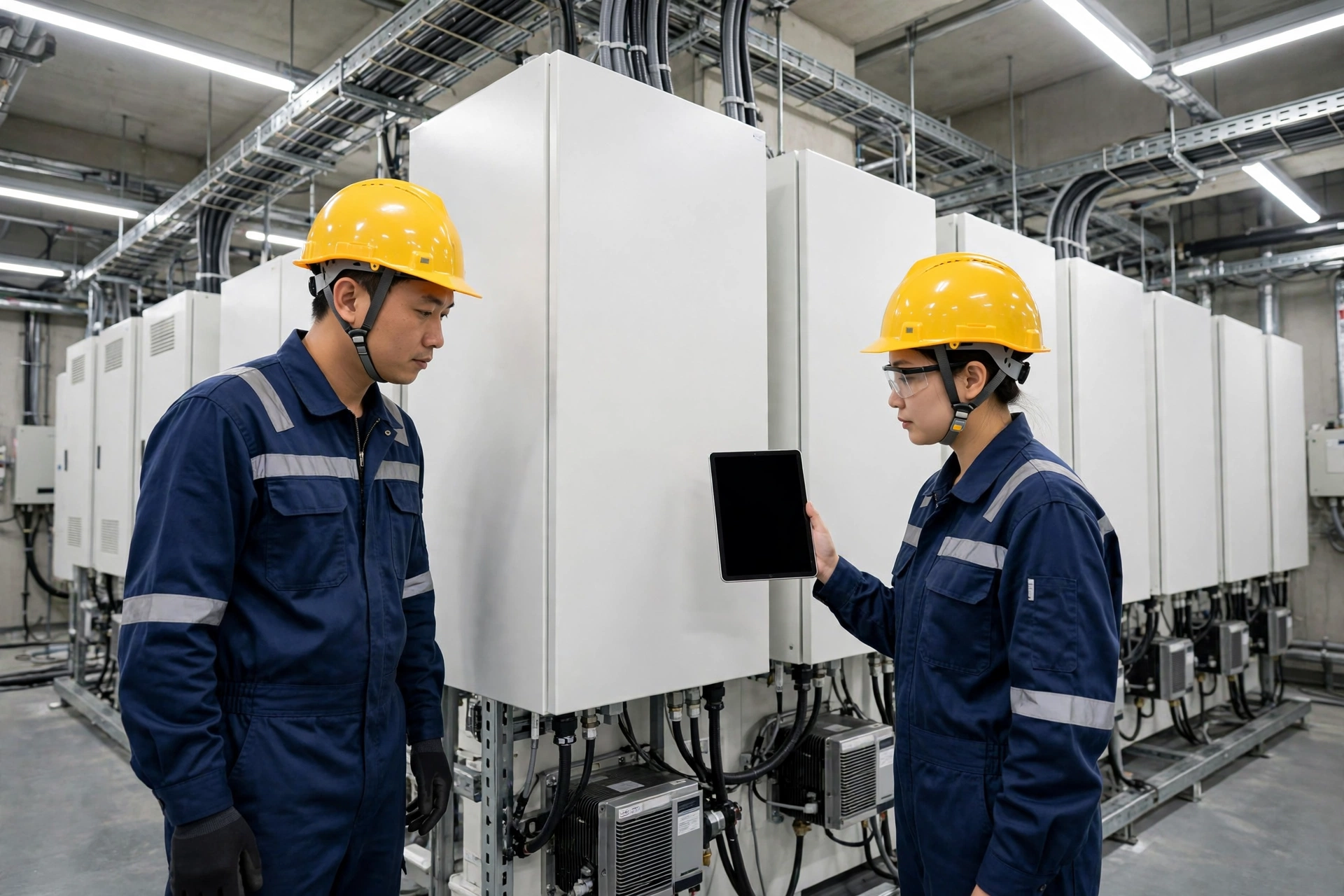
Electric vehicle and battery manufacturing is electricity-intensive work. Stamping, welding, painting, and battery cell production all draw heavy, continuous loads, and factories of this scale face both rising electricity demand and peak-hour pricing. For an industrial zone built around vehicle and battery production, daytime solar output lines up well with factory operating hours, while the battery covers the evening shoulder when solar drops off. Generating part of that load on site, and storing it for use when the sun is down, reduces reliance on the grid and lowers electricity costs.
The project also coincides with a busy month for solar in Vietnam. Hanoi approved a household rooftop solar subsidy on October 28, 2026, paying up to VND 6 million per household for panels and storage. The government has ordered every province to introduce its own rooftop solar support policy by the end of December 2026. Storage is also advancing: a USD 105 million green loan arranged in October 2026 is funding batteries at 110 kV substations across northern Vietnam.
The Vung Ang project differs from both. Hanoi’s subsidy targets households, and the HSBC-backed loan targets the grid. VinEnergo’s project combines rooftop solar and storage for direct industrial offtake under the DPPA framework, putting generation, storage, and consumption inside one economic zone.
What to watch
The numbers to track from here are operational, rather than initial projections. The first is actual annual generation against the 39 million kWh projection. The second is how much of the complex’s electricity demand the system covers once it runs through a full year of seasons. The third is whether VinEnergo replicates the model, at Vingroup’s other industrial sites or for outside customers, now that the first DPPA contracts are signed. The fourth is how quickly other industrial parks sign similar offtake deals, now that the model has a working reference.
The Ministry of Industry and Trade’s deadline to propose per-province rooftop solar targets to the government falls on October 30, 2026. If those targets appear, they will determine the potential for projects like Vung Ang to multiply. Until then, the Vung Ang installation stands as a concrete case of Vietnam’s DPPA mechanism working at industrial scale.
Sources
vietnam.vn, October 28, 2026: https://www.vietnam.vn/vinenergo-van-hanh-he-thong-dien-mat-troi-tai-ha-tinh
Soha, October 28, 2026: https://soha.vn/ty-phu-pham-nhat-vuong-chinh-thuc-cho-van-hanh-he-thong-tao-ra-39-trieu-kwh-dien-sach-mot-nam-198261028175518839.htm
VNBizNews, October 28, 2026: https://vnbiznews.com/ty-phu-pham-nhat-vuong-chinh-thuc-cho-van-hanh-he-thong-tao-ra-39-trieu-kwh-dien-sach-mot-nam-pid1989619007