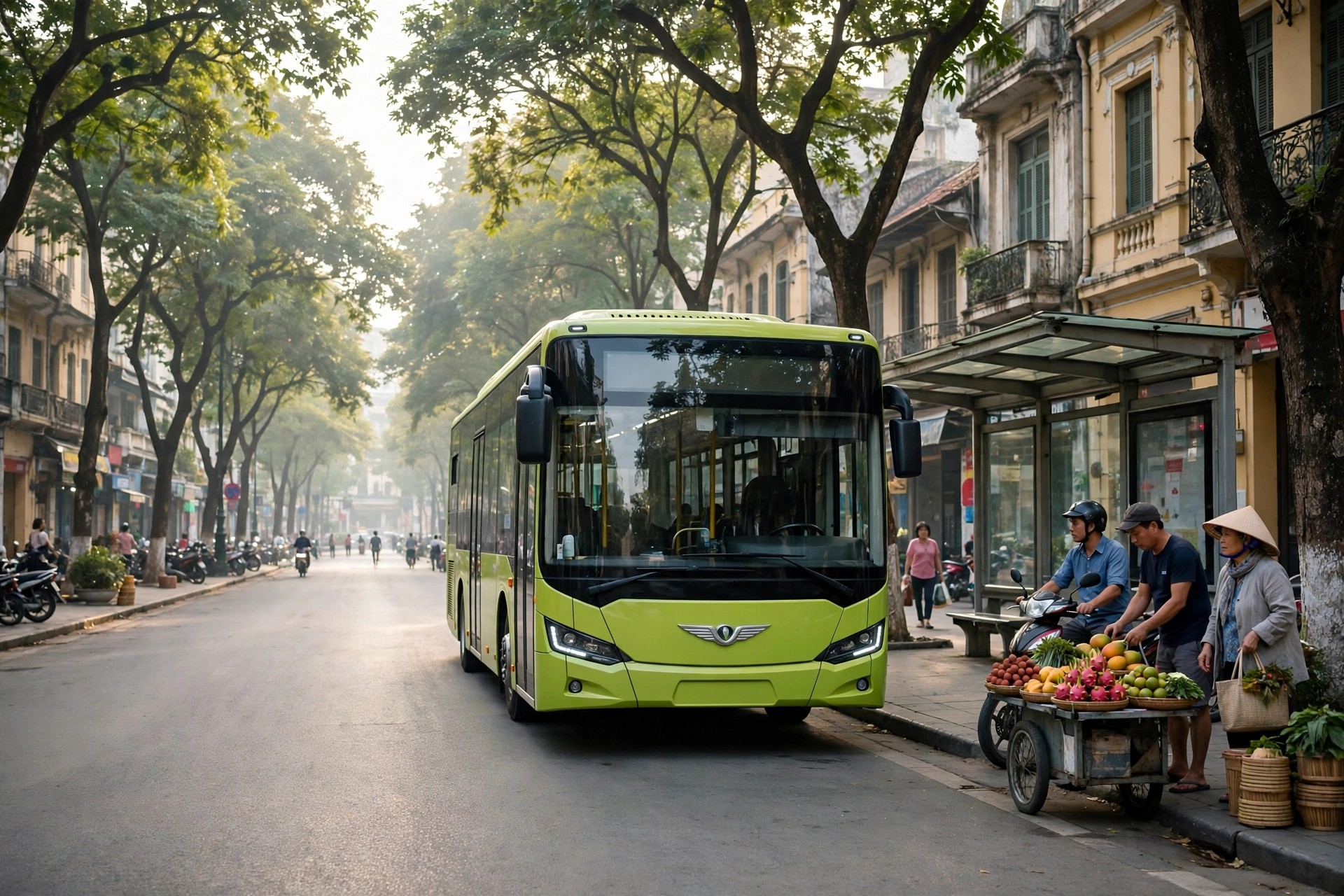
Hanoi’s bus route 40 switched to full electric operation on November 1, replacing all 15 diesel buses on the line with VinFast EB8 electric buses. The change, ordered by the Hanoi Department of Construction, covers the route linking Cong Vien Thong Nhat with Van Lam in Hung Yen province, and maintains a planned fleet of 15 vehicles, with 13 in regular daily operation, according to the city’s announcement.
The new buses were built in 2026 and seat 60 passengers each. They run in the Hanoibus green livery with the peace-dove motif and the Khue Van Cac emblem, and they are low-floor vehicles with access for passengers with disabilities. The route is the latest in a fast-moving municipal program: Transerco, the city’s bus operator, and its affiliates converted six routes to electric and opened one new electric route during October, adding 94 electric buses to Hanoi’s streets in a single month.
An October of conversions
The October wave shows how quickly the capital is working through its fleet. Ninety-four electric buses entered service across six converted routes and one newly opened route, and the city now targets more than 51 percent of the bus fleet to be electric by the end of 2026. Route 40 follows route 31, which switched to the same VinFast EB8 model in an earlier phase of the program.
The pace matters because buses are the workhorses of Hanoi’s public transport. A single converted route takes its diesel emissions off the road every day of the year, and the operating pattern of city buses, fixed routes, depot charging overnight, predictable mileage, fits electric operation particularly well. The city is converting the routes where the technology case is strongest first.
The same bus, the same playbook
Route 40 is not an experiment. It is a repeat. The VinFast EB8 is the same model Hanoi put on route 31 in an earlier phase of the program, which means the depots already know the vehicle: the same 60-seat layout, the same charging interface, the same maintenance routine. Standardizing on one model across converted routes keeps spare parts, driver training and depot equipment common, and it lets each new conversion move faster than the last.
The route itself tells a story about the city’s reach. Route 40 links Cong Vien Thong Nhat in central Hanoi with Van Lam in Hung Yen province, carrying commuters between the capital’s core and its industrial fringe. Electrifying a cross-boundary commuter line, not just inner-city loops, signals that the program is moving beyond showcase routes.
Why buses lead the transition
The bus program sits inside a wider policy push. Hanoi began operating its low-emission zone around Ring Road 1 in July 2026, making the city’s roughly 450,000 central motorbikes a key focus of a managed shift. The national green transport action program, Decision 876/QD-TTg, sets the direction for public fleets to electrify ahead of private vehicles. Buses convert first because the city controls the procurement, the routes and the depots.
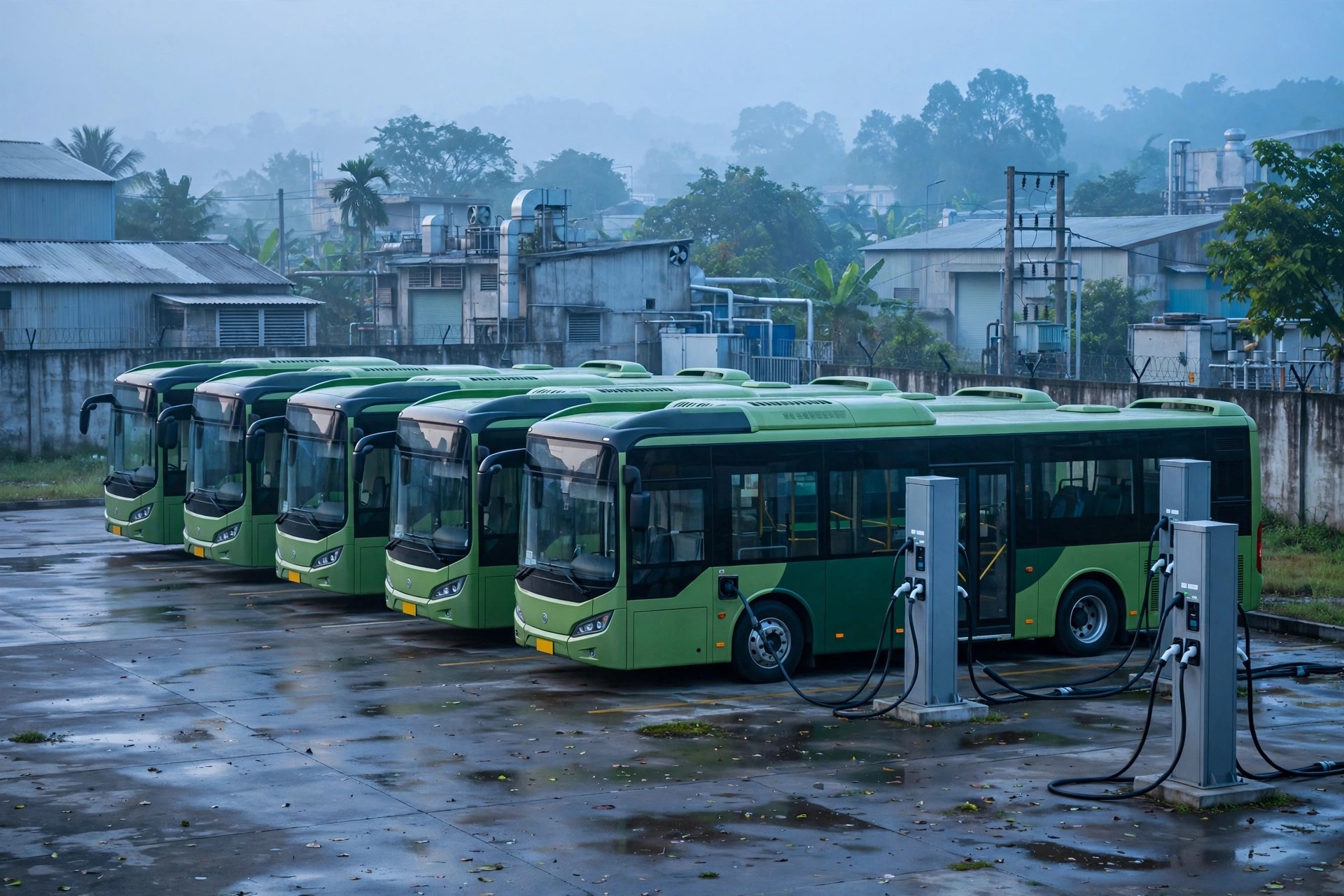
The charging question is being answered in parallel. Hanoi’s charging network is expanding, with large hubs such as the 1,038-port facility now operating in the city. Bus depots add their own overnight charging, which keeps the daytime grid impact of a bus fleet far below what the same number of private cars would demand. A bus that charges at the depot between its evening pull-in and morning pull-out barely touches the evening peak at all.
What riders notice
For passengers, the change is felt before it is seen. Electric buses pull away without the diesel shudder, idle silently at stops and produce no tailpipe exhaust at the curb, which is particularly significant at the crowded transfer points where buses, motorbikes and pedestrians share the same air. The low-floor design and disability access on the EB8 fleet also raise the baseline for the whole network: each converted route helps to improve the overall accessibility standard.
The test of the program will be reflected in the December figures. If the electric share crosses 51 percent as planned, more than half of Hanoi’s bus fleet will be running on electricity within about eighteen months of the low-emission zone’s launch. Route 40, unremarkable on a map, is one more step in that count.
There is also a credibility aspect to this. Hanoi’s low-emission zone asks private motorbike owners to change how they move, a far harder request than swapping a municipally owned bus fleet. Every route the city converts independently strengthens the case it makes to everyone else: the transition is not a burden handed down to residents but a program the city is visibly running itself. Route 40’s fifteen green buses will not change the city’s air on their own, but they change the argument.
Sources
vietnam.vn (the state’s official external information portal), November 1, 2026, reporting Hanoi Department of Construction’s decision: route 40 (Cong Vien Thong Nhat to Van Lam, Hung Yen) converts all 15 diesel buses to VinFast EB8 electric buses from November 1, 2026; 2026-built, 60 seats each, green Hanoibus livery with peace-dove motif and Khue Van Cac emblem, low-floor with disability access; planned fleet 15, 13 in regular operation; Transerco and member units converted 6 routes and opened 1 new route in October 2026, adding 94 electric buses; target of above-51-percent green fleet by end 2026. https://www.vietnam.vn/ha-noi-tuyen-buyt-so-40-chuyen-toan-bo-phuong-tien-sang-su-dung-xe-dien