A target beaten before the year turned
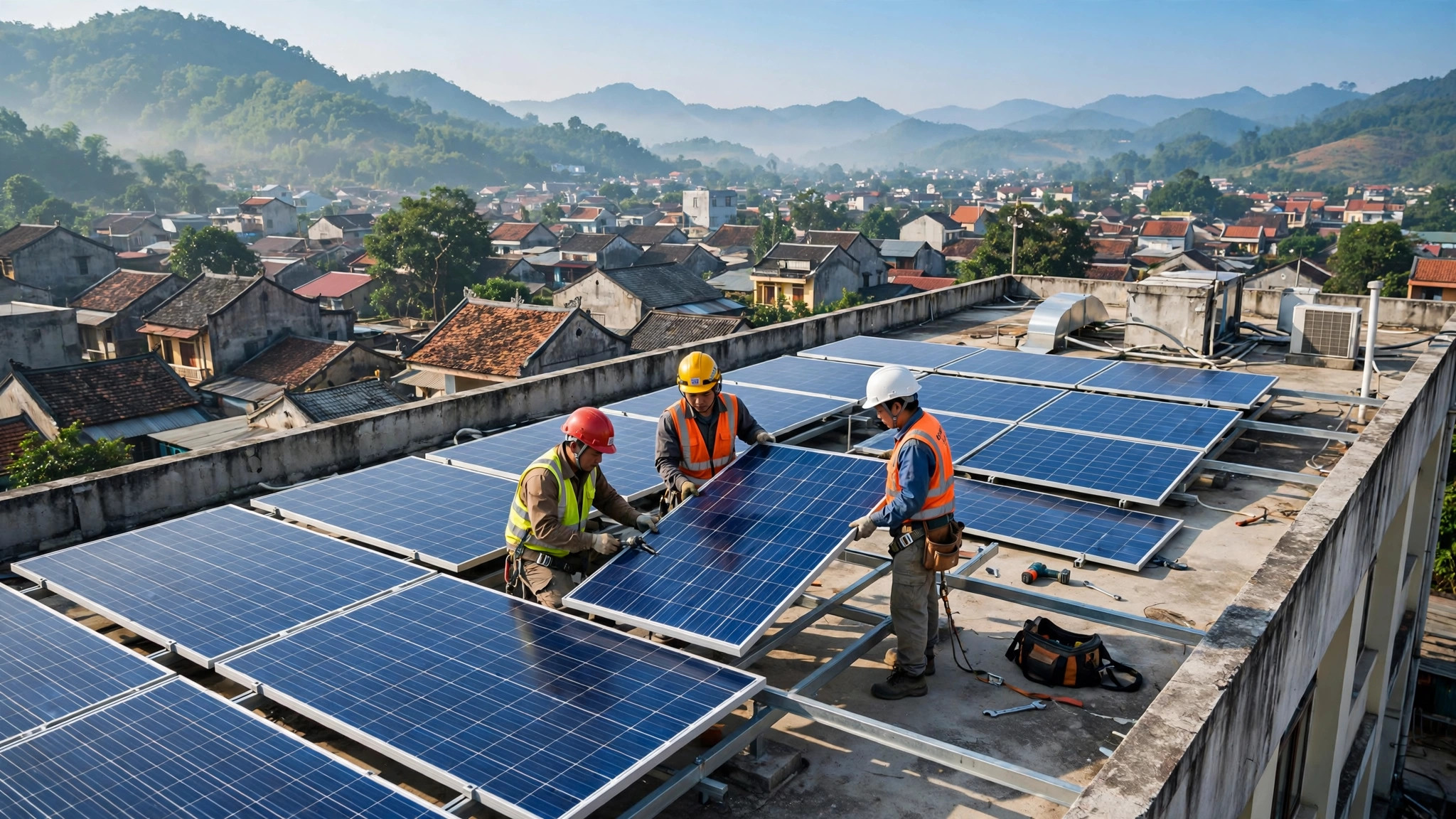
Plans in the power sector are usually beaten by weather, not by administrators. Thanh Hoa beat its own with paperwork, door knocking and example setting. By the end of August 2026, Thanh Hoa Power Company had signed up 1,202 customers generating rooftop solar for their own consumption, reaching 227.6 percent of its plan by customer count. Installed capacity reached 27.02 MW, or 126.6 percent of the assigned plan. August alone added 245 customers, 371.2 percent of the monthly plan by count. The province had not discovered a new technology. It had executed an old one unusually well.
The instruction that started the machine
The national frame arrived in spring. Directive 10, issued on March 30, 2026, tied electricity saving to rooftop solar development, setting a goal of saving at least 3 percent of total consumption in 2026 and at least 10 percent in the peak hot months from April to July, alongside demand management intended to trim at least 3,000 MW at risky peak hours. Thanh Hoa converted the instruction into a provincial program on April 7, 2026, when its People’s Committee approved an energy saving and efficiency plan for 2026 to 2030 requiring new businesses and agency headquarters to use efficient equipment and fit solar systems, targeting savings of 8 to 10 percent of provincial consumption by 2030 and rooftop solar on 50 percent of public buildings under a self production and self consumption model.
The headroom was never the constraint. Under the revised national power plan, Thanh Hoa’s allocated rooftop capacity reaches 373 MW by 2030 and 441 MW by 2035, across a province of economic zones, industrial parks and large roof stock. The 27.02 MW installed by August is a small fraction of that ceiling. What the province proved is not that the ceiling is reachable. It is that the first stretch of the road, the stretch most provinces stall on, can be driven quickly when someone organizes it.
The customers behind the percentage
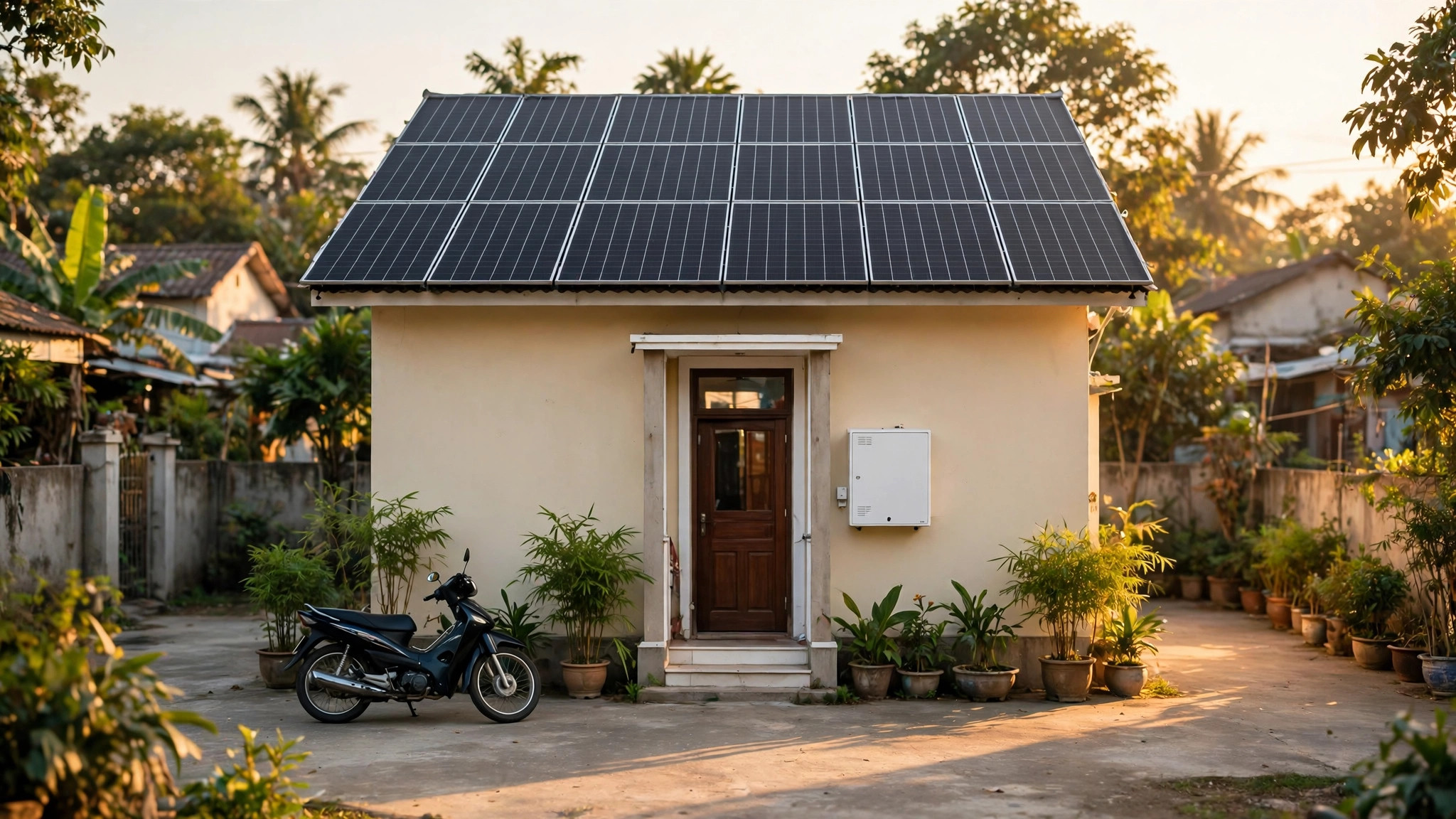
The structure of the rollout explains both its speed and its next problem. Households and small production facilities made up about 94 percent of systems but only about 33 percent of capacity. Businesses and industrial parks were about 6 percent of systems and about 67 percent of capacity. In other words, the headline percentage was built from many small roofs, while the megawatts came from a few large ones. A household system sized to daytime use earns its keep in avoided purchases; the Nga Son Hotel in Nga Son commune invested more than VND 800 million, about USD 31,000, in an 80.6 kWp system with storage in August 2026, and a family in Hac Thanh ward installed an 8 kW system with battery storage the same month. Both patterns fit the self consumption logic the rules now reward: Decree 243 of June 26, 2026 refined how surplus power from self consumption systems may be sold, favoring systems designed around their own load rather than sized for export.
The utility that sold by going first
The distinctive move was institutional. In the second quarter of 2026, the power company installed self consumption rooftop systems at 22 of its own units, totalling more than 600 kW, and ran a program aiming for 80 percent of employee households to install voluntarily during 2026. By the reporting date, 260 employee households had systems totalling nearly 2.1 MW, and every leader from company level to unit level had participated. Staff who live with a system advise customers differently: they know their own generation curve, storage behavior and self consumption share, and the company says that experience now grounds its guidance on sizing, equipment and connection. It also issued targeted documents to businesses in economic zones and industrial parks and worked with the provincial industry department on a formal development plan for self consumption solar, while a support policy for households pairing solar with storage was being drafted for provincial approval.
What 227 percent does and does not prove
Scepticism is due in one place. A plan beaten by 227 percent was, in part, a modest plan: customer count targets reward many small sign ups, and the capacity figure at 126.6 percent of plan is the more demanding measure. The province’s own analysis names the operational cost of success. Every behind the meter system is a forecasting problem for dispatchers, who need accurate installation data to predict generation and run the system safely, a point national system operators have stressed as rooftop fleets grow. Growth that outruns registration and data quality creates tomorrow’s curtailment arguments.
Even with those caveats, Thanh Hoa’s eight months offer a transferable lesson. National directives set the direction, decrees set the economics, but the conversion of roofs into power plants happened through a provincial plan with named responsibilities, a utility willing to install on itself first, and guidance offered at the moment customers chose system size. Other provinces hold the same directives and larger roof stocks. The gap Thanh Hoa exposed is not technological or financial. It is organizational, and organizational gaps can be closed by copying what a neighbor already did.
Related reading
- 130,811 Rooftops and Counting: Vietnam’s Solar Policy Meets Its Moment
- The 6.6 Billion kWh Rooftop Surplus
- Energy Efficiency: the Cheapest Gigawatt
Sources
Thanh Hoa Power Company reporting via Vietnam.vn, September 2026, on 1,202 customers at 227.6 percent of plan, 27.02 MW capacity, customer structure, own unit installations and employee households. VietnamPlus and Nhan Dan reporting, 2026, on Directive 10 targets, provincial implementation in Thanh Hoa and household experience; Ministry of Industry and Trade reporting, September 2026, on Decree 243 and the national rooftop program.