For years, the standard objection to electric cars was that they worked only as a second vehicle, fine for short trips while a gasoline car handled the serious driving. A large owner survey from Spain now suggests that this hierarchy has flipped. In multi-car households, 84.1% of pure electric car owners say the electric car is their household’s main vehicle, according to a study released on October 14, 2026 by insurer Mutua Madrileña, based on a random-sample survey of 1,200 owners of pure electric and plug-in hybrid cars conducted by research firm Demométrica.
The broader plug-in figure is nearly as strong. Across both technologies, 79.1% of multi-car households use the plug-in as their primary car, with plug-in hybrid owners at 74.3%, below the pure electric figure. Two details give the result weight. Some 64% of plug-in households own more than one car, so most respondents had a real choice every morning. And for 84% of households, the plug-in they own is the first one they have ever bought, meaning first-time adopters are handing the new technology the central role at once, not testing it at the margins.
The motive ranking is led by running costs, not technology appeal. Fuel savings were the most cited purchase motive at 51%, ahead of environmental awareness at 32% and access to urban low-emission zones at 30%. Technology mattered to 91% of buyers, design to 85% and brand to 74%, while purchase incentives played a role for 64%. A Spanish car marketplace, Clicars, estimates that a household driving about 1,200 kilometers a month can save more than 100 euros a month, and over 1,300 euros a year, by switching from a gasoline car to an electric one charged at home. Numbers of that size, repeated every month, are what move a car from second place to first in daily use, a pattern familiar to anyone weighing whether an EV fits a daily commute in Vietnam.
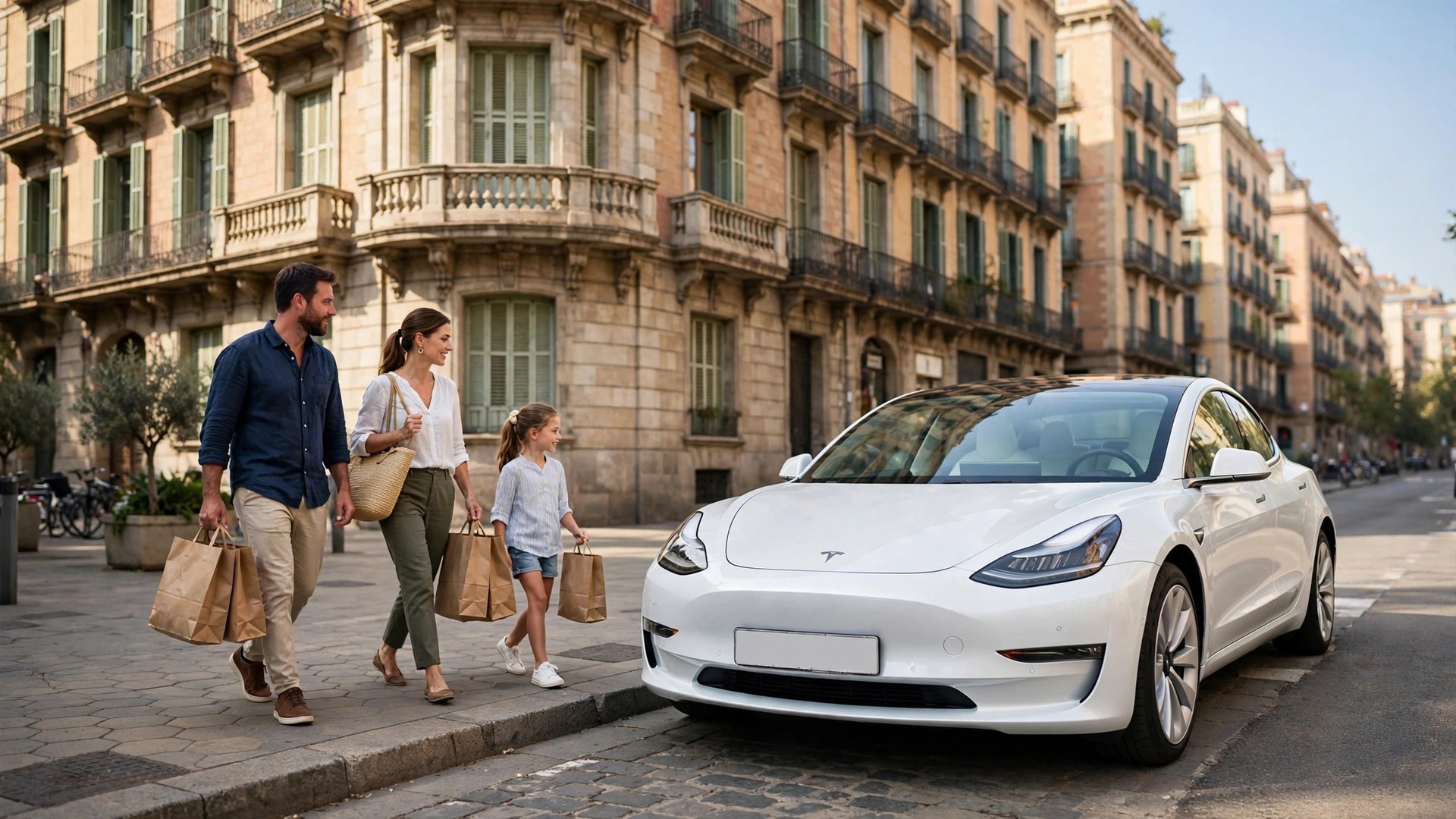
The behavior fits the market data. Spain registered 93,858 passenger cars in September 2026, and 31,945 of them, or 34%, were pure electric or plug-in hybrid models, according to the automakers association ANFAC. Pure electric cars alone reached 17,366 units, up 71.7% year on year, making them the second most chosen powertrain in the country, ahead of gasoline and diesel. Over the first nine months of the year, plug-ins took a 23.8% share of the passenger-car market. September also produced a symbolic first: the Tesla Model 3 was Spain’s best-selling car overall, with 2,528 registrations.

Policy design has moved to support that demand at the point of sale. Spain replaced its MOVES III subsidy program with the Auto+ program on January 1, 2026, funded with 400 million euros. Instead of paying in full and waiting for a reimbursement, individual buyers of a pure electric car now receive up to 4,500 euros deducted directly at the dealership. The amount is below the old program’s 7,000-euro ceiling, but it arrives at the moment of decision. For markets designing purchase incentives, including Vietnam, the Spanish change is a live test of a simple idea: a smaller discount applied instantly may move more buyers than a larger one paid late.
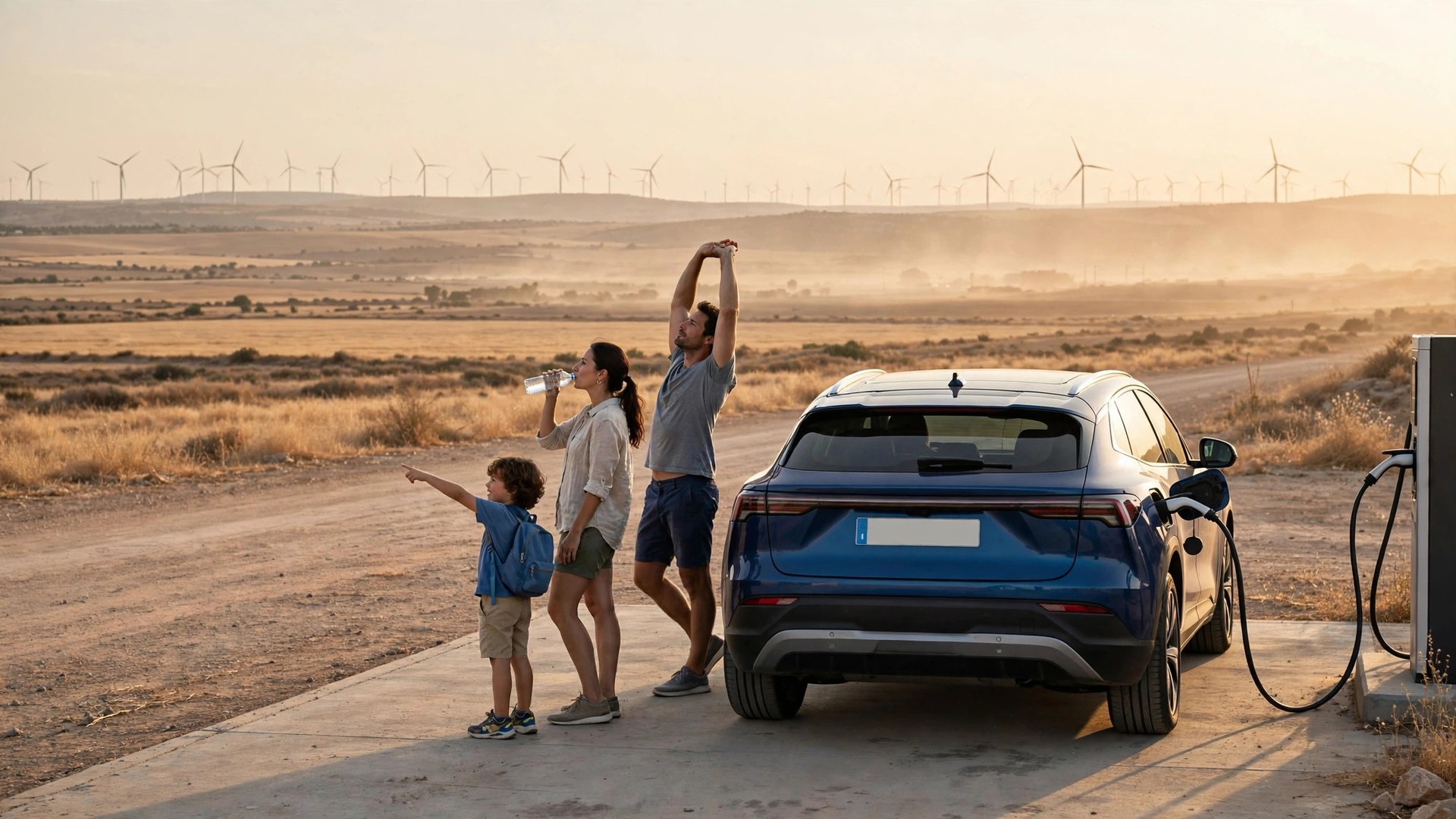
Charging infrastructure is expanding alongside sales, though unevenly. Spain had 53,373 operational public charging points on October 1, 2026, up 6.74% from the end of 2025, according to the electromobility association AEDIVE, and the fastest growth is in high-power units, with chargers from 150 to 350 kilowatts up 27.6%. The weak spot is activation, not construction: ANFAC counts roughly 17,965 further points that are installed but not yet in service, close to a quarter of everything built. Households that depend on public charging feel that gap directly, because a charger that exists on paper but not on the road does not support a main vehicle.
The remaining frictions are familiar ones. Price is still the biggest purchase barrier at 56.5%, followed by range limits at 53.9%. Among owners, the top concern is battery durability at 51.1%, then charger availability on long trips at 17.5%. Adoption, in other words, has outrun neither cost anxiety nor infrastructure quality. What has changed is the default assumption inside the household: the plug-in is no longer presumed to be the spare.
For investors watching EV adoption curves, the Spanish result marks a useful milestone. Sales share shows how many people buy a technology; primary-vehicle share shows how deeply they rely on it, and reliance is what drives charging revenue, battery replacement demand and repeat purchases. Spain reached that stage through a combination of visible monthly savings, point-of-sale incentives and a fast-growing rapid-charging network. Emerging markets on their own adoption path, Vietnam included, will pass through the same second-car phase. The question the Spanish data helps answer is which levers shorten it.
Sources: El Periódico de la Energía, Eight in ten households that buy a plug-in car already use it as their main vehicle; ANFAC data via Infobae, Electric cars already account for one in three car sales in Spain; AEDIVE data via Esmartcity, Spain reaches 53,373 operational public charging points