Taiwan’s Gogoro is getting smaller and healthier at the same time, and its next test is in Vietnam. The battery-swapping company reported third-quarter results on November 11, 2026, with revenue down 9.1 percent year-on-year to USD 70.6 million, but gross margin at a record 24.4 percent, up from 12.2 percent a year earlier. Its net loss narrowed to USD 3.4 million from USD 14.9 million. The same release carries the figure that matters most for Vietnam: electric two-wheeler sales in the country passed the full-year 2025 total in the first nine months of 2026 alone. Gogoro’s joint venture with Castrol is now building swap stations in Ho Chi Minh City.
Gogoro is the world’s largest battery-swapping operator for two-wheelers, with nearly 700,000 riders and more than 900 million battery swaps across more than 2,700 GoStation locations, almost all of them in Taiwan. Vietnam would be its first large new market. The company is entering through commercial riders first, not consumers, and the early numbers from its pilot suggest that choice is deliberate.
A smaller, healthier Gogoro
The third quarter shows a company trading volume for margin. Battery-swapping service revenue was USD 37.1 million, down 4.7 percent year-on-year but up 1.8 percent on a constant currency basis, while hardware sales fell 13.5 percent to USD 33.5 million. Subscribers reached 684,000 at the end of the quarter, up 4 percent from 657,000 a year earlier. The margin gain came largely from the end of a costly battery upgrade program: costs linked to those upgrades fell USD 7.7 million after the program finished at the end of 2025, with better overhead absorption and lower network operating costs adding to the improvement.
Cash generation held up. Operating cash flow rose 8.8 percent year-on-year to USD 27.9 million in the first nine months of 2026, the sixth consecutive quarter of operating cash generation. Adjusted EBITDA was USD 19.0 million, down slightly from USD 20.2 million a year earlier. The company also strengthened its balance sheet, receiving an additional USD 61.8 million in equity in October 2026, the final round of a funding commitment of up to NT$2.5 billion. Cash and cash equivalents stood at USD 68.9 million at the end of September.
The outlook stays cautious. Gogoro cut its full-year 2026 revenue guidance to a range of USD 270 million to USD 290 million, with about 95 percent expected to come from Taiwan. It expects to reach free cash flow in 2027 and profitability in 2028. The company warned that spending on brand marketing, channel development and Vietnam expansion would slow further quarter-on-quarter improvement in profitability. Vietnam, in other words, is a cost before it is a return.
Why Vietnam, and why now
Vietnam is one of the largest two-wheeler markets in the world, with about 80 million registered powered two-wheelers and a fleet that keeps growing. Electric two-wheeler sales reached about 735,000 units in full-year 2025, more than 20 percent of total two-wheeler sales. In the first nine months of 2026 alone, sales already passed that full-year total, according to Gogoro’s release. Few other markets of this size are electrifying two-wheelers as fast.
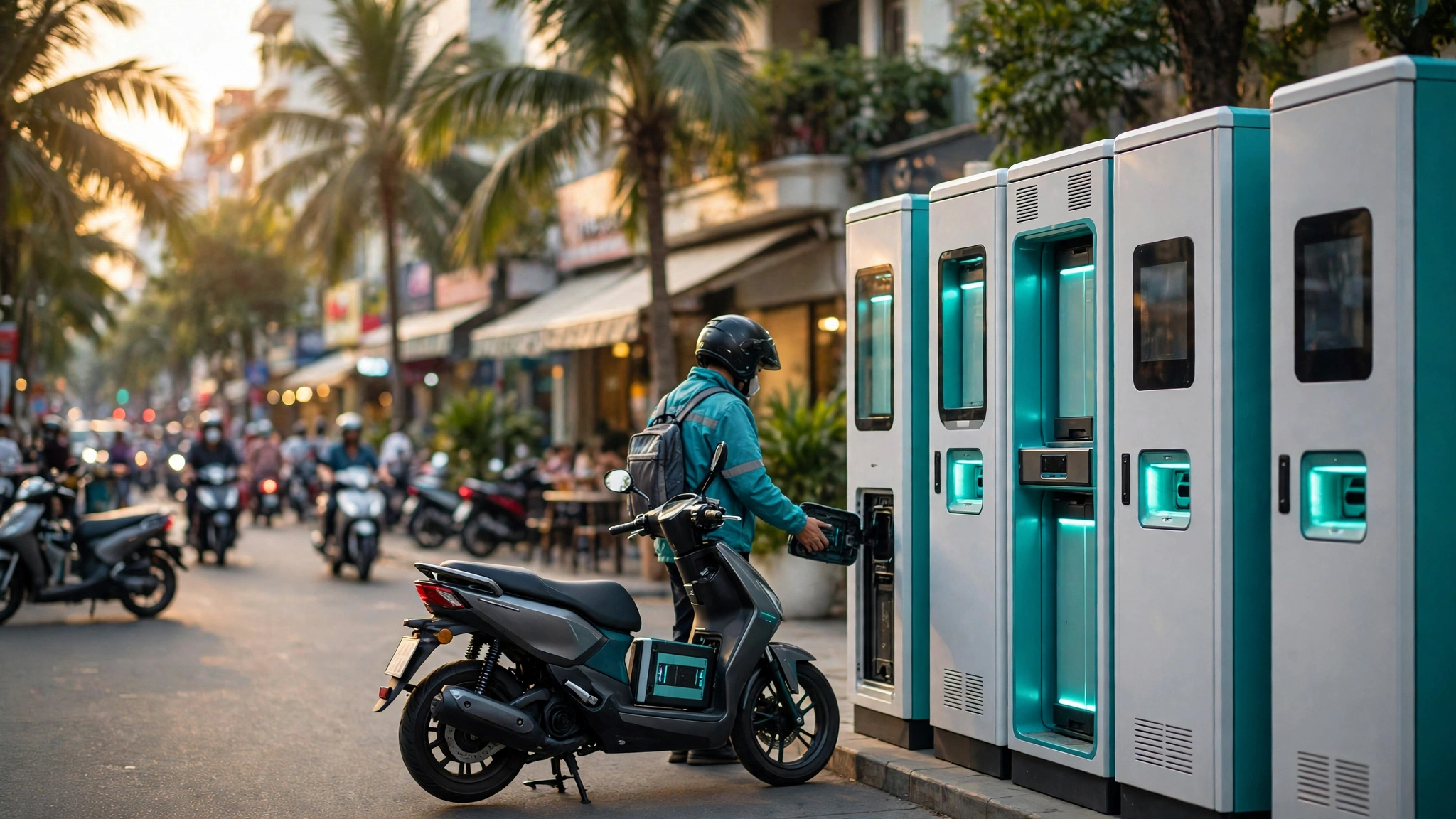
Gogoro’s route into the market is Castrol Gogoro Mobility, its joint venture with Castrol. The venture established its presence in Vietnam during the third quarter and expanded battery-swapping infrastructure in Ho Chi Minh City. The timing lines up with policy: Hanoi’s low-emission zone began in July 2026, Ho Chi Minh City plans to replace 400,000 gasoline motorbikes with electric ones by 2028, and Vietnam set a dedicated electricity tariff for EV charging that took effect on November 1, 2026. Swapping fits a city where most riders live in apartments and cannot charge at home.
The delivery rider test
Gogoro is not starting with showrooms. It has formed partnerships with two of Vietnam’s leading delivery service platforms to test battery swapping with commercial riders, the users who ride the most and charge the most often. The pilot is showing promising results, according to the company, with participating riders covering about 150 to 160 kilometers. If sustained daily, that level of use is exactly where swapping beats plugging in: a rider swaps a depleted battery for a full one in about a minute instead of waiting hours for a charge.
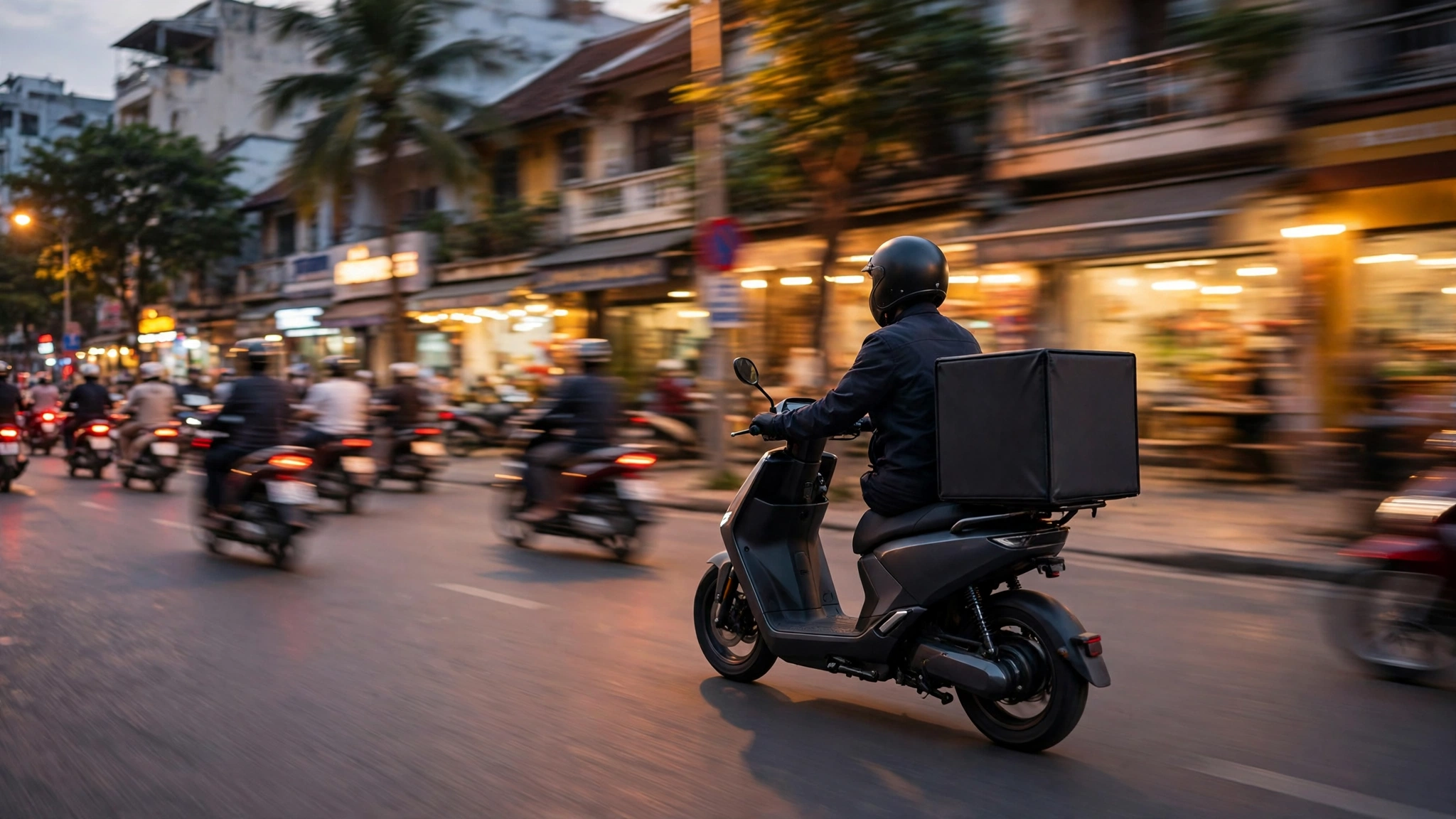
The test matters because delivery riders are the hardest customers to win and the most valuable to keep. They ride long distances, they cannot afford downtime, and their economics decide whether a swap network pays for itself. If swapping works for them, it can work for commuters. If it does not, Gogoro will have learned that in its cheapest possible market before committing more capital.
What swapping still has to prove
Vietnam already has a battery-swapping story, and Gogoro did not write it. VinFast dominates electric two-wheeler sales in the country, and local operators such as Selex and Dat Bike run their own swap and charging models. Gogoro’s network is proven at scale, but only in Taiwan, where it controls the standard. In Vietnam it must build stations, win riders and share the market with incumbents that already have factories, dealers and brand recognition.
The economics are also unproven at Vietnamese price points. Gogoro’s subscription model works in Taiwan, where riders pay a monthly fee for swaps. Vietnam’s delivery riders earn far less, and the swap fee has to fit inside a day’s earnings. The company’s record margins in Taiwan came from cost discipline, not from growth, and its guidance makes clear that Vietnam will cost money before it makes any. The pilot with delivery platforms is the right place to find out whether the model transfers. The next quarters will show whether Gogoro expands the Ho Chi Minh City network or keeps it small. For now, the company has put its first chips on the table in the world’s most promising two-wheeler market.
Related reading: One Minute to a Full Battery: How Swapping Is Solving the Apartment Charging Problem and Vietnam’s Electric Two-Wheelers Near One Million in Nine Months and Vietnam’s First Dedicated EV Charging Tariff, Explained.
Sources
Gogoro Inc. (via GlobeNewswire), November 11, 2026, third-quarter 2026 financial results and Vietnam business update: https://www.globenewswire.com/news-release/2026/11/11/3400525/0/en/gogoro-releases-third-quarter-financial-results-gogoro-reports-continued-gross-margin-improvement.html
Gogoro Inc. (via Morningstar), November 11, 2026, republication of the third-quarter 2026 results release: https://www.morningstar.com/news/globe-newswire/9875323/gogoro-releases-third-quarter-financial-results-gogoro-reports-continued-gross-margin-improvement
—