Start with a number that corrects a common misunderstanding. Vietnam’s sustainable bond market is small, and its green bond segment is smaller still. The Asian Development Bank’s AsianBondsOnline market summary for September 2026 reports outstanding sustainable bonds of USD 0.9 billion at the end of the second quarter of 2026, after a USD 0.2 billion green bond matured during that quarter. Green bonds made up 42.1 percent of that total, sustainability bonds the remaining 57.9 percent, and the private sector accounted for 100 percent of the stock. Anyone picturing a deep pool of green capital waiting for projects should recalibrate. The bond market is the visible tip of Vietnamese sustainable finance. The bulk sits in bank lending.
Step one: understand where the money actually is
Green credit outstanding reached nearly VND 780 trillion by the end of 2025, about USD 30 billion at VND 26,000 to USD 1, equal to 4.19 percent of all lending in the economy, according to State Bank of Vietnam figures presented in March 2026. By the end of the first quarter of 2026 the figure had risen to VND 828 trillion, about USD 31.8 billion, or about 4.3 percent of total credit, Vietstock reported in June 2026. The number of institutions offering green loans has risen from 15 in 2017 to 78, and growth remains brisk, at 14.62 percent in 2025. Green agriculture takes about 33 percent of green credit and renewable energy about 22 percent, with green buildings and green transport among the other categories.
For a mid size manufacturer, this ordering matters. A bank loan is the realistic first instrument. A green bond is a later step, suited to larger, repeat funding needs and to issuers able to carry the fixed costs of documentation, external review and ongoing reporting.
Step two: get the project classified as green
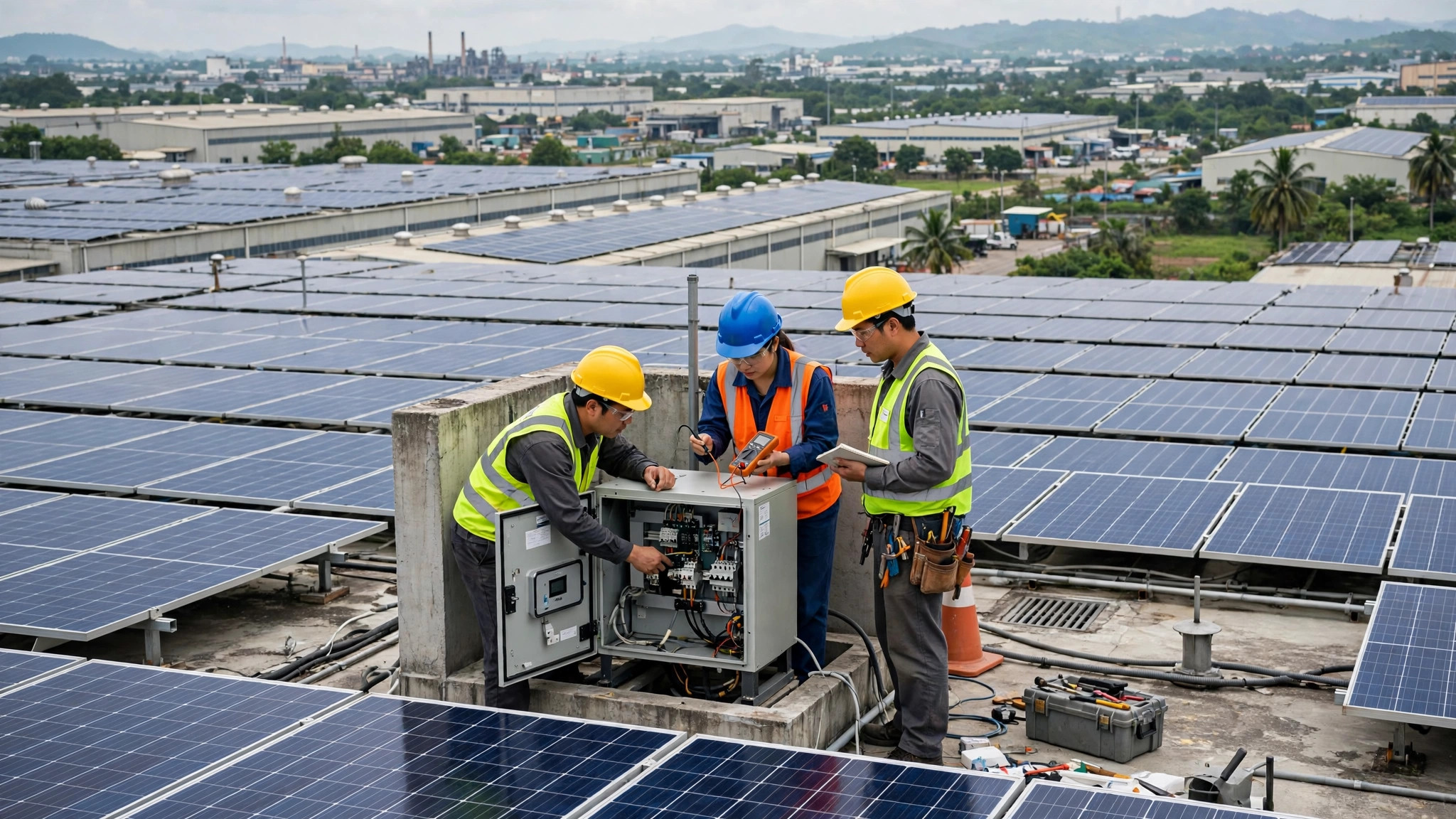
The gateway is classification. Decision 21 of 2025 from the Prime Minister set environmental criteria and a confirmation process for investment projects classified as green, giving banks and issuers a shared reference for what counts. In practice, a manufacturer should expect to show how the project fits the national green taxonomy, what environmental benefit it delivers, and how that benefit will be measured. Rooftop solar, energy efficient machinery, wastewater treatment and cleaner production lines are typical candidates, but eligibility is proven with data, not asserted with labels.
The State Bank has complemented the taxonomy with guidance on environmental and social risk management in lending, and banks have added environmental compliance criteria to internal credit ratings. A borrower with messy permits or missing emissions data can be creditworthy in the ordinary sense and still stall in a green facility, because the bank must defend the label to its own supervisors and funders.
Step three: structure the funding, loan first, bond when scale allows
A typical path runs in sequence. The company prepares an investment case with baseline energy and emissions data. It seeks a green loan, where policy support can include an interest subsidy of about 2 percent for green, circular economy and ESG standard projects under government support guidelines described in State Bank presentations. It builds a reporting track record with the bank. Only then does a bond become plausible, because bond investors ask for the same evidence in a more public form: a green finance framework, an independent assessment, allocation reporting and impact reporting.
For bonds, the market context from the Asian Development Bank is sobering and useful. The whole local currency bond market stood at VND 4,021.6 trillion at the end of June 2026, so sustainable bonds are a fraction of one percent of the total. International Finance Corporation figures cited by the Vietnam Chamber of Commerce and Industry put green bond issuance in Vietnam at more than USD 1.5 billion across 2020 to 2025. Issuance exists, benchmarks exist, but every new issuer is still helping to build the market it borrows from.
Step four: expect the evidence burden to be the real cost
At a June 2026 conference reported by Vietstock, experts urged simpler certification for smaller companies and a digital platform for environmental data. The underlying facts explain why. Small and medium sized enterprises make up 97 to 98 percent of Vietnamese businesses, many lack standardized environmental data and governance systems, and about 80 percent have no prior credit history, according to remarks attributed to the Private Economic Development Research Board at that conference. Green funding has flowed mainly to large projects with clear models, collateral and complete files.
So the practical advice is unglamorous. Meter your energy use before you apply. Keep environmental paperwork current. Assign one person to own the data file. Treat the first green loan application as an audit you prepare for months in advance, because that is what it is.
The direction of travel
Two forces will widen this market. The first is demand from export supply chains, where buyers ask suppliers for cleaner production and the documentation to prove it. The second is policy layering: the green taxonomy, bank risk rules and the new carbon market all push companies toward the same emissions data, so the cost of preparing it is increasingly shared across purposes. Vietnam’s green bond market will look more impressive when the unglamorous groundwork beneath it, classification, metering and reporting, is routine. The USD 0.9 billion bond stock is not the story. The VND 828 trillion loan book, and the data systems growing behind it, are.
Related reading
- Seven Trades and 1,310 Allowances: Vietnam’s Carbon Exchange Finds Its First Price
- The Accountants of Decarbonization: ESG Reporting Goes Mandatory
Sources
Asian Development Bank, AsianBondsOnline Viet Nam Market Summary, September 2026, on sustainable bonds outstanding of USD 0.9 billion at the end of Q2 2026, the green and sustainability split, and the total local currency bond market. State Bank of Vietnam figures reported by Chinhphu.vn via vietnam.vn, March 27, 2026, on green credit of nearly VND 780 trillion at the end of 2025, sector shares, participating institutions and Decision 21 of 2025. Vietstock, June 2026, on green loans of VND 828 trillion at the end of Q1 2026 and the barriers facing small and medium sized enterprises.