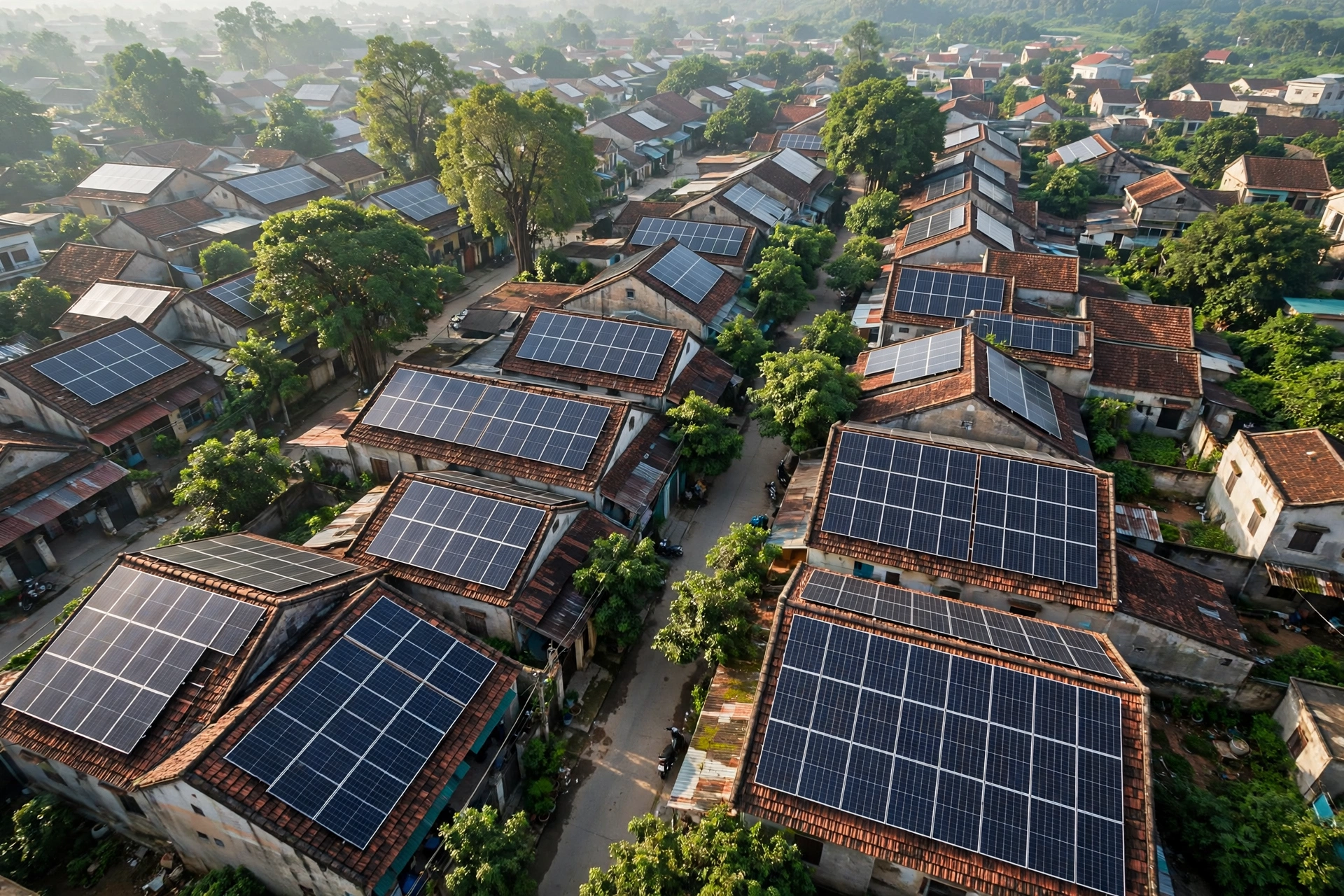
Vietnam has ordered every province and city to introduce support policies for household rooftop solar systems by the end of December 2026, as part of a drive to secure electricity supply from 2027 to 2030. The instruction also requires battery storage rules by the same month, with a focus on northern provinces where supply constraints remain a concern. It is a deadline with teeth: implementation progress will count in the performance assessment of the ministries and local officials responsible.
What the directive orders
The instruction was issued as Government Office Dispatch No. 10790/VPCP-CN, dated October 22, 2026, conveying the Prime Minister’s direction after a government meeting on electricity supply security and the revised Power Development Plan VIII, pv magazine reported on October 24, 2026. A dispatch of this kind is a steering instruction from the Prime Minister’s office, not a subsidy law: it sets deadlines and assigns tasks, and the operative support policies must still be written.
The deadlines are specific. The Ministry of Industry and Trade, known as MOIT, must propose rooftop solar deployment targets for individual provinces and cities by October 30, 2026, specifying installation capacities and commissioning schedules, with particular attention to northern provinces. Provincial People’s Committees must then introduce support policies for households installing self-consumption rooftop solar systems by the end of December 2026, under Article 22 of Vietnam’s Electricity Law, with MOIT providing guidance and monitoring implementation.
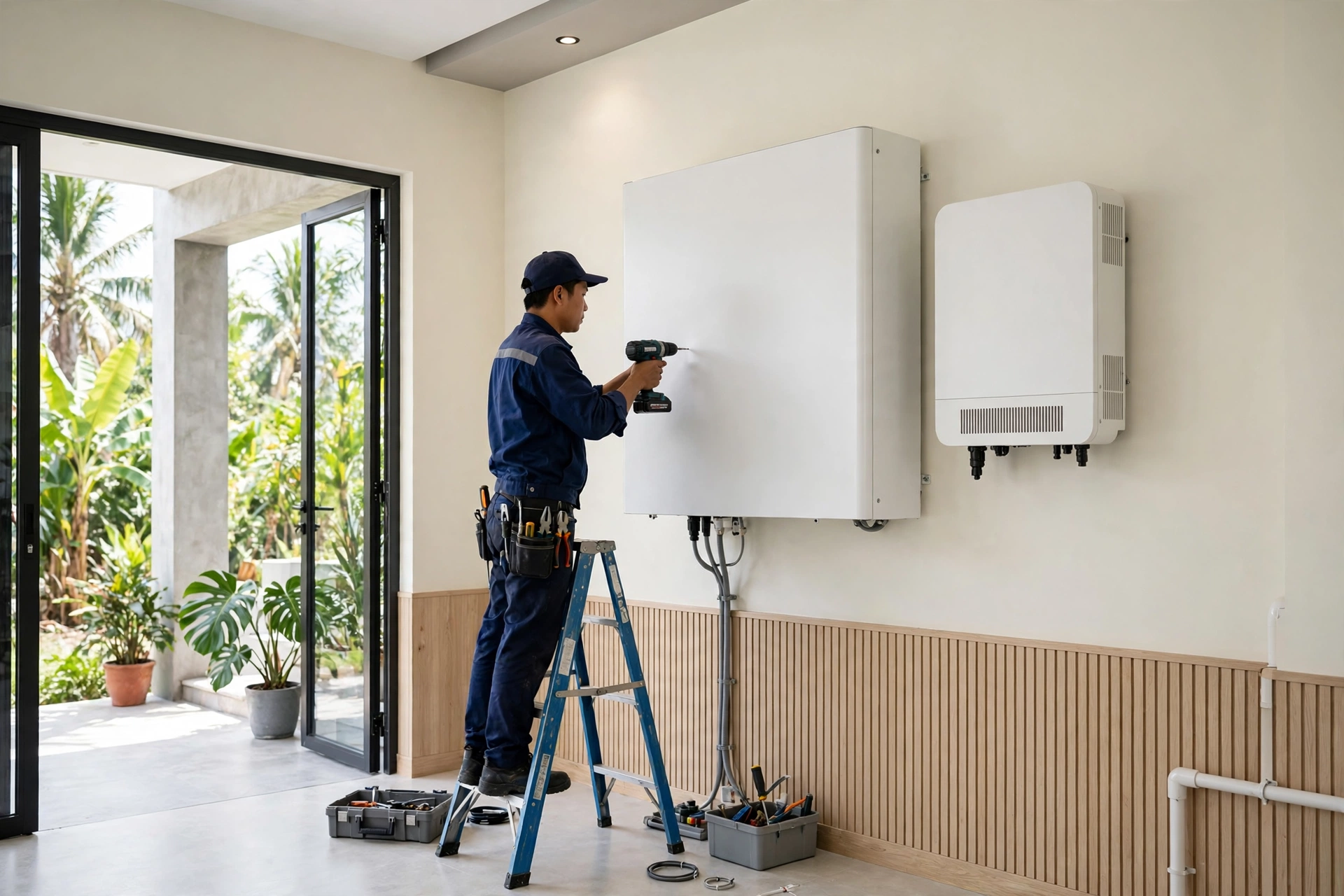
Energy storage has its own deadline. MOIT, working with the ministries of finance and justice and other agencies, must develop policies and guidance to accelerate battery energy storage systems, known as BESS, by December 2026. The government is particularly encouraging rooftop solar paired with storage at industrial parks and industrial clusters, especially in northern Vietnam, where storage can cut peak demand and improve local energy self-sufficiency.
Why the order was needed
The order reads as an admission that the existing framework has moved slowly at local level. MOIT reported in September 2026 that only two of Vietnam’s 34 provinces and municipalities, Bac Ninh and Lai Chau, had adopted the required household support policies, pv magazine reported. The December deadline is therefore less a new policy than an enforcement push on a policy that most localities have not yet delivered.
The underlying market is already large. State-owned utility Vietnam Electricity, known as EVN, reported 134,410 rooftop solar installations with combined capacity of more than 11.45 GW at the end of August 2026, nationwide. Households and businesses have installed at scale even without uniform local support, helped by an earlier rule change: Decree No. 243/2026/ND-CP, which took effect on June 26, 2026, raised the standard limit on surplus electricity sales from 20 percent to 50 percent of eligible generation, with higher percentages negotiable until the end of 2030 subject to local grid capacity. VoltViet examined that storage angle in its explainer on battery storage in the new rooftop rules.
What the directive does not do
Two limits matter for anyone reading this as an investment signal. First, the directive does not establish a nationwide subsidy rate, pv magazine noted. Support mechanisms will differ by locality, so a household in one province may receive different terms from a household in another, and developers cannot yet price a national product off a single tariff.
Second, the storage rules are still to be written. Until MOIT publishes the BESS policies and guidance due in December 2026, there is no operative national storage incentive to fund, only a direction to produce one. The distinction matters: the directive creates deadlines, not entitlements.
The wider supply program
Rooftop solar and storage sit inside a broader electricity security program for 2027 to 2030. The program targets annual electricity savings of at least 3 percent of total national consumption. During the peak hot-weather months of April, May, June, and July, savings must reach at least 10 percent, and peak system demand must fall by at least 3 GW, pv magazine and VnEconomy reported. System power losses are to fall below 6 percent.
On the supply side, investors have been instructed to accelerate construction and bring the Na Duong 2 and Quang Trach I thermal power plants into commercial operation in 2026, VnEconomy reported. For 2028 to 2030, ministries must review generation and transmission projects and agree on a list of key projects to be assigned to state-owned groups. The rooftop solar push is therefore one leg of a program that still leans on thermal capacity for baseload, a balance worth noting for readers who track Vietnam’s energy transition.
The directive builds on Directive No. 10/CT-TTg, issued in March 2026, which set targets for rooftop solar deployment at households, government offices, and commercial facilities alongside conservation measures. VoltViet covered that directive’s savings targets in its analysis of energy efficiency as the cheapest gigawatt.
What to watch
Three checkable milestones will show whether this directive changes facts on the ground. The first arrives on October 30, 2026, when MOIT must publish province-by-province rooftop solar targets. The second arrives in December 2026, when local support policies and the BESS guidance are both due. The third is the count that prompted this action: how many of the 34 provinces and municipalities have adopted household support policies, up from two in September.
If those documents arrive on time and the local policies carry real support, Vietnam’s rooftop solar market gains a second growth leg, with storage attached. If they slip, the December deadline will join the September finding as evidence that local delivery lags behind central direction, and the supply crunch the directive is meant to prevent will arrive with fewer local tools in place. Either way, the next two months will give investors a clean test of whether Vietnam’s energy bureaucracy can hit its own deadlines.
Sources
pv magazine, October 24, 2026: Vietnam orders provinces to introduce rooftop solar incentives by December 2026: https://www.pv-magazine.com/2026/10/24/vietnam-orders-provinces-to-introduce-rooftop-solar-incentives-by-december-2026/; VnEconomy, October 23, 2026: PM orders urgent measures to strengthen energy security through 2030: https://en.vneconomy.vn/pm-orders-urgent-measures-to-strengthen-energy-security-through-2030.htm; VietnamNet, October 23, 2026: PM orders urgent measures to ensure power supply for 2027-2030: https://vietnamnet.vn/en/pm-orders-urgent-measures-to-ensure-power-supply-for-20272030-2567706.html