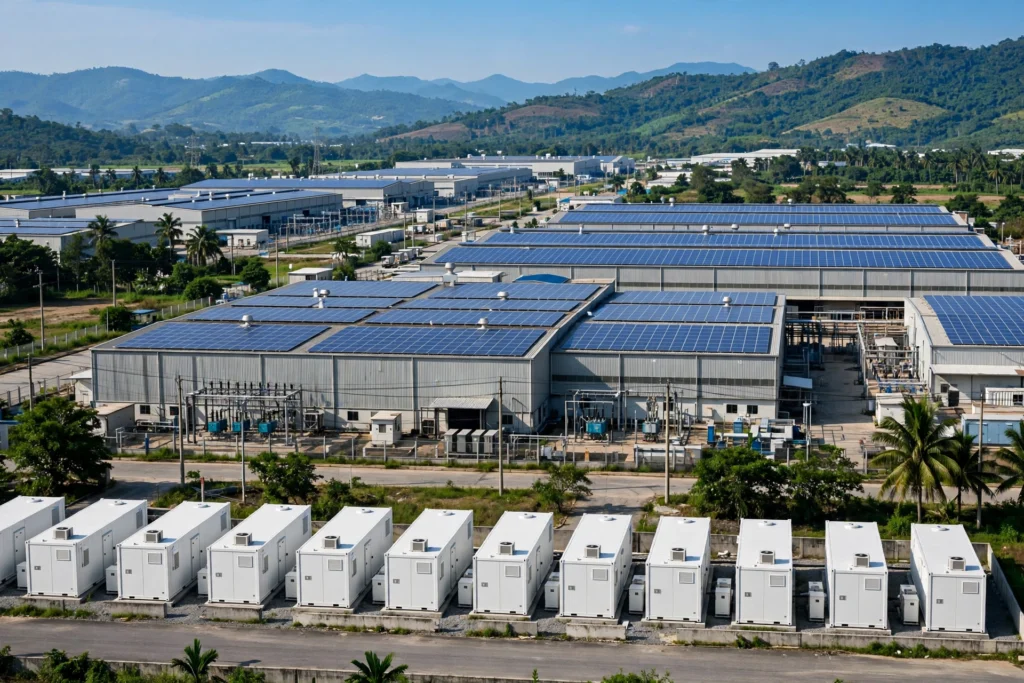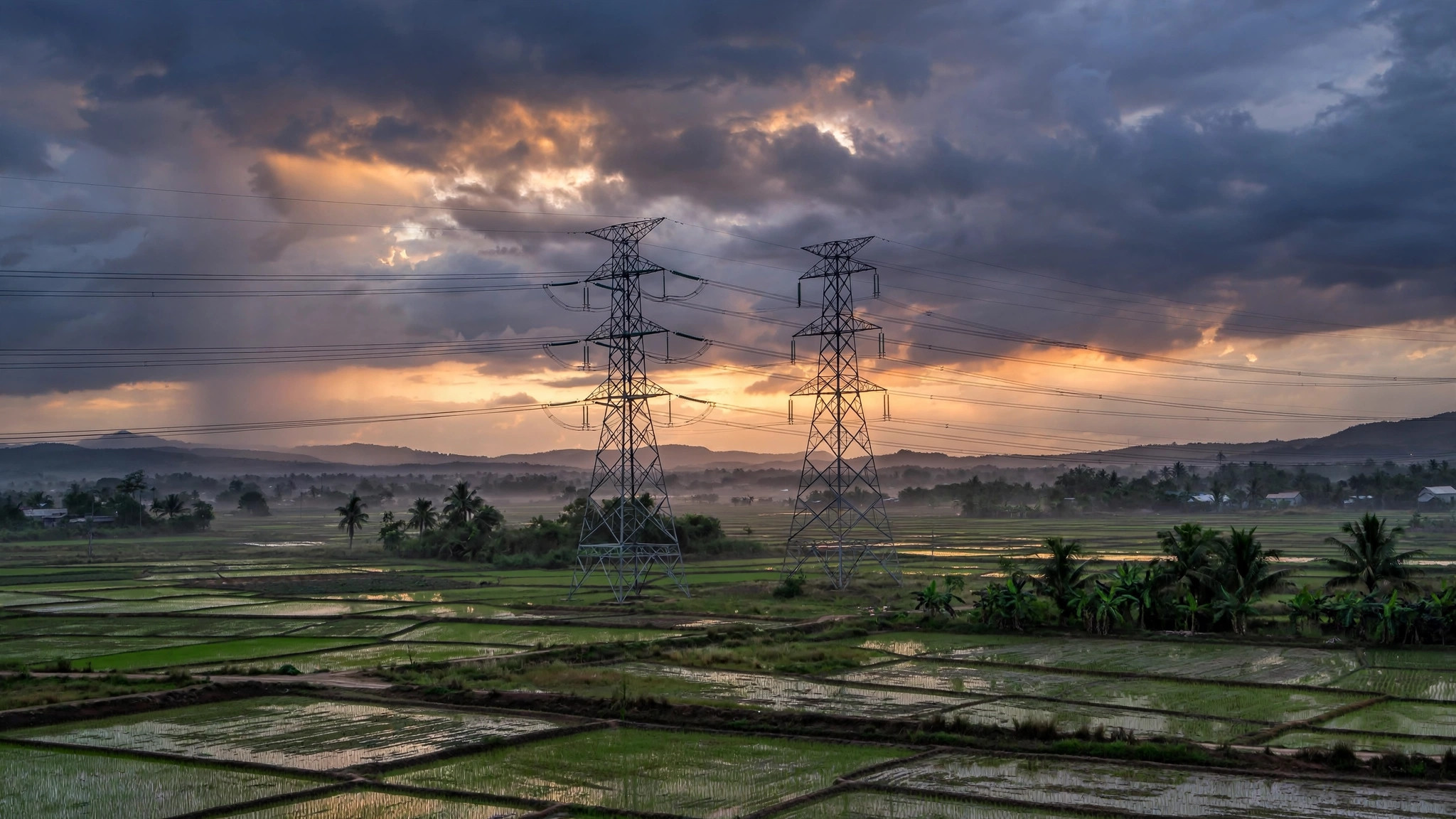
Compare two grids. The first was built to move power in one direction, from large plants to passive consumers, and to be judged mainly on whether the lights stayed on. The second must absorb rooftop solar at noon, offshore wind on blustery nights, data center loads that never sleep and millions of new electric vehicles, while keeping those same lights on. Vietnam’s updated Just Energy Transition Partnership plan, approved by Deputy Prime Minister Bui Thanh Son and reported by VnEconomy in 2026, is a commitment to build the second grid. This comparison article reads that plan through its wires, substations and meters, because that is where its promises will either hold or fail.
Column one: the targets the grid must serve
The updated plan sets renewable energy at about 47 percent of total installed power capacity by 2030, caps coal fired capacity at just over 30 GW, in the detailed decision at 30.2 to 31.05 GW, and limits power sector emissions to no more than 170 million tonnes of carbon dioxide equivalent. It also calls for two renewable energy industry and service hubs by 2030, a completed policy framework for offshore wind, solar and storage, and renewables reaching 80 to 85 percent of total primary energy by 2050. Each of those figures is a generation target. None of them can be met by generation alone. Variable renewables at 47 percent of capacity change how the whole system must be operated, hour by hour.
Column two: transmission, the long distance problem
Vietnam’s renewable resources and its demand centers are badly matched in space. Strong wind and sun sit in the central and southern regions, while the largest loads cluster around Hanoi and Ho Chi Minh City. The plan answers with upgraded transmission infrastructure built with international partners, and the national transmission operator is already spending at that scale. EVNNPT invested more than USD 1.1 billion in transmission projects in 2025, Vietstock reported, and for 2026 it aims to transmit 276.5 billion kWh, start construction on 87 projects and complete 86, with priority on strengthening the 500 kV north to central to south backbone. A grid code grows up when the backbone stops being the bottleneck that forces curtailment of cheap renewable power in one region while another region runs expensive thermal plants.

Column three: substations that run themselves
The smart grid roadmap prepared for Vietnam’s Energy Transition Partnership sets the automation ladder clearly. By 2030, all 500 kV and 220 kV substations should be fully automated, 110 kV substations fully automated as well, at least half of medium voltage substations remotely monitored and operated, and distribution control centers fitted with distributed energy resource management systems. Field reporting in 2026 shows the ladder being climbed. EVN states that 100 percent of transmission equipment data has been digitized on its PMIS technical management system, many 220 kV substations have moved to unmanned operation, and the number of 220 kV substations has risen by more than 70 percent in about ten years while operator numbers fell by more than half. At Power Transmission Company 2, digitized records and QR codes covered more than 7,800 devices at 23 substations by April 2026, and fault location systems on all 16 of its 500 kV lines cut fault location time by about 8 hours. Drones flew more than 23,400 km of line inspection in 2025 across the system.
Column four: meters and data, the demand side problem
A smarter grid also has to see its smallest customers. The roadmap target is for about 95 percent of power company customers to have electronic meters with at least remote measurement capability by 2030, with large, industrial and commercial customers first, and advanced metering infrastructure pilots informing wider rollout. That visibility is what allows demand response, time-based pricing and rooftop solar monitoring to move from pilot language into operations. It matters for the JETP arithmetic because every megawatt of flexible demand is a megawatt of renewable variability the system can absorb without new wires or storage.
The verdict of the comparison
Set the two grids side by side and the change is not cosmetic. The old code asked whether capacity was adequate on paper. The emerging one asks whether the system can forecast, move, balance and prove, in real time, across millions of endpoints. Vietnam’s JETP plan supplies the frame: 47 percent renewable capacity, a coal cap near 31 GW and a 170 million tonne emissions ceiling for power by 2030. The transmission budget, the automation ladder and the metering targets supply the content. If EVNNPT sustains investment near the 2025 level and the 2030 automation goals are met, the grid stops being the reason renewable projects wait. That, more than any single power plant, is what growing up means for a grid code.
Related reading
- JETP Money: Has the USD 15.5 Billion Started to Move?
- The Evening Peak Problem in Numbers
- Bac Ai Pumped Hydro: the Battery Vietnam Is Building into a Mountain
Sources
VnEconomy, 2026, and Vietnam News on Decision 458, 2026, on the updated JETP plan targets for renewable capacity, the coal cap, the power sector emissions ceiling and smart grid upgrades. Energy Transition Partnership, Development of Vietnam Smart Grid Roadmap to 2030 with a vision to 2050, on substation automation targets, distributed energy resource management and metering goals. EVN reporting via vietnam.vn, 2026, and Vietstock, January 2026, on transmission digitization, unmanned substations, drone inspection and EVNNPT investment and 2026 project targets.