Frankfurt says its electric buses run about 40 percent cheaper than comparable diesel buses. London has passed 3,000 zero-emission buses, India is deploying two national electric bus programs, and Vietnam added 169 in Ho Chi Minh City.
The electrification of city buses is accelerating, and the main driver is cost. In Frankfurt, Germany, 109 of the city's 418 buses now run on locally emission-free drives, including 77 battery-electric buses. The striking figure is the running cost: an electric bus costs about 40 percent less to operate than a comparable diesel bus, according to the municipal transport company traffiQ.
At the same time, London has passed 3,000 zero-emission buses, India is rolling out two national programs for electric buses, and Vietnam recorded new progress in both Ho Chi Minh City and Hanoi.
Frankfurt passed the 100-bus milestone in the 2026 timetable year, after putting nine new Ebusco battery-electric buses into service on routes 56 and 71. The city now has 109 buses on locally emission-free drives, about 26 percent of the fleet, including 77 battery-electric buses and 32 hydrogen fuel-cell buses. traffiQ managing director Tom Reinhold said operating costs for an electric bus are now about 40 percent lower than for a comparable diesel bus, with a range of 250 to 300 kilometers per charge. Frankfurt will add 10 more electric buses in the west from 2027 and 39 in the east in 2028, and electrify the whole bus fleet by 2033.
London shows what scale looks like. In June, the British capital passed 3,000 zero-emission buses in scheduled service, about one third of the Transport for London fleet, the largest in Western Europe. In 2016, London had only 30 electric buses, so the fleet has grown a hundredfold in ten years. Every new bus since 2021 has been a zero-emission vehicle, and the interim target is about 6,000 zero-emission buses by 2030 out of a fleet of about 9,000. In June 2026, Zenobe raised almost 1 billion pounds for its UK and Ireland electric vehicle debt facility, enough to deploy more than 1,200 electric buses and charging infrastructure over three years. According to Zenobe, diesel fuel accounts for about 40 percent of a vehicle's lifetime cost, compared with about 20 percent for electricity in an electric vehicle.
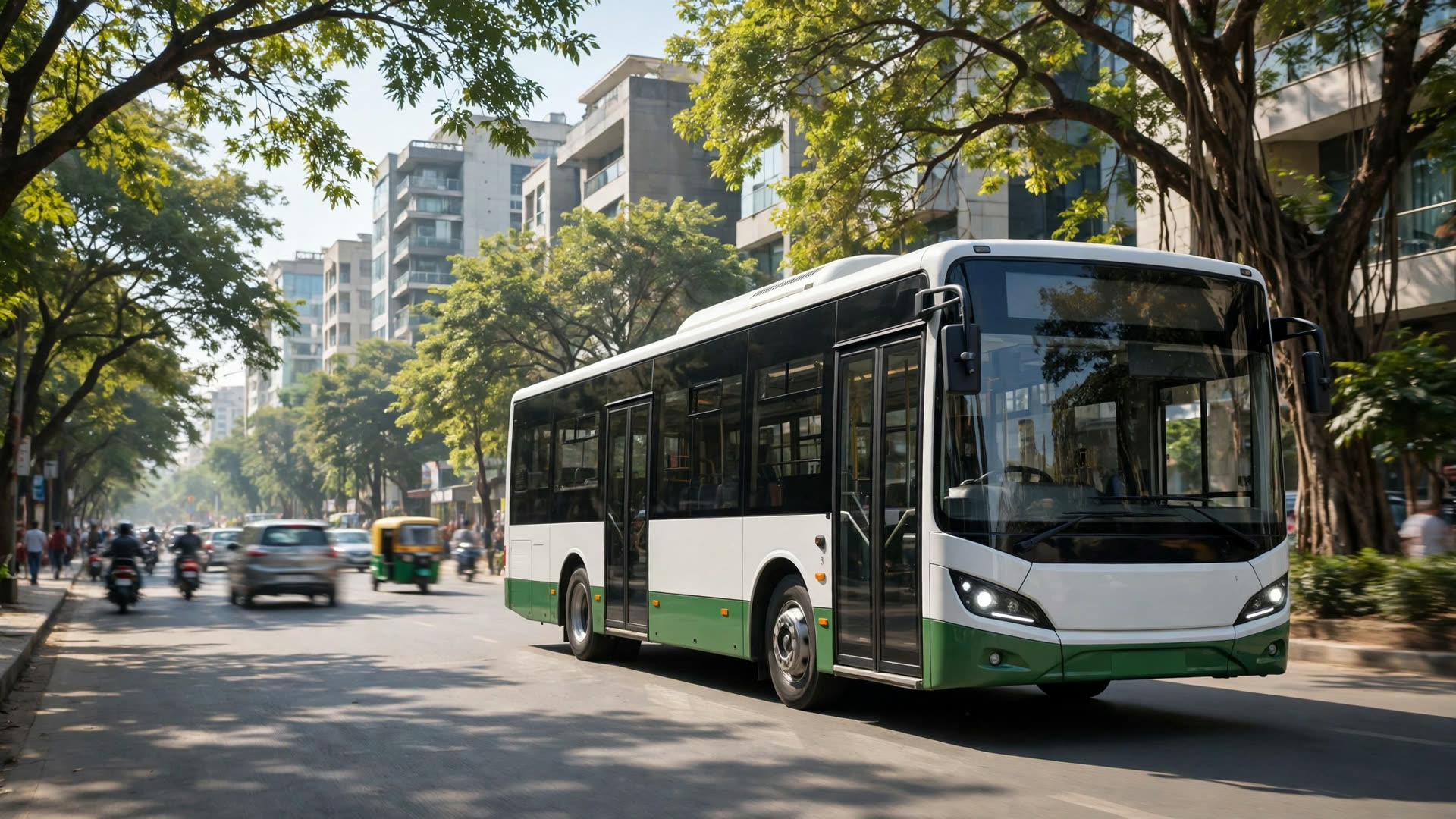
India is electrifying by national program. The PM E-DRIVE scheme allocated Rs.4,391 crore to deploy 14,028 electric buses, initially in nine cities with more than four million people. The scheme has a total outlay of Rs.10,900 crore over two years, including Rs.2,000 crore for public charging stations. A second program, PM e-Bus Sewa, approved in August 2023 with an outlay of Rs.57,613 crore, will put 10,000 air-conditioned electric buses into 116 cities by the end of 2027. Agreements for 6,500 buses are already finalized.
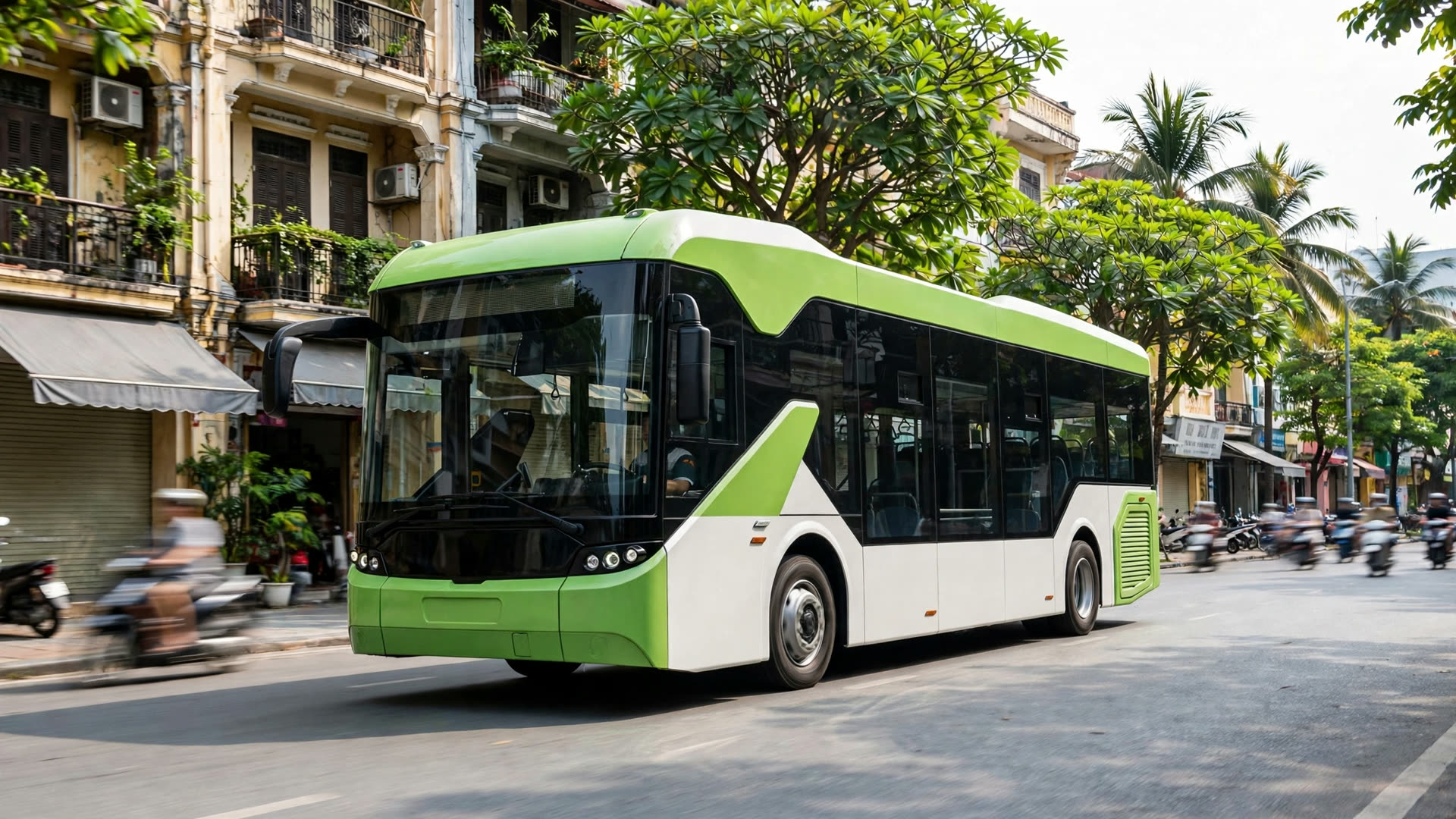
In Vietnam, Ho Chi Minh City recorded the clearest step forward this year. On March 1, 2026, the city put 169 electric buses into service on nine routes, numbered 32, 38, 45, 53, 64, 93, 127, 140 and 148, operated by VinBus. The launch is part of a package of 25 new electric bus routes, with VinBus operating nine and Phuong Trang operating 16. As of mid-2025, the city already had 613 electric buses, about 25 percent of its fleet, alongside nearly 500 compressed natural gas buses. The city targets a fully clean bus fleet by 2030.
Hanoi expanded its electric bus network on the same day. On March 1, 2026, VinBus opened routes E06TC and E07TC linking the city center with the Hoa Lac Hi-Tech Park, with E06TC running nearly 46 kilometers from Giap Bat station and E07TC running more than 47 kilometers from Long Bien. Phase one uses 16 large electric buses running from 5 a.m. to 9 p.m. every 30 minutes, rising to 20 buses from April 1, 2026. The buses seat 68 passengers, have low floors with wheelchair ramps, and charge a fare of 20,000 dong per trip, with a monthly pass of 70,000 dong for students and workers. Hanoi targets an all-electric or green-energy bus system by 2030.
Why it matters: For bus riders, fleet electrification means quieter, cleaner rides with less exhaust on busy routes. For cities, lower running costs stretch the same subsidy budget further on every route. For Vietnam, the lesson is to compare lifetime running costs instead of purchase prices alone, and to deploy in large batches so vehicle, charging and maintenance costs fall together.
Source: traffiQ, Urban Transport Magazine, Zenobē, Ministry of Heavy Industries, India, EVINDIA, Southeast Asia Infrastructure, Nghe Nhin Vietnam