Vietnam’s energy system took its biggest shock in decades in 2026 and held. That is the headline of the Viet Nam Energy Security Report 2026, released by the Ministry of Industry and Trade at the National Energy Security Forum in Hanoi on November 10. The Strait of Hormuz was blockaded for about six months, and Brent crude at one point reached USD 118.35 a barrel. Record heat and El Niño pushed power demand to a new high, while hydropower output fell about 18.5 billion kWh short of 2025 levels. The lights stayed on. The report’s second message is less comfortable: coal still generated almost half of the country’s electricity. The system that survived 2026 faces a harder test in 2027 and 2028.
Of the 177 countries surveyed in the report, as of November 9, 2026, 102, or 57.6 percent, faced energy difficulties. Only 13 maintained stability, including Vietnam. Thirty-three countries were in severe crisis and 69 under high stress. The report, prepared under Resolution 70-NQ/TW on national energy security to 2030, will now be published every year in two languages. It will sit alongside a dedicated energy security site that is awaiting a license from the Ministry of Culture, Sports, and Tourism.
What the shock looked like
The shock arrived from two directions at once. Abroad, the Hormuz blockade squeezed oil and gas flows for about half the year and sent Brent to USD 118.35 a barrel. At home, record heatwaves and El Niño drove electricity demand to a record peak of 57,537 MW in June 2026, while low water levels cut hydropower output by about 18.5 billion kWh compared to 2025. In May and June alone, demand in the northern region rose 14.7 percent and 17.5 percent respectively.
Three results kept the system stable, according to Deputy Minister of Industry and Trade Nguyen Viet Son, who presented the report at the forum. Electricity supply was sufficient. Fuel supply was maintained. Energy prices were controlled. The tools included a Price Stabilization Fund and five rounds of tax cuts, backed by more than VND 64,000 billion allocated for fuel tax and fee reductions and advances from the fund. The two domestic refineries ran above designed capacity, crude sources were diversified from a single type to more than ten, and the country did not have to draw on its national fuel reserves. Household electricity prices in March 2026 stood at about 45 percent of the global average.
Coal still does the heavy lifting
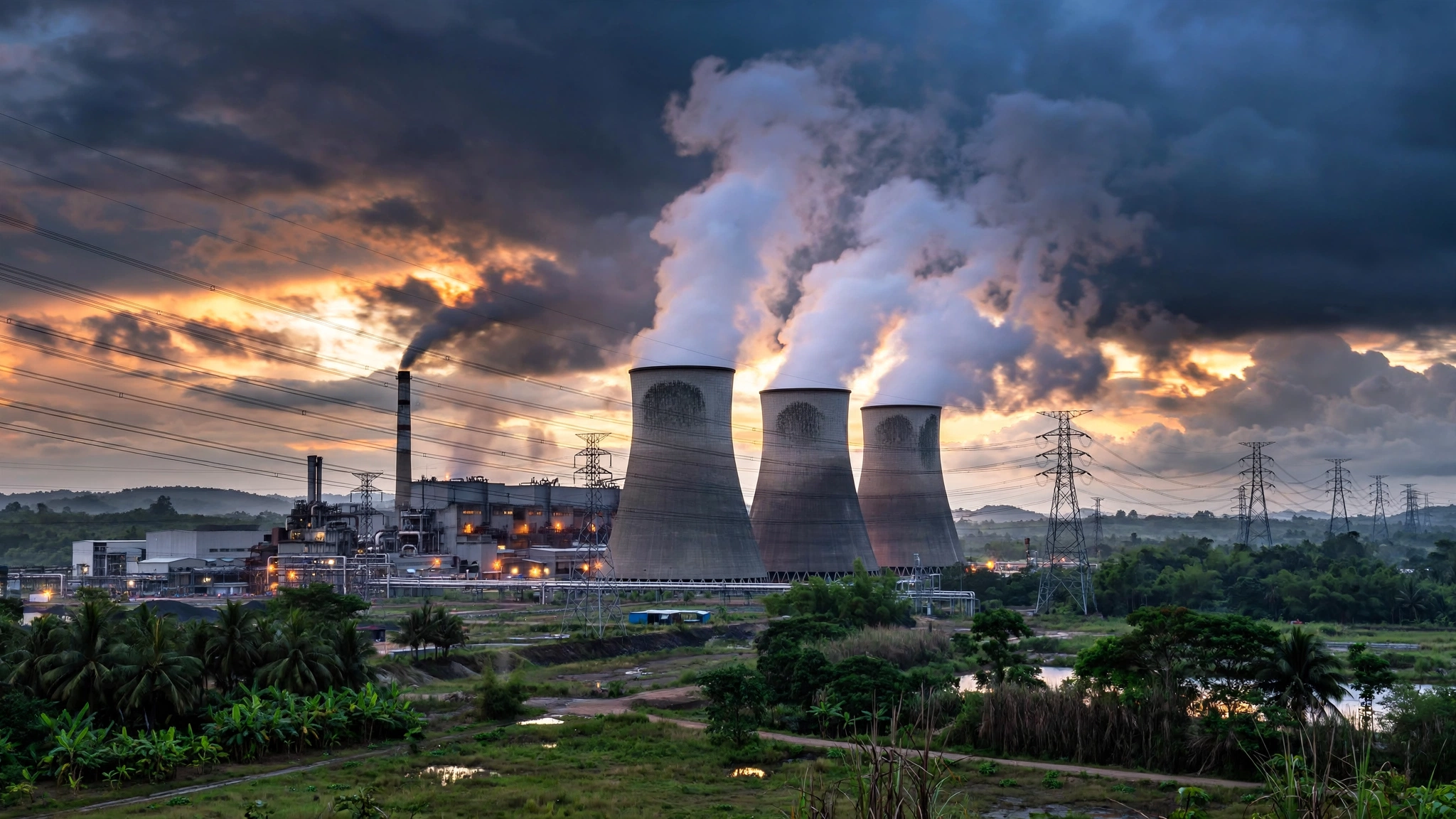
The generation mix for the first ten months of 2026 shows why the report’s authors are uneasy. Coal-fired power generated 147.78 billion kWh, or 49.7 percent of output. Hydropower generated 73.39 billion kWh, or 24.7 percent. Gas turbines generated 23.28 billion kWh, or 7.8 percent. Renewable energy generated 40.72 billion kWh, or 13.7 percent, including 24.04 billion kWh of solar and 15.37 billion kWh of wind. Imported electricity totaled 11.77 billion kWh, or 4 percent.
Economist Can Van Luc, speaking at the forum, plainly outlined the discrepancy with Power Development Plan VIII. The plan aims for thermal power to account for only about 32 percent of generation. It still accounts for nearly half. Renewables were designed to reach 20 to 25 percent. They stand at just over 13 percent. The plan, he said, needs to be reviewed and adjusted to reflect reality.
Coal supply itself is the sharpest vulnerability. Power plants hold only about 20 to 30 days of coal reserves, against an energy security requirement of two to three months. State coal group TKV expects to supply about 50.8 million tonnes of coal for power generation this year: 42 million tonnes from TKV and 8.8 million from Dong Bac Corporation. That is a record for the two suppliers. Even so, TKV plans to import about 20 million tonnes, and coal imports for power generation could reach 38 to 40 million tonnes by 2030. TKV has proposed that the ministry track the share of imported coal secured through long-term contracts. The proposed targets are about 30 percent by 2027, 40 percent by 2028, and at least 50 percent by 2030. Those are proposals, not approved mandatory targets.

The dependence runs deeper than coal. Net energy imports in 2025 reached 43.9 percent of total primary energy supply. Fuel reserves cover only about 60 days of net imports, against a target of 90 days, and Vietnam holds no national crude oil reserves. Demand keeps rising by about 10 percent a year from an already high base. Full-year 2026 system output is estimated at 356.2 billion kWh, up 10.3 percent from 2025, and commercial electricity sales rose 9.8 percent in the first ten months.
The investment answer
EVN’s answer is the largest investment program in its history. The group plans about VND 830 trillion of investment in 2026 to 2030, averaging VND 166 trillion a year, the highest ever. The plan covers 15 power generation projects totaling 6,066 MW, 292 transmission projects at 500 and 220 kV, and around 1,320 projects at 110 kV. Two units of the 1,403 MW Quang Trach I coal plant are due to enter commercial operation in 2026, ahead of the dry season. The 200 MW Tri An hydropower expansion aims to start generating in 2027.
The ministry’s five urgent tasks, set out by Deputy Minister Nguyen Viet Son after the forum, show where policy goes next. First, institutions: finalize the draft law amending the Electricity Law, now before the second session of the 16th National Assembly. Guiding documents on electricity prices, power purchase agreements, risk allocation for gas and offshore wind projects, energy storage, and direct power purchase should follow once it passes. Second, securing enough electricity for 2027, 2028 and the period to 2030, with firm milestones for projects due in 2027. Third, fuel self-reliance, diversifying import markets, sources and shipping routes, and a roadmap to raise national petroleum reserves. Fourth, data-driven management, with the annual report and a National Energy Information System expected from 2027. Fifth, energy transition alongside efficiency, including effective implementation of Directive 10/CT-TTg on electricity saving, which the report calls the cheapest and fastest source of supply for 2027 to 2030.
The test ahead
The report’s warning is explicit. Deputy Minister Nguyen Viet Son said 2027 would be difficult and 2028 even more so, as demand keeps rising by about 10 percent while new baseload sources are not yet ready. The ministry has already set a 2027 demand-response target of cutting the northern peak by at least 3,000 MW. EVN is filling hydropower reservoirs, securing fuel and scheduling plant maintenance to prepare.
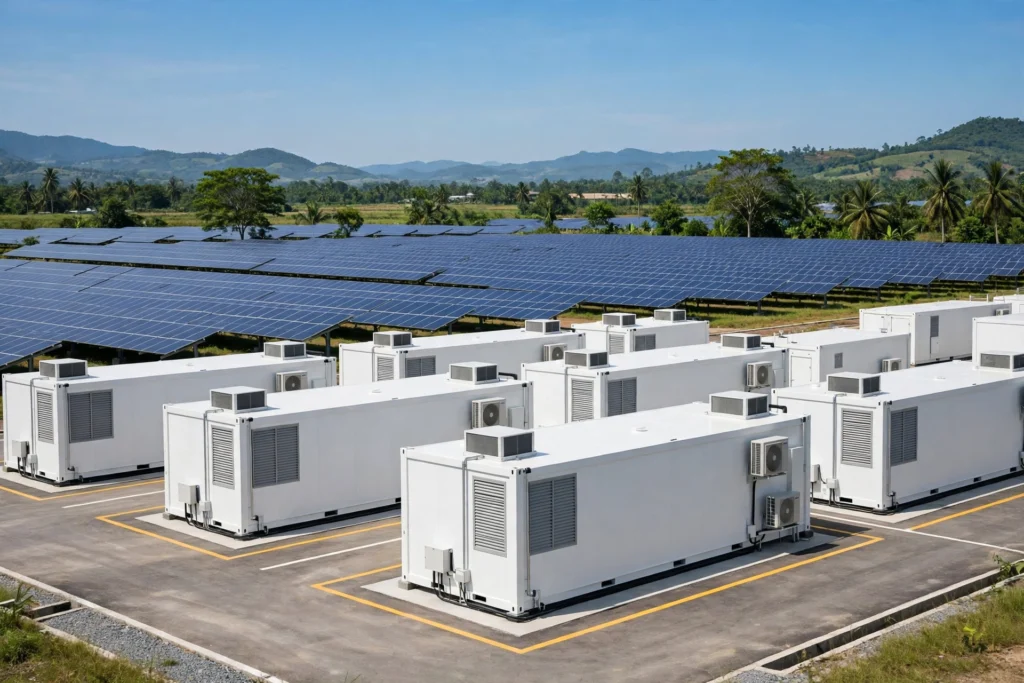
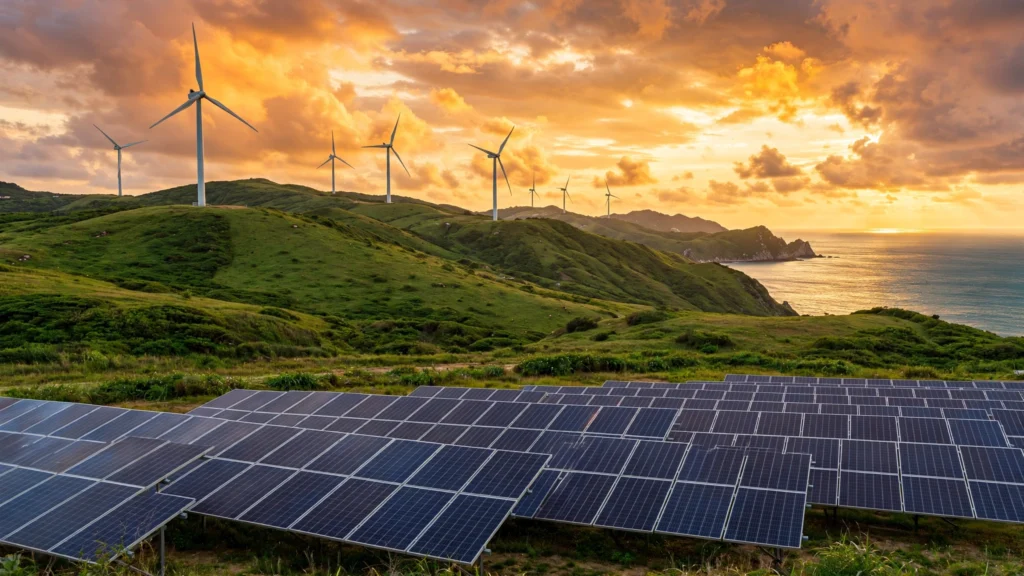
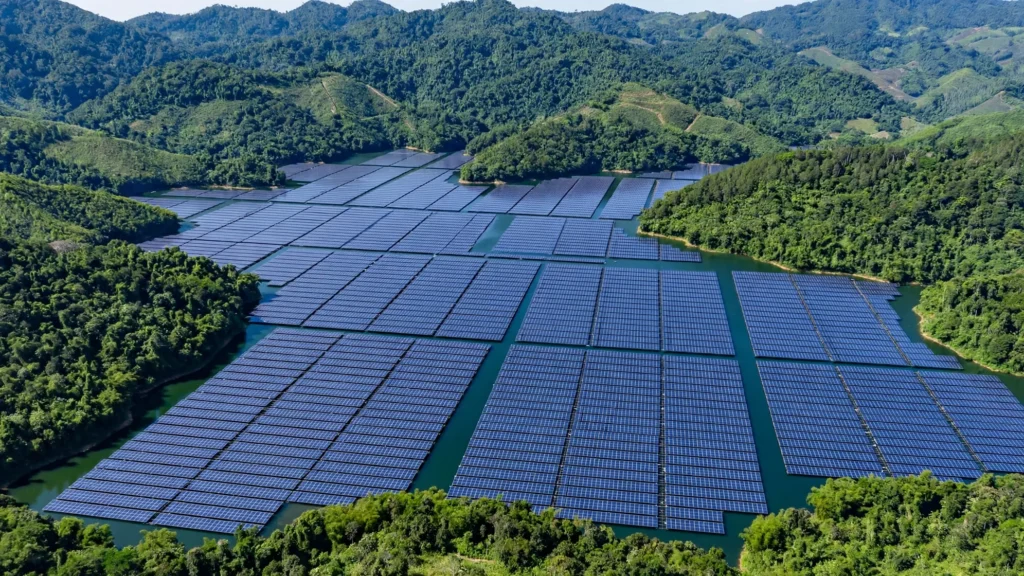
There are bright spots beyond survival. E10 gasoline has been sold nationwide since June 2026, cutting an estimated 2.5 million tonnes of carbon dioxide a year. Solar generated 24.04 billion kWh in ten months, more than gas. And the framework for new renewable supply keeps improving. The ministry set 2026 generation price ceilings for wind and solar plants on November 5, giving developers and EVN a current basis to negotiate power purchase agreements. But the report’s central finding stands. Vietnam proved in 2026 that it can keep the power on through a global shock. The next two years will test whether it can do so while cutting the coal share that made that possible.
Related reading: Decree 344 Backs Homegrown Power Equipment Makers and One Standard for Every Public Charger: QCVN 32:2026 and Circular 61/2026 Explained and Vietnam’s First Dedicated EV Charging Tariff, Explained.
Sources
Ministry of Industry and Trade (via Cong Thuong Newspaper, English), November 10, 2026, on the release of the Viet Nam Energy Security Report 2026: https://ven.congthuong.vn/moit-releases-viet-nam-energy-security-report-2026-60027.html
Ministry of Industry and Trade (via Cong Thuong Newspaper, English), November 10, 2026, on the five urgent tasks after the forum: https://ven.congthuong.vn/national-energy-security-and-five-urgent-tasks-ahead-60028.html
Stockbiz (English), November 10, 2026, on the ten-month generation mix and the coal supply challenge: https://stockbiz.vn/en/news/the-systems-largest-power-source-risks-running-out-of-steam-due-to-imported-coal/42722478
Stockbiz (English), November 10, 2026, on EVN’s VND 830 trillion investment plan and the 2027-2028 supply outlook: https://stockbiz.vn/en/news/despite-overcoming-a-historic-energy-shock-vietnam-still-faces-power-supply-concerns/42716761
—