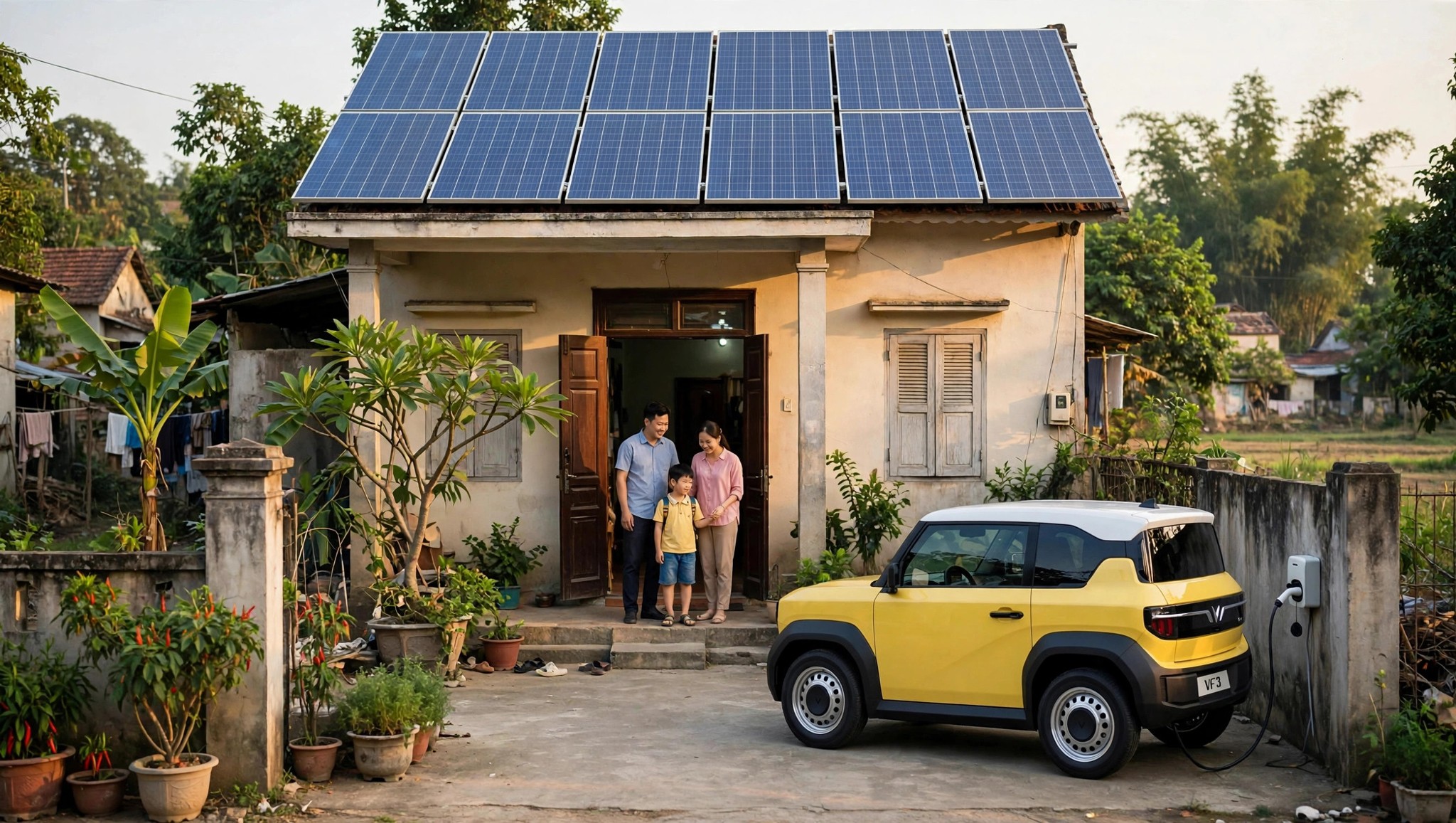
The prosumer household used to be a slogan. In Bac Ninh in 2026, it became a registration list. More than 2,500 households in the province have registered to install rooftop solar under a new local support policy, according to the provincial industry and trade department. This is the story of what those households are actually building on their roofs, in their meter cabinets and, increasingly, in the corner of the yard where the car charges at night.
A province that moved first
Bac Ninh is an industrial province, dense with electronics factories and the workers they employ. Its revised power planning puts rooftop solar potential at 3,392 MW for the period to 2030, of which only 33 MW had been achieved when officials described the program. That gap is the context for Resolution 21 of 2026, issued by the provincial people’s council on July 16, 2026 and effective from August 1, 2026. Bac Ninh was the first province in Vietnam to put a direct household support policy in place, at a moment when only two of the country’s 34 provinces and cities, Bac Ninh and Lai Chau, had done so.
The support is deliberately simple. A household installing rooftop solar for self production and self consumption receives VND 1 million per kilowatt peak, up to VND 3 million per household. Add a battery storage system and the province adds VND 1 million per kilowatt hour of storage, up to another VND 3 million. The maximum combined support is VND 6 million per household, about USD 231 at VND 26,000 to USD 1. Payment is handled at commune level within 15 working days, and each house qualifies once during the period the resolution runs, from 2026 to 2030. The money is small against the cost of a full system. Its real function is to turn a vague intention into a dated decision.
Morning: the roof starts work
The daily rhythm of a prosumer household follows the sun, not the grid. Panels begin generating as the house wakes. The first electricity of the day is the cheapest the household will ever use, because it travels meters rather than across a provincial network: kettle, lights, fans, the water pump, a motorbike battery on charge. Under the self production and self consumption model, every kilowatt hour used at home is one not bought at retail tariff. That is the core economics, before any sale of surplus enters the picture.
The national framework behind the Bac Ninh policy is Decree 243 of 2026. Households may sell more than 50 percent of their surplus electricity from the decree taking effect until December 31, 2030, and up to 50 percent after 2030. Batch 1 of this content bank explained the surplus cap mechanics in detail. For the household, the practical translation is simpler: use your own power first, store what you can, and treat any sale as a bonus rather than the business case.
Midday: the battery becomes the second roof
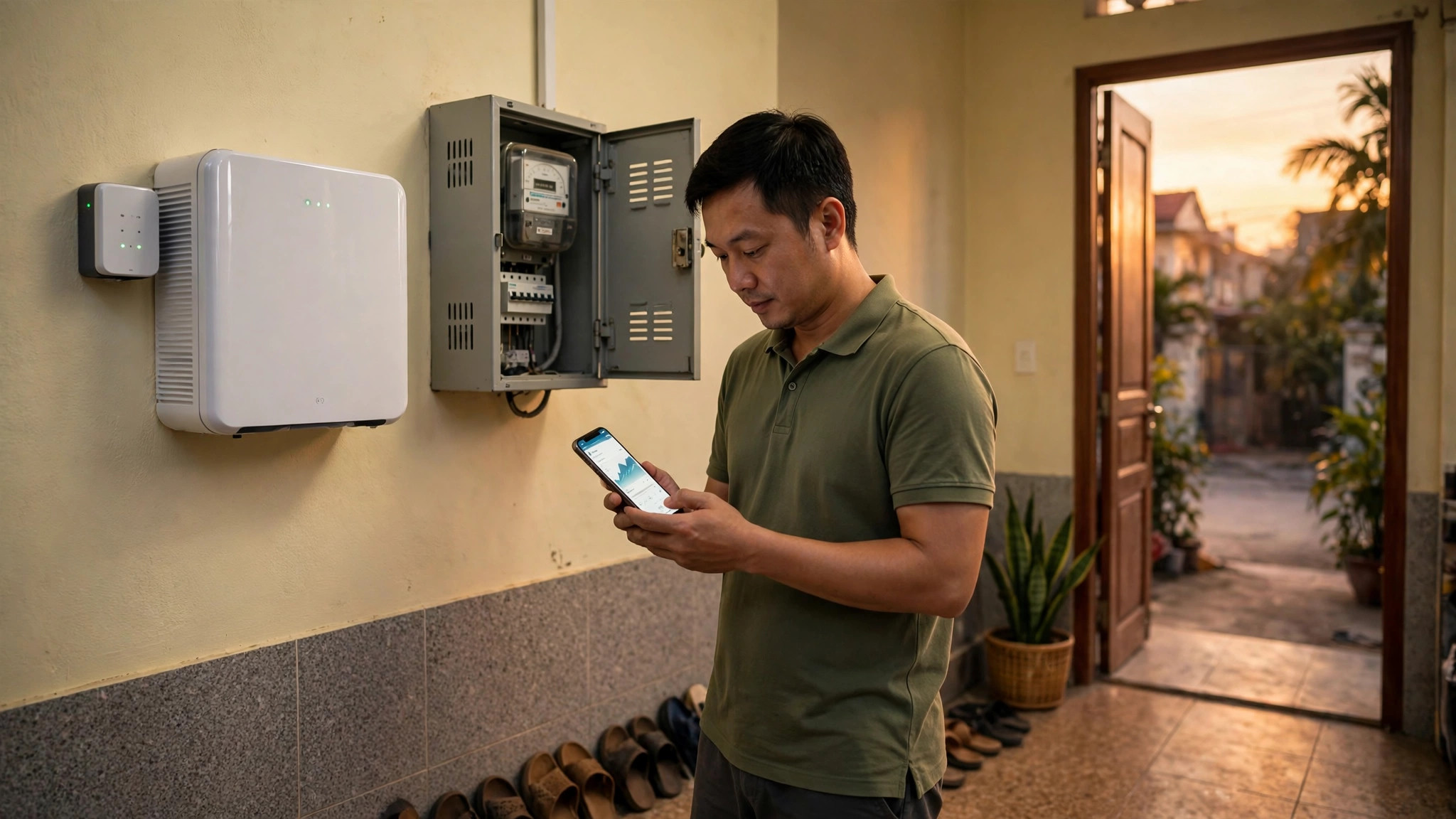
At noon the pattern flips. The house is often empty or lightly loaded, the panels are at full output, and without storage the surplus would leave through the meter at whatever the sale rules allow. A battery changes the household from a generator with one customer, the grid, into a small system with its own schedule. Stored midday power covers the late afternoon, when cooking, air conditioning and hot water collide with the system wide evening peak that Vietnam’s power sector struggles to serve.
This is why national policy now pushes solar and storage as a pair. The Ministry of Industry and Trade has asked provinces to build programs supporting households to install rooftop systems connected to battery storage, and has pressed ministries, provinces and Vietnam Electricity to complete Directive 10 targets before the dry season pressure of 2027. A battery on a wall in Bac Ninh is, in aggregate, a peak shaving asset for the northern grid.
Evening: the car joins the household load
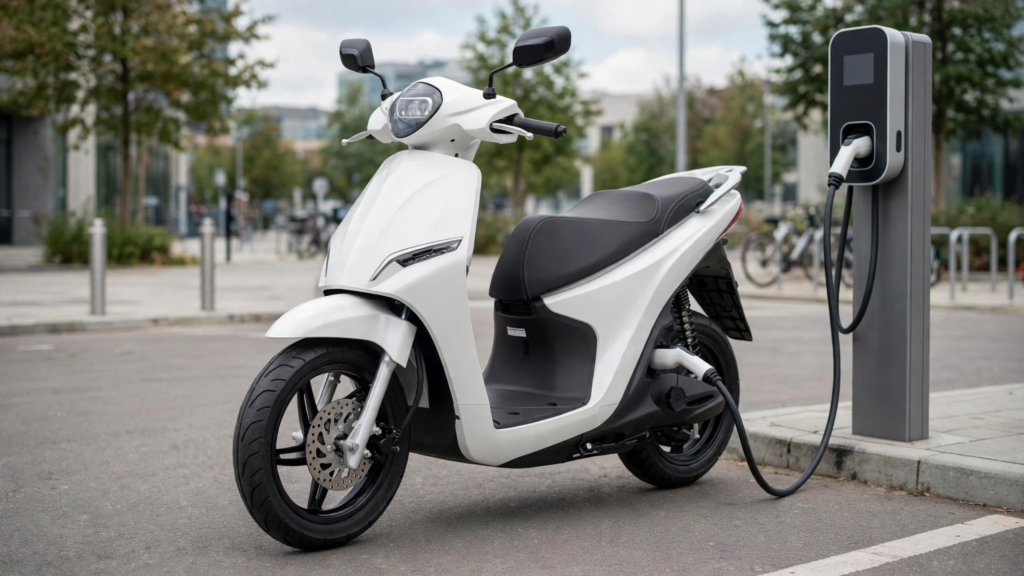
The newest member of the household load arrives home at dusk. An electric car or electric motorbike charged overnight from stored solar, or from off peak grid power when storage runs short, completes the prosumer triangle: generation on the roof, storage on the wall, and transport in the yard all on one bill. Charging at home also moves the car out of the public charging queue and into the household’s own energy plan. The bill stops being three separate payments to three systems and becomes one optimization problem the family can see.
None of this is automatic. Sizing matters. Panels oversized for the daytime load waste capital. A battery too small fills by ten in the morning. A car charged at the wrong hour can erase the storage saved for the evening peak. The households registering in Bac Ninh are buying equipment, but the installers who serve them are really selling a daily schedule.
The wider count
Bac Ninh’s experiment sits inside a national stock that is already large. By the end of July 2026, Vietnam recorded 130,811 rooftop solar systems with total capacity above 11,200 MWp, according to figures from Vietnam Electricity reported in ministry coverage. What Bac Ninh adds is the missing layer beneath those totals: a provincial subsidy simple enough to claim in 15 working days, and a registration count that shows households responding. If the model works in an industrial province of factory wages and new housing, it becomes the template other provinces are already being urged to copy. The prosumer household stops being a pioneer with a hobby. It becomes a line in a provincial plan, a battery on a wall, and a car charging quietly in the yard while the evening peak passes the house by.
Related reading
- 130,811 Rooftops and Counting: Vietnam’s Solar Policy Meets Its Moment
- Storage Stops Being Optional: BESS in the New Rooftop Rules
- The 6.6 Billion kWh Rooftop Surplus
Sources
vietnam.vn, September 2026, reporting Bac Ninh Resolution 21 of 2026, the support levels for rooftop solar and storage, and more than 2,500 household registrations. VnEconomy, September 2026, reporting the Ministry of Industry and Trade push on self consumption rooftop solar, Decree 243 surplus rules, and that only two of 34 provinces had household support policies. TaiyangNews, September 22, 2026, reporting Vietnam’s call for faster rooftop solar deployment and the March 2027 target under Directive 10.