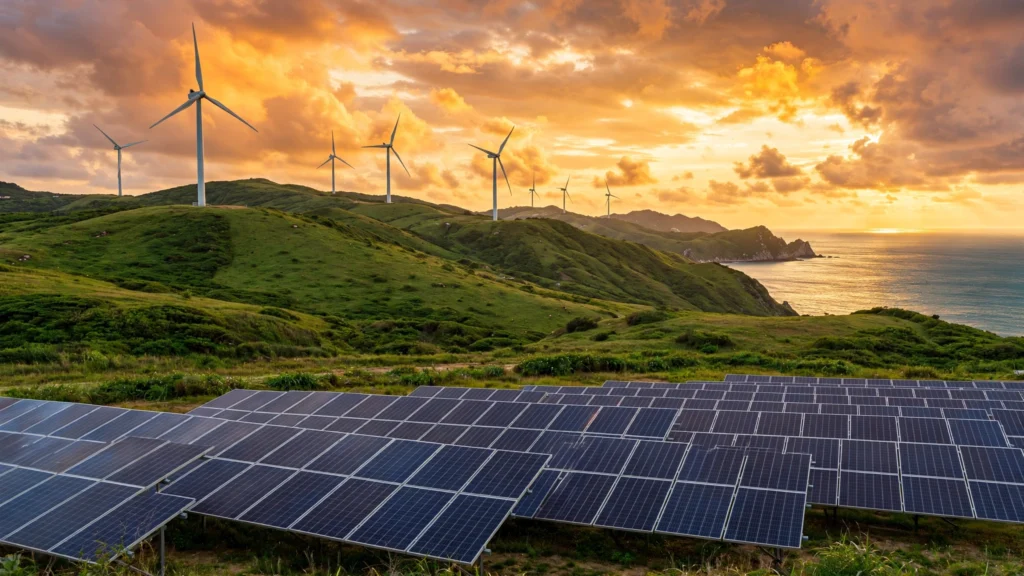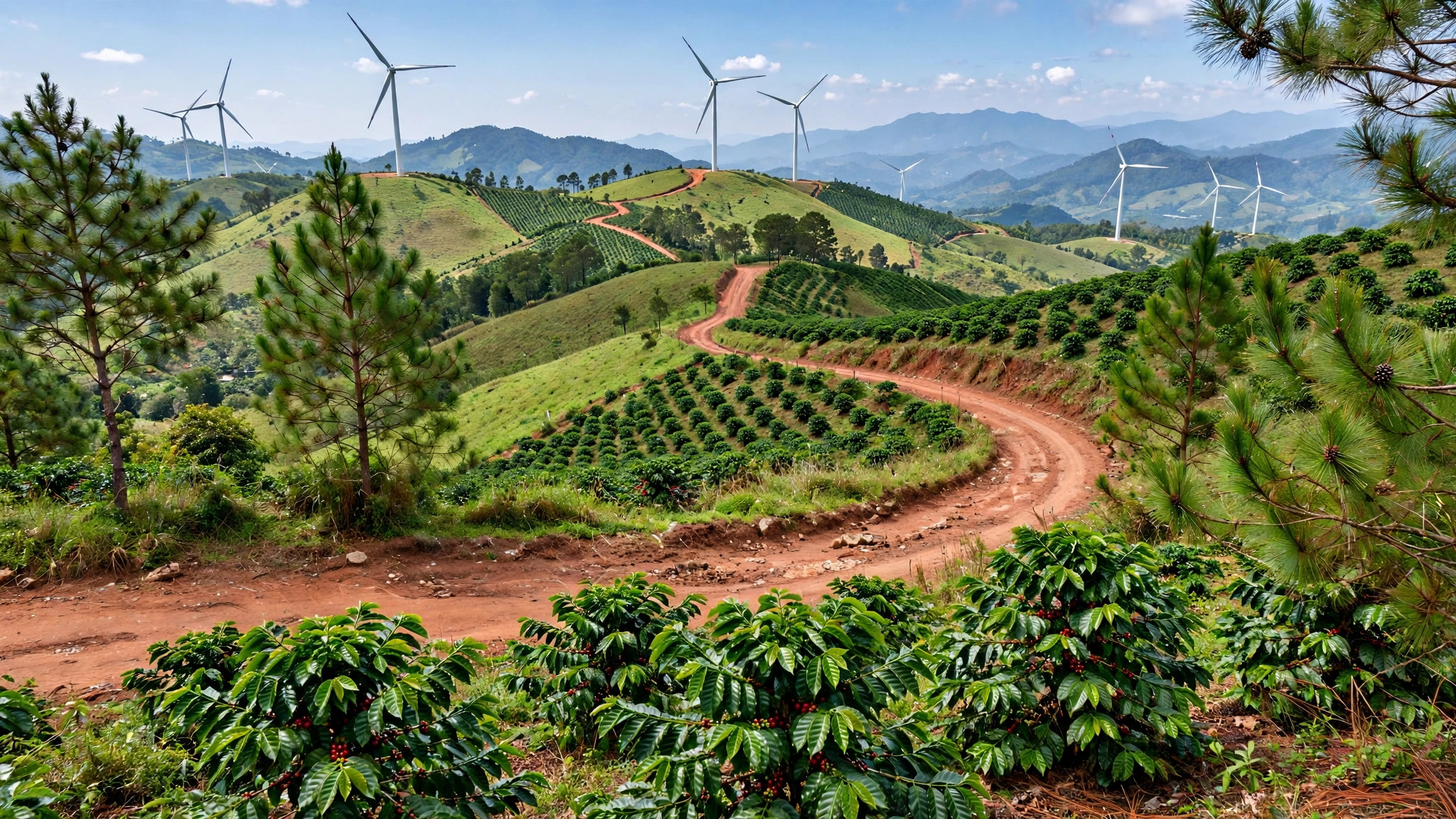
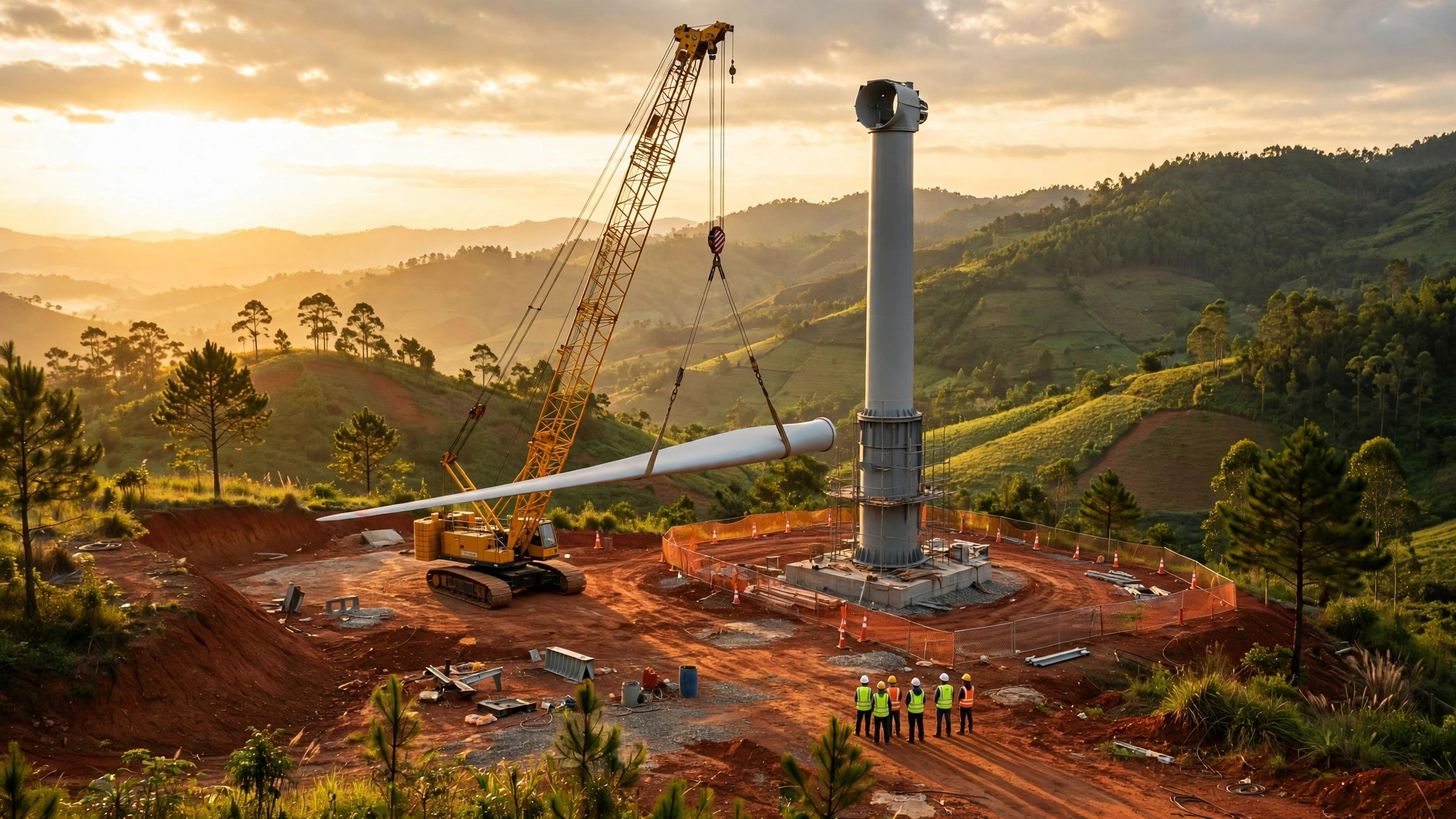
Construction began on the Van Canh 2 Wind Power Plant on November 7, 2026, in Van Canh commune, Gia Lai province. The groundbreaking ceremony was attended by Politburo member and Standing Deputy Prime Minister Pham Gia Tuc, leaders from central government ministries, and Gia Lai provincial leaders. The investor is Vung Ben Renewable Energy Co., Ltd. (Công ty TNHH Năng lượng tái tạo Vững Bền), and the project is included in the revised Power Development Plan VIII, with investment approval from the Gia Lai Provincial People’s Committee.
The project is a 180 MW onshore wind farm on about 62 hectares across Van Canh and Canh Lien communes, with total investment of about VND 7,771 billion, or about USD 300 million at VND 26,000 to the dollar. When complete, it is expected to supply about 623 million kWh of electricity a year to the national grid. That output implies a capacity factor close to 40%, high for onshore wind and a sign of the site’s wind resource. The investor aims to bring the plant into operation by the end of 2027, while the province’s public target is operation in 2028, with acceleration to 2027 if conditions permit. The Deputy Prime Minister told the ceremony the project should meet its 2028 target and generate power in 2027 if conditions allow.
Who is building it
Vung Ben Renewable Energy is a young company with a large parent. It was established on June 5, 2026, and is linked to Kinh Bac Urban Development Corporation (KBC), whose board chairman, Dang Thanh Tam, spoke at the ceremony as the investor’s representative. The project changed hands before construction: on March 26, 2026, the Gia Lai People’s Committee approved Saigon-Bac Giang Industrial Park JSC, a KBC subsidiary, as the investor for both Van Canh 1 and Van Canh 2, and on June 16, 2026, the province recognized Vung Ben as the project company responsible for the two projects, assuming all of Saigon-Bac Giang’s rights and obligations.
Van Canh 2 is the first of a pair. After it, the investor will continue with Van Canh 1, a 160 MW project with investment of about VND 6,905 billion and expected output of about 502 million kWh a year. Together the two projects total nearly 360 MW and about VND 15,000 billion of investment. The similar scale of the two plants explains a figure that needs care: some ceremony reporting gave Van Canh 2 an output of about 503 million kWh a year, which matches Van Canh 1’s expected output almost exactly. The project approval record and the provincial press give Van Canh 2 about 623 million kWh a year, and that is the figure used here.
A province that already runs on renewables
Gia Lai is not starting from scratch. After administrative reorganization, the province has 85 renewable-energy projects in commercial operation totaling 4,271 MW. The revised Power Development Plan VIII projects about 9,657 MW of renewables in the province by 2035, with more than 100 potential projects totaling over 32,000 MW. Van Canh 2 is a small part of that pipeline, but it is the part now under construction, with a Deputy Prime Minister at the groundbreaking and a named operator, a budget, and a date.
The province’s wind story is also a planning story. Vietnam’s wind build-out has so far been dominated by coastal and nearshore projects, where the turbines are visible and the wind is proven. Van Canh 2 sits inland, on highland terrain, and its economics depend on the same ingredients as any wind project: measured wind, a grid connection that can take the power, and a tariff that pays for the turbines. The 623 million kWh figure, if the plant delivers it, would make Van Canh 2 a productive mid-size wind farm by Vietnamese standards.
From coast to highlands
The inland move matters because the easy coastal sites are filling up. Provinces such as Ca Mau have approved large wind pipelines of their own (see Ca Mau’s 2,409 MW wind plan to 2028), and a wind-power export route to Singapore is now taking shape (see the export route). Gia Lai’s contribution is different: highland wind for the domestic grid, in a province where renewables already dominate the generation mix. The question for Van Canh 2 is not whether the wind blows, but whether the plant connects on time and whether the 2027 acceleration the investor wants survives the realities of turbine delivery, grid reinforcement, and highland construction.
There is a smaller detail from the ceremony worth noting. The investor and its partners donated Starlink satellite internet equipment to the local community, a gesture that says something about how remote the site is: Van Canh and Canh Lien are communes where getting online is itself still new. A wind farm that powers the national grid and a satellite link for the village next door are two versions of the same promise that infrastructure reaches places it has not reached before.
What to watch
Three things will show whether Van Canh 2 delivers on its groundbreaking. First, the operation date: the end of 2027 is the investor’s aim and 2028 is the province’s target, and the gap between them is the measure of how smoothly construction goes. Second, Van Canh 1: the 160 MW sister project is the next test of the same investor, the same terrain, and the same grid. Third, the grid itself: Gia Lai’s renewable pipeline to 2035 is far larger than its current 4,271 MW, and every new project adds to the transmission question that runs through all of Vietnam’s clean-energy build-out. The turbines are not installed yet. The groundbreaking is a promise, made in front of a Deputy Prime Minister, with a date attached.
Sources
vietnam.vn (English, VNA), November 7, 2026: construction begins on the Van Canh 2 wind power plant with a capacity of 180 MW; groundbreaking ceremony November 7, 2026 in Van Canh commune, Gia Lai province; 180 MW designed capacity, total investment approximately VND 7,771 billion; included in the revised Power Development Plan VIII; investment approval from the Gia Lai Provincial People’s Committee; average annual output about 623 million kWh; investor expects operation by the end of 2027; province target operation in 2028 with acceleration to 2027 if conditions permit; investor Sustainable Renewable Energy Co., Ltd. (name as rendered in the English edition); board chairman Dang Thanh Tam (Kinh Bac Urban Development Corporation) said after Van Canh 2 the company will continue with Van Canh 1 (160 MW, similar scale); pair totals nearly 360 MW and about VND 15,000 billion investment; on June 16, 2026 the Gia Lai People’s Committee recognized the company as implementing organization for Van Canh 1 and Van Canh 2 in Canh Lien commune; on March 26, 2026 Saigon-Bac Giang Industrial Park JSC had been approved as investor for both projects; Gia Lai has 85 renewable-energy projects in commercial operation totaling 4,271 MW; revised PDP8 projects about 9,657 MW of renewables in the province by 2035, with over 100 potential projects totaling more than 32,000 MW; investor and partners donated Starlink satellite internet equipment to the local community. https://www.vietnam.vn/en/khoi-cong-nha-may-dien-gio-van-canh-2-cong-suat-180-mw
vietnam.vn (English, VNA), November 7, 2026: Deputy Prime Minister Pham Gia Tuc attended the groundbreaking ceremony for the VND 7,700 billion wind power project; project to strive for operation in 2028, accelerating to 2027 if conditions permit. https://www.vietnam.vn/en/pho-thu-tuong-pham-gia-tuc-du-le-khoi-cong-du-an-dien-gio-7-700-ti-dong
Bnews (TTXVN), November 7, 2026: groundbreaking of the Van Canh 2 wind power plant, 180 MW, total investment about VND 7,771 billion; investor Cong ty TNHH Nang luong tai tao Vung Ben; operation expected in 2028, average annual output about 623 million kWh; included in the revised Power Development Plan VIII. https://bnews.vn/khoi-cong-nha-may-dien-gio-van-canh-2-cong-suat-180-mw/443470.html
Bao Gia Lai, November 7, 2026: Standing Deputy Prime Minister Pham Gia Tuc attended the groundbreaking of the Van Canh 2 wind power plant; 180 MW, total investment about VND 7,771 billion, operation in 2028, average annual output about 623 million kWh. https://baogialai.com.vn/pho-thu-tuong-thuong-truc-chinh-phu-pham-gia-tuc-du-le-khoi-cong-du-an-nha-may-dien-gio-van-canh-2-post604240.html
Doanh Nhan Bao Phap Luat, November 7, 2026: KBC joins wind power development in its green energy transition strategy; on January 7, 2026 Gia Lai issued two decisions approving the investor-selection results for Van Canh 1 and Van Canh 2, naming Saigon-Bac Giang Industrial Park JSC as the qualifying investor; Van Canh 1 total investment about VND 6,905 billion, about 56 ha in Canh Lien commune, 160 MW, expected annual output about 502 million kWh; Van Canh 2 total investment over VND 7,771 billion, about 62 ha in Van Canh and Canh Lien communes, 180 MW, expected annual output about 623.2 million kWh. https://doanhnhan.baophapluat.vn/kbc-tham-gia-phat-trien-dien-gio-trong-chien-luoc-chuyen-dich-nang-luong-xanh-90583.html