POSCO Future M announced on November 3 that it had signed a letter of intent with Hyundai Motor Group. The agreement covers a possible equity investment of KRW 100 billion (about USD 74 million) in its battery anode plant in Vietnam. Under the agreement, Hyundai will explore taking a stake in the project and seek priority purchasing rights for the synthetic graphite anode materials it produces. The two companies will also work together on early-stage product development and quality assessments. The letter of intent is exploratory: no binding investment or purchase terms have been agreed yet.
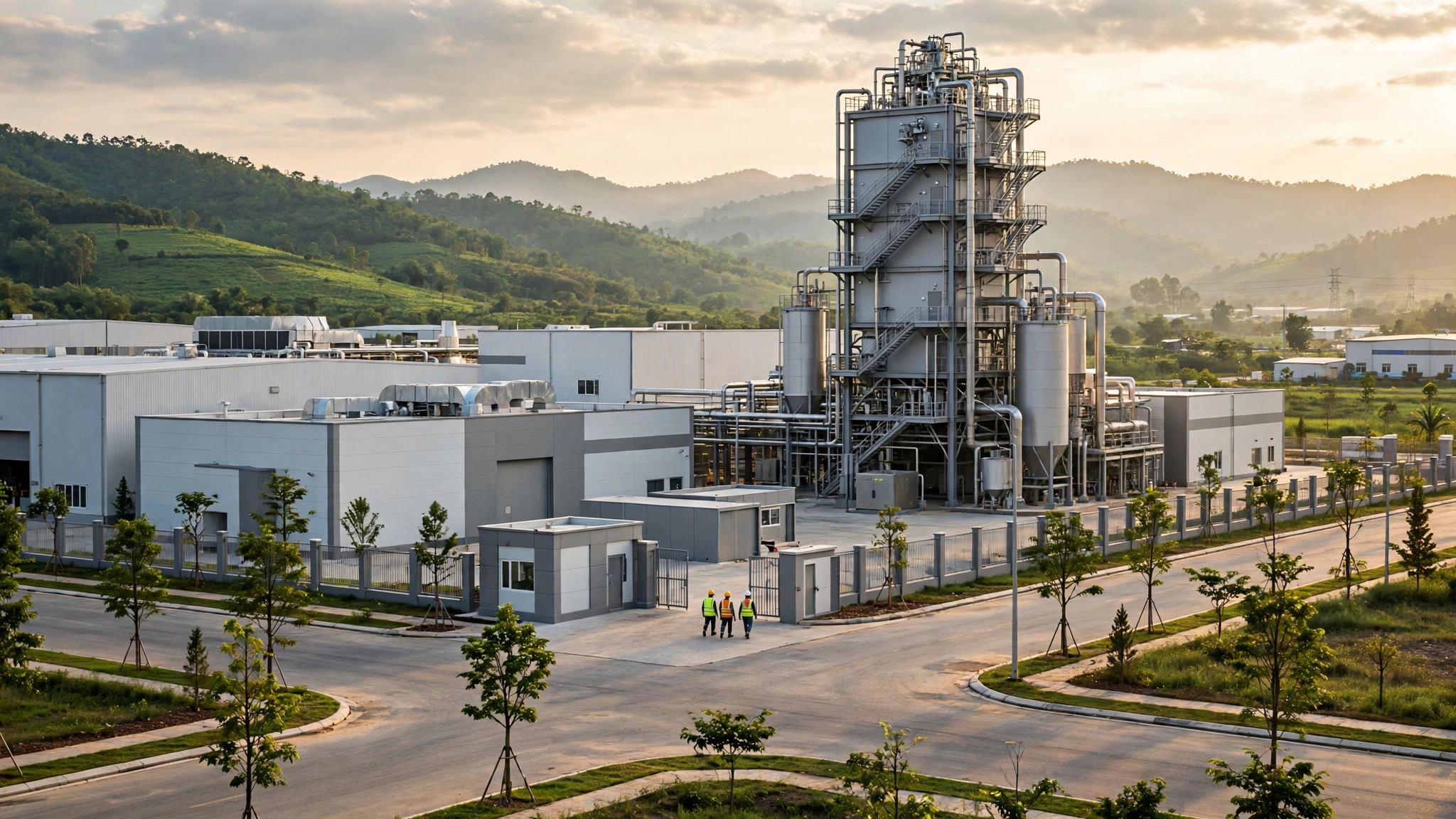
The plant, at Song Cong II Industrial Park in the northern province of Thai Nguyen, is set to be Vietnam’s first synthetic graphite anode facility. POSCO Future M received its investment and enterprise registration certificates from the provincial authorities on April 23, 2026, and construction began this year. Once operational, it is expected to produce up to 46,000 tonnes of synthetic graphite anode material a year, according to Vietnam Investment Review. It is also expected to generate more than USD 150 million in annual revenue. The company says it has already secured customer orders for the first phase and is exploring a second investment phase, with commercial operations scheduled for the fourth quarter of 2028.
The anode is the part of a battery few people see and every electric vehicle depends on. It stores lithium ions when the battery charges and releases them when it discharges, and its quality sets limits on range, charging speed and battery life. Synthetic graphite, made by heating carbon to very high temperatures, is the standard choice for high-performance cells. The material, rather than the finished battery, is the prize here: whoever controls anode supply controls a choke point in the whole electric vehicle chain.
The figures differ by source, and the gaps matter
Two details in the reporting do not line up neatly. First, capacity: Vietnam Investment Review reports up to 46,000 tonnes a year once the plant is operational. East Asia Brief puts phase one at 23,000 tonnes a year, scalable to 55,000 tonnes. The two figures are probably a matter of phasing rather than disagreement, but they should not be merged into a single number. Second, timing: East Asia Brief reports commercial production in the first half of 2028, while Vietnam Investment Review reports the fourth quarter of 2028. This article uses the fourth-quarter date and treats 2028 as the target year either way. The investment total is KRW 357 billion, consistent across the reporting; dollar conversions vary by outlet, from about USD 247 million to about USD 282 million, the higher figure coming from the original April announcement. This article uses the won figure, roughly USD 250 million.
Hyundai is not the only suitor
The Hyundai letter of intent is the second Korean deal around the Thai Nguyen plant in a week. On October 30, POSCO Future M signed a memorandum of understanding with LG Energy Solution to supply a combined 720,000 tonnes of cathode and anode materials over seven years, from 2027 to 2033. The deal covers LFP cathodes and synthetic graphite anodes. Industry estimates put the volume at about KRW 10 trillion (about USD 7.5 billion), with a definitive contract targeted by the end of 2026. Note the 720,000-tonne figure covers cathode and anode materials combined, mostly cathodes, and is not the volume of the Thai Nguyen anode plant alone.
The order book behind the plant is already forming. In March 2026, POSCO Future M signed a synthetic graphite anode supply contract worth about KRW 1.0149 trillion (about USD 709 million) with a global automaker it did not name. The company’s existing synthetic graphite capacity is 8,000 tonnes a year at Pohang in South Korea, so the Thai Nguyen plant would multiply that several times over. The business is also recovering: POSCO Future M reported third-quarter 2026 operating profit up 23.2 percent year on year to KRW 82.14 billion (about USD 59.5 million), helped by rising cathode shipments.
The China factor
The strategic driver is concentration. China supplied 92.4 percent of South Korea’s battery-grade synthetic graphite imports through May 2026, according to Korea Customs Service figures. Chinese processors control about 95 percent of global commercial refining capacity for the material, according to East Asia Brief. For Korean carmakers and battery makers, that is a single point of failure, and it is the reason an anode plant outside China is worth a stake rather than just a purchase order.
Vietnam is a natural place to put it. The country already hosts large Korean manufacturing operations, including Samsung’s complexes in the north, and Thai Nguyen sits within a day’s trucking of the ports at Hai Phong. Vietnam’s electric vehicle story has so far been built on vehicle assembly and a fast-growing domestic market. An anode plant adds the upstream link: material, not just finished vehicles, made in Vietnam for export.
What it means for Vietnam
For Vietnam, the significance is less the size of the investment than its position in the chain. A KRW 357 billion plant is modest next to the region’s multi-billion-dollar battery cell factories, but an anode plant is a different kind of asset. It makes Vietnam a supplier to Korean carmakers and battery makers, not only a market for their vehicles. Recycling closes the same loop from the other end (see our report on battery recycling). If Hyundai closes its stake and LG Energy Solution signs its definitive contract, Thai Nguyen becomes a node in the supply chains of two major Korean battery buyers.
There are limits to keep in mind. The Hyundai stake is a letter of intent, not a closed deal, and the LG volumes are a memorandum, not a contract. The plant does not start commercial production until 2028, and its first-phase output is small next to global anode demand. The plant’s real test will be whether its output meets the quality standards of its Korean customers at the volumes they need.
What to watch
Three milestones decide whether this becomes a supply-chain story or a press-release story. First, whether Hyundai converts its letter of intent into a binding investment and procurement agreement, and at what size. Second, whether POSCO Future M and LG Energy Solution sign their definitive supply contract by the end of 2026 as targeted. Third, construction progress in Thai Nguyen through 2027, and whether the 2028 start date holds.
Vietnam’s electric vehicle story has been told so far in deliveries and showrooms. This plant tells the next part of it, in materials and supply chains.
Sources
Vietnam Investment Review, November 6, 2026: POSCO Future M signed a letter of intent with Hyundai Motor Group on November 3, 2026 to explore an equity investment worth KRW 100 billion in its battery anode plant in Vietnam; Hyundai to seek priority purchasing rights for synthetic graphite anode materials; plant at Song Cong II Industrial Park, Thai Nguyen; investment and enterprise registration certificates granted April 23, 2026; commercial operations scheduled fourth quarter 2028; up to 46,000 tonnes of artificial graphite annually; more than USD 150 million in yearly revenue; customer orders secured for initial phase; second investment phase explored. https://vir.com.vn/hyundai-mulls-investment-in-posco-battery-anode-plant-in-vietnam-164630.html
Aju Press, November 3, 2026: POSCO Future M and Hyundai Motor Group signed a letter of intent on November 3, 2026 for Hyundai to explore a KRW 100 billion equity investment and priority purchase rights; companies agreed to collaborate on early-stage product development and quality assessments. https://www.ajupress.com/view/20261103152070391
The Elec, November 1, 2026: POSCO Future M and LG Energy Solution signed a future cooperation memorandum of understanding on October 30, 2026 to supply a combined 720,000 tonnes of cathode and anode materials over 2027 to 2033, including LFP cathodes and synthetic graphite anodes; definitive contract targeted by end-2026; industry estimate about KRW 10 trillion. https://www.thelec.net/news/articleView.html?idxno=15140
East Asia Brief, November 7 to 8, 2026: phase one adds 23,000 tonnes a year of synthetic graphite capacity, scalable to 55,000 tonnes a year; POSCO Future M existing capacity 8,000 tonnes a year at Pohang; China supplied 92.4 percent of South Korea’s battery-grade synthetic graphite imports through May 2026 (Korea Customs Service); Chinese processors control about 95 percent of global commercial refining capacity; commercial production in the first half of 2028. https://eastasiabrief.com/semiconductors/posco-future-m-anchors-260m-vietnam-anode-site-bypass-1241
Seoul Economic Daily, November 4, 2026: Hyundai Motor Group eyes a KRW 100 billion (about USD 70 million) bet on the Vietnam anode project; POSCO Future M signed a synthetic graphite anode supply contract worth about KRW 1.0149 trillion (about USD 709 million) with a global automaker in March 2026. https://en.sedaily.com/finance/2026/11/04/hyundai-motor-group-eyes-70-million-bet-on-vietnam-anode
East Asia Brief, November 2, 2026: POSCO Future M third-quarter 2026 operating profit rose 23.2 percent year on year to KRW 82.14 billion (about USD 59.5 million). https://eastasiabrief.com/batteries-ev/posco-future-m-profit-rebounds-23-cathode-shipments-rise-1078