Vietnam’s carbon market opened quietly in June 2026, with free quotas, a pilot exchange and a first price near USD 5 per tonne. The interesting part of the design is not the opening. It is the staircase built into the rules between now and 2029, when free allocation gives way to auctions and a pilot becomes a national market. This Q and A walks the staircase step by step, using the roadmap as approved and the decrees issued since.
What exactly is running during the pilot, and when does it end?
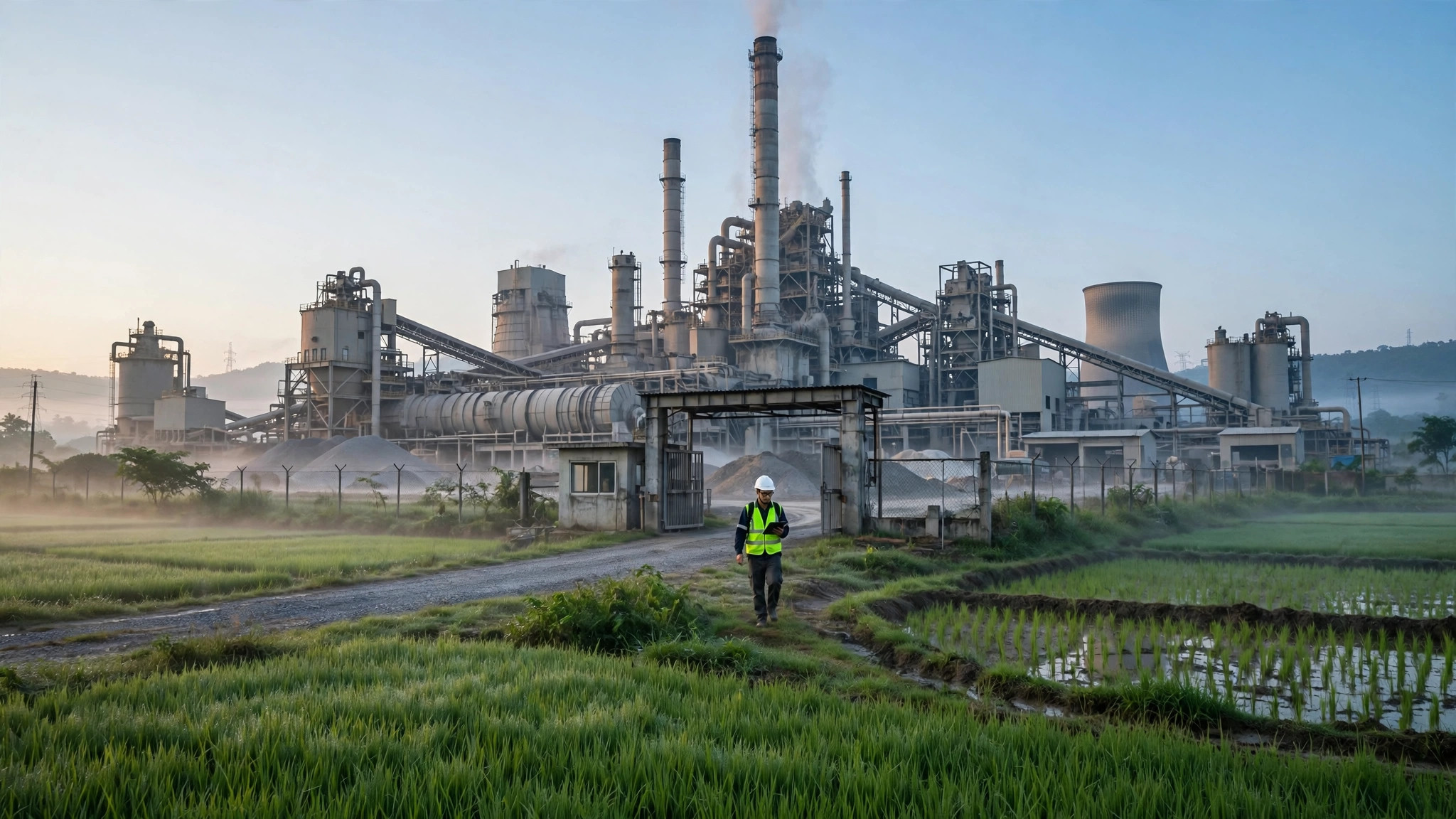
The pilot runs through the end of 2028. It covers 110 major emitters in thermal power, iron and steel, and cement, allocated greenhouse gas quotas for 2025 and 2026. Decision 263 of February 2026 approved aggregate allowance budgets of 243.1 million tonnes of carbon dioxide equivalent for 2025 and 268.4 million tonnes for 2026, from which installation level allocations are finalized. Allowances in the pilot are allocated free of charge, trading is spot only on the exchange, and participants are exempt from exchange service fees during the pilot period. The legal stack has been built in layers: Decision 232 of January 2025 set the roadmap, Decree 119 of 2025 operationalized the trading system, Decree 29 of 2026 set the rules for the domestic carbon trading platform, and Decree 83 of 2026 amended the original framework further.
What changes first, in 2027?
The first surrender deadline. Facilities must surrender allowances against their verified emissions for the 2025 to 2026 period. That is the moment a quota stops being an administrative document and becomes a balance sheet item: a facility that emitted above its allocation must buy, borrow or offset, and a facility below its allocation holds something saleable. The system includes flexibility tools, each with a limit. Facilities may use carbon credits to offset up to 30 percent of an excess. They may borrow up to 15 percent of the allowance allocated for the next compliance period. Unused allowances can be carried forward. Expect trading volumes, which were thin in the opening months, to concentrate as surrender approaches, because that is what deadlines do in every compliance market.

What changes on January 1, 2029?
Three things at once. First, the market moves to official nationwide operation, ending the pilot. Second, allowance auctions begin: the state starts selling part of the supply instead of allocating all of it free, so a share of compliance becomes a cash purchase at a market discovered price. Third, commercial terms arrive, including exchange service fees that the pilot waived. UNDP, which supported the registry and trading infrastructure, summarizes the phase in the same terms: from 2029 the market enters a new phase with expanded participation and the introduction of allowance auctions. Expert commentary reported in late 2026 expects the same direction of travel, with tighter emissions limits following the free allocation era that ends around 2028.
Who has to prepare for wider coverage?
Officially, expansion beyond the first three sectors has no published timetable, and that honesty matters. But the direction is stated in the roadmap: broader participation from 2029, and a market designed to expand in scale and scope while meeting international standards. The practical candidates are the other large emitting industries already inside Vietnam’s greenhouse gas inventory system, since facilities that must report emissions are the natural next ring of an allocation system. Any large emitter that is reporting today but not yet allocated should treat 2027 and 2028 as preparation years: build verified emissions data, assign internal ownership of carbon, and model a carbon cost into investment decisions before an auction price makes the exercise compulsory.
What should a covered company actually do between now and 2029?
Four tasks, in order. First, fix the data: auctions punish weak measurement, reporting and verification, because a company bids for allowances against numbers it must later defend. Second, build a position forecast for each year to 2029, so the surrender in 2027 and the first auction purchases are planned cash flows, not surprises. Third, decide an abatement order of merit: which internal reductions cost less per tonne than the expected auction price, and do those first. Fourth, understand the credit rules early, including the 30 percent offset limit and the quality screens that will govern which domestic and international credits, including Article 6 credits, can be used. UNDP’s readiness work with the 110 pilot enterprises, covering emissions trading and hands on use of the national registry, exists precisely because these tasks are new to most finance and operations teams.
Will the carbon price simply rise once auctions start?
Not automatically, and anyone promising a price path is guessing. Auctions change who pays, immediately and visibly, because allowances that were free must now be bought. The price itself will still be set by the cap, the allocation budgets and real demand at surrender. What auctions do guarantee is a regular, transparent price signal and revenue for the state, which governments typically recycle into transition support. Vietnam also aims, over time, to strengthen participation in international carbon markets under Article 6 of the Paris Agreement. A credible domestic auction price is the entry ticket to that world, because foreign partners will not link to a market whose home price they cannot observe.
The pilot was designed to be survivable. The market from 2029 is designed to be consequential. Companies that use the quiet years to build data, forecasts and abatement plans will experience auctions as a procurement exercise. Companies that wait will experience them as a tax they did not budget for. The roadmap has been public since January 2025. The remaining variable is preparation.
Related reading
- Seven Trades and 1,310 Allowances: Vietnam’s Carbon Exchange Finds Its First Price
- Decree 06 to Decree 83: Vietnam’s Carbon Rulebook, Version by Version
- The 2027 Surrender Deadline: a CFO’s Countdown
Sources
UNDP Climate and Forests, September 2026, on the June 2026 platform launch, the 110 pilot emitters, pilot operation through 2028, and expanded participation with allowance auctions from 2029. International Carbon Action Partnership status reporting, 2026, on Decision 232, Decree 119 of 2025, Decree 29 of 2026, and Decision 263 budgets of 243.1 MtCO2e for 2025 and 268.4 MtCO2e for 2026. VnEconomy, September 2026, reporting expert expectations of an auction-based mechanism, tighter limits and broader coverage after the free allocation phase ends around 2028.