Every energy transition has a technology that attracts announcements faster than factories. In Vietnam, that technology is green hydrogen. The strategy documents are ambitious, the project lists are long, and the ribbon cuttings have been photogenic. Yet hydrogen is unforgiving: it needs cheap renewable electricity, expensive electrolysers, pipelines or conversion plants, and a buyer willing to pay several times the price of the fossil alternative. This audit separates Vietnam’s hydrogen story into three piles: what is built or building, what is signed with named counterparties, and what remains a target in a plan. The answer is more substantial than sceptics suggest and thinner than the headlines imply.
The strategy pile: targets with very wide ranges
Vietnam’s hydrogen energy development strategy, approved in February 2024, sets indicative production of 100,000 to 500,000 tonnes of hydrogen per year by 2030, rising to 10 million to 20 million tonnes by 2050. A fivefold range for a target six years away is not a plan so much as an admission that the market does not yet exist. The revised Power Development Plan VIII, adopted in April 2025, folds hydrogen and ammonia into the long term mix: green ammonia could partly replace coal in thermal generation, contributing around 25,800 MW of capacity by 2050, while hydrogen fired generation could substitute part of liquefied natural gas capacity. Ministry statements have listed project development interest in Tra Vinh, Ben Tre, Bac Lieu and Tien Giang, with further research proposals across at least seven other provinces. Policy commentary, including legal analysis in Vietnam Investment Review, notes the missing middle: a complete framework for production, storage, transport, certification and trade has not yet been established, and that gap creates legal uncertainty for investors. Strategy, in short, is abundant. Standards are not.
The built pile: one flagship, honestly described
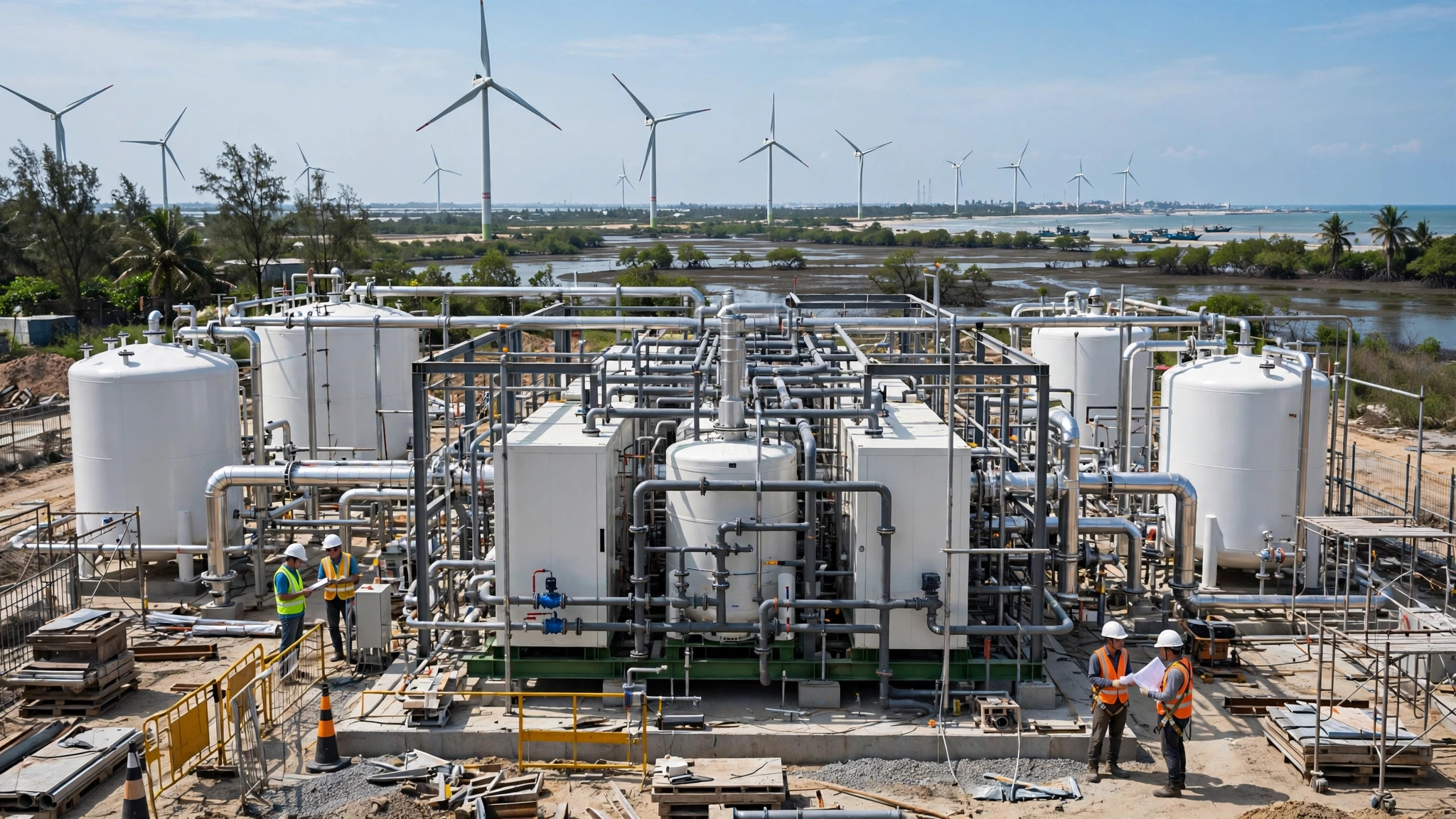
One project anchors the sector in physical reality. The Tra Vinh Green Hydrogen Plant, developed by The Green Solutions Group through its TGS Tra Vinh company in Duyen Hai district, broke ground as Vietnam’s first and largest green hydrogen factory, on about 21 hectares, with investment of VND 8 trillion, reported at the time as about USD 341 million. Its initial design output was 24,000 tonnes of green hydrogen and 195,000 tonnes of oxygen a year, with direct employment estimated at 300 to 500 local workers and a construction period of about two years. Those figures come from the groundbreaking coverage by Vietnam News, and they deserve a caveat the coverage itself implies: groundbreaking is a beginning, not a commissioning. No Vietnamese green hydrogen plant is yet producing at commercial scale. The honest summary of the built pile is one serious project under construction, sized at roughly a twentieth of the low end of the 2030 national target if that target is read as green hydrogen alone. Everything else in the country is earlier stage than Tra Vinh.
The signed pile: an offtake that changes the logic
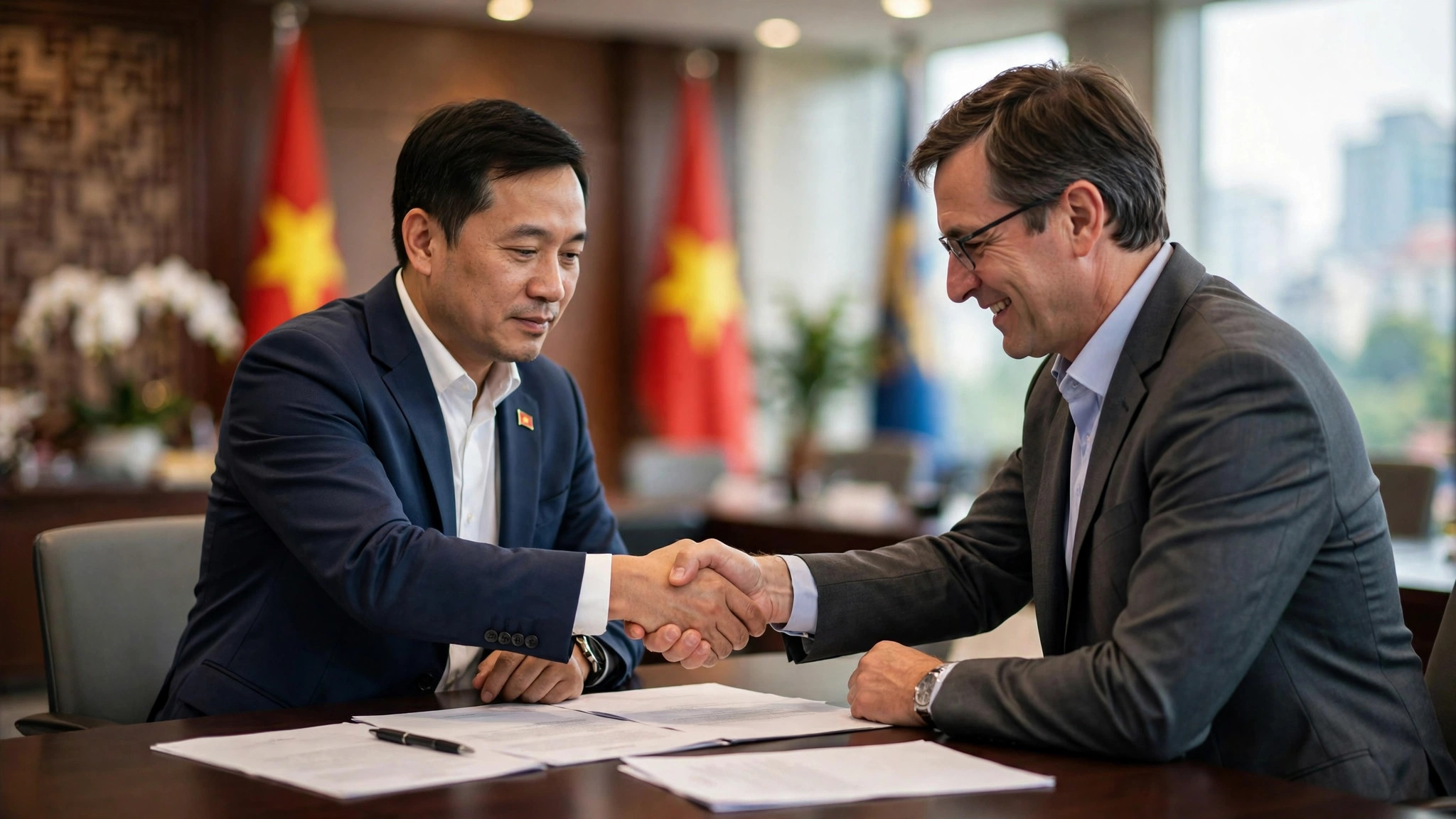
The most important hydrogen news of 2026 was not a groundbreaking. It was a set of signatures in Hanoi on June 25, 2026, when TGS signed three agreements for the Tra Vinh project: an electrolyser supply agreement with Plug Power of the United States for an integrated system of about 240 MW, a front end engineering design and EPC arrangement with Sinopec, and a long term offtake arrangement with Allied Biofuels. Vietnam.vn reporting on the sector describes the offtake as covering the plant’s full output for 25 years, about 36,500 tonnes of green hydrogen a year, to produce about 91,000 tonnes of sustainable aviation fuel annually. Note what changed. Hydrogen projects usually fail on the buyer: the fuel costs, on analysis cited by Associate Professor Pham Hoang Luong, roughly three to four times the USD 0.8 to USD 1.5 per kilogram of hydrogen from coal gasification or natural gas reforming used in fertilizer plants today. An aviation fuel offtake attacks that problem from the demand side, because sustainable aviation fuel sells into regulated markets where buyers pay for verified carbon savings, and because the hydrogen is an input to a higher value product rather than a commodity competing with cheap grey hydrogen. A 25 year buyer, named equipment suppliers and an engineering contractor do not guarantee delivery. They do move Tra Vinh from the press release pile into the project finance pile, where milestones can be checked.
The missing middle: certification, transport and price
Three gaps decide whether the signed pile becomes an industry. Certification comes first: green hydrogen is a claim about electricity, and export buyers will demand audited proof of renewable origin, hour by hour in the strictest regimes, before paying any premium. Vietnam does not yet operate that certification system. Transport comes second: hydrogen is costly to move, which is why the Tra Vinh logic of converting it on site into aviation fuel, and the national plan’s emphasis on ammonia as a carrier and fuel, matter more than pipeline dreams. Price comes third and governs the rest. Until electrolyser costs fall, renewable power is contracted cheaply at scale, or carbon pricing raises the fossil alternative, green hydrogen in Vietnam will live in protected niches: aviation fuel, export ammonia, and industrial buyers with their own compliance exposure. The strategy’s own sequencing admits this, calling for pilot co firing of hydrogen with gas and ammonia with coal before 2030 rather than immediate conversion.
The verdict
Pilot projects or press releases? The fair answer, on the verified record, is one flagship project that has progressed from announcement to construction to signed equipment, engineering and 25 year offtake agreements, inside a national strategy whose 2030 range is too wide to be a forecast and whose legal framework is admittedly incomplete. That is neither a hydrogen economy nor a mirage. It is a first project being de risked properly, in public, with named counterparties who can be asked for progress next year. Judge the sector by Tra Vinh’s milestones: electrolyser delivery, plant commissioning, first certified fuel. If those land, the strategy pile starts to look like a pipeline. If they slip quietly, the press releases were the product all along.
Related reading
- Hydrogen Valleys and Ammonia Co Firing: Realistic Timelines
- Bac Ai Pumped Hydro: the Battery Vietnam Is Building into a Mountain
- JETP Money: Has the USD 15.5 Billion Started to Move?
Sources
Vietnam News, groundbreaking coverage of the Tra Vinh Green Hydrogen Plant, on VND 8 trillion investment, 21 hectares, 24,000 tonnes of hydrogen and 195,000 tonnes of oxygen a year and 300 to 500 jobs. Vietnam.vn sector analysis, 2026, on the June 25, 2026 Hanoi signing of TGS agreements with Plug Power, Sinopec and Allied Biofuels, the 25 year offtake of about 36,500 tonnes a year for about 91,000 tonnes of sustainable aviation fuel, and green hydrogen cost comparisons. Vietnam Investment Review and Vietstock, 2025 to 2026, on the 2024 hydrogen strategy targets of 100,000 to 500,000 tonnes by 2030 and 10 million to 20 million tonnes by 2050, the revised Power Development Plan VIII and the incomplete legal framework.