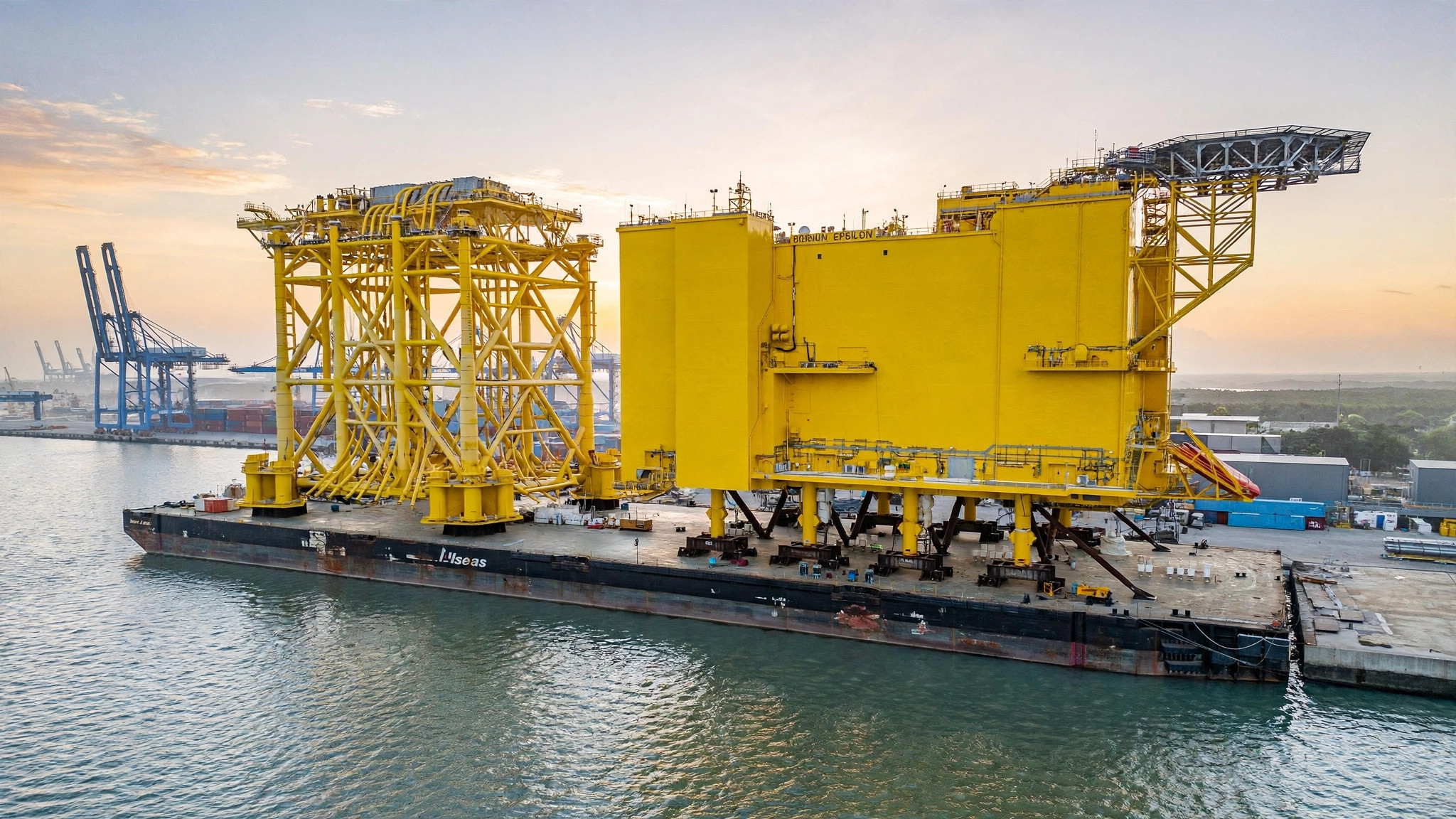
The heaviest export Vietnam sent to Europe this autumn was not packed in containers. On September 12, 2026, PTSC Mechanical and Construction, known as PTSC M&C, held a load out and handover ceremony at its Vung Tau yard for four offshore substation topsides and four modular support frames, together weighing about 16,000 tonnes. Two substations were already on their way to Europe. The other two sat loaded on transport barges at the PTSC port, ready to follow. Their destination is the Baltic Sea, where the Baltica 2 offshore wind farm, developed by PGE of Poland and Ørsted of Denmark, will use them to gather power from 107 turbines. HMT News, reporting the shipment in September 2026, called it the first delivery of offshore substations manufactured in Vietnam for the European market. That sentence deserves a pause, because substations are among the most complex structures in an offshore wind farm, and Europe is the industry home market.
What a substation does, and why it is hard to build
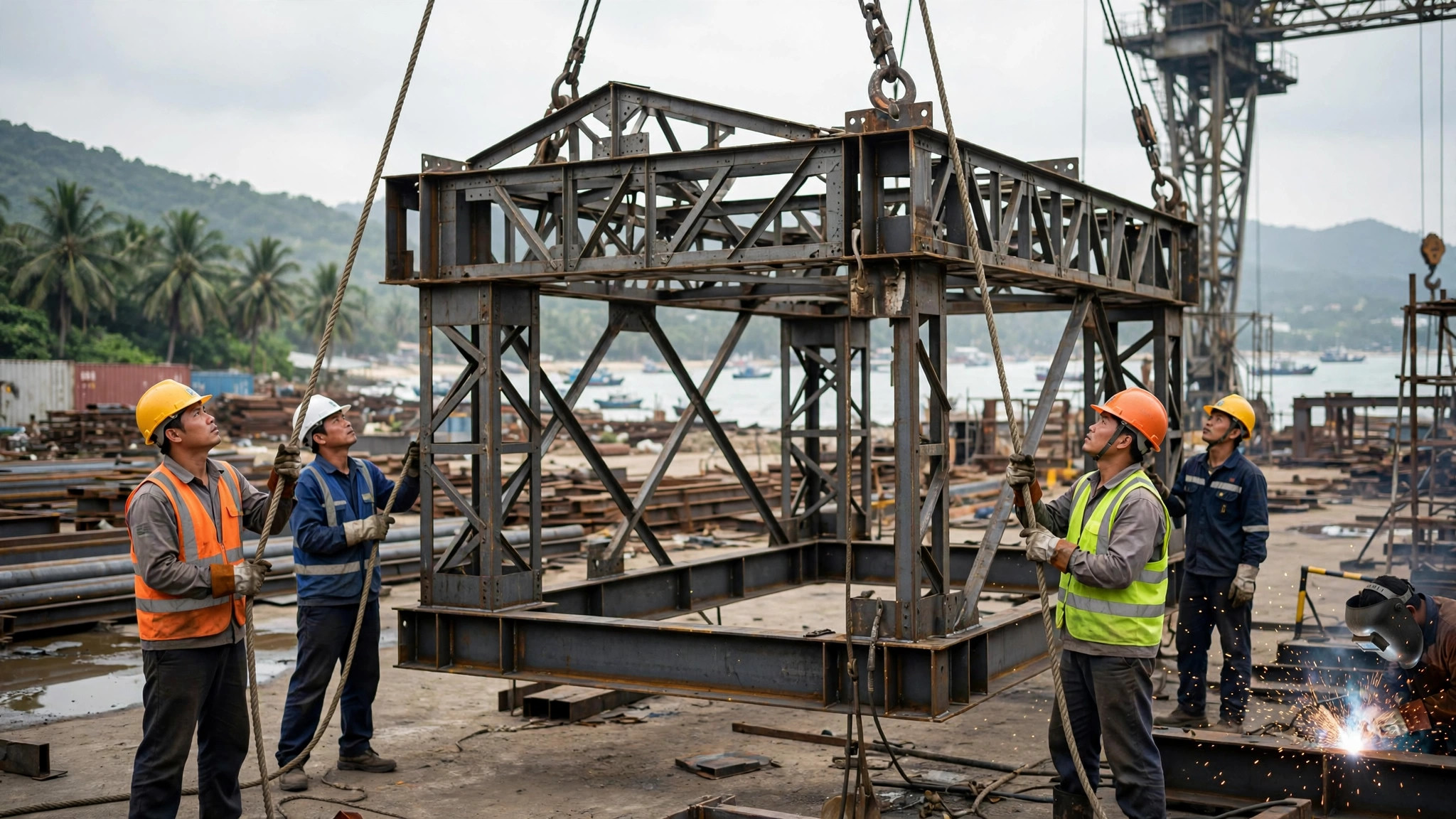
A wind farm generates electricity in dozens of separate turbines. The substation is the node that collects that power, steps up its voltage with large transformers, and sends it ashore through export cables at a voltage the grid can use efficiently. Each Baltica 2 substation is rated at 375 MW, so the four units match the farm planned capacity of about 1.5 GW. Building one means integrating heavy steel structure, transformers, high and medium voltage switchgear, control and safety systems, and accommodation and access for maintenance crews, all to marine standards, all testable before it leaves the yard. The engineering, procurement and construction contract was awarded on June 13, 2023 to a consortium of Semco Maritime and PTSC M&C, covering design, engineering, procurement, construction and commissioning, with ISC Consulting Engineers and Hyundai Electric as primary subcontractors. PTSC M&C responsibility was fabrication, complete installation and onshore commissioning in Vietnam. The load out itself took a 43 day campaign to move eight structures of about 16,000 tonnes in total from fabrication positions onto vessels and barges.
The timing on the other side of the world
The Vietnamese shipment lands in a project that is moving on schedule at the Polish end. PGE and Ørsted completed installation of all 111 monopile foundations on August 21, 2026, of which 107 support turbines and four support the substations. Offshore installation and connection of the substations is planned to begin from November 2026, according to vietnam.vn reporting of the ceremony. When complete, Baltica 2 is expected to supply electricity equivalent to the needs of about 2.4 million Polish households, with power flowing from the fourth quarter of 2027. For a yard in Vung Tau, that means its steel becomes part of Polish energy security on a published timetable, with European developers, certifiers and insurers watching every milestone. Passing that scrutiny once is an achievement. Its commercial value is that it can be referenced on every bid that follows.
From oil services to wind supply chains
PTSC M&C is a subsidiary of the Vietnam Oil and Gas Technical Services Corporation, within the Petrovietnam group, and its yard skills were built on offshore oil and gas structures. Baltica 2 shows those skills transferring to renewables at the highest specification level the market offers. The transfer is not automatic. Wind customers buy on different contract models, European standards for electrical integration and safety are exacting, and the consortium structure, Danish developer, Polish utility, Danish maritime engineering partner, Korean electrical equipment and Vietnamese fabrication, requires coordination across languages, standards and time zones. Vietnam domestic offshore wind ambitions, by contrast, are still working through surveys, port readiness and bankable power purchase terms. The export route lets a Vietnamese supplier build a wind track record now, at full scale, instead of waiting for the home pipeline to clear. When domestic projects do reach construction, the country will not be starting its supply chain from zero.
What to watch next
Three follow on questions decide whether Baltica 2 becomes a business line or a single trophy project. The first is installation: the November 2026 offshore campaign in the Baltic must connect Vietnamese built topsides to Polish installed foundations without costly rework, in autumn weather. The second is repeat orders: European offshore wind pipelines run to many gigawatts, and a supplier with one delivered reference project bids differently from a supplier with a brochure. The third is depth at home: how much of the value, electrical design, transformers, control systems and marine logistics, can Vietnamese firms capture in the next contract, beyond steel fabrication and assembly. The September ceremony in Vung Tau, reported by Lao Dong and vietnam.vn as a national first for offshore wind exports to Europe, marks the moment the first question became real. A substation is, in the end, a promise that power will flow. Vietnam has now shipped that promise, four times over, at 375 MW each.
Related reading
- Southeast Asia’s Largest Turbines Rise Off Vinh Long
- Offshore Wind’s Missing Middle: Surveys, Ports and Bankable PPAs
- Green Logistics: Ports Race for Shore Power and Green Corridors
Sources
HMT News, September 2026, on the 43 day load out campaign, the September 12, 2026 ceremony, the combined weight of about 16,000 tonnes and the first delivery of Vietnam made offshore substations for the European market. vietnam.vn, September 2026, on the Baltica 2 project structure, 107 turbines, four substations of 375 MW each, the June 2023 EPC contract and planned offshore installation from November 2026. Lao Dong News, September 2026, on the ceremony at the PTSC center in Vung Tau and expected supply to about 2.4 million Polish households from the fourth quarter of 2027. NS Energy, June 2023, on the original EPC award to the Semco Maritime and PTSC M&C consortium by PGE and Ørsted.