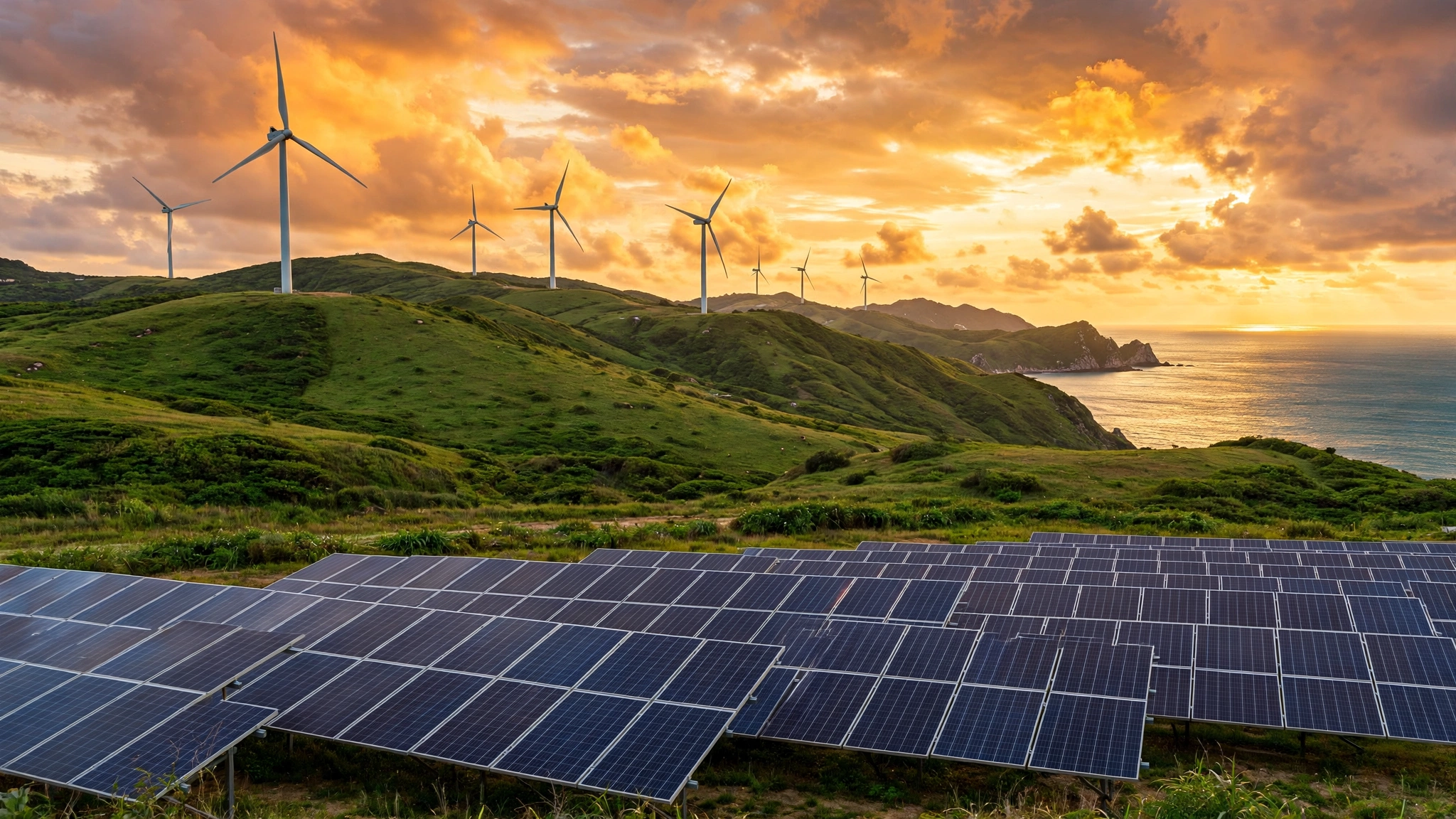
Goldwind has spent ten years in Vietnam selling wind turbines. Its next decade will look different. At its Annual Client Day 2026 in Hanoi on November 6, the Chinese turbine maker brought together more than 70 developers, contractors, and value chain partners to mark the anniversary and present a new integrated offer: wind, solar, and battery storage sold as one system, with hybrid power plant controls to manage them together. The company has secured contracts totaling more than 2.2 GW in Vietnam over the past decade, and once all of those projects are connected to the grid, they are expected to generate about 6 TWh of electricity a year.
The shift from turbines to systems is the story. Vietnam’s grid faces an evolving challenge: less a shortage of wind projects, more a need for projects that can deliver power reliably when the grid needs it, at a price lenders find attractive. Goldwind’s answer is to sell the whole plant, storage included.
What 2.2 GW means
Goldwind’s contracted capacity in Vietnam, at more than 2.2 GW, would generate about 6 TWh a year once fully operational, according to the company. That is equivalent to one in every five kWh of electricity consumed in Hanoi, based on the comparison published by Vietnam Investment Review. This scale positions Goldwind among the largest foreign equipment suppliers in Vietnam’s wind sector, a presence established through a decade of project-by-project development rather than a single flagship deal.
Globally, Goldwind’s cumulative installed wind capacity reached 186 GW at the end of the third quarter of 2026, with operations in 49 countries across six continents and eight research and development centers. Vietnam is a small share of that total, but the company treats it as a strategic market: its business vice president, Wang Hai, reaffirmed an “In Country, For Country” approach at the Hanoi event, committing Goldwind as a long-term system partner for more than 20 years.
From turbines to an integrated system
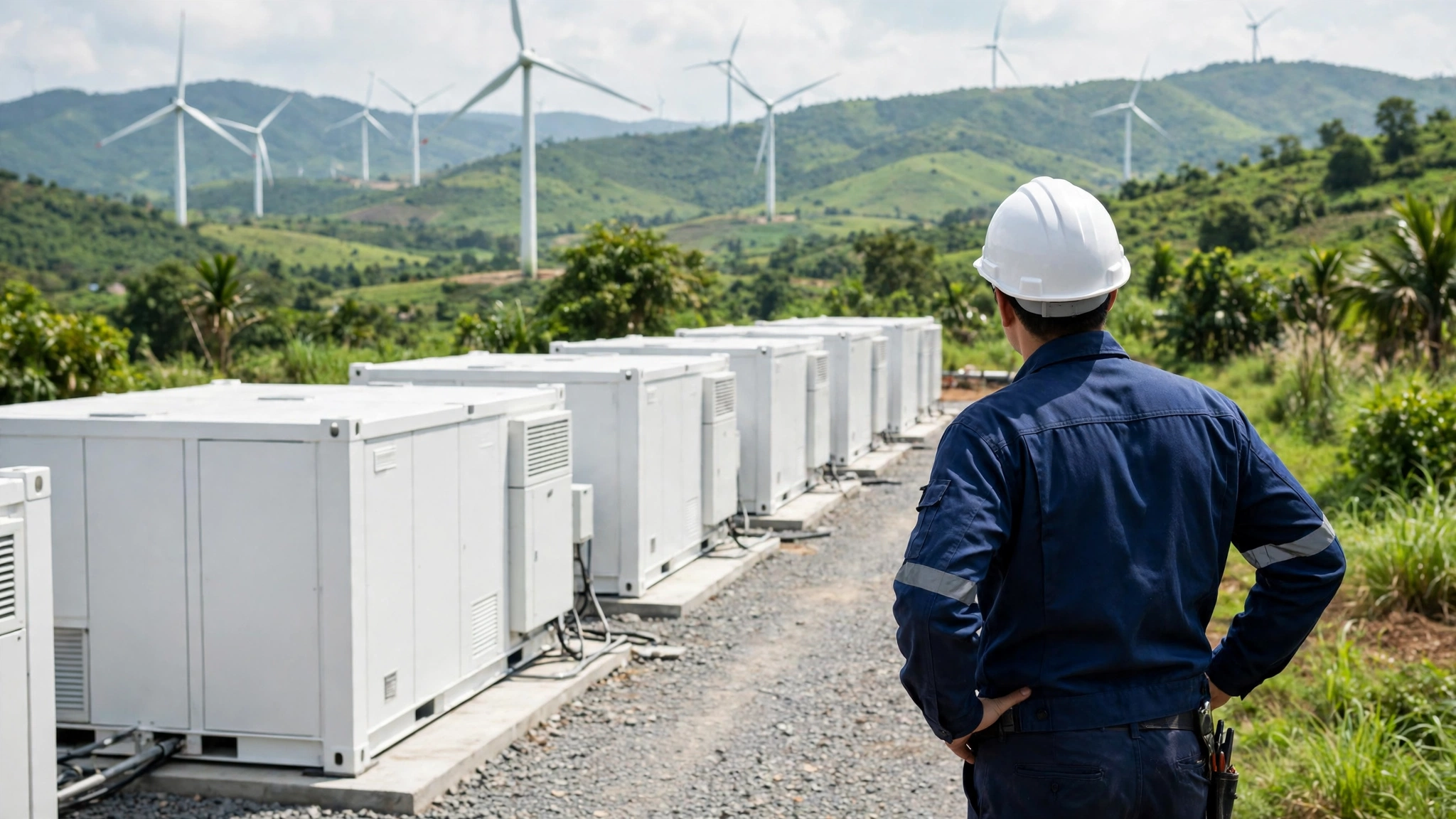
The new offer is built around an idea Goldwind calls Energy 3.0, or A³nergy: Available Energy, Affordable Renewables and an Assureable System. In practice, that means combining wind turbines with solar panels, AC and DC battery energy storage systems, and hybrid power plant control in a single package. Nguyen Ba Hai, head of business development at Goldwind Vietnam, presented the solution in Hanoi, describing how wind-storage coordination and grid-forming technologies help projects integrate with the grid and deliver more predictable returns over their lifetime.
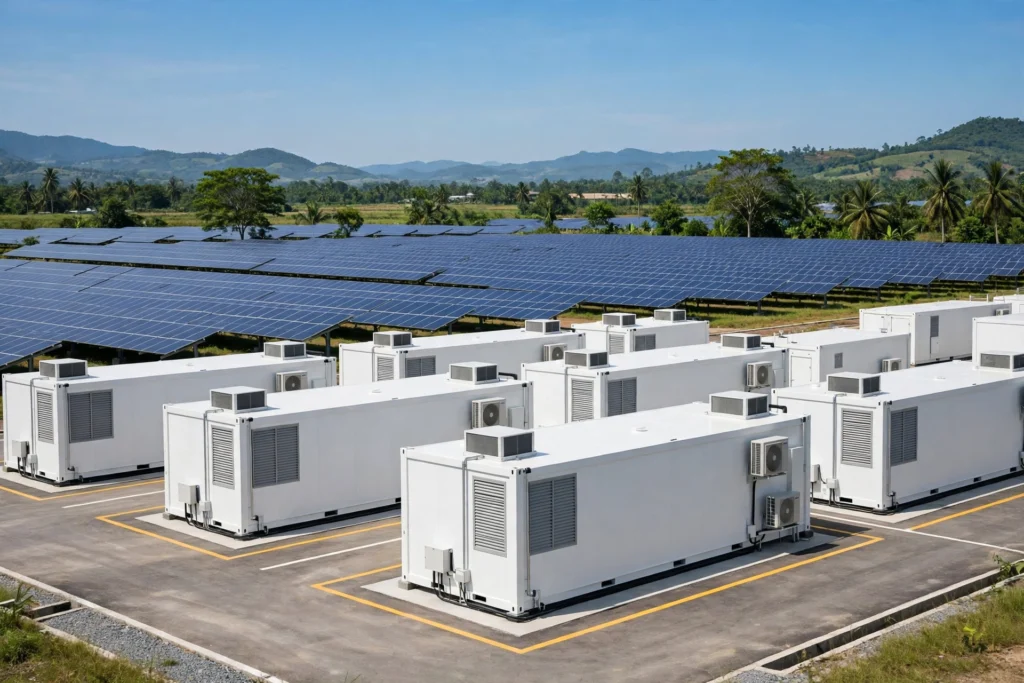
The new offer directly addresses a significant challenge. Wind and solar produce power when the weather allows, not when demand peaks. A plant that pairs turbines with batteries can store midday solar output and evening wind for the hours when the grid is short, and grid-forming inverters help stabilize frequency in a system that still leans heavily on coal and hydropower. For developers, that steadier output is a key factor in making a project bankable. For the grid operator, it offers a more predictable and stable power supply.
Why storage is now part of the sale
Vietnam’s grid faces the same pressure. At the National Energy Security Forum on November 10, EVN said 2026 was the first year it deployed battery energy storage systems, with battery storage capacity in the north expected to reach 805 MW. In 2027, EVN plans to invest in a further 930 MW of storage capacity, installed at the Thai Binh and Mong Duong 1 thermal power plants and at key points across Hanoi’s distribution grid. The ministry set 2026 generation price ceilings for wind and solar plants on November 5, giving developers and EVN a current basis to negotiate power purchase agreements.
Goldwind’s integrated offer sits directly on that trend. A developer that buys turbines, panels, and batteries together, with a unified control system, can significantly reduce the integration risks associated with assembling them separately. The company says its wind-storage synergy supports predictable asset returns through the project lifecycle, a claim that matters most to the lenders who decide whether a project gets built.
The localization test
Entering its next decade in Vietnam, Goldwind says it will deepen localization and strengthen long-term customer partnerships. That is both a promise and a test. Vietnam’s revised Power Development Plan VIII continues to add renewable capacity, but local content expectations have risen alongside it. Foreign suppliers are increasingly judged on what they build within the country, not merely on what they import.
The early signs are favorable. Nguyen Thai Ha, director of the energy division of T&T Group, praised Goldwind’s engineering expertise and customer-first mindset at the Hanoi event, and said the two companies could create value together and contribute to low-carbon development in Vietnam and the wider region. Goldwind’s challenge now is to transform a decade of turbine contracts into a decade of system contracts, in a market where the turbine itself may no longer be the most complex aspect of project development.
Related reading: Gia Lai Breaks Ground on 180 MW Van Canh 2 Wind Farm and Vietnam sets 2026 price ceilings for wind and solar power and Ca Mau Approves Two Wind Farms.
Sources
Goldwind (via PR Newswire), November 11, 2026, on the Annual Client Day 2026 in Hanoi and the A³nergy vision: https://en.prnasia.com/story/archive/5095063_AE95063_0
Vietnam Investment Review, November 11, 2026, on Goldwind’s decade in Vietnam and the integrated energy solution: https://vir.com.vn/goldwind-marks-decade-in-vietnam-with-new-energy-solutions-164922.html
Vietnam Insider, November 10, 2026, on the National Energy Security Forum and EVN’s battery storage plans: https://vietnaminsiders.com/vietnam-secures-sufficient-power-supply-this-year-despite-unprecedented-challenges/
—