What is the JETP, and what exactly was promised?
The Just Energy Transition Partnership, known as the JETP, was agreed in December 2022 between Vietnam and an International Partners Group. The headline pledge was USD 15.5 billion, to be mobilised over a period of from 3 to 5 years. About half is public money and about half is private finance. Most of it is loans rather than grants, a detail that shapes everything that follows. A loan based package can fund large power and grid projects, but only if those projects can repay, which puts bankability at the centre of the JETP story.
The partnership aims to move Vietnam’s power system away from coal and toward cleaner sources, while keeping electricity reliable and affordable. It is pledged finance tied to a transition plan and, in practice, to individual projects that lenders and investors judge ready to fund.
Has the USD 15.5 billion started to move?
Yes, but slowly and unevenly. Some flagship support has taken concrete form, most notably finance linked to pumped hydro storage at Bac Ai. At the same time, disbursement overall has been slow, and one visible early target, offshore wind, has slipped, with major international developers stepping back. One large announcement does not prove that the full USD 15.5 billion is flowing. Equally, slow early disbursement does not prove failure. JETP money moves when projects, paperwork and power purchase arrangements align, and in Vietnam that alignment has taken longer than the political announcement suggested.
What does the updated JETP plan commit Vietnam to?
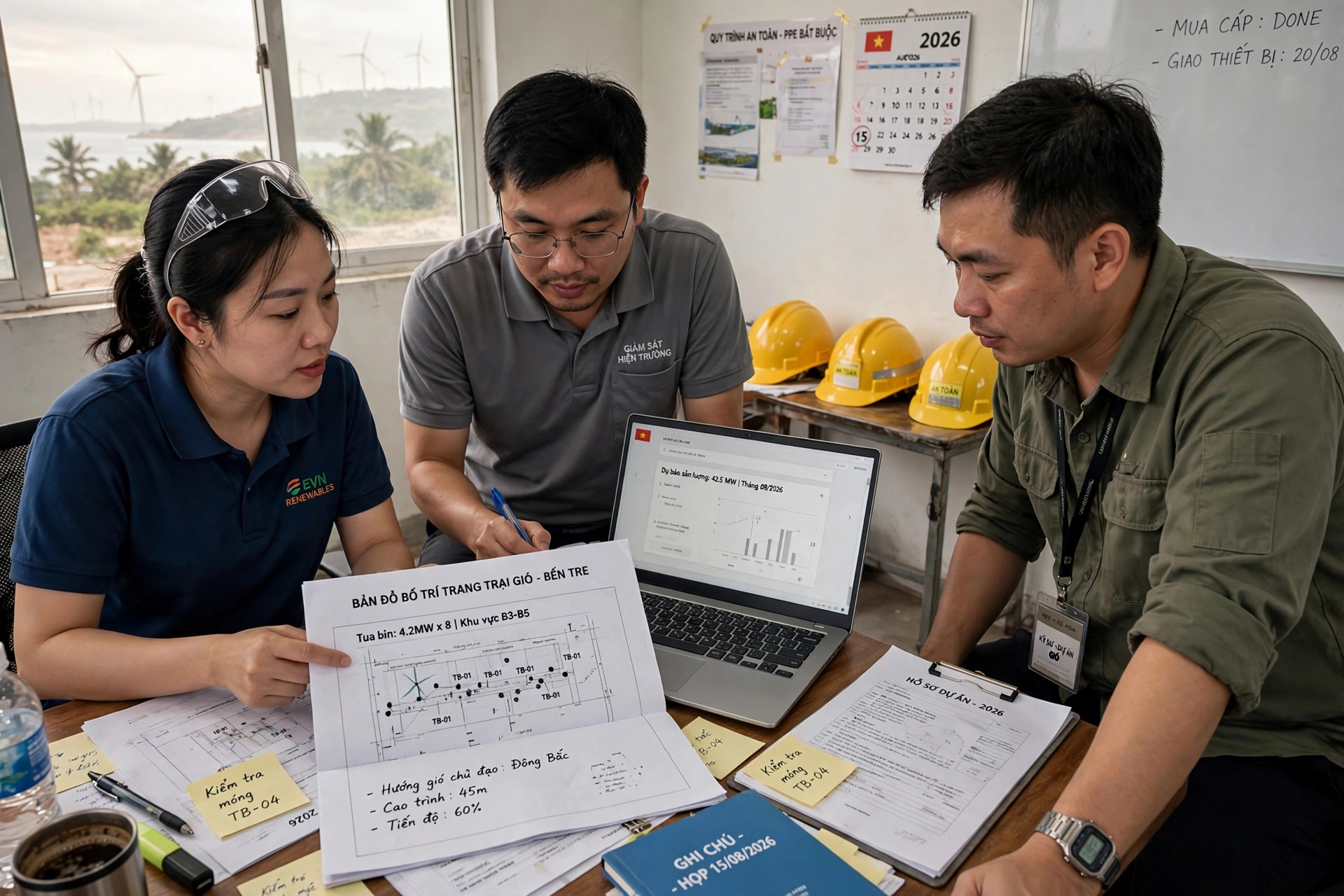
An updated JETP implementation plan was approved by Deputy Prime Minister Bui Thanh Son in 2026. It sets renewables at about 47 percent of installed power capacity by 2030. Coal capacity is capped at just over 30 GW, or 30 gigawatts. Power sector emissions are to peak at no more than 170 million tonnes of carbon dioxide equivalent. Together, those figures describe the intended system at the end of this decade: more renewable capacity, a firm ceiling on coal, and a defined emissions peak.
The plan also calls for two renewable energy industry and service hubs by 2030. That points to an ambition to build domestic supply chains, skills and services around the transition, not only generation assets. Beyond 2030, the direction steepens. Renewables are to supply from 80 percent to 85 percent of primary energy by 2050, and ageing coal plants are to be retired. Those longer commitments matter to investors, because they signal that policy direction is meant to last well beyond one project cycle, even where financing individual projects remains hard.
What is the Bac Ai package, and why does it matter?
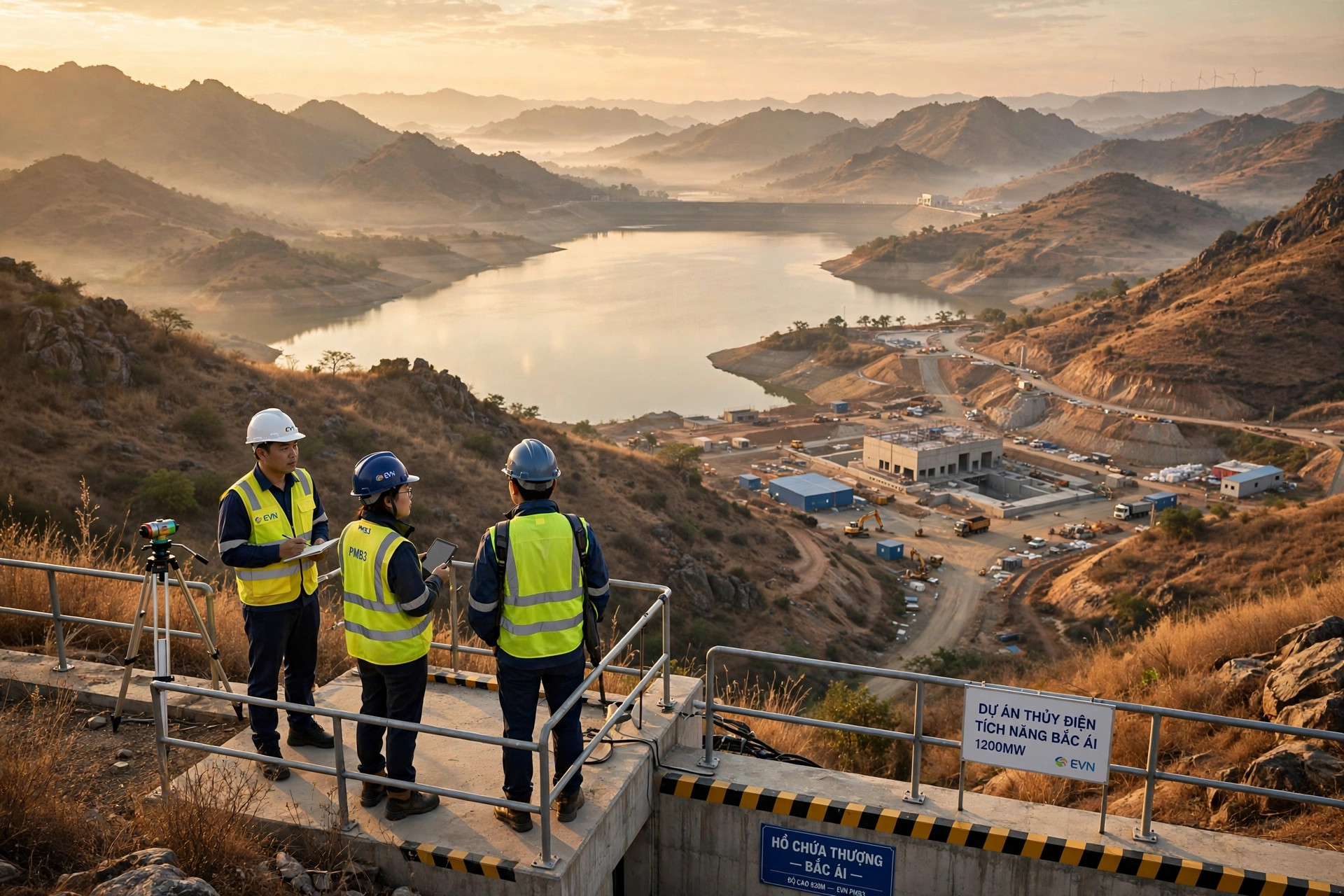
The clearest flagship example of JETP money taking project form is Bac Ai, a pumped hydro storage project. The European Union and European actors have announced a package of EUR 430 million, which is nearly USD 500 million, for Bac Ai. Pumped hydro stores energy by moving water between reservoirs at different heights, releasing it to generate power when the system needs it. For a grid adding large amounts of solar and wind, storage of this kind helps match supply with demand across the day.
Bac Ai also shows what a financeable project looks like when a defined asset, public backing and international partners come together around one site. If it proceeds smoothly, it offers a template for other storage and grid projects. Its progress is a practical test of whether JETP structures can deliver at project scale.
Why do lenders keep talking about bankability?
Reporting by Vietnam Investment Review in October 2026 identifies bankability as the key hurdle that remains. A bankable project is one whose documents, revenues and risks are clear enough for a lender to approve funding with confidence. Lenders have documentation requirements, and meeting them takes time, specialist work and consistent information from project owners. When each financier asks for a different package in a different format, cost and delay multiply.
One response discussed in that reporting is a common project package, so several financiers can appraise the same base of studies and documents rather than separate versions. Experience from the ETEF, a finance facility referenced in the discussion, points that way. Owners also keep responsibility for their studies. International finance can review and fund, but it does not remove the owner’s duty to produce credible work on demand, costs, environmental effects and delivery. A pledge becomes a loan only after that paperwork succeeds.
What happened to the 6 gigawatt offshore wind target?
Vietnam had set a target of 6 GW, or 6 gigawatts, of offshore wind by 2030. That target has slipped toward 2035. The reasons are structural. Frameworks for marine surveys, for the tariff projects would receive, and for power purchase agreements, known as PPAs, have been missing or incomplete. Without confidence on price and on the contract guaranteeing a buyer for the power, developers cannot finalise investment cases for projects that cost very large sums and take years to build.
Developers such as Orsted and Equinor withdrew in 2023 and 2024. Pilot projects were assigned to state firms instead. That shift may keep a domestic learning path alive, but it changes the financing picture, because the early international private capital that the JETP model hoped to mobilise is no longer leading those pilots. Readers should separate two questions. Is the offshore resource attractive? And is the current framework sufficient to turn it into funded projects by a given date? The evidence gives different answers to each.
Does slow disbursement mean the JETP is failing?
Not on its own. Transition finance at this scale was always going to move more slowly than its announcement. Loans require appraisal, and private finance requires returns and contracts that can be enforced. Vietnam is also attempting several difficult changes at once, from capping coal to building new industry hubs. Delay is a warning sign, not a final verdict.
The fair test is whether obstacles named in 2026 are being removed. Are common project packages becoming normal? Are owners producing studies to the standard lenders require? Are the missing offshore wind frameworks for surveys, tariffs and PPAs being completed, even with a 2035 horizon? And does Bac Ai, backed by EUR 430 million or nearly USD 500 million, move from announcement toward delivery? If several answers become yes, the USD 15.5 billion will look like money that started slowly and then gathered pace. If they stay unanswered, the pledge will remain larger on paper than in the power system it was meant to transform.
Related reading
- Seven Trades and 1,310 Allowances: Vietnam’s Carbon Exchange Finds Its First Price
- Bac Ai Pumped Hydro: the Battery Vietnam Is Building into a Mountain
- Offshore Wind’s Missing Middle: Surveys, Ports and Bankable PPAs
Sources
VnEconomy, updated JETP implementation plan approved in 2026, reporting the capacity, coal cap and emissions peak targets. Vietnam Investment Review, October 2026, on bankability, lender documentation, common project packages and the Bac Ai package. Kurums, JETP analysis, September 2026, on the structure and progress of Vietnam JETP funding.