Government Office Dispatch 11281/VPCP-CN, dated November 5, 2026, conveys Permanent Deputy Prime Minister Pham Gia Tuc’s directive on finalizing two draft instruments. They are the Strategy for the Development of Transportation Services to 2035, with a vision toward 2050, and the Action Program for Green Energy Transition and Greenhouse Gas Emission Reduction in Transportation. The Ministry of Construction must finalize both drafts and report to the Prime Minister before November 15, 2026.
The directive is explicit about how the transition must work. Solutions must be coordinated and aligned with socio-economic conditions and infrastructure, and must encourage people and businesses to switch proactively. The drafts must contain no regulations mandating a switch to purely electric vehicles or green transport. They must contain no provisions that could be interpreted as setting a mandatory roadmap, especially for road motor vehicles. The two drafts must also avoid overlap with the Logistics Industry Development Strategy, and must incorporate the directions given by General Secretary and President To Lam at the November 2, 2026 meeting on national logistics development.
Why the clarification matters
The directive lands after months of headlines that left many readers unsure whether a ban on gasoline vehicles was coming. Hanoi’s low-emission zone, which began in July 2026, restricts older vehicles in the city center, and a draft subsidy plan would help poor households switch to electric motorbikes. Neither measure is a national mandate. The November 5 directive draws the line at the national level: encouragement, not compulsion.
That distinction matters for timing. A mandatory switch would have forced investment decisions on a fixed schedule. A voluntary one lets owners and businesses choose when the economics work for them, which is the point the transport industry made in its reaction to the directive.
What businesses said
Le Trung Tinh, Vice Chairman of the Ho Chi Minh City Transport Association, welcomed the shift from mandate to encouragement. He told Dan Tri that transport businesses, especially passenger and freight operators, are switching. But buying green vehicles requires very large capital, and the financial pressure is considerable. Encouragement rather than compulsion lets a business calculate its own capacity and timing, he said.
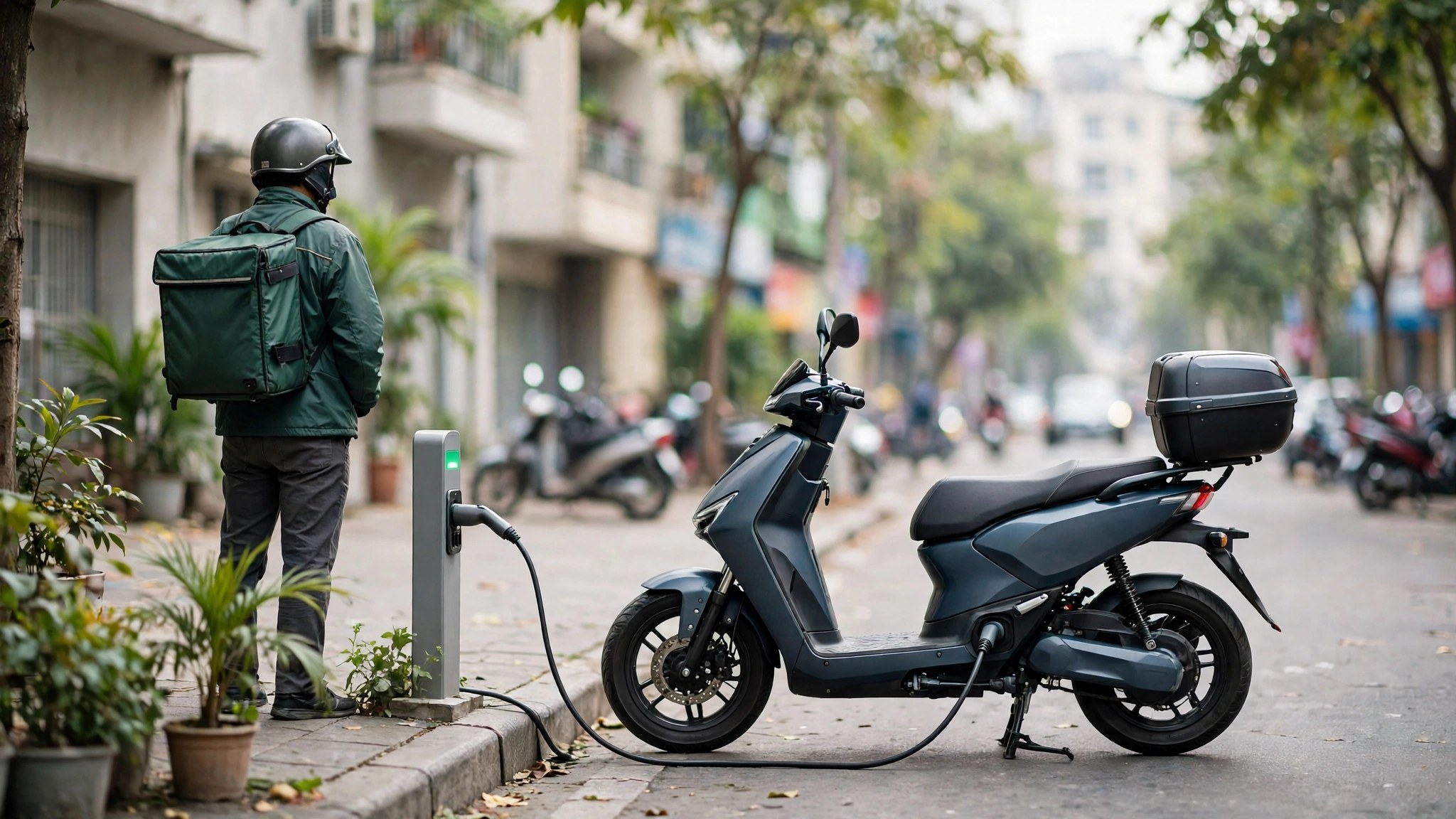
His second point was about infrastructure. Charging density in Ho Chi Minh City is still far behind gas stations, he said. At present there is roughly one charging station for every ten gas stations. Finding land for a charging station in the central districts is not easy, and he suggested a network with a station roughly every 5 to 7 kilometers in central areas, rather than pushing most stations to the suburbs and asking residents to travel out to charge before entering the center. If vehicles switch faster than charging infrastructure grows, he warned, drivers will face queues and inconvenience.
Dr Nguyen Huu Phuoc Nguyen, co-founder and chief executive of Selex Motors, made the same point from the manufacturing side. He said a voluntary switch, letting the market and users choose, is reasonable, and that demand for electric vehicles already exists without any ban on gasoline vehicles. What the state should do, in his view, is build the ecosystem around that demand: loan, tax and land incentives for domestic makers, and support for local production and localization. Selex still cannot access public land for battery-swap stations, he said, and mostly rents private land at high cost.
The electricity price problem
Nguyen’s sharpest point was about the price of the electricity used by charging and swapping infrastructure. At peak hours, charging electricity can exceed VND 4,200 per kWh, which squeezes the return on investment in infrastructure that is not yet profitable. He proposed a dedicated electricity tariff for shared charging and swap infrastructure below VND 3,000 per kWh.
The proposal connects directly to the electricity tariff schedule announced two days earlier. On November 4, EVN announced Decision 2892/QD-BCT of the Ministry of Industry and Trade. It is Vietnam’s first dedicated retail tariff for EV charging, with peak prices of VND 4,212 per kWh at low voltage and VND 3,758 at medium voltage (see our explainer on the new tariff). Nguyen’s proposal would give shared infrastructure a cheaper rate than the one the new tariff sets. Whether the ministry accepts that argument will shape how fast swap networks and public chargers can expand.
The three bottlenecks he named, location, electricity price and capital, are linked. A swap station needs affordable land in a useful place, electricity priced low enough to leave a margin, and financing to build before demand arrives. Solving one without the others leaves the network thin, which is the outcome the directive’s encouragement model depends on avoiding.
Demand is not waiting for a mandate
The third voice in the Dan Tri report came from a shop floor. Truong Thanh Ngoc, store manager of a Dat Bike shop on Tu Xuong Street in Ho Chi Minh City, said business remains stable. Customers come because they want to switch and try the vehicle, he said, not because a rule tells them to. In March, when fuel prices rose and interest in green vehicles surged, the store sometimes received three truckloads of bikes a day, dozens per truck, and still could not meet demand.
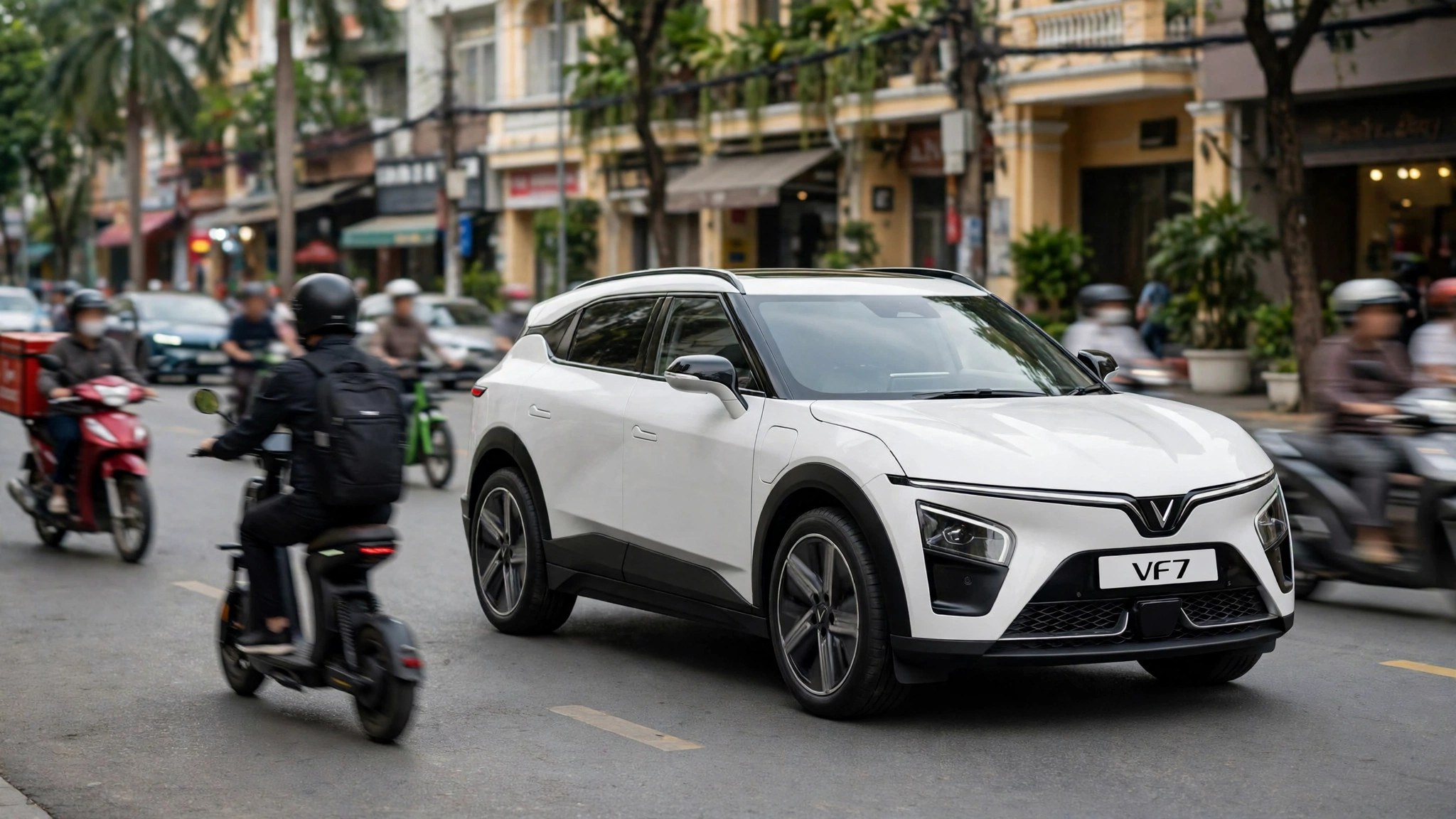
That pattern fits the wider market. Nearly one million electric two-wheelers were in use in Vietnam in the first nine months of 2026. VinFast reported 177,697 electric cars delivered in Vietnam over the same period (see our overview of the two-wheeler market). Demand is growing on running costs and curiosity, not on compulsion, which is the premise the November 5 directive now makes official.
What to watch
Three dates and decisions follow from the directive. First, the Ministry of Construction reports to the Prime Minister before November 15, 2026, with the finalized strategy and action program. That text will show whether the voluntary principle survives the drafting process intact. Second, the charging standard QCVN 32:2026 takes effect on July 1, 2027. It sets five groups of requirements for every public charger in the country (see why the standard matters beyond chargers). Standards define what a charger must be; the tariff defines what the electricity inside it costs; the directive defines who must switch, which is no one, for now. Third, the electricity-price question Nguyen raised remains open: whether shared charging and swap infrastructure gets its own tariff below VND 3,000 per kWh, or operates under the peak prices set by the new tariff schedule.
The directive settles the question of compulsion. It leaves open the harder question, whether encouragement plus infrastructure plus affordable electricity can move a fleet as fast as a mandate would have, without one.
Sources
Dan Tri (Dan Tri newspaper), November 6, 2026, 15:28: Government Office Government Office Dispatch 11281/VPCP-CN dated November 5, 2026, conveying the directive of Permanent Deputy Prime Minister Pham Gia Tuc on finalizing the draft Strategy for the Development of Transportation Services and the Action Program for Green Energy Transition and Greenhouse Gas Emission Reduction in Transportation; transition solutions must be synchronized and suited to socio-economic conditions and infrastructure, encouraging people and businesses to switch proactively, with no regulations mandating or being interpreted as setting a mandatory roadmap for switching to purely electric vehicles or green transport, especially road motor vehicles; the Ministry of Construction must finalize the drafts, ensure no overlap with the Logistics Industry Development Strategy, incorporate General Secretary and President To Lam’s directives from the November 2, 2026 meeting on national logistics development, and report to the Prime Minister before November 15, 2026; Le Trung Tinh, Vice Chairman of the Ho Chi Minh City Transport Association, welcomed the shift from mandate to encouragement, said charging density in Ho Chi Minh City is roughly 10 gas stations for every 1 charging station and suggested a station roughly every 5-7 km in central areas; Dr Nguyen Huu Phuoc Nguyen, co-founder and CEO of Selex Motors, said voluntary switching is reasonable, proposed a dedicated electricity tariff for shared charging and swap infrastructure below VND 3,000 per kWh, noted peak charging electricity can exceed VND 4,200 per kWh, proposed loan, tax and land incentives for domestic makers, and said Selex still cannot access public land for swap stations; Truong Thanh Ngoc, Dat Bike store manager on Tu Xuong Street, Ho Chi Minh City, said sales remain stable, and in March, when fuel prices rose, the store sometimes received 3 truckloads of bikes a day, dozens per truck, and still could not meet demand. https://dantri.com.vn/kinh-doanh/khong-bat-buoc-chuyen-sang-xe-dien-doanh-nghiep-van-tai-noi-gi-20261106151146304.htm
vietnam.vn (the state’s official external information portal), November 6, 2026: confirms people are not required to switch to purely electric vehicles under the November 5 directive. https://www.vietnam.vn/en/khong-bat-buoc-nguoi-dan-chuyen-sang-su-dung-phuong-tien-thuan-dien